Richard Patterson - Conviction
Здесь есть возможность читать онлайн «Richard Patterson - Conviction» весь текст электронной книги совершенно бесплатно (целиком полную версию без сокращений). В некоторых случаях можно слушать аудио, скачать через торрент в формате fb2 и присутствует краткое содержание. Жанр: Старинная литература, на английском языке. Описание произведения, (предисловие) а так же отзывы посетителей доступны на портале библиотеки ЛибКат.
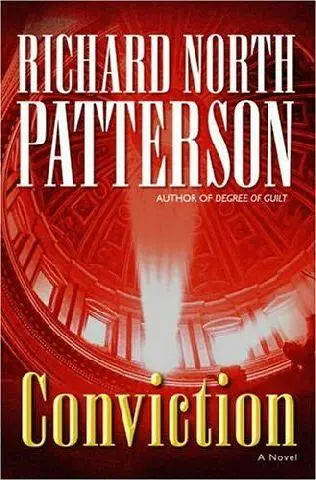
- Название:Conviction
- Автор:
- Жанр:
- Год:неизвестен
- ISBN:нет данных
- Рейтинг книги:3 / 5. Голосов: 1
-
Избранное:Добавить в избранное
- Отзывы:
-
Ваша оценка:
Conviction: краткое содержание, описание и аннотация
Предлагаем к чтению аннотацию, описание, краткое содержание или предисловие (зависит от того, что написал сам автор книги «Conviction»). Если вы не нашли необходимую информацию о книге — напишите в комментариях, мы постараемся отыскать её.
Conviction — читать онлайн бесплатно полную книгу (весь текст) целиком
Ниже представлен текст книги, разбитый по страницам. Система сохранения места последней прочитанной страницы, позволяет с удобством читать онлайн бесплатно книгу «Conviction», без необходимости каждый раз заново искать на чём Вы остановились. Поставьте закладку, и сможете в любой момент перейти на страницу, на которой закончили чтение.
Интервал:
Закладка:
With these words, Lane had veered sharply into guilt or innocence—just as Terri had designed—while creating sympathy for Rennell. Bond hesitated, seemingly torn between annoyance at this detour and interest in what Lane had to say.
"What about retardation?" the judge finally demanded. "That's supposed to be the focus of your testimony."
"I'm coming to retardation," Lane promised. "But that's not what makes Rennell Price a tragic figure. It's everything else about him.
"Rennell was genetically predisposed to retardation, substance addiction, and mental difficulties. He was completely unwanted from birth, and suffered chronic neglect, physical illnesses, and extreme abuse since infancy. By early childhood, he was mentally, socially, and emotionally impaired. His history shows severe learning problems, mental retardation, organic deficits, and trauma. He was raised in poverty, in a chaotic environment that lacked supervision, guidance, or any positive role models. He was failed by his home, school, and community, all of which deprived him of a basic foundation for healthy development." Lane paused, his face and manner filled with a sad conviction. "Rennell Price, Your Honor, is the worst case of neglect and abuse I've ever seen."
Bond regarded him, fingertips steepled together. "Perhaps so, Dr. Lane. But I hear any number of habeas corpus petitions, and I can't recall one where the petitioner's childhood was not portrayed as a horror story."
Lane held the judge's gaze. "Perhaps so," he answered quietly. "But Rennell Price's childhood is the perfect storm."
After a moment, Bond's expression became inscrutable. "All right," he said. "We'll recess for ten minutes," he said. "Then perhaps you'd care to address why we would find this man retarded. Which, rather than guilt or innocence, is the proper purview of your profession."
The courtroom stirred, tension released in a Babel of voices and shifting bodies. Terri turned to her husband and murmured, "How do you feel about calling Rennell now?"
With cool eyes, Chris watched Gardner Bond as he retreated from the bench. "Ask me later," he said.
NINE
"A SCORE OF SEVENTY," ANTHONY LANE ADVISED THE JUDGE, "IS not an absolute ceiling on retardation. And seventy-two is not a passing grade—"
Bond held up a hand. "How do we impose a standard, Dr. Lane?"
"By looking at whether retardation was clear from childhood, and the degree to which it affected Rennell's capacity to act in daily life." Lane's voice was cool. "Which, as we know, is a long, sad story—a devil's brew of heredity, brain trauma, and abuse. The only question is whether a number justifies ignoring all that."
Stepping closer to the witness stand, Terri interposed a question of her own. "The Supreme Court's opinion in Atkins, Dr. Lane, emphasized the difficulties of a retarded man in coping with the legal system. Can you describe how retardation landed Rennell Price on death row?"
Lane settled back, hands folded in his lap, assuming a more academic tone. "I'd describe it as a series of misperceptions and disconnects, beginning with Rennell's first interrogation and ending when the jury and judge sentenced him to death.
"Inspector Monk saw a sullen crack dealer unable to conceal his own sense of guilt. What Monk actually faced was a frightened boy of extremely low intellect, searching for answers which would please the police—"
"Didn't Rennell," Bond interrupted, "admit seeing Thuy Sen at a store?"
"Maybe he did," Lane answered with a shrug. "Maybe he was just guessing. The real mystery is why he didn't confess to killing her.
"All too often, retarded people make false confessions to ingratiate themselves, or simply to put an end to repeated questioning. No matter how many times Monk asked him, Rennell came back to 'I didn't do that little girl.' But he couldn't make the police believe him."
"Perhaps," Bond retorted, "because he couldn't account for his whereabouts."
Though the judge's comment was delivered as a counterthrust, Lane nodded in amiable agreement. "Precisely. Monk imagined seeing a child molester without an alibi. What he really saw was someone without any capacity to remember, or any specific sense of time or place—let alone of where he was the day Thuy Sen disappeared.
"Payton says Rennell was asleep. In an even deeper sense than that, he was—each day and every day. For Rennell, one day was like any other, an indeterminate moment spent in a darkened room."
The somber description made Gardner Bond pause. "What about Jamal Harrison?" Terri interposed. "His story to the police helped persuade Assistant D.A. Mauriani to seek the death penalty."
"It's the same phenomenon. Harrison believed Rennell smiled because Payton had just told him Jamal would take care of Eddie Fleet. But Payton says it was simply because he'd promised Rennell that things would be okay." Lane's tone softened. "As always, Rennell believed him. Which is why we're all here."
"Did Rennell's retardation affect his relationship to Yancey James?" Terri asked.
"Yes," Lane answered gravely. "At the preliminary hearing, Judge Warner asked Payton, then Rennell, whether they'd agree to waive James's conflict of interest in representing them both. When Rennell's turn came to answer, Warner heard the answer yes. But what he really heard was a retarded teenager taking cues from his older brother. In terms of Rennell's comprehension, the judge could have been speaking in Bulgarian.
"As for James, once Payton had tacitly confessed his guilt, James assumed that Rennell must also be guilty. To James, Rennell's insistence that he 'didn't do that little girl' was merely a failure of imagination—for which Payton compensated by inveigling Tasha Bramwell to lie for both of them." Lane's smile was etched with irony. "The only 'true' part of her story was that Rennell slept through the afternoon Thuy Sen died. Which, given his deficits in memory, surely came as news to Rennell. But all the jury saw was an inept lawyer offering a pathetic alibi to cover up for two degenerates."
To Terri, Lane's measured account of Rennell's fate, accumulating step by step, seemed to have sobered those who watched. The courtroom felt preternaturally quiet. "How do you relate retardation," Terri asked, "to the question of whether Rennell was innocent and wrongly convicted?"
"To me, they're intimately related. Knowing that he was innocent, if Rennell were a man of functional intellect he would have known that Eddie Fleet was framing him and, in all likelihood, favored his lawyer with some conclusions about why. A man of functional intellect might even have challenged Payton about what happened." Sitting back, Lane seemed to imagine Rennell at trial. "Rennell just sat there. With respect to Eddie Fleet, he was truly innocent."
"Unless Rennell knew himself to be guilty," Bond objected.
This, Terri knew, was the opening Tony Lane had been waiting for. "In my view," Lane replied, "retardation only made him look guilty. Aside from the compelling psychological reasons I gave you for believing that he'd never molest a child, there's not the slightest evidence in his life that Rennell would ever do so."
Larry Pell leapt up at once. "Your Honor," he interrupted, "we've been more than tolerant of Dr. Lane's digressions from his area of expertise. But Rennell Price's guilt or innocence is a question for this Court, not for a mental health professional who has no personal knowledge of what happened on the day Thuy Sen was killed. We object to any further speculation."
With an air of agreement, Bond swiveled his chair toward Terri. "Mr. Pell," she answered, "objects to a great deal. He objects to our calling Eddie Fleet. He objects to our calling Dr. Tammy Mattox to testify to Rennell Price's personal history." Turning on Pell, she asked, "You do still object, don't you?"
Читать дальшеИнтервал:
Закладка:
Похожие книги на «Conviction»
Представляем Вашему вниманию похожие книги на «Conviction» списком для выбора. Мы отобрали схожую по названию и смыслу литературу в надежде предоставить читателям больше вариантов отыскать новые, интересные, ещё непрочитанные произведения.












Обсуждение, отзывы о книге «Conviction» и просто собственные мнения читателей. Оставьте ваши комментарии, напишите, что Вы думаете о произведении, его смысле или главных героях. Укажите что конкретно понравилось, а что нет, и почему Вы так считаете.