Richard Patterson - Conviction
Здесь есть возможность читать онлайн «Richard Patterson - Conviction» весь текст электронной книги совершенно бесплатно (целиком полную версию без сокращений). В некоторых случаях можно слушать аудио, скачать через торрент в формате fb2 и присутствует краткое содержание. Жанр: Старинная литература, на английском языке. Описание произведения, (предисловие) а так же отзывы посетителей доступны на портале библиотеки ЛибКат.
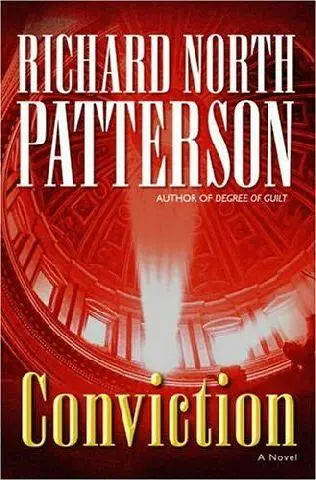
- Название:Conviction
- Автор:
- Жанр:
- Год:неизвестен
- ISBN:нет данных
- Рейтинг книги:3 / 5. Голосов: 1
-
Избранное:Добавить в избранное
- Отзывы:
-
Ваша оценка:
Conviction: краткое содержание, описание и аннотация
Предлагаем к чтению аннотацию, описание, краткое содержание или предисловие (зависит от того, что написал сам автор книги «Conviction»). Если вы не нашли необходимую информацию о книге — напишите в комментариях, мы постараемся отыскать её.
Conviction — читать онлайн бесплатно полную книгу (весь текст) целиком
Ниже представлен текст книги, разбитый по страницам. Система сохранения места последней прочитанной страницы, позволяет с удобством читать онлайн бесплатно книгу «Conviction», без необходимости каждый раз заново искать на чём Вы остановились. Поставьте закладку, и сможете в любой момент перейти на страницу, на которой закончили чтение.
Интервал:
Закладка:
For a long time, Rennell was silent, and then the lid of one half-closed eye fluttered. "Daddy," he mumbled. "It was my daddy."
After this, he barely spoke at all. He would not, or could not, tell Terri what he meant.
* * *
Chatting amiably, Carlo Paget and his father sat drinking beer and half-watching the Giants play their last day game of the summer on a sunstruck afternoon at Pacific Bell Park. Closing his eyes, Carlo tilted his head back toward the sun. "Baseball in San Francisco shouldn't be played on a day like this," he said lazily. "Weather's way too nice."
Chris smiled at this. Carlo and he had watched baseball together for almost two decades, and the memories of Giants games were part of the warp and woof of their shared history, even—or perhaps especially—their mutual determination to endure the misery of night games once played at Candlestick Park, enveloped by the chill dampness of the bay. A phrase passed from one to the other—perhaps as simple as "remember the night"—would evoke for Kit's benefit, and their own amusement, the memory of the Dodgers' right-hander who disappeared in an impenetrable fog enveloping the pitcher's mound, from which his pitches emerged like bullets fired from ambush. Other images were, quite literally, warmer: the day game when the Pirates catcher Tony Pena decided to toss a baseball to the eight-year-old Carlo instead of to a gaggle of rude and clamoring adults; the sudden arrival of Barry Bonds, which the fifteen-year-old Carlo had insisted—in the face of his father's skepticism—would change San Francisco Giants baseball as they knew it; the other bone-chilling night when Bonds had changed the quality of Christopher Paget's life by hitting an eleventh-inning home run to put his teammates, and Carlo's shivering father, out of their collective misery.
Carlo had been fifteen then. Now he was twenty-five, and his father had acquired a brace of tickets in anticipation of Carlo's return to the city. And so, for these few hours, he had resolved to bail Carlo out of their office and, he hoped, out of his increasingly grim preoccupation with the impending execution of Rennell Price. But the game through eight innings was scoreless and, for the most part, lacking in incident, save for a couple of double plays and a base-running blunder by the Giants which had left Carlo muttering darkly about brainlock. Then he gazed into the bottom of his empty cup of beer and began relating Terri's account of this morning's interview with Rennell, and the way his stepmother's questions had suddenly hit a wall.
"It could be that he's just inarticulate," Chris observed. "Or maybe it's something too awful to articulate. As terrible as it is, we're left hoping to find out the latter—and that it'll matter."
"Shouldn't it?"
"Atkins gives us a shot," Chris answered in an undertone too soft for others to hear. Leaning back, he cast an eye upon the sunlit field and restive fans around them. "But lately I find myself looking at Kit and wondering how I would feel about anyone who did to him what Rennell Price is supposed to have done to Thuy Sen. And what kind of man would Kit become if he suffered as a child like Rennell may have? Considering either question makes me sick. Though not as sick as wondering about what Terri must feel about this case, but can never let herself say."
Pensive, Carlo touched the bridge of his nose, a characteristic gesture Chris first had noticed when his older son had been the age Kit was now. "So how did you decide you were against the death penalty?"
Chris gazed out toward left field, with its giant baseball mitt rising above the stands, the palm trees jutting from behind them toward an electric blue sky. "When I was eight or nine," he answered finally, "and I heard there was a thing called the death chamber, I had a kid's visceral sense that it wasn't right. But I was twenty-one when Sirhan Sirhan shot Bobby Kennedy, and I felt like I could have pulled the switch on that sonofabitch myself, for murdering our future." Turning to Carlo, his father smiled briefly. "Marrying your somewhat determined stepmother required me to sort death out for good. In the end, what clinched it for me was the real fear of executing the innocent, and the absolute conviction we've done that already."
"Think we'll ever prove that?"
"Sure. Maybe starting with Texas, if the state doesn't cover up its crime to spare the rest of our delicate sensibilities. I only hope it'll make a difference." Chris's tone became sardonic. "A lot of people figure it won't happen to folks like them—white, well-educated, privileged—so why does it matter? At the very least, they rationalize, someone charged with a capital crime probably did something, so we're merely weeding out a few social undesirables."
Carlo nodded. "The people who most people never see."
"Uh-huh. When it comes to capital punishment, America suffers from a massive failure of empathy and imagination." Chris's face was somber now. "A sentence of death cuts fault lines through the lives of everyone involved: not just Rennell and Payton Price, but their grandmother; the father, mother, and sister of Thuy Sen; and Yancey James. Perhaps even Eddie Fleet, and whatever lives he may have touched since he dimed out his two friends. The death sentence becomes a life sentence for those it doesn't kill."
Saying this, Chris Paget fully confronted his subconscious fear: Carlo, like Terri, might devote his life to this. This was selfish, he acknowledged, but not entirely—he did not want his son to take on a career that hard, or to develop all the defenses he would need to endure it. He did not want the death penalty to claim Carlo Paget.
Suddenly, Carlo smiled at him—the easy, charming grin Chris had known since Carlo was seven—and turned his eyes toward home plate. "You'd better pay attention, Dad. Bonds is up, and something might actually happen here. Another piece of family lore."
ELEVEN
SAN QUENTIN PRISON ALLOWED PSYCHOLOGICAL TESTING MONDAYS, Tuesdays, and Wednesdays between eight-thirty and two, and on Thursdays or Fridays for another three hours beginning at eleven in the morning. Even if the testing consumed the maximum five and a half hours, the prison authorities allowed no food in the psychiatric conference room—not for Rennell, Lane, or Terri. Though she disliked the inhumanity of forcing Rennell to go five hours without food, a condition which made Terri herself irritable, this was one test she badly needed him to fail.
Among the problems of retardation, Lane had confirmed, is that it affects attention—the ability to sustain it, and to chose among competing stimuli the one which is most important. A second area for testing was the ability to absorb and remember information. Another lay in the visual and perceptual function—whether Rennell could see a triangle and then copy it. Yet another was basic reading, spelling, and arithmetic. For the first three and a half hours, Terri observed what she had expected: that Rennell was easily distracted; that his memory was short-lived and erratic; that shapes translated poorly from his eye to his hand, triangles becoming cubes and squares morphing into rectangles; and that Rennell's scholastic skills remained roughly those of the third grader taught by Sharon Brooks. Yet Rennell tried so hard that Terri found it heartbreaking to watch. By the time he began the IQ test, it was past noon. The big man froze, a vacant-eyed replica of himself, with his pencil suspended over the paper as though fearing further shame.
And still he tried.
Now he glanced sideways at Terri, as though fearful of her judgment or, perhaps, imploring her to stop. Tiredly, Rennell said, "You're really workin' my mind today."
She forced herself to smile and stay quiet. "You're doing good," Tony Lane assured him. "Just stick with it awhile longer, and this stuff will all be over."
Читать дальшеИнтервал:
Закладка:
Похожие книги на «Conviction»
Представляем Вашему вниманию похожие книги на «Conviction» списком для выбора. Мы отобрали схожую по названию и смыслу литературу в надежде предоставить читателям больше вариантов отыскать новые, интересные, ещё непрочитанные произведения.







Обсуждение, отзывы о книге «Conviction» и просто собственные мнения читателей. Оставьте ваши комментарии, напишите, что Вы думаете о произведении, его смысле или главных героях. Укажите что конкретно понравилось, а что нет, и почему Вы так считаете.