Richard Patterson - Conviction
Здесь есть возможность читать онлайн «Richard Patterson - Conviction» весь текст электронной книги совершенно бесплатно (целиком полную версию без сокращений). В некоторых случаях можно слушать аудио, скачать через торрент в формате fb2 и присутствует краткое содержание. Жанр: Старинная литература, на английском языке. Описание произведения, (предисловие) а так же отзывы посетителей доступны на портале библиотеки ЛибКат.
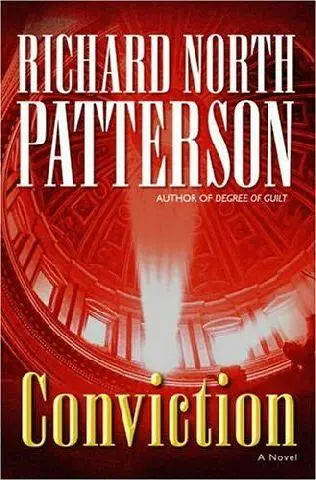
- Название:Conviction
- Автор:
- Жанр:
- Год:неизвестен
- ISBN:нет данных
- Рейтинг книги:3 / 5. Голосов: 1
-
Избранное:Добавить в избранное
- Отзывы:
-
Ваша оценка:
Conviction: краткое содержание, описание и аннотация
Предлагаем к чтению аннотацию, описание, краткое содержание или предисловие (зависит от того, что написал сам автор книги «Conviction»). Если вы не нашли необходимую информацию о книге — напишите в комментариях, мы постараемся отыскать её.
Conviction — читать онлайн бесплатно полную книгу (весь текст) целиком
Ниже представлен текст книги, разбитый по страницам. Система сохранения места последней прочитанной страницы, позволяет с удобством читать онлайн бесплатно книгу «Conviction», без необходимости каждый раз заново искать на чём Вы остановились. Поставьте закладку, и сможете в любой момент перейти на страницу, на которой закончили чтение.
Интервал:
Закладка:
"Which means . . . ?"
"That Rennell Price had been tortured." Now Mattox spoke slowly, and very softly. "Someone in this child's family made him sit naked on a space heater while he screamed in pain. Keeping him there must have been the fun part."
EIGHT
FOUR DAYS LATER, WITH TWO MORE VISITS FROM TERRI INTERVENING, Rennell Price met for the first time with Dr. Anthony Lane.
Lane and Terri sat with Rennell at a bare table in the psychiatric conference room of San Quentin Prison, a windowless, ten-by-fifteen cubicle with a chair for the inmate bolted to the floor. As a prisoner under an execution warrant, Rennell was handcuffed, his legs shackled. A burly guard with a baton stood outside.
Lane was dressed in khakis, a work shirt, and tennis shoes. He had greeted Rennell with a power shake and introduced himself in the vernacular; it was his plan, Terri knew, that a black man with a casual air would at some point put Rennell more at ease. But Rennell greeted the doctor as Lane had predicted—with wariness and near-total silence. "If he's retarded," Lane had told Terri, "he'll try to place people into categories, hoping to figure out what their deal is so he can respond appropriately." The role of intermediary fell to Terri.
Rennell slumped in a chair, his eyes fixed exclusively on her. "Tony's an expert," Terri told him. "He can help the judge understand you better."
Rennell hesitated, then slowly nodded, his face devoid of comprehension. "He's just going to talk with us," she continued easily. "Later—not today—he'll help me give you tests."
Rennell's face clouded. "They already give me tests in school."
Terri nodded in acknowledgment. "What kind of tests do you remember?"
"All kinds. Made my head hurt from too many fucking questions."
Lane chuckled appreciatively. "I hear you. We won't pile on quite as many, and we'll break it up a little."
Rennell tilted his head back, eyes fixed on the wall, as though struggling to retrieve a memory. "Mrs. Brooks said I did good," he reported in tones of doubt.
"Mrs. Brooks liked you," Terri assured Rennell. "Still does."
Slowly, his gaze returned to Terri. "You're like Mrs. Brooks," he said. "Sometimes I have dreams about you."
Startled, Terri managed a smile, trying to sort out her own confusion—it was at once the most unguarded thing Rennell had said to her and the most sexually ambiguous. "That's a nice thing to tell me," she answered. "I know Mrs. Brooks was important to you."
Rennell stared at her now, oblivious to Lane. "She was beautiful. She said she missed me every night at home. Like I miss you in my cell."
"Tell me about that," Lane said with amiable curiosity. "Your cell."
The inquiry seemed to startle Rennell from his contemplation of Terri or, perhaps, his memories. In a recalcitrant, near-sullen tone, he asked Lane, "What about?"
Lane gave a casual shrug. "I don't know. Maybe just what it looks like."
Rennell glanced at Terri, who smiled, tilting her head in inquiry. "I try to make it like my home," he told her, "best I can. But I always keep the light on." His face darkened. "Least till the bulb blows out."
The first part of the answer Terri understood: the mentally challenged, as Lane had told her, are more likely to accept the limits of a cell, whereas Payton might rage at his confinement. But Rennell's last comment bespoke a fear that she could not define.
"What do you do during the day?" Lane inquired.
Rennell turned to him at last, considering his answer. "The same stuff. Boring."
Lane nodded in commiseration. "You've been here for a long time, Rennell. How do you think you're different than when you came?"
It was the kind of abstract question, Terri thought, which most Americans in the age of therapy—or daytime talk shows—could answer by rote. But Rennell looked wary and distrustful. Grudgingly, he answered, "I'm the same."
"Sure," Lane agreed. "But maybe you've learned different things."
Rennell seemed to grope for some response. "I know about law—the DNA stuff."
"Yeah. Tell me about that."
Rennell regarded his hands. "DNA makes you innocent," he said at length. "It's like a test."
"So sometimes tests can help you. Like the tests Terri and I want to give you."
Rennell glanced at the guard on the other side of the glass. "That's what I'm scared of. That's the problem I'm in with you—I don't know things about this test. I just try to do the best I can."
"Man can't do no more than that." Reaching into his briefcase, Lane placed Rennell's third-grade report card on the table. "Remember this? It's your report card from Mrs. Brooks."
A disaster carefully recorded in black ink, Terri thought. Gazing down at it, Rennell touched its edge with his finger, eyes widening with what seemed like wonder at the cursive name at the bottom. "Sharon Brooks," he read aloud.
That was all the meaning the report card seemed to have. "Mrs. Brooks was a good teacher," Lane said. "She knew it was hard for you to read sometimes. The tests will help us understand why."
Rennell's upper teeth dug into his lip. "I'm not sure about no tests. Might not want to take them."
Tense, Terri wondered what to say: if Rennell failed to cooperate, the defense of retardation—Rennell's last and best hope of living—would evaporate. Instinctively, she reached for his hand. "Please," she said. "If you help Dr. Lane test you, I'll be there."
Surprised, Rennell gazed down at her hand, small and delicate on top of his. Then he looked into her face with the eyes of a frightened child. "Will the test make me innocent?" he asked.
Terri's throat tightened, and her hand clasped his wrist. "I hope so," she answered and realized how much, for her own sake, she wished this could be true.
NINE
JOHNNY MOORE ARRIVED AT TERRI'S OFFICE WITHIN TEN MINUTES of her return. "Yancey James," he told her without preface, "got disbarred six years ago. I guess Kenyon and Walker forgot to get back to him."
"Amazing." She waved him to a chair in front of her desk. "Getting disbarred is a trick," she told him. "Anything in James's record relevant to us?"
"Twelve clients on death row by the time he lost his ticket—they just kept piling up. Eventually he earned the charming sobriquet Death's Co-Counsel." Moore's blue eyes held a cynical amusement. "His defenses were so cursory they give new meaning to the concept 'speedy trial.' "
"Any sins in particular?"
"One failure after another to investigate, all rationalized as 'tactical decisions'—which tended, unsurprisingly, to shaft his clients." Moore pulled a notebook from his briefcase and put on his half-glasses. "I've got notes on his five other capital cases in 1987, the year he represented the brothers Price.
"In the Curtis Smith case, he failed to present Smith's only meritorious defense. On behalf of Earl Prentice, he failed to challenge the eyewitness ID of his client, though he had a witness who could have. He defended Stevie Washburn by depending entirely on the investigation conducted by the lawyer for Stevie's codefendant and doing nothing on his own—"
"Like our case," Terri interjected, "except there was no codefendant to rely on. Yancey had them both."
"Indeed," Moore answered dryly. "But at least he gave them a two-day defense—a day for each client. In the Serge Dieterman case, James lost a one-day murder trial. Reason it was so short is that he didn't call the defendant and three other witnesses to testify that the defendant had withdrawn from a conspiracy to murder and, in fact, was leaving the scene when one of the others shot the victim . . ."
"It's almost comical," Terri observed. "Except for the lives at stake."
"I doubt you'll find the last one very amusing—the Calvin Coolman case." Moore glanced at his notes. "Try this, Terri. Calvin, James's client, was accused of shooting Roy Sylvester to death in the Double Rock section of the Bayview. The only person who claimed to have seen the killing was Stace Morgan, a convicted rapist and crack dealer. Stace did not hurry down to the police station with his story. But three weeks later the cops busted him for dealing, and he came up with his story about Calvin capping Sylvester in exchange for probation on the drug rap—"
Читать дальшеИнтервал:
Закладка:
Похожие книги на «Conviction»
Представляем Вашему вниманию похожие книги на «Conviction» списком для выбора. Мы отобрали схожую по названию и смыслу литературу в надежде предоставить читателям больше вариантов отыскать новые, интересные, ещё непрочитанные произведения.










Обсуждение, отзывы о книге «Conviction» и просто собственные мнения читателей. Оставьте ваши комментарии, напишите, что Вы думаете о произведении, его смысле или главных героях. Укажите что конкретно понравилось, а что нет, и почему Вы так считаете.