Philippa Gregory - The Constant Princess
Здесь есть возможность читать онлайн «Philippa Gregory - The Constant Princess» — ознакомительный отрывок электронной книги совершенно бесплатно, а после прочтения отрывка купить полную версию. В некоторых случаях можно слушать аудио, скачать через торрент в формате fb2 и присутствует краткое содержание. Жанр: Старинная литература, на английском языке. Описание произведения, (предисловие) а так же отзывы посетителей доступны на портале библиотеки ЛибКат.
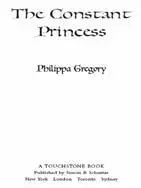
- Название:The Constant Princess
- Автор:
- Жанр:
- Год:неизвестен
- ISBN:нет данных
- Рейтинг книги:4 / 5. Голосов: 1
-
Избранное:Добавить в избранное
- Отзывы:
-
Ваша оценка:
The Constant Princess: краткое содержание, описание и аннотация
Предлагаем к чтению аннотацию, описание, краткое содержание или предисловие (зависит от того, что написал сам автор книги «The Constant Princess»). Если вы не нашли необходимую информацию о книге — напишите в комментариях, мы постараемся отыскать её.
Thus, bestselling author Philippa Gregory introduces one of her most unforgettable heroines: Katherine of Aragon. Known to history as the Queen who was pushed off her throne by Anne Boleyn, here is a Katherine the world has forgotten: the enchanting princess that all England loved. First married to Henry VIII's older brother, Arthur, Katherine's passion turns their arranged marriage into a love match; but when Arthur dies, the merciless English court and her ambitious parents -- the crusading King and Queen of Spain -- have to find a new role for the widow. Ultimately, it is Katherine herself who takes control of her own life by telling the most audacious lie in English history, leading her to the very pinnacle of power in England.
Set in the rich beauty of Moorish Spain and the glamour of the Tudor court, The Constant Princess presents a woman whose constancy helps her endure betrayal, poverty, and despair, until the inevitable moment when she steps into the role she has prepared for all her life: Henry VIII's Queen, Regent, and commander of the English army in their greatest victory against Scotland.
From Publishers Weekly
As youngest daughter to the Spanish monarchs and crusaders King Ferdinand and Queen Isabella, Catalina, princess of Wales and of Spain, was promised to the English Prince Arthur when she was three. She leaves Spain at 15 to fulfill her destiny as queen of England, where she finds true love with Arthur (after some initial sourness) as they plot the future of their kingdom together. Arthur dies young, however, leaving Catalina a widow and ineligible for the throne. Before his death, he extracts a promise from his wife to marry his younger brother Henry in order to become queen anyway, have children and rule as they had planned, a situation that can only be if Catalina denies that Arthur was ever her lover. Gregory's latest (after Earthly Joys) compellingly dramatizes how Catalina uses her faith, her cunning and her utter belief in destiny to reclaim her rightful title. By alternating tight third-person narration with Catalina's unguarded thoughts and gripping dialogue, the author presents a thorough, sympathetic portrait of her heroine and her transformation into Queen Katherine. Gregory's skill for creating suspense pulls the reader along despite the historical novel's foregone conclusion.
The Constant Princess — читать онлайн ознакомительный отрывок
Ниже представлен текст книги, разбитый по страницам. Система сохранения места последней прочитанной страницы, позволяет с удобством читать онлайн бесплатно книгу «The Constant Princess», без необходимости каждый раз заново искать на чём Вы остановились. Поставьте закладку, и сможете в любой момент перейти на страницу, на которой закончили чтение.
Интервал:
Закладка:
He asks me if I eat well and if I have any sickness. I answer that I eat well enough but that I am sick of the smell and sight of cooked meats. I miss the fruit and vegetables that were part of my daily diet in Spain, I am craving baklava sweetmeats made from honey or a tagine made with vegetables and rice. He says that it does not matter since there is no benefit to eating vegetables or fruit for humans, and, indeed, he would have advised me against eating any raw stuff for the duration of my pregnancy.
He asks me if I know when I conceived. I say that I cannot say for certain, but that I know the date of my last course. He smiles as a learned man to a fool and tells me that this is little guide as to when a baby might be due. I have seen Moorish doctors calculate the date of a baby’s birth with a special abacus. He says he has never heard of such things and such heathen devices would be unnatural and not wanted at the treatment of a Christian child.
He suggests that I rest. He asks me to send for him whenever I feel unwell and he will come to apply leeches. He says he is a great believer in bleeding women frequently to prevent them becoming overheated. Then he bows and leaves.
I look blankly at María de Salinas, standing in the corner of the room for this mockery of a consultation. “This is the best doctor in England?” I ask her. “This is the best that they have?”
She shakes her head in bewilderment.
“I wonder if we can get someone from Spain,” I think aloud.
“Your mother and father have all but cleared Spain of the learned men,” she says, and in that moment I feel almost ashamed of them.
“Their learning was heretical,” I say defensively.
She shrugs. “Well, the Inquisition arrested most of them. The rest have fled.”
“Where did they go?” I ask.
“Wherever people go. The Jews went to Portugal and then to Italy, to Turkey, I think throughout Europe. I suppose the Moors went to Africa and the East.”
“Can we not find someone from Turkey?” I suggest. “Not a heathen, of course. But someone who has learned from a Moorish physician? There must be some Christian doctors who have knowledge. Some who know more than this one?”
“I will ask the ambassador,” she says.
“He must be Christian,” I stipulate.
I know that I will need a better doctor than this shy ignoramus, but I do not want to go against the authority of my mother and the Holy Church. If they say that such knowledge is sin, then, surely, I should embrace ignorance. It is my duty. I am no scholar and it is better if I am guided by the ruling of the Holy Church. But can God really want us to deny knowledge? And what if this ignorance costs me England’s son and heir?
Katherine did not reduce her work, commanding the clerks to the king, hearing petitioners who needed royal justice, discussing with the Privy Council the news from the kingdom. But she wrote to Spain to suggest that her father might like to send an ambassador to represent Spanish interests, especially since Henry was determined on a war against France in alliance with Spain as soon as the season for war started in the spring, and there would be much correspondence between the two countries.
“He is most determined to do your bidding,” Catalina wrote to her father, carefully translating every word into the complex code that they used. “He is conscious that he has not been to war and is anxious that all goes well for an English-Spanish army. I am very concerned, indeed, that he is not exposed to danger. He has no heir, and even if he did, this is a hard country for princes in their minority. When he goes to war with you, I shall trust him into your safekeeping. He should certainly feel that he is experiencing war to the full, he should certainly learn how to campaign from you. But I shall trust you to keep him from any real danger. Do not misunderstand me on this,” she wrote sternly. “He must feel that he is at the heart of war, he must learn how battles are won, but he must not ever be in any real danger. And,” she added, “he must never know that we have protected him.”
King Ferdinand, in full possession of Castile and Aragon once more, ruling as regent for Juana—who was now said to be far beyond taking her throne, lost in a dark world of grief and madness—wrote smoothly back to his youngest daughter that she was not to worry about the safety of her husband in war; he would make sure that Henry was exposed to nothing but excitement. “And do not let your wifely fears distract him from his duty,” he reminded her. “In all her years with me your mother never shirked from danger. You must be the queen she would want you to be. This is a war that has to be fought for the safety and profit of us all, and the young king must play his part alongside this old king and the old emperor. This is an alliance of two old warhorses and one young colt, and he will want to be part of it.” He left a space in the letter as if for thought and then added a postscript. “Of course, we will both make sure it is mostly play for him. Of course he will not know.”
Ferdinand was right. Henry was desperate to be part of an alliance that would defeat France. The Privy Council, the thoughtful advisors of his father’s careful reign, were appalled to find that the young man was utterly set on the idea that kingship meant warfare, and he could imagine no better way to demonstrate that he had inherited the throne. The eager, boastful young men that formed the young court, desperate for a chance to show their own courage, were egging Henry on to war. The French had been hated for so long that it seemed incredible that a peace had ever been made and that it had lasted. It seemed unnatural to be at peace with the French—the normal state of warfare should be resumed as soon as victory was a certainty. And victory, with a new young king and a new young court, must be a certainty now.
Nothing that Katherine might quietly remark could completely calm the fever for war, and Henry was so bellicose with the French ambassador at their first meeting that the astounded representative reported to his master that the new young king was out of his mind with choler, denying that he had ever written a peaceable letter to the King of France, which the Privy Council had sent in his absence. Fortunately, their next meeting went better. Katherine made sure that she was there.
“Greet him pleasantly,” she prompted Henry as she saw the man advance.
“I will not feign kindness where I mean war.”
“You have to be cunning,” she said softly. “You have to be skilled in saying one thing and thinking another.”
“I will never pretend. I will never deny my righteous pride.”
“No, you should not pretend, exactly. But let him in his folly misunderstand you. There is more than one way to win a war, and it is winning that matters, not threatening. If he thinks you are his friend, we will catch them unprepared. Why would we give them warning of attack?”
He was troubled. He looked at her, frowning. “I am not a liar.”
“No, for you told him last time that the vain ambitions of his king would be corrected by you. The French cannot be allowed to capture Venice. We have an ancient alliance with Venice….”
“Do we?”
“Oh, yes,” Katherine said firmly. “England has an ancient alliance with Venice, and besides, it is the very first wall of Christianity against the Turks. By threatening Venice the French are on the brink of letting the heathens into Italy. They should be ashamed of themselves. But last time you met, you warned the French ambassador. You could not have been more clear. Now is the time for you to greet him with a smile. You do not need to spell out your campaign. We will keep our own counsel. We will not share it with such as him.”
Читать дальшеИнтервал:
Закладка:
Похожие книги на «The Constant Princess»
Представляем Вашему вниманию похожие книги на «The Constant Princess» списком для выбора. Мы отобрали схожую по названию и смыслу литературу в надежде предоставить читателям больше вариантов отыскать новые, интересные, ещё непрочитанные произведения.









Обсуждение, отзывы о книге «The Constant Princess» и просто собственные мнения читателей. Оставьте ваши комментарии, напишите, что Вы думаете о произведении, его смысле или главных героях. Укажите что конкретно понравилось, а что нет, и почему Вы так считаете.