Philippa Gregory - The Constant Princess
Здесь есть возможность читать онлайн «Philippa Gregory - The Constant Princess» — ознакомительный отрывок электронной книги совершенно бесплатно, а после прочтения отрывка купить полную версию. В некоторых случаях можно слушать аудио, скачать через торрент в формате fb2 и присутствует краткое содержание. Жанр: Старинная литература, на английском языке. Описание произведения, (предисловие) а так же отзывы посетителей доступны на портале библиотеки ЛибКат.
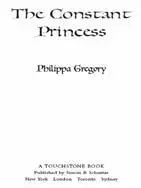
- Название:The Constant Princess
- Автор:
- Жанр:
- Год:неизвестен
- ISBN:нет данных
- Рейтинг книги:4 / 5. Голосов: 1
-
Избранное:Добавить в избранное
- Отзывы:
-
Ваша оценка:
The Constant Princess: краткое содержание, описание и аннотация
Предлагаем к чтению аннотацию, описание, краткое содержание или предисловие (зависит от того, что написал сам автор книги «The Constant Princess»). Если вы не нашли необходимую информацию о книге — напишите в комментариях, мы постараемся отыскать её.
Thus, bestselling author Philippa Gregory introduces one of her most unforgettable heroines: Katherine of Aragon. Known to history as the Queen who was pushed off her throne by Anne Boleyn, here is a Katherine the world has forgotten: the enchanting princess that all England loved. First married to Henry VIII's older brother, Arthur, Katherine's passion turns their arranged marriage into a love match; but when Arthur dies, the merciless English court and her ambitious parents -- the crusading King and Queen of Spain -- have to find a new role for the widow. Ultimately, it is Katherine herself who takes control of her own life by telling the most audacious lie in English history, leading her to the very pinnacle of power in England.
Set in the rich beauty of Moorish Spain and the glamour of the Tudor court, The Constant Princess presents a woman whose constancy helps her endure betrayal, poverty, and despair, until the inevitable moment when she steps into the role she has prepared for all her life: Henry VIII's Queen, Regent, and commander of the English army in their greatest victory against Scotland.
From Publishers Weekly
As youngest daughter to the Spanish monarchs and crusaders King Ferdinand and Queen Isabella, Catalina, princess of Wales and of Spain, was promised to the English Prince Arthur when she was three. She leaves Spain at 15 to fulfill her destiny as queen of England, where she finds true love with Arthur (after some initial sourness) as they plot the future of their kingdom together. Arthur dies young, however, leaving Catalina a widow and ineligible for the throne. Before his death, he extracts a promise from his wife to marry his younger brother Henry in order to become queen anyway, have children and rule as they had planned, a situation that can only be if Catalina denies that Arthur was ever her lover. Gregory's latest (after Earthly Joys) compellingly dramatizes how Catalina uses her faith, her cunning and her utter belief in destiny to reclaim her rightful title. By alternating tight third-person narration with Catalina's unguarded thoughts and gripping dialogue, the author presents a thorough, sympathetic portrait of her heroine and her transformation into Queen Katherine. Gregory's skill for creating suspense pulls the reader along despite the historical novel's foregone conclusion.
The Constant Princess — читать онлайн ознакомительный отрывок
Ниже представлен текст книги, разбитый по страницам. Система сохранения места последней прочитанной страницы, позволяет с удобством читать онлайн бесплатно книгу «The Constant Princess», без необходимости каждый раз заново искать на чём Вы остановились. Поставьте закладку, и сможете в любой момент перейти на страницу, на которой закончили чтение.
Интервал:
Закладка:
“I wouldn’t know,” Henry said easily. “I wouldn’t have asked him. He wouldn’t have told me anyway.”
“Not even when he knew you were to be the next king?”
He shook his head. “He thought I wouldn’t be king for years yet,” he said. “He had not finished making me study my books. He had not yet let me out into the world.”
She shook her head. “When we have a son we will make sure he is prepared for his kingdom from an early age.”
At once his hand stole around her waist. “Do you think it will be soon?” he asked.
“Please God,” she said sweetly, withholding her secret hope. “Do you know, I have been thinking of a name for him?”
“Have you, sweetheart? Shall you call him Ferdinand for your father?”
“If you would like it, I thought we might call him Arthur,” she said carefully.
“For my brother?” His face darkened at once.
“No, Arthur for England,” she said swiftly. “When I look at you sometimes I think you are like King Arthur of the Round Table, and this is Camelot. We are making a court here as beautiful and as magical as Camelot ever was.”
“Do you think that, little dreamer?”
“I think you could be the greatest king England has ever known since Arthur of Camelot,” she said.
“Arthur it is, then,” he said, soothed as always by praise. “Arthur Henry.”
“Yes.”
They called to him from the butts that it was his turn and that he had a high score to beat, and he went with a kiss blown to her. Katherine made sure that she was watching as he drew his bow, and when he glanced over, as he always did, he could see that her attention was wholly on him. The muscles in his lean back rippled as he drew back the arrow, he was like a statue, beautifully poised, and then slowly, like a dancer, he released the string and the arrow flew—faster than sight—true to the very center of the target.
“A hit!”
“A winning hit!”
“Victory to the king!”
The prize was a golden arrow and Henry came bright-faced to his wife to kneel at her feet so that she could bend down and kiss him on both cheeks, and then, lovingly, on the mouth.
“I won for you,” he said. “You alone. You bring me luck. I never miss when you are watching me. You shall keep the winning arrow.”
“It is a Cupid’s arrow,” she responded. “I shall keep it to remind me of the one in my heart.”
“She loves me.” He rose to his feet and turned to his court, and there was a ripple of applause and laughter. He shouted triumphantly, “She loves me!”
“Who could help but love you?” Lady Elizabeth Boleyn, one of the ladies-in-waiting, called out boldly. Henry glanced at her and then looked down from his great height to his petite wife.
“Who could help but love her?” he asked, smiling at her.
That night I kneel before my prie-dieu and clasp my hands over my belly. It is the second month that I have not bled, I am almost certain that I am with child.
“Arthur,” I whisper, my eyes closed. I can almost see him, as he was: naked in candlelight in our bedroom at Ludlow. “Arthur, my love. He says that I can call this boy Arthur Henry. So I will have fulfilled our hope—that I should give you a son called Arthur. And though I know you didn’t like your brother, I will show him the respect that I owe to him; he is a good boy and I pray that he will grow to a good man. I shall call my boy Arthur Henry for you both.”
I feel no guilt for my growing affection for this boy Henry, though he can never take the place of his brother, Arthur. It is right that I should love my husband and Henry is an endearing boy. The knowledge that I have of him, from watching him for long years as closely as if he were an enemy, has brought me to a deep awareness of the sort of boy he is. He is selfish as a child, but he has a child’s generosity and easy tenderness. He is vain, he is ambitious, to tell truth, he is as conceited as a player in a troupe, but he is quick to laughter and quick to tears, quick to compassion, quick to alleviate hardship. He will make a good man if he has good guides, if he can be taught to rein in his desires and learn service to his country and to God. He has been spoiled by those who should have guided him; but it is not too late to make a good man from him. It is my task and my duty to keep him from selfishness. Like any young man, he is a tyrant in the making. A good mother would have disciplined him, perhaps a loving wife can curb him. If I can love him, and hold him to love me, I can make a great king of him. And England needs a great king.
Perhaps this is one of the services I can do for England: guide him, gently and steadily, away from his spoiled childhood and towards a manhood which is responsible. His father and his grandmother kept him as a boy; perhaps it is my task to help him grow to be a man.
“Arthur, my dearest Arthur,” I say quietly as I rise and go towards the bed, and this time I am speaking to them both: to the husband that I loved first, and to the child that is slowly, quietly growing inside me.
AUTUMN 1509
At nighttime in October, after Katherine had refused to dance after midnight for the previous three weeks and had insisted, instead, on watching Henry dance with her ladies, she told him that she was with child and made him swear to keep it secret.
“I want to tell everyone!” he exclaimed. He had come to her room in his nightgown and they were seated either side of the warm fire, on their way to bed.
“You can write to my father next month,” she specified. “But I don’t want everyone to know yet. They will all guess soon enough.”
“You must rest,” he said instantly. “And should you have special things to eat? Do you have a desire for anything special to eat? I can send someone for it at once, they can wake the cooks. Tell me, love, what would you like?”
“Nothing! Nothing!” she said, laughing. “See, we have biscuits and wine. What more do I ever eat this late at night?”
“Oh usually, yes! But now everything is different.”
“I shall ask the physicians in the morning,” she said. “But I need nothing now. Truly, my love.”
“I want to get you something,” he said. “I want to look after you.”
“You do look after me,” she reassured him. “And I am perfectly well fed, and I feel very well.”
“Not sick? That is a sign of a boy, I am sure.”
“I have been feeling a little sick in the mornings,” she said, and watched his beam of happiness. “I feel certain that it is a boy. I hope this is our Arthur Henry.”
“Oh! You were thinking of him when you spoke to me at the archery contest.”
“Yes, I was. But I was not sure then, and I did not want to tell you too early.”
“And when do you think he will be born?”
“In early summer, I think.”
“It cannot take so long!” he exclaimed.
“My love, I think it does take that long.”
“I shall write to your father in the morning,” he said. “I shall tell him to expect great news in the summer. Perhaps we shall be home after a great campaign against the French then. Perhaps I shall bring you a victory and you shall give me a son.”
Henry has sent his own physician, the most skilled man in London, to see me. The man stands at one side of the room while I sit on a chair at the other. He cannot examine me, of course—the body of the queen cannot be touched by anyone but the king. He cannot ask me if I am regular in my courses or in my bowels; they too are sacred. He is so paralyzed with embarrassment at being called to see me that he keeps his eyes on the floor and asks me short questions in a quiet, clipped voice. He speaks English, and I have to strain to hear and understand him.
Читать дальшеИнтервал:
Закладка:
Похожие книги на «The Constant Princess»
Представляем Вашему вниманию похожие книги на «The Constant Princess» списком для выбора. Мы отобрали схожую по названию и смыслу литературу в надежде предоставить читателям больше вариантов отыскать новые, интересные, ещё непрочитанные произведения.








Обсуждение, отзывы о книге «The Constant Princess» и просто собственные мнения читателей. Оставьте ваши комментарии, напишите, что Вы думаете о произведении, его смысле или главных героях. Укажите что конкретно понравилось, а что нет, и почему Вы так считаете.