Philippa Gregory - The Constant Princess
Здесь есть возможность читать онлайн «Philippa Gregory - The Constant Princess» — ознакомительный отрывок электронной книги совершенно бесплатно, а после прочтения отрывка купить полную версию. В некоторых случаях можно слушать аудио, скачать через торрент в формате fb2 и присутствует краткое содержание. Жанр: Старинная литература, на английском языке. Описание произведения, (предисловие) а так же отзывы посетителей доступны на портале библиотеки ЛибКат.
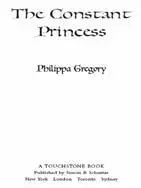
- Название:The Constant Princess
- Автор:
- Жанр:
- Год:неизвестен
- ISBN:нет данных
- Рейтинг книги:4 / 5. Голосов: 1
-
Избранное:Добавить в избранное
- Отзывы:
-
Ваша оценка:
The Constant Princess: краткое содержание, описание и аннотация
Предлагаем к чтению аннотацию, описание, краткое содержание или предисловие (зависит от того, что написал сам автор книги «The Constant Princess»). Если вы не нашли необходимую информацию о книге — напишите в комментариях, мы постараемся отыскать её.
Thus, bestselling author Philippa Gregory introduces one of her most unforgettable heroines: Katherine of Aragon. Known to history as the Queen who was pushed off her throne by Anne Boleyn, here is a Katherine the world has forgotten: the enchanting princess that all England loved. First married to Henry VIII's older brother, Arthur, Katherine's passion turns their arranged marriage into a love match; but when Arthur dies, the merciless English court and her ambitious parents -- the crusading King and Queen of Spain -- have to find a new role for the widow. Ultimately, it is Katherine herself who takes control of her own life by telling the most audacious lie in English history, leading her to the very pinnacle of power in England.
Set in the rich beauty of Moorish Spain and the glamour of the Tudor court, The Constant Princess presents a woman whose constancy helps her endure betrayal, poverty, and despair, until the inevitable moment when she steps into the role she has prepared for all her life: Henry VIII's Queen, Regent, and commander of the English army in their greatest victory against Scotland.
From Publishers Weekly
As youngest daughter to the Spanish monarchs and crusaders King Ferdinand and Queen Isabella, Catalina, princess of Wales and of Spain, was promised to the English Prince Arthur when she was three. She leaves Spain at 15 to fulfill her destiny as queen of England, where she finds true love with Arthur (after some initial sourness) as they plot the future of their kingdom together. Arthur dies young, however, leaving Catalina a widow and ineligible for the throne. Before his death, he extracts a promise from his wife to marry his younger brother Henry in order to become queen anyway, have children and rule as they had planned, a situation that can only be if Catalina denies that Arthur was ever her lover. Gregory's latest (after Earthly Joys) compellingly dramatizes how Catalina uses her faith, her cunning and her utter belief in destiny to reclaim her rightful title. By alternating tight third-person narration with Catalina's unguarded thoughts and gripping dialogue, the author presents a thorough, sympathetic portrait of her heroine and her transformation into Queen Katherine. Gregory's skill for creating suspense pulls the reader along despite the historical novel's foregone conclusion.
The Constant Princess — читать онлайн ознакомительный отрывок
Ниже представлен текст книги, разбитый по страницам. Система сохранения места последней прочитанной страницы, позволяет с удобством читать онлайн бесплатно книгу «The Constant Princess», без необходимости каждый раз заново искать на чём Вы остановились. Поставьте закладку, и сможете в любой момент перейти на страницу, на которой закончили чтение.
Интервал:
Закладка:
“Are you happy?” the boy asks me, shouting to make himself heard above the pealing of the bells and the cheering of the crowds. “Are you happy, Catalina? Are you glad that I married you? Are you glad to be Queen of England, that I have given you this crown?”
“I am very happy,” I promise him. “And you must call me Katherine now.”
“Katherine?” he asks. “Not Catalina anymore?”
“I am Queen of England,” I say, thinking of Arthur saying these very words. “I am Queen Katherine of England.”
“Oh, I say!” he exclaims, delighted at the idea of changing his name, as I have changed mine. “That’s good. We shall be King Henry, and Queen Katherine. They shall call me Henry too.”
This is the king but he is not Arthur, he is Harry who wants to be called Henry, like a man. I am the queen, and I shall not be Catalina. I shall be Katherine—English through and through, and not the girl who was once so very much in love with the Prince of Wales.
Katherine,
Queen of England
Summer 1509
THE COURT, DRUNK WITH JOY, with delight in its own youth, with freedom, took the summer for pleasure. The progress from one beautiful, welcoming house to another lasted for two long months when Henry and Katherine hunted, dined in the greenwood, danced until midnight, and spent money like water. The great lumbering carts of the royal household went along the dusty lanes of England so that the next house might shine with gold and be bright with tapestries, so that the royal bed—which they shared every night—would be rich with the best linen and the glossiest furs.
No business of any worth was transacted by Henry at all. He wrote once to his father-in-law to tell him how happy he was, but the rest of the work for the king followed him in boxes from one beautiful parkland castle or mansion to another, and these were opened and read only by Katherine, Queen of England, who ordered the clerks to write her orders to the Privy Council and sent them out herself over the king’s signature.
Not until mid-September did the court return to Richmond and Henry at once declared that the party should go on. Why should they ever cease in pleasure? The weather was fair, they could have hunting and boating, archery and tennis contests, parties and masquings. The nobles and gentry flocked to Richmond to join the unending party: the families whose power and name were older than the Tudors’ and the new ones, whose wealth and names were bobbing upwards on the rise of the Tudor tide, floated by Tudor wealth. The victors of Bosworth who had staked their lives on the Tudor courage in great danger found themselves alongside newcomers who made their fortunes on nothing more than Tudor amusements.
Henry welcomed everyone with uncritical delight; anyone who was witty and well read, charming or a good sportsman could have a place at court. Katherine smiled on them all, never rested, never refused a challenge or an invitation, and set herself the task of keeping her teenage husband entertained all the day long. Slowly but surely, she drew the management of the entertainments, then of the household, then of the king’s business, then of the kingdom, into her hands.
Queen Katherine had the accounts for the royal court spread out before her, a clerk to one side, a comptroller of the household with his great book to another, the men who served as exchequers of the household standing behind her. She was checking the books of the great departments of the court: the kitchen, the cellar, the wardrobe, the servery, the payments for services, the stables, the musicians. Each department of the palace had to compile its monthly expenditure and send it to the Queen’s Exchequer—just as they had sent it to My Lady the King’s Mother, for her to approve their business, and if they overspent by very much, they could expect a visit from one of the exchequers for the Privy Purse to ask them pointedly if they could explain why costs had so suddenly risen?
Every court in Europe was engaged in the struggle to control the cost of running the sprawling feudal households with the newly fashionable wealth and display. All the kings wanted a great entourage, like a mediaeval lord; but now they wanted culture, wealth, architecture and rich display as well. England was managed better than any court in Europe. Queen Katherine had learned her housekeeping skills the hard way: when she had tried to run Durham House as a royal palace should be run, but with no income. She knew to a penny what was the price of a gallon loaf, she knew the difference between salted fish and fresh, she knew the price of cheap wine imported from Spain and expensive wine brought in from France. Even more rigorous than that of My Lady the King’s Mother, Queen Katherine’s scrutiny of the household books made the cooks argue with suppliers at the kitchen doors and get the very best price for the extravagantly consuming court.
Once a week Queen Katherine surveyed the expenditure of the different departments of the court, and every day at dawn, while King Henry was out hunting, she read the letters that came for him, and drafted his replies.
It was steady, unrelenting work, to keep the court running as a well-ordered center for the country and to keep the king’s business under tight control. Queen Katherine, determined to understand her new country, did not begrudge the hours she spent reading letters, taking advice from Privy Councilors, inviting objections, taking opinions. She had seen her own mother dominate a country by persuasion. Isabella of Spain had brokered her country out of a collection of rival kingships and lordships by offering them a trouble-free, cheap, central administration, a nationwide system of justice, an end to corruption and banditry, and an infallible defense system. Her daughter saw at once that these advantages could be transferred to England.
But she was also following in the steps of her Tudor father-in-law, and the more she worked on his papers and read his letters, the more she admired the steadiness of his judgment. Oddly, she wished now that she had known him as a ruler, as she would have benefited from his advice. From his records she could see how he balanced the desire of the English lords to be independent, on their own lands, with his own need to bind them to the crown. Cunningly, he allowed the northern lords greater freedom and greater wealth and status than anyone, since they were his bulwark against the Scots. Katherine had maps of the northern lands pinned around the council chamber and saw how the border with Scotland was nothing more than a handful of disputed territories in difficult country. Such a border could never be made safe from a threatening neighbor. She thought that the Scots were England’s Moors: the land could not be shared with them. They would have to be utterly defeated.
She shared her father-in-law’s fears of overmighty English lords at court, she learned his jealousy of their wealth and power; and when Henry thought to give one man a handsome pension in an exuberant moment, it was Katherine who pointed out that he was a wealthy man already, there was no need to make his position any stronger. Henry wanted to be a king famed for his generosity, beloved for the sudden shower of his gifts. Katherine knew that power followed wealth and that kings new-come to their throne must hoard both wealth and power.
“Did your father never warn you about the Howards?” she asked as they stood together watching an archery contest. Henry, stripped down to his shirtsleeves, his bow in his hand, had the second-highest score and was waiting for his turn to go again.
“No,” he replied. “Should he have done so?”
“Oh, no,” she said swiftly. “I did not mean to suggest that they would play you false in any way, they are love and loyalty personified. Thomas Howard has been a great friend to your family, keeping the north safe for you, and Edward is my knight, my dearest knight of all. It is just that their wealth has increased so much, and their family alliances are so strong. I just wondered what your father thought of them.”
Читать дальшеИнтервал:
Закладка:
Похожие книги на «The Constant Princess»
Представляем Вашему вниманию похожие книги на «The Constant Princess» списком для выбора. Мы отобрали схожую по названию и смыслу литературу в надежде предоставить читателям больше вариантов отыскать новые, интересные, ещё непрочитанные произведения.



Обсуждение, отзывы о книге «The Constant Princess» и просто собственные мнения читателей. Оставьте ваши комментарии, напишите, что Вы думаете о произведении, его смысле или главных героях. Укажите что конкретно понравилось, а что нет, и почему Вы так считаете.