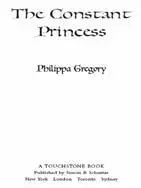
Philippa Gregory - The Constant Princess
Здесь есть возможность читать онлайн «Philippa Gregory - The Constant Princess» — ознакомительный отрывок электронной книги совершенно бесплатно, а после прочтения отрывка купить полную версию. В некоторых случаях можно слушать аудио, скачать через торрент в формате fb2 и присутствует краткое содержание. Жанр: Старинная литература, на английском языке. Описание произведения, (предисловие) а так же отзывы посетителей доступны на портале библиотеки ЛибКат.
- Название:The Constant Princess
- Автор:
- Жанр:
- Год:неизвестен
- ISBN:нет данных
- Рейтинг книги:4 / 5. Голосов: 1
-
Избранное:Добавить в избранное
- Отзывы:
-
Ваша оценка:
The Constant Princess: краткое содержание, описание и аннотация
Предлагаем к чтению аннотацию, описание, краткое содержание или предисловие (зависит от того, что написал сам автор книги «The Constant Princess»). Если вы не нашли необходимую информацию о книге — напишите в комментариях, мы постараемся отыскать её.
Thus, bestselling author Philippa Gregory introduces one of her most unforgettable heroines: Katherine of Aragon. Known to history as the Queen who was pushed off her throne by Anne Boleyn, here is a Katherine the world has forgotten: the enchanting princess that all England loved. First married to Henry VIII's older brother, Arthur, Katherine's passion turns their arranged marriage into a love match; but when Arthur dies, the merciless English court and her ambitious parents -- the crusading King and Queen of Spain -- have to find a new role for the widow. Ultimately, it is Katherine herself who takes control of her own life by telling the most audacious lie in English history, leading her to the very pinnacle of power in England.
Set in the rich beauty of Moorish Spain and the glamour of the Tudor court, The Constant Princess presents a woman whose constancy helps her endure betrayal, poverty, and despair, until the inevitable moment when she steps into the role she has prepared for all her life: Henry VIII's Queen, Regent, and commander of the English army in their greatest victory against Scotland.
From Publishers Weekly
As youngest daughter to the Spanish monarchs and crusaders King Ferdinand and Queen Isabella, Catalina, princess of Wales and of Spain, was promised to the English Prince Arthur when she was three. She leaves Spain at 15 to fulfill her destiny as queen of England, where she finds true love with Arthur (after some initial sourness) as they plot the future of their kingdom together. Arthur dies young, however, leaving Catalina a widow and ineligible for the throne. Before his death, he extracts a promise from his wife to marry his younger brother Henry in order to become queen anyway, have children and rule as they had planned, a situation that can only be if Catalina denies that Arthur was ever her lover. Gregory's latest (after Earthly Joys) compellingly dramatizes how Catalina uses her faith, her cunning and her utter belief in destiny to reclaim her rightful title. By alternating tight third-person narration with Catalina's unguarded thoughts and gripping dialogue, the author presents a thorough, sympathetic portrait of her heroine and her transformation into Queen Katherine. Gregory's skill for creating suspense pulls the reader along despite the historical novel's foregone conclusion.
The Constant Princess — читать онлайн ознакомительный отрывок
Ниже представлен текст книги, разбитый по страницам. Система сохранения места последней прочитанной страницы, позволяет с удобством читать онлайн бесплатно книгу «The Constant Princess», без необходимости каждый раз заново искать на чём Вы остановились. Поставьте закладку, и сможете в любой момент перейти на страницу, на которой закончили чтение.
Интервал:
Закладка:
“Does the Spanish ambassador not advise you?”
Catalina made a little face. “He is the king’s own man,” she said. “No help to me. I don’t like him. He is a Jew, but converted. An adaptable man. A Spaniard, but he has lived here for years. He is become a man for the Tudors, not for Aragon. I shall tell my father that he is poorly served by Dr. de Puebla, but in the meantime, I have no good advice, and in my household Doña Elvira and my treasurer never stop quarreling. She says that my goods and my treasure must be loaned to the goldsmiths to raise money; he says he will not let them out of his sight until they are paid to the king.”
“And have you not asked the prince what you should do?”
Catalina hesitated. “It is a matter between his father and my father,” she said cautiously. “I didn’t want to let it disturb us. He has paid for all my traveling expenses here. He is going to have to pay for my ladies’ wages at midsummer, and soon I will need new gowns. I don’t want to ask him for money. I don’t want him to think me greedy.”
“You love him, don’t you?” Margaret asked, smiling, and watched the younger woman’s face light up.
“Oh yes,” the girl breathed. “I do love him so.”
The older woman smiled. “You are blessed,” she said gently. “To be a princess and to find love with the husband you are ordered to marry. You are blessed, Catalina.”
“I know. I do think it is a sign of God’s especial favor to me.”
The older woman paused at the grandness of the claim, but did not correct her. The confidence of youth would wear away soon enough without any need for warnings. “And do you have any signs?”
Catalina looked puzzled.
“Of a child coming? You do know what to look for?”
The young woman blushed. “I do know. My mother told me. There are no signs yet.”
“It’s early days,” Lady Margaret said comfortingly. “But if you had a child on the way I think there would be no difficulty with a dowry. I think nothing would be too good for you if you were carrying the next Tudor prince.”
“I ought to be paid my allowance whether I have a child or not,” Catalina observed. “I am Princess of Wales, I should have an allowance to keep my state.”
“Yes,” said Margaret drily. “But who is going to tell the king that?”
“Tell me a story.”
They were bathed in the dappled gold of candlelight and firelight. It was midnight and the castle was silent but for their low voices, all the lights were out but for the blaze of Catalina’s chambers where the two young lovers were resisting sleep.
“What shall I tell you about?”
“Tell me a story about the Moors.”
She thought for a moment, throwing a shawl around her bare shoulders against the cold. Arthur was sprawled across the bed but when she moved he gathered her to him so her head rested on his naked chest. He ran his hand through her rich red hair and gathered it into his fist.
“I will tell you a story about one of the sultanas,” she said. “It is not a story. It is true. She was in the harem—you know that the women live apart from the men in their own rooms?”
He nodded, watching the candlelight flicker on her neck, on the hollow at her collarbone.
“She looked out of the window and the tidal river beneath her window was at low ebb. The poor children of the town were playing in the water. They were on the slipway for the boats and they had spread mud all around and they were slipping and sliding, skating in the mud. She laughed while she watched them and she said to her ladies how she wished that she could play like that.”
“But she couldn’t go out?”
“No, she could never go out. Her ladies told the eunuchs who guarded the harem and they told the grand vizier and he told the sultan, and when she left the window and went to her presence chamber, guess what?”
He shook his head, smiling. “What?”
“Her presence chamber was a great marble hall. The floor was made of rose-veined marble. The sultan had ordered them to bring great flasks of perfumed oils and pour them on the floor. All the perfumiers in the town had been ordered to bring oil of roses to the palace. They had brought rose petals and sweet-smelling herbs and they had made a thick paste of oil of roses and rose petals and herbs and spread it, one foot thick, all across the floor of her presence chamber. The sultana and her ladies stripped to their chemises and slid and played in the mud, threw rose water and petals and all the afternoon played like the mud larks.”
He was entranced. “How glorious.”
She smiled up at him. “Now it is your turn. You tell me a story.”
“I have no stories like that. It is all fighting and winning.”
“Those are the stories you like best when I tell them,” she pointed out.
“I do. And now your father is going to war again.”
“He is?”
“Did you not know?”
Catalina shook her head. “The Spanish ambassador sometimes sends me a note with the news, but he has told me nothing. Is it a crusade?”
“You are a bloodthirsty soldier of Christ. I should think the infidels shake in their sandals. No, it is not a crusade. It is a far less heroic cause. Your father, rather surprisingly to us, has made an alliance with King Louis of France. Apparently they plan to invade Italy together and share the spoils.”
“King Louis?” she asked in surprise. “Never! I had thought they would be enemies until death.”
“Well, it seems that the French king does not care who he allies with. First the Turks and now your father.”
“Well, better that King Louis makes alliance with my father than with the Turks,” she said stoutly. “Anything is better than they are invited in.”
“But why would your father join with our enemy?”
“He has always wanted Naples,” she confided to him. “Naples and Navarre. One way or another he will have them. King Louis may think he has an ally but there will be a high price to pay. I know him. He plays a long game but he usually gets his own way. Who sent you the news?”
“My father. I think he is vexed not to be in their counsel. He fears the French worse only than the Scots. It is a disappointment for us that your father would ally with them on anything.”
“On the contrary, your father should be pleased that my father is keeping the French busy in the south. My father is doing him a service.”
He laughed at her. “You are a great help.”
“Will your father not join with them?”
Arthur shook his head. “Perhaps, but his one great desire is to keep England at peace. War is a terrible thing for a country. You are a soldier’s daughter and you should know. My father says it is a terrible thing to see a country at war.”
“Your father only fought one big battle,” she said. “Sometimes you have to fight. Sometimes you have to beat your enemy.”
“I wouldn’t fight to gain land,” he said. “But I would fight to defend our borders. And I think we will have to fight against the Scots unless my sister can change their very nature.”
“And is your father prepared for war?”
“He has the Howard family to keep the north for him,” he said. “And he has the trust of every northern landlord. He has reinforced the castles and he keeps the Great North Road open so that he can get his soldiers up there if needs be.”
Catalina looked thoughtful. “If he has to fight he would do better to invade them,” she said. “Then he can choose the time and the place to fight and not be forced into defense.”
“Is that the better way?”
She nodded. “My father would say so. It is everything to have your army moving forwards and confident. You have the wealth of the country ahead of you, for your supplies; you have the movement forwards: soldiers like to feel that they are making progress. There is nothing worse than being forced to turn and fight.”
Читать дальшеИнтервал:
Закладка:
Похожие книги на «The Constant Princess»
Представляем Вашему вниманию похожие книги на «The Constant Princess» списком для выбора. Мы отобрали схожую по названию и смыслу литературу в надежде предоставить читателям больше вариантов отыскать новые, интересные, ещё непрочитанные произведения.







Обсуждение, отзывы о книге «The Constant Princess» и просто собственные мнения читателей. Оставьте ваши комментарии, напишите, что Вы думаете о произведении, его смысле или главных героях. Укажите что конкретно понравилось, а что нет, и почему Вы так считаете.