Philippa Gregory - The Constant Princess
Здесь есть возможность читать онлайн «Philippa Gregory - The Constant Princess» — ознакомительный отрывок электронной книги совершенно бесплатно, а после прочтения отрывка купить полную версию. В некоторых случаях можно слушать аудио, скачать через торрент в формате fb2 и присутствует краткое содержание. Жанр: Старинная литература, на английском языке. Описание произведения, (предисловие) а так же отзывы посетителей доступны на портале библиотеки ЛибКат.
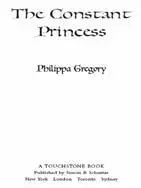
- Название:The Constant Princess
- Автор:
- Жанр:
- Год:неизвестен
- ISBN:нет данных
- Рейтинг книги:4 / 5. Голосов: 1
-
Избранное:Добавить в избранное
- Отзывы:
-
Ваша оценка:
The Constant Princess: краткое содержание, описание и аннотация
Предлагаем к чтению аннотацию, описание, краткое содержание или предисловие (зависит от того, что написал сам автор книги «The Constant Princess»). Если вы не нашли необходимую информацию о книге — напишите в комментариях, мы постараемся отыскать её.
Thus, bestselling author Philippa Gregory introduces one of her most unforgettable heroines: Katherine of Aragon. Known to history as the Queen who was pushed off her throne by Anne Boleyn, here is a Katherine the world has forgotten: the enchanting princess that all England loved. First married to Henry VIII's older brother, Arthur, Katherine's passion turns their arranged marriage into a love match; but when Arthur dies, the merciless English court and her ambitious parents -- the crusading King and Queen of Spain -- have to find a new role for the widow. Ultimately, it is Katherine herself who takes control of her own life by telling the most audacious lie in English history, leading her to the very pinnacle of power in England.
Set in the rich beauty of Moorish Spain and the glamour of the Tudor court, The Constant Princess presents a woman whose constancy helps her endure betrayal, poverty, and despair, until the inevitable moment when she steps into the role she has prepared for all her life: Henry VIII's Queen, Regent, and commander of the English army in their greatest victory against Scotland.
From Publishers Weekly
As youngest daughter to the Spanish monarchs and crusaders King Ferdinand and Queen Isabella, Catalina, princess of Wales and of Spain, was promised to the English Prince Arthur when she was three. She leaves Spain at 15 to fulfill her destiny as queen of England, where she finds true love with Arthur (after some initial sourness) as they plot the future of their kingdom together. Arthur dies young, however, leaving Catalina a widow and ineligible for the throne. Before his death, he extracts a promise from his wife to marry his younger brother Henry in order to become queen anyway, have children and rule as they had planned, a situation that can only be if Catalina denies that Arthur was ever her lover. Gregory's latest (after Earthly Joys) compellingly dramatizes how Catalina uses her faith, her cunning and her utter belief in destiny to reclaim her rightful title. By alternating tight third-person narration with Catalina's unguarded thoughts and gripping dialogue, the author presents a thorough, sympathetic portrait of her heroine and her transformation into Queen Katherine. Gregory's skill for creating suspense pulls the reader along despite the historical novel's foregone conclusion.
The Constant Princess — читать онлайн ознакомительный отрывок
Ниже представлен текст книги, разбитый по страницам. Система сохранения места последней прочитанной страницы, позволяет с удобством читать онлайн бесплатно книгу «The Constant Princess», без необходимости каждый раз заново искать на чём Вы остановились. Поставьте закладку, и сможете в любой момент перейти на страницу, на которой закончили чтение.
Интервал:
Закладка:
Arthur and I will inherit great power, his father has seen to that. I think we will inherit a strong throne and a great treasure. We will inherit with the goodwill of the people; the king is not loved but he is respected, and nobody wants a return to endless battles. These English have a horror of civil war. If we come to the throne with this power, this wealth, and this goodwill, there is no doubt in my mind that we can make a great country here.
And it shall be a great country in alliance with Spain. My parents’ heir is Juana’s son, Charles. He will be Holy Roman Emperor and King of Spain. He will be my nephew and we will have the friendship of kinsmen. What a powerful alliance this will be: the great Holy Roman Empire and England. Nobody will be able to stand against us, we might divide France, we might divide most of Europe. Then we will stand, the empire and England against the Moors, then we will win and the whole of the East, Persia, the Ottomans, the Indies, even China will be laid open to us.
The routine of the castle changed. In the days which were starting to become warmer and brighter the young Prince and Princess of Wales set up their office in her rooms, dragged a big table over to the window for the afternoon light, and pinned up maps of the principality on the linenfold paneling.
“You look as if you are planning a campaign,” Lady Margaret Pole said pleasantly.
“The princess should be resting,” Doña Elvira remarked resentfully to no one in particular.
“Are you unwell?” Lady Margaret asked quickly.
Catalina smiled and shook her head. She was becoming accustomed to the obsessive interest in her health. Until she could say that she was carrying England’s heir, she would have no peace from people asking her how she did.
“I don’t need to rest,” she said. “And tomorrow, if you will take me, I should like to go out and see the fields.”
“The fields?” asked Lady Margaret, rather taken aback. “In March? They won’t plow for another week or so, there is almost nothing to see.”
“I have to learn,” Catalina said. “Where I live, it is so dry in summer that we have to build little ditches in every field, to the foot of every tree, to channel water to the plants to make sure that they can drink and live. When we first rode through this country and I saw the ditches in your fields, I was so ignorant I thought they were bringing water in.” She laughed aloud at the memory. “And then the prince told me they were drains to take the water away. I could not believe it! So we had better ride out and you must tell me everything.”
“A queen does not need to know about fields,” Doña Elvira said in muted disapproval from the corner. “Why should she know what the farmers grow?”
“Of course a queen needs to know,” Catalina replied, irritated. “She should know everything about her country. How else can she rule?”
“I am sure you will be a very fine queen of England,” Lady Margaret said, making the peace.
Catalina glowed. “I shall be the best queen of England that I can be,” she said. “I shall care for the poor and assist the church, and if we are ever at war I shall ride out and fight for England just as my mother did for Spain.”
Planning for the future with Arthur, I forget my homesickness for Spain. Every day we think of some improvement we could make, of some law that should be changed. We read together books of philosophy and politics. We talk about whether people can be trusted with their freedom, of whether a king should be a good tyrant or should step back from power. We talk about my home: of my parents’ belief that you make a country by one church, one language, and one law. Or whether it could be possible to do as the Moors did: to make a country with one law but with many faiths and many languages, and assume that people are wise enough to choose the best.
We argue, we talk. Sometimes we break up in laughter, sometimes we disagree. Arthur is my lover always, my husband, undeniably. And now he is becoming my friend.
Catalina was in the little garden of Ludlow Castle, which was set along the east wall, in earnest conversation with one of the castle gardeners. In neat beds around her were the herbs that the cooks used, and some herbs and flowers with medicinal properties grown by Lady Margaret. Arthur, seeing Catalina as he walked back from confession in the round chapel, glanced up to the great hall to check that no one would prevent him, and slipped off to be with her. As he drew up she was gesturing, trying to describe something. Arthur smiled.
“Princess,” he said formally in greeting.
She swept him a low curtsey, but her eyes were warm with pleasure at the sight of him. “Sire.”
The gardener had dropped to his knees in the mud at the arrival of the prince. “You can get up,” Arthur said pleasantly. “I don’t think you will find many pretty flowers at this time of year, Princess.”
“I was trying to talk to him about growing salad vegetables,” she said. “But he speaks Welsh and English and I have tried Latin and French and we don’t understand each other at all.”
“I think I am with him. I don’t understand either. What is salad?”
She thought for a moment. “Acetaria.”
“Acetaria?” he queried.
“Yes, salad.”
“What is it, exactly?”
“It is vegetables that grow in the ground and you eat them without cooking them,” she explained. “I was asking if he could plant some for me.”
“You eat them raw? Without boiling?”
“Yes, why not?”
“Because you will be dreadfully ill, eating uncooked food in this country.”
“Like fruit, like apples. You eat them raw.”
He was unconvinced. “More often cooked, or preserved or dried. And anyway, that is a fruit and not leaves. But what sorts of vegetables do you want?”
“Lactuca,” she said.
“Lactuca?” he repeated. “I have never heard of it.”
She sighed. “I know. You none of you seem to know anything of vegetables. Lactuca is like…” She searched her mind for the truly terrible vegetable that she had been forced to eat, boiled into a pulp at one dinner at Greenwich. “Samphire,” she said. “The closest thing you have to lactuca is probably samphire. But you eat lactuca without cooking and it is crisp and sweet.”
“Vegetables? Crisp?”
“Yes,” she said patiently.
“And you eat this in Spain?”
She nearly laughed at his appalled expression. “Yes. You would like it.”
“And can we grow it here?”
“I think he is telling me: no. He has never heard of such a thing. He has no seeds. He does not know where we would find such seeds. He does not think it would grow here.” She looked up at the blue sky with the scudding rain clouds. “Perhaps he is right,” she said, a little weariness in her voice. “I am sure that it needs much sunshine.”
Arthur turned to the gardener. “Ever heard of a plant called lactuca ?”
“No, Your Grace,” the man said, his head bowed. “I’m sorry, Your Grace. Perhaps it is a Spanish plant. It sounds very barbaric. Is Her Royal Highness saying they eat grass there? Like sheep?”
Arthur’s lip quivered. “No, it is a herb, I think. I will ask her.”
He turned to Catalina and took her hand and tucked it in the crook of his arm. “You know, sometimes in summer, it is very sunny and very hot here. Truly. You would find the midday sun was too hot. You would have to sit in the shade.”
She looked disbelievingly from the cold mud to the thickening clouds.
“Not now, I know; but in summer. I have leaned against this wall and found it warm to the touch. You know, we grow strawberries and raspberries and peaches. All the fruit that you grow in Spain.”
Читать дальшеИнтервал:
Закладка:
Похожие книги на «The Constant Princess»
Представляем Вашему вниманию похожие книги на «The Constant Princess» списком для выбора. Мы отобрали схожую по названию и смыслу литературу в надежде предоставить читателям больше вариантов отыскать новые, интересные, ещё непрочитанные произведения.


Обсуждение, отзывы о книге «The Constant Princess» и просто собственные мнения читателей. Оставьте ваши комментарии, напишите, что Вы думаете о произведении, его смысле или главных героях. Укажите что конкретно понравилось, а что нет, и почему Вы так считаете.