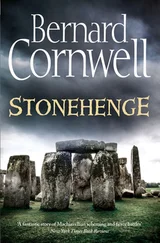
Bernard Cornwell - Stonehenge
Здесь есть возможность читать онлайн «Bernard Cornwell - Stonehenge» — ознакомительный отрывок электронной книги совершенно бесплатно, а после прочтения отрывка купить полную версию. В некоторых случаях можно слушать аудио, скачать через торрент в формате fb2 и присутствует краткое содержание. Жанр: Старинная литература, на русском языке. Описание произведения, (предисловие) а так же отзывы посетителей доступны на портале библиотеки ЛибКат.
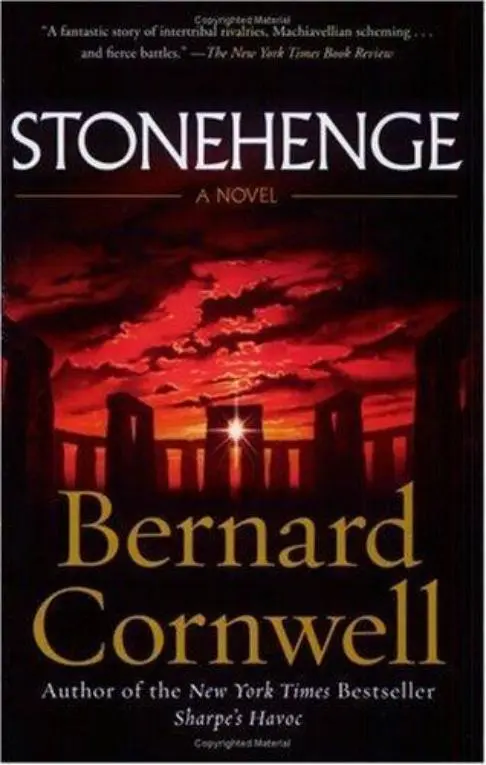
- Название:Stonehenge
- Автор:
- Жанр:
- Год:неизвестен
- ISBN:нет данных
- Рейтинг книги:3 / 5. Голосов: 1
-
Избранное:Добавить в избранное
- Отзывы:
-
Ваша оценка:
Stonehenge: краткое содержание, описание и аннотация
Предлагаем к чтению аннотацию, описание, краткое содержание или предисловие (зависит от того, что написал сам автор книги «Stonehenge»). Если вы не нашли необходимую информацию о книге — напишите в комментариях, мы постараемся отыскать её.
Stonehenge — читать онлайн ознакомительный отрывок
Ниже представлен текст книги, разбитый по страницам. Система сохранения места последней прочитанной страницы, позволяет с удобством читать онлайн бесплатно книгу «Stonehenge», без необходимости каждый раз заново искать на чём Вы остановились. Поставьте закладку, и сможете в любой момент перейти на страницу, на которой закончили чтение.
Интервал:
Закладка:
The trader shed no tears for Saban. The bronze manacles rubbed weals into Saban's skin, and the weals erupted with blood and pus. Haragg treated them with herbs then tucked leaves under the manacles to stop them chafing, though the leaves always fell away. After a few days he grudgingly allowed Saban a mangy wolfskin to tie around his waist, but became annoyed when Saban scratched at the lice that crawled from the pelt. 'Stop itching,' he would growl, lashing out with his stick. 'I can't bear itching! You're not a dog.'
They travelled eastwards and then northwards, usually in the protective company of other traders but sometimes alone for, though the woods were full of outcasts and hunters, Haragg reckoned there was small risk of ambush. 'If one trader is attacked,' he told Saban, 'then all traders will be attacked, so the chiefs protect us. But there are still dangerous places and there I always travel in company.' Many traders, Haragg explained, went by sea, paddling their wooden boats around the coast and exchanging goods only with the tribes that lived on the shore, but those seafarers missed the far larger inland settlements where Haragg made his living.
When they reached a settlement it was Saban's task to unpack Haragg's goods from the horses and lay them on otter skins in front of the chief's hut. Cagan would lift the heavy bags from the horses, then he would sit and watch, while the folk stared at him for he truly was a giant. The women would giggle, and sometimes the men, realising that Cagan had the mind of a small child, would try to provoke him, but then Haragg would shout at them and the men would back off, terrified of his height and fierceness.
There were some goods that were never unpacked: mainly scraps of gold and a handful of elegant bronze brooches that were saved for the chieftains Haragg reckoned would pay best. The haggling would last all day, sometimes two, and when it ended Saban would place the goods for Sarmennyn into one great leather bag, and the remaining trade goods into another, and Cagan would hang them on the horses' backs. One smaller bag contained nothing but fine large sea-shells which were wrapped in a strange weed that Haragg said grew in the ocean, but as Saban had never seen the sea it meant little to him. The shells were exchanged for food.
Haragg was not unkind. It took Saban a long time to learn this, for he feared the trader's expressionless face and quick stick, but he discovered that Haragg did not smile at anyone except his own son, but nor did he frown; instead he faced each man, woman and circumstance with the same grim determination, and if he spoke little, he listened much. He would speak to Saban, if only to while away the long journeys, but he spoke tonelessly, as though the information he provided was of small interest.
They were far to the north when the first hints of winter came with cold winds and spitting rains. The folk here spoke a strange language which even Haragg found difficult to understand. By now he was exchanging his bronze bars and black stone axes for small bags of herbs which, he said, flavoured the liquor that the folk of Sarmennyn brewed, but he grudgingly exchanged one small bronze spearhead for a fleece tunic and a pair of properly sewn ox-hide boots that he gave to Saban.
The boots would not fit over the manacles so Haragg sat him down and took a stone axe-head from one of his bags, then levered and beat the manacles far enough apart to force them off Saban's ankles. 'If you run away now,' he said tonelessly, 'you will be killed, for this is dangerous country.' He stowed the manacles among his cargo and at the next settlement sold them for twenty bags of the precious herbs. That was one of the settlements where, when the horn sounded the trader's approach, all the women were hidden away in their huts so that the strangers would not see any of their faces. 'They behave oddly up here,' Haragg said.
By now Haragg and Saban conversed only in the Outfolk tongue. Ratharryn was a memory — a sharp one, to be sure, but fading. Even Derrewyn's face had blurred in Saban's head. He could still feel a terrible pang of remorse when he thought of her, but now, instead of self-pity, he was filled with a burning desire for revenge. Night after night he consoled himself with images of Lengar's death and of Jegar's humiliation, but those consolations were being diluted by the new wonders he saw and the strange things he learned.
He saw temples. Many were great temples: some of wood, more of stone. The stones made vast circles, while the wooden temples soared to the sky and were hung with holly and ivy. He saw priests who cut themselves with flint so that their chests were smothered in blood as they prayed. He saw a place where the tribe worshipped a stream and Haragg told him how the folk drowned a child in its pool every new moon. In another place the men worshipped an ox, a different ox each year, and killed the beast at midsummer and ate its flesh before selecting a new god. One tribe had a mad high priest who twitched and dribbled and spoke nonsense, while another would only allow cripples to be priests. They worshipped vipers in that place, and nearby was a settlement ruled by a woman. That seemed strangest of all to Saban, for she was not merely an influential sorceress like Sannas, but the chief of all the tribe. 'They've always had women chiefs,' Haragg said, 'ever since I've known them. It seems their goddess ordered it.' The woman chief insisted that Haragg sleep a night in her bed. 'She won't buy anything if I say no,' the big man explained. It was in that settlement that Haragg ordered Saban to cut a branch of yew and make himself a bow. Haragg bought arrows for him, content that Saban would not now use the weapon against his master. 'But don't let Cagan have the arrows,' Haragg warned him, 'for he will only injure himself.'
The scar from Saban's missing finger had become a hard callus, but Saban found he could use a bow as well as ever. The missing finger was a mark of his servitude, but it was no handicap. His hair had grown back thickly and there were days when he even found himself laughing and smiling; one morning he woke with the strange realisation that he was enjoying this life with the dour Haragg. That thought gave him a pang of guilt about Derrewyn, but Saban was still young and his misery was fast being diluted by novelty.
They waited in the woman-ruled settlement as more traders assembled. The next journey, Haragg said, was dangerous and sensible men did not travel the track alone. The woman chief was paid a piece of bronze to provide twenty warriors as an escort and on a cold morning the traders walked north, climbing onto wide bleak moors that were dark under the clouded sky. No trees grew here and Saban did not understand how any folk could live in such a place, but Haragg said there were deep rocky clefts in the moors, and caves hidden in the clefts, and outcasts made their homes in such dank places. 'They are desperate,' Haragg said.
Late that day a band of men did attack. They rose from the heather to loose arrows, but they were few and cautious, and they showed themselves too soon. The hired spearmen tried to frighten the outcasts away by shouting and waving their spears, but the enemy was stubborn and still blocked the path. 'You must attack them,' Haragg shouted at the warriors, but they were unwilling to die for a few traders. Cagan wanted to charge the ragged men, howling like a beast, but Haragg held him back and let Saban advance instead. Saban loosed an arrow and saw it fall short so he ran a few more paces and let another fly. It fluttered just wide of his target and he guessed that was because the arrow had been slightly out of true rather than because of the wind, and he released a third and watched it thump home into a man's belly. The enemy's arrows were being aimed at Saban now, but they had poor bows, and Saban ran another few steps and hauled the sinew back and let it go to drive another man back. He screamed at them, mocking their courage and their marksmanship, then slashed a third flint arrow-head into a wild-haired man in a dirty fleece tunic. He danced as they ran away. 'Your mothers were swine!' Saban called. 'Your sisters lie with goats!' None of the enemy would have understood the insults, even if they had been close enough to hear them.
Читать дальшеИнтервал:
Закладка:
Похожие книги на «Stonehenge»
Представляем Вашему вниманию похожие книги на «Stonehenge» списком для выбора. Мы отобрали схожую по названию и смыслу литературу в надежде предоставить читателям больше вариантов отыскать новые, интересные, ещё непрочитанные произведения.




Обсуждение, отзывы о книге «Stonehenge» и просто собственные мнения читателей. Оставьте ваши комментарии, напишите, что Вы думаете о произведении, его смысле или главных героях. Укажите что конкретно понравилось, а что нет, и почему Вы так считаете.