Upton Sinclair - Love's pilgrimage
Здесь есть возможность читать онлайн «Upton Sinclair - Love's pilgrimage» весь текст электронной книги совершенно бесплатно (целиком полную версию без сокращений). В некоторых случаях можно слушать аудио, скачать через торрент в формате fb2 и присутствует краткое содержание. Год выпуска: 1911, Издательство: New York : M. Kennerley, Жанр: Старинная литература, на английском языке. Описание произведения, (предисловие) а так же отзывы посетителей доступны на портале библиотеки ЛибКат.
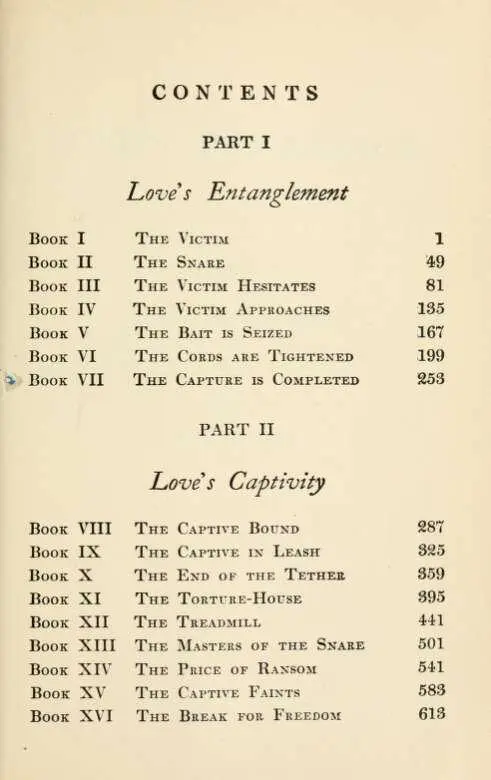
- Название:Love's pilgrimage
- Автор:
- Издательство:New York : M. Kennerley
- Жанр:
- Год:1911
- ISBN:нет данных
- Рейтинг книги:4 / 5. Голосов: 1
-
Избранное:Добавить в избранное
- Отзывы:
-
Ваша оценка:
Love's pilgrimage: краткое содержание, описание и аннотация
Предлагаем к чтению аннотацию, описание, краткое содержание или предисловие (зависит от того, что написал сам автор книги «Love's pilgrimage»). Если вы не нашли необходимую информацию о книге — напишите в комментариях, мы постараемся отыскать её.
Love's pilgrimage — читать онлайн бесплатно полную книгу (весь текст) целиком
Ниже представлен текст книги, разбитый по страницам. Система сохранения места последней прочитанной страницы, позволяет с удобством читать онлайн бесплатно книгу «Love's pilgrimage», без необходимости каждый раз заново искать на чём Вы остановились. Поставьте закладку, и сможете в любой момент перейти на страницу, на которой закончили чтение.
Интервал:
Закладка:
ness and their greed—sinister and cruel figures, but also humorous, very creatures of the spirit of comedy! Yes, he had a comedy this time—a real comedy!
§ 2. IN this hour, of course, Thyrsis forgot all about the "plot" he had outlined to Mr. Ardsley, and about his promises to be "practical." Something arose within him, imperious and majestic, and swept all this out of the way with one gesture of the hand. He dropped everything else and plunged into the play. Never yet in his life had anything taken hold of him to such an extent; it drove him so that he forgot to eat, he forgot to sleep. He would work over some part of it until he was exhausted—and then, without warning, some other part would open out in a vista before him, and he would spring up in pursuit of that. Characters and episodes and dialogue, wild humor, scalding satire, grim tragedy—they thronged and jostled and crowded one another in his imagination.
"The Genius" was the title of the play. Its protagonist had come home after completing his education in Vienna; and there was- the family gathered to greet him. Mr. Hartman, the father, was a wholesale grocer —a business large enough to have brought wealth, but painfully tainted with "commonness". Then there was Mrs. Hartman, stout and tightly-laced, who had studied the science of elegance while her husband studied sugar. There was the elder son, who under his mother's guidance had married well; and Miss Violet Hartman, who was looking up to the perilous heights of a foreign alliance.
Only of late had the family come to realize what an asset to their career this "Genius" might be. They had humored him in his strange whim to devote his life
to fiddling; money had been spent on him freely—he brought home with him a famous Cremona instrument for which three thousand dollars had been paid. But now it was dawning upon them that this was an "ugly duckling"; he was to make his debut in the metropolis, where an overwhelming triumph was expected; and then he would return to the home city in the middle West, and would play at music ales, which even the most exclusive of the "elite" must attend.
There was also the great Prof. Reminitsky, the teacher who had made Lloyd, and had come to New York with him; and there was the Herr Prof, von Arne, of the University of Berlin, a world-renowned psychiatrist, author of "The Neurosis of Inspiration". The Herr Professor had come to America to make some studies for his forthcoming masterpiece on the religious mania; and he was glad to see his old friend Reminitsky, whose seventeen-year-old musical prodigy was most interesting material for study.
Prof. Reminitsky was the world's greatest authority in the art of tearing the human soul to pieces by means of horse-hair rubbed with resin and scraped over the intestines of a pig. There were no tricks of finger-gymnastics and of tone-production that he had not mastered. As for the emotions produced thereby, he felt them, but in a purely professional way; that is, the convictions he had concerning them related to their effects upon audiences, and more especially upon the score or two of critical experts whose psychology had been his life-study. But having studied also the psychology of youth, he knew that his protege must needs have other convictions concerning his performances. This fras his .,upreme greatness—that he understood
the paranoia of enthusiasm, and used this understanding to tempt his pupils to new heights of achievement.
In all of which, of course, his friend von Arne was a great help to him. Von Arne had dug through a score of great libraries, and had travelled all the world over, frequenting cafes and salons, monasteries and prayer-cells, prisons and hospitals and asylums—wherever one might get new glimpses of the extraordinarily intricate phenomena of the aberration called "Genius". He had several thousand cases of it at his finger-tips -he had measured its reaction-times and calculated its cephalic index, and analyzed its secretions and tested it for indecan. He knew trance and clairvoyance, autosuggestion and telepathic hallucination, epilepsy and hysteria and ecstasy; and over the head of any disputatious person he would swing the steam-shovel of his erudition, and bury the unfortunate beneath a wagon-load of Latin and Greek derivatives.
Also, there was Moses Rosen, the business-manager. Moses was short, and wore a large diamond ring, and he also was a specialist in the phenomena of "Genius". He studied them from the point of view of the box-office, and his tests were quite as definite as those of the psychological laboratory. There came to Moses an endless stream of prodigies, all of them having long hair and picturesque aspects, and talking rapidly and rolling their eyes; the problem was to determine which of them had the faculty of true Genius, which not only talked rapidly and rolled its eyes, but also had the power of causing money to flow in through a box-office window.
In this case Moses felt that the prospects were good; the only trouble being that the prodigy intended to render a concerto by a strange composer —a stormy
and unconventional thing which would annoy the critics. Moses suggested something that was "classic"; and agreed with Mrs. Hartman that there ought to be something corresponding to "good form" in music.
§ 3. So all these strange creatures were poking and peering and smelling about the "Genius" ; and meanwhile, there came at intervals faint strains of music from a distant room. At last Lloyd Hartman entered; beautiful, pale and sensitive—a haunted boy, and the most haunting figure that had yet come to Thyrsis' imagination. Also, it was the hardest piece of work he had ever undertaken; for the character had come to him, not as a formula or a collection of phrases, but as an intuition, a part of his own soul; and he would work out a scene a score of times, finding words to phrase it, and then rejecting them. By what speeches could he give his sense of the gulf that lay between Lloyd and the people about him? For this boy could not cope with them in argument, he would have no mastery of the world of facts. He must be without any touch of sophistication, of cynicism; and yet, when he spoke to them, it must be clear that he knew them for different beings from himself. He would go with them meekly; but one would feel that it was because his path lay in their direction. When the point came that their ways parted, he would go his own way; and just there lay the seed of the tragi-comedy.
The family gathers about him, and he answers their questions. He will wear the kind of tie that his sister prefers, and they may set any date they please for the musicales at home. He hears the "copy" which Moses has prepared for his advertisements; and then he sits, absent-minded, while they talk about him. Music is in
his thoughts, and gradually it steals into his aspect and the gestures of his hand. They watch him, and a pall comes over them: until at last the mother exclaims that he makes her nervous, and leads the family off.
Then Miss Arnold is announced—Helena Arnold, who has been recommended as accompanist at the great concert. She is young and beautiful; and the two go into the next room to play, while the professors remain to talk over this new complication.
Prof, von Arne, of course, lays especial emphasis upon the sex-element in psychopathology; he and Remi-nitsky have talked the subject out many years ago, and adopted a definite course of action. The abnormalities incidental to sex-repression were innumerable, and for the most part destructive; but there could be no question that all the more striking phenomena of the neurosis called "Genius" were greatly increased in their intensity by this means. So, in dealing with his pupils, and especially with a prodigy like young Hartman, Prof. Reminitsky would call into service all the paraphernalia of religious mysticism; teaching his pupil to regard woman as the object of exalted adoration, a being too holy to be attained to even in thought. And now, of course, when the proposed accompanist turns out to be a decidedly alluring young female, it is necessary to take careful heed.
Читать дальшеИнтервал:
Закладка:
Похожие книги на «Love's pilgrimage»
Представляем Вашему вниманию похожие книги на «Love's pilgrimage» списком для выбора. Мы отобрали схожую по названию и смыслу литературу в надежде предоставить читателям больше вариантов отыскать новые, интересные, ещё непрочитанные произведения.









Обсуждение, отзывы о книге «Love's pilgrimage» и просто собственные мнения читателей. Оставьте ваши комментарии, напишите, что Вы думаете о произведении, его смысле или главных героях. Укажите что конкретно понравилось, а что нет, и почему Вы так считаете.