Hood, Bruce - Supersense
Здесь есть возможность читать онлайн «Hood, Bruce - Supersense» весь текст электронной книги совершенно бесплатно (целиком полную версию без сокращений). В некоторых случаях можно слушать аудио, скачать через торрент в формате fb2 и присутствует краткое содержание. Год выпуска: 2009, Издательство: Constable Robinson, Жанр: Старинная литература, на английском языке. Описание произведения, (предисловие) а так же отзывы посетителей доступны на портале библиотеки ЛибКат.
- Название:Supersense
- Автор:
- Издательство:Constable Robinson
- Жанр:
- Год:2009
- ISBN:нет данных
- Рейтинг книги:3 / 5. Голосов: 1
-
Избранное:Добавить в избранное
- Отзывы:
-
Ваша оценка:
Supersense: краткое содержание, описание и аннотация
Предлагаем к чтению аннотацию, описание, краткое содержание или предисловие (зависит от того, что написал сам автор книги «Supersense»). Если вы не нашли необходимую информацию о книге — напишите в комментариях, мы постараемся отыскать её.
Supersense — читать онлайн бесплатно полную книгу (весь текст) целиком
Ниже представлен текст книги, разбитый по страницам. Система сохранения места последней прочитанной страницы, позволяет с удобством читать онлайн бесплатно книгу «Supersense», без необходимости каждый раз заново искать на чём Вы остановились. Поставьте закладку, и сможете в любой момент перейти на страницу, на которой закончили чтение.
Интервал:
Закладка:
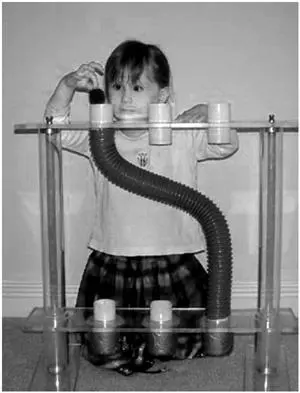
You can find out how much children learn about the brain by asking them a series of ‘Do you need your brain to . . . ?’ type questions. By the first year of school, most children, like adults, understand that brains are for thinking, knowing, being smart, and remembering. However, they still feel they have a mind in control of and separate from their brain. For example, they do not regard the brain as being responsible for feelings such as hunger, sleepiness, sadness, and fear. From the child’s viewpoint, ‘It is me who is sad, me who is tired, and me who is hungry.’
These responses tell us that children regard feelings as more personal than thoughts. This is because feelings affect us in a direct emotional way. When we are sad, we feel the pain, the misery, or the despair. It is ‘me’ that suffers. When we are happy, we feel the elation, the excitement, or the contentment. Feelings are like an emotional barometer of change that we can compare from one moment to the next. It makes a lot more intuitive sense to say that I am a lot happier than I was yesterday than to say that my body and brain are producing different types of mood experiences from one day to the next.
More telling of children’s dualism is the way they consider the origin of actions. Actions are controlled by the mind. So kicking a ball or wiggling my toes is a decision made by me, not by my brain. These sorts of answers reveal that children are indeed intuitive dualists. When asked, ‘Can you have a mind without a brain?’ all six- to seven-year-olds said yes. Science education does little to alter this belief: most fourteen- to fifteen-year-olds agree that the mind does not depend on the brain.
My hunch is that most adults also think the mind can exist without the brain. They may know the scientific position that the mind is a product of the brain, but as we saw with people’s understanding of natural selection, knowing the correct answer does not make it feel right. Adults who accept that the mind depends on the brain are likely to still make the same mistake as Descartes in thinking that the immaterial mind acts directly on the material brain.
ROBOCOP
When Officer Murphy was terminally wounded in the sci-fi film Robocop , he underwent radical reconstructive surgery to make him into a powerful cyborg. 35His brain survived, but his memories were wiped clean so that he could become Robocop. His colleagues treated Robocop as a machine, but his former partner, Officer Lewis, detected that there was still something of Murphy present. Over the course of the movie, the cyborg eventually regains traces of his memory to become Officer Murphy again. This tale of human identity is a familiar theme in fiction. A travelling salesman wakes up to find himself transformed into a giant verminous bug in Kafka’s The Metamorphosis , but he is still Gregor Samsa because he has Gregor Samsa’s mind. The replicant in the sci-fi modern classic Blade Runner is convinced that she is human because she has childhood memories, but the Tyrell Corporation, which created her, also fabricated her childhood. 36It would appear that the hallmark of human identity is a mind full of memories. Maybe that’s why most people say they would save a family album full of recorded memories from a burning house.
These examples suggest that we have some strong opinions about what makes something a unique human person, and they make for some interesting thought experiments. 37For example, imagine that Jim is involved in a terrible car crash and ends up in the hospital, where all the doctors can do is to offer a brain transplant. Consider these different scenarios. Jim’s brain is transplanted into a human donor’s body. Jim’s brain is transplanted into a donor body, but his memory is accidentally wiped clean during the operation. Or Jim’s brain is transplanted into a highly sophisticated cybernetic body. After the transplantation, Jim’s original body is destroyed. Which, if any, of these patients is still Jim?
Adults are more likely to say that Jim is still Jim if his memories are left intact, irrespective of whether his brain ends up in a human donor body or an artificial cybernetic one. Our conscious experience of our own minds and memories inclines us to think of minds being unique and the source of personal identity. We certainly don’t think our own minds and memories could belong to other people. So Jim is like Officer Murphy. He is the product of his mind and memories, and if these can be transplanted, even into an artificial body, he remains Jim. However, the patient with the brain but no memories is deemed to be more human than the cybernetic body containing Jim’s brain with memories. This pattern reveals that people consider humans in terms of a physical body and a unique mind that can exist separately.
What about minds existing independently of brains? Most laypeople think that the mind is separate from the brain. After all, the majority of humans have lived their lives never knowing that they possessed a brain, let alone knowing what it might be useful for. Also, as we will see later, people think that it might be possible to copy a body through some form of technology, and possibly even duplicate a brain, but they are less likely to think that a mind could be similarly copied. Moreover, if we could download the mind into another brain, most people assume that the identity associated with that brain would also change with the new mind. So we are naturally inclined to see minds as unique identities that can exist independently of the brain. If this distinction is drawn from an early age, it is easy to see how it leads us to the position that minds are not necessarily tethered to the physical brain. If this is so, then the mind is not subject to the same destiny as our physical bodies. Such reasoning allows us to entertain the possibility that the mind can outlive the body.
AFTERLIFE
In my experience, most Western parents don’t talk with their children about death unless they are comfortable with religious explanations. As someone who does not believe in an afterlife, I have found it very difficult to discuss death with my young daughters. It’s too painful and awkward. To begin with, you don’t have a happy ending, as you do with religion. Also, by discussing death, you are acknowledging that we are all destined to die one day. I will die, and my children will die. It’s the ultimate separation anxiety for both parent and child. This makes for a very uncomfortable reality check. All those oxytocin moments seem hollow, artificial, and ultimately pointless when faced with the prospect of death. I would imagine that most atheist parents like me probably avoid discussing death with their children to spare them the difficulty in coming to terms with an existence that has no purpose. So young children are understandably confused by death. They do not know that all life comes to an end. They do not know that they are going to die one day. They do not appreciate that death is inevitable, universal, irreversible, and final. 38There are two main reasons for this. First, they cannot conceive of death because they lack a mature understanding of the biological cycle of life and death. As we saw earlier in discussing creationism, children conceive of life as always existing. Second, because of their intuitive dualism, they conceive of death in psychological terms and, in doing so, they can’t imagine themselves being dead. So death is understood as the continued existence of the individual, but somewhere else.
Most pre-schoolers think that death is like buying a one-way ticket to a new address with no prospect of return or home visits. When Grandpa has moved on, he has gone to another place. Even if the address is heaven, at least he still exists somewhere. Or they think that death is like sleeping. Certainly ideas of ‘departing’, ‘passing over’, and ‘resting in peace’ are culturally acceptable to tell children and conceptually easier to grasp. No wonder the practice of burying someone in a box under the ground is a very disturbing notion for many pre-schoolers.
Читать дальшеИнтервал:
Закладка:
Похожие книги на «Supersense»
Представляем Вашему вниманию похожие книги на «Supersense» списком для выбора. Мы отобрали схожую по названию и смыслу литературу в надежде предоставить читателям больше вариантов отыскать новые, интересные, ещё непрочитанные произведения.








Обсуждение, отзывы о книге «Supersense» и просто собственные мнения читателей. Оставьте ваши комментарии, напишите, что Вы думаете о произведении, его смысле или главных героях. Укажите что конкретно понравилось, а что нет, и почему Вы так считаете.