Hood, Bruce - Supersense
Здесь есть возможность читать онлайн «Hood, Bruce - Supersense» весь текст электронной книги совершенно бесплатно (целиком полную версию без сокращений). В некоторых случаях можно слушать аудио, скачать через торрент в формате fb2 и присутствует краткое содержание. Год выпуска: 2009, Издательство: Constable Robinson, Жанр: Старинная литература, на английском языке. Описание произведения, (предисловие) а так же отзывы посетителей доступны на портале библиотеки ЛибКат.
- Название:Supersense
- Автор:
- Издательство:Constable Robinson
- Жанр:
- Год:2009
- ISBN:нет данных
- Рейтинг книги:3 / 5. Голосов: 1
-
Избранное:Добавить в избранное
- Отзывы:
-
Ваша оценка:
Supersense: краткое содержание, описание и аннотация
Предлагаем к чтению аннотацию, описание, краткое содержание или предисловие (зависит от того, что написал сам автор книги «Supersense»). Если вы не нашли необходимую информацию о книге — напишите в комментариях, мы постараемся отыскать её.
Supersense — читать онлайн бесплатно полную книгу (весь текст) целиком
Ниже представлен текст книги, разбитый по страницам. Система сохранения места последней прочитанной страницы, позволяет с удобством читать онлайн бесплатно книгу «Supersense», без необходимости каждый раз заново искать на чём Вы остановились. Поставьте закладку, и сможете в любой момент перейти на страницу, на которой закончили чтение.
Интервал:
Закладка:
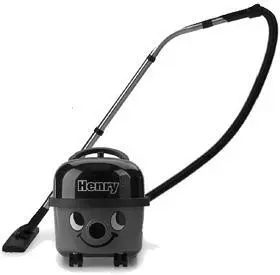
FIG. 10: The ‘Henry’ vacuum cleaner. © NUMATIC INTERNATIONAL LTD.
I don’t think anyone really believes that Henry is alive or has feelings. But the vacuum cleaner does illustrate how easy it is to adopt the intentional stance. This may not be such a bad thing. After all, when we are trying to understand and predict events in the world, adopting an intentional stance gives us a useful way of framing information and doing things. For example, let’s say my car breaks down one day. Confronted with this, I have to plan a course of action to fix the problem. What’s troubling her? Maybe she wants a service. The old girl needs a face-lift. Dennett gives another good example. 27Gardeners trick their flowers into budding by putting them in the hothouse so that they think it is spring. The intentional stance is just a comfortable way of talking about and interacting with the natural and artificial world. But as we saw in Piaget’s animism in children, this way of thinking emerges early and may support a supersense that there are secret agents operating throughout the world. It is supernatural because it represents the over-extension of the intentional stance from real agents with minds to objects that cannot have this kind of mental life. Certainly we slip into this supernatural way of thinking remarkably easily. We may laugh it off, but as the saying goes, there is no smoke without fire. It must have some influence on our reasoning, lurking there in the back of our minds. The very same processes that led us as babies to seek out potential agents in the world continue to fool us as adults into thinking that the world is populated with purposeful and willful inanimate objects.
GHOSTS IN THE MEAT MACHINE
Whether we are reading our own mind or inferring the mind of others, we are treating minds as separate from bodies. This idea that the mind exists separately from the body is known as ‘dualism’. In his book Descartes’ Baby , Paul Bloom heralds an impressive avalanche of work to argue that humans are born to be intuitive substance dualists. 28Substance dualism is the philosophical position that humans are made up of two different types of substances, a physical body and an immaterial soul. Our mind is part of this soul that inhabits our body. The separation of the body and mind – or the ‘mind–body problem’, as it is known – is one that keeps philosophers and neuroscientists awake at night. Let me explain why.
Each of us experiences our mental life as distinct from our body. We can see how our bodies change over the decades, but we feel that we remain the same person. For example, I think I am still the same man I was in my late teens. I sometimes still behave that way. Our knowledge, experiences, ambitions, priorities, and concerns may change over the years, but our sense of self is constant. This is one of the most frustrating aspects of ageing. Old people do not feel they have aged; only their bodies have. And what’s worse is that Western society is increasingly ageist. We treat old people differently and patronize them. But old people feel they are generally no different from when they were young. When we look in the mirror, we can see how the ravages of time and gravity have taken their toll on our bodies, but we still feel we are the same self. We may even change our beliefs and opinions with time, realizing that some punk music was actually pretty awful, but we don’t experience a change in the person having those beliefs or opinions. That’s because we cannot step outside of our mind to see how it looks from a different perspective. We are our minds.
In addition to the cruel injustice of youthful minds being trapped inside ageing bodies, our daily experience constantly tells us that our minds work independently and in advance of our bodies. Every waking moment, we make decisions that precede our actions. It seems that our bodies are controlled by our thoughts. We feel the authorship of action. We are the ones doing the doing. This is the experience of conscious free will. However, free will – the idea that we can make whatever choices we want, whenever we want – is most likely an illusion. The experience of free will is very real, but the reality of it is very doubtful.
Cognitive scientists (those who study the mechanisms of thinking) believe that we are in fact conscious automata running a complex set of rule-based equations in our heads. We are consciously aware of some of the outputs from these processes. These are our thoughts. We experience the mental processes of weighing up evidence, considering options, and anticipating possible outcomes, but the conclusion that our minds have a free will in making those decisions is not logical.
If you doubt this (and most readers will), then consider this. If we are free to make decisions, at what point are decisions made and who is making them? Who is weighing up the evidence? Where is the ‘me’ inside my head considering the options and doing ‘eeny, meeny, miny, moe?’ That would require someone inside our heads, or a ghost inside the machine. But how does the ghost in the machine make decisions? There would have to be someone inside the ghost’s head making the choices. So if there is only one ghost, how does it arrive at a decision? Does it look at all the alternatives and then flip a coin? If so, flipping a coin can hardly be free will.
THE NUMSKULLS
My editor tells me that these are really difficult concepts that need explaining, so rather than ghosts inside heads flipping coins, let me tell you about ‘The Numskulls’.
When I was a kid growing up in Dundee, Scotland, ‘The Numskulls’ was the local DC Thompson’s comic strip about an army of little people who lived inside of the head of a man called Edd. They were workers controlling his body and brain. And like workers in a factory, sometimes they would screw up. For example, the Numskull controlling the stomach would see that reserves were getting low and send a request for more food. The Numskull responsible for feeding would pull the levers to get Edd eating. Maybe the Numskull in the tummy would fall asleep at his station because of all the food, and Edd would end up stuffing himself until he became sick. An alarm light would go off in the brain department, where the boss Numskull sat at his executive desk reading the incoming messages. Then there would be a frantic race to tell the eating Numskull to stop working. You can see how such a scenario easily generated comic story lines each week as the machine called Edd would encounter different problems arising from his internal workforce. It was one of my favorite comics, even though I did not realize that the creators were actually presenting children with a profound philosophical conundrum about free will.
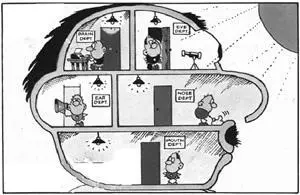
FIG. 11: ‘The Numskulls’ from my childhood © D.C. THOMSON & CO, LTD , Dundee.
The Numskulls show that decision-making is a deep problem. How are decisions arrived at? If a choice has to be made, how does that happen? We intuitively think that we make the decisions. We make up our minds. But how? Is there a Numskull boss inside my head? And if so, who is inside his head, and so on? Like an endless series of Russian dolls, one inside another, an infinite number of Numskulls becomes an absurd concept.
To cap it all, the experience of conscious decisions preceding events may also be an illusion. If I ask you to move your finger whenever you feel like it, you can sit there and then eventually decide to raise your digit. That’s what conscious free will feels like. But we know from measuring your brain activity while you’re sitting there waiting to decide that the point when you thought you had reached a decision to move your finger actually occurred after your brain had already begun to take action. 29In other words, the point in time when we think we have made a choice occurs after the event. It’s like putting the action cart before the conscious horse. The mental experience of conscious free will may simply justify what our brains have already decided to implement. In describing this type of after-the-fact decision-making, Steven Pinker says, ‘The conscious mind – the self or soul – is a spin doctor, not the commander-in-chief.’ 30The mind is constructing a story that fits with decisions after they have been made.
Читать дальшеИнтервал:
Закладка:
Похожие книги на «Supersense»
Представляем Вашему вниманию похожие книги на «Supersense» списком для выбора. Мы отобрали схожую по названию и смыслу литературу в надежде предоставить читателям больше вариантов отыскать новые, интересные, ещё непрочитанные произведения.





Обсуждение, отзывы о книге «Supersense» и просто собственные мнения читателей. Оставьте ваши комментарии, напишите, что Вы думаете о произведении, его смысле или главных героях. Укажите что конкретно понравилось, а что нет, и почему Вы так считаете.