Hood, Bruce - Supersense
Здесь есть возможность читать онлайн «Hood, Bruce - Supersense» весь текст электронной книги совершенно бесплатно (целиком полную версию без сокращений). В некоторых случаях можно слушать аудио, скачать через торрент в формате fb2 и присутствует краткое содержание. Год выпуска: 2009, Издательство: Constable Robinson, Жанр: Старинная литература, на английском языке. Описание произведения, (предисловие) а так же отзывы посетителей доступны на портале библиотеки ЛибКат.
- Название:Supersense
- Автор:
- Издательство:Constable Robinson
- Жанр:
- Год:2009
- ISBN:нет данных
- Рейтинг книги:3 / 5. Голосов: 1
-
Избранное:Добавить в избранное
- Отзывы:
-
Ваша оценка:
Supersense: краткое содержание, описание и аннотация
Предлагаем к чтению аннотацию, описание, краткое содержание или предисловие (зависит от того, что написал сам автор книги «Supersense»). Если вы не нашли необходимую информацию о книге — напишите в комментариях, мы постараемся отыскать её.
Supersense — читать онлайн бесплатно полную книгу (весь текст) целиком
Ниже представлен текст книги, разбитый по страницам. Система сохранения места последней прочитанной страницы, позволяет с удобством читать онлайн бесплатно книгу «Supersense», без необходимости каждый раз заново искать на чём Вы остановились. Поставьте закладку, и сможете в любой момент перейти на страницу, на которой закончили чтение.
Интервал:
Закладка:
Strangers can read each other’s minds when no word has been spoken. As we watch people go about their business in public places, we automatically attribute hidden purpose to their movements. They seem to have intentions and goals. We imbue them with rich mental lives. That’s because we think they are like us. They too must experience the same anxieties, disappointments, frustrations, elations, and the whole varied tapestry of human concerns that we do. However, our mind-reading is not foolproof. We often misjudge. Nevertheless, it is easier to understand others as beings motivated by minds rather than the unsavoury alternative: mindless beings, sophisticated robots, or well-dressed zombies.
Some of us are better at mind-reading than others. The Cambridge psychologist Simon Baron-Cohen has proposed that women are more accomplished at it than men. 1Mind-reading – or social empathizing, to be more accurate – is a female skill resulting from a brain designed to be social. Men, on the other hand, are poor empathizers, but really good at cataloguing CD collections. According to the theory, women are good at empathizing, whereas men are better at systemizing. It’s a controversial idea and deeply ‘un-PC’, but it does seem to fit with much common sense.
Our mind-reading is intuitive. No one teaches us, and we start using it before we can even speak. Like language, it’s one of the things that make us human. This is because understanding other minds is so critical to the way we get on with each other. Homo sapiens may have evolved to think, but most of those thoughts are about other people. In this chapter, we examine the emergence of mind-reading in our first important relationship with our parents, and in particular our mothers. During these formative years, babies and adults engage in increasingly complex social exchanges. Are you hungry? Do you need your nappy changed? What’s she doing? What does he mean? Second-guessing each other is the art of mind-reading, and babies become expert over the early years, better than any other animal. 2They do this by understanding that bodies are motivated by minds. This understanding equips them for the more challenging role of understanding the social world of others outside the family circle. However, in becoming sociable mind-readers, children start to think about how minds are separate from bodies. That thinking prepares the ground for some very strong supernatural beliefs about the body, the mind, and the soul.
LET’S FACE IT
Our mind-reading starts with the face, and reading the eyes in particular. What do supermodels like Naomi Campbell and Kate Moss, Japanese Manga cartoon characters, and babies all have in common? My, what big eyes they have. One of the reasons we find supermodels and Manga characters so cute is that they remind us of babies. This quality is called ‘babyness’. It’s simply the large size of eyes relative to big heads on small bodies. 3Biologists noticed that the young offspring of many mammals share this babyness feature. Puppies, bunny rabbits, and Chihuahuas are all good examples of animals that excel at babyness. It is particularly noticeable in apes because of their large heads, which are needed to accommodate their big brains. However, babyness is more than just a quirk of physical dimensions. For example, if you ask children who have not yet reached puberty to rate faces for attractiveness, they prefer adult faces to baby faces. 4However, when they hit puberty, girls, in contrast to boys, show a marked reversal by preferring babies to adults. In this way, nature is beginning to pull the strings that shape our reproductive behaviour.
Faces are like magnets to babies. They can’t keep their eyes off us. If you measure their eye movements to see where they are looking in a busy social scene, they are checking out the faces of the other people in the room. This interest in faces begins at birth.
For example, given the choice, newborn babies will look longer at the pattern on the left compared to the one on the right. 5The one on the left looks more like a face than the other, which is identical but upside down. The fact that this is found in babies who have had little experience of faces supports the theory that humans are born to attend to anything that looks like a face. Some argue that this reflects an evolutionary adaptation to make sure babies pay attention to their mother’s face in much the same way that young baby birds instinctively follow the first moving thing that resembles an adult as soon as they hatch. 6

FIG. 8: Newborns stare longer at the face image on the left. AUTHOR’S COLLECTION.
So faces are particularly important to humans. We can distinguish and remember thousands of faces, and yet the differences between individual faces can be so small. As we discussed in chapter 3, the fusiform gyrus of the brain (the area just behind your ears) is active whenever you look at faces. 7However, if you are unfortunate enough to suffer damage to your fusiform gyrus, you can lose the ability to recognize individual faces. The resulting disorder, known as prosopagnosia, can even produce a loss of recognition of one’s own face in the mirror. 8
All this brain machinery dedicated to faces may explain why we are hardwired to see faces when there are none, and often in the most unexpected places. Dr J.R. Harding, a radiologist in Wales, told me about the case of a man who had an undescended right testicle. 9This condition is common and usually identified during routine screening around the time a boy reaches puberty. Which reminds me of my own experience. I am not sure how the screening is done today, but in my time, before informed consent, most of us prepubescent boys were left completely terrified and perplexed as to why the school nurse asked us to cough as she cradled our scrotums.
When Dr Harding examined the image of the man’s descended left testicle, he nearly fell off his seat when he saw what was clearly a face. He wrote the case up and published a medical paper entitled A Case of the Haunted Scrotum’ for a bit of fun, which became his ‘least important but most celebrated contribution to radiology’. In the report, Dr Harding offered an explanation for the absence of the second undescended testicle: ‘If you were a right testis, would you want to share the scrotum with that?’
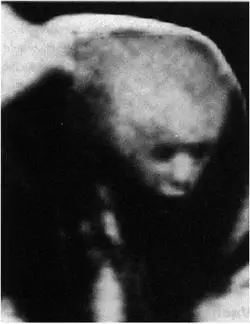
FIG. 9: ‘The Haunted Scrotum’. Face image discovered by Dr Harding. PHOTO © RICHARD HARDING.
Facelike appearances can readily be found among natural and artificial objects. Boulders, knotted tree trunks, and Volkswagen Beetle cars can all look like they have faces. Because faces are so important, we tend to treat their appearances as auspicious. We think of such appearances as more than just coincidences. In his book Faces in the Clouds , Stewart Guthrie argues that our intuitive pattern-processing biases us towards seeing faces, which leads us to assume that hidden agents surround us. 10Building on David Hume’s ‘We find human faces in the moon, armies in the clouds’ observation that we encountered in the last chapter, Guthrie presents the case that our mind is predisposed to see and infer the presence of others, which explains why we are prone to see faces in ambiguous patterns. If you are in the woods and suddenly see what appears to be a face, it is better to assume that it is one rather than ignore it. It could be another person out to get you. Seeing faces leads to inferences of minds. Those minds may have malevolent intentions against us. Why else would they be hiding in the shadows? Such a bias could be just one of the mechanisms that support a sense of supernatural agents in the world. This probably accounts for why face apparitions are often taken as evidence of supernatural activity. For example, the online casino Goldenpalace.com bought a decade-old toasted cheese sandwich said to bear the image of the Virgin Mary for £14,000, 11and the face of Jesus has appeared on several baby ultrasound scans of pregnant women.
Читать дальшеИнтервал:
Закладка:
Похожие книги на «Supersense»
Представляем Вашему вниманию похожие книги на «Supersense» списком для выбора. Мы отобрали схожую по названию и смыслу литературу в надежде предоставить читателям больше вариантов отыскать новые, интересные, ещё непрочитанные произведения.












Обсуждение, отзывы о книге «Supersense» и просто собственные мнения читателей. Оставьте ваши комментарии, напишите, что Вы думаете о произведении, его смысле или главных героях. Укажите что конкретно понравилось, а что нет, и почему Вы так считаете.