SS
Здесь есть возможность читать онлайн «SS» весь текст электронной книги совершенно бесплатно (целиком полную версию без сокращений). В некоторых случаях можно слушать аудио, скачать через торрент в формате fb2 и присутствует краткое содержание. Жанр: Справочники, на английском языке. Описание произведения, (предисловие) а так же отзывы посетителей доступны на портале библиотеки ЛибКат.
- Название:SS
- Автор:
- Жанр:
- Год:неизвестен
- ISBN:нет данных
- Рейтинг книги:5 / 5. Голосов: 1
-
Избранное:Добавить в избранное
- Отзывы:
-
Ваша оценка:
SS: краткое содержание, описание и аннотация
Предлагаем к чтению аннотацию, описание, краткое содержание или предисловие (зависит от того, что написал сам автор книги «SS»). Если вы не нашли необходимую информацию о книге — напишите в комментариях, мы постараемся отыскать её.
SS — читать онлайн бесплатно полную книгу (весь текст) целиком
Ниже представлен текст книги, разбитый по страницам. Система сохранения места последней прочитанной страницы, позволяет с удобством читать онлайн бесплатно книгу «SS», без необходимости каждый раз заново искать на чём Вы остановились. Поставьте закладку, и сможете в любой момент перейти на страницу, на которой закончили чтение.
Интервал:
Закладка:
6.1 Organizational development
When senior managers adopt a service management orientation, they are adopting a vision for the organization . Such a vision provides a model toward which staff can work. Organizational change , however, is not instantaneous. Senior managers often make the mistake of thinking that announcing the organizational change is the same as making it happen.
There is no one best way to organize. Elements of an organizational design , such as scale, scope and structure, are highly dependent on strategic objective s. Over time, an organization will likely outgrow its design . There is the underlying problem of structural fit. Certain organizational designs fit while others do not. The design challenge is to identify and select among often distinct choices. Thus the problem becomes much more solvable when there is an understanding of the factors that generate fit and the trade-offs involved, such as control and coordination.
Case example 12: Organizational development
1. The global CIO of the Fortune 50 automotive company built an IT organization in an unusual manner. He hires divisional CIOs to correspond to business divisions: North America, Europe, Asia-Pacific, Latin America, Africa, the Middle East and finance. At the same time, he hires process information officers (PIOs) to work horizontally in different specialities across all divisions around the world: product development , supply chain management, production, customer experience and business service s (HR, legal and so on).
2. The IT organization for one of the most popular sports leagues in North America flourishes under a culture of speed and entrepreneurship. Sunday game results and media events often dictate service activities with short time frames. Service processes are minimally structured, with room for improvisation and adaptation.
What are these organizational structures called?
(Answer given later in this section)
When the organization performs well, the structure tends to drift towards a decentralized model where local managers possess greater autonomy (Figure 6.2). When problems persist, the tendency is to shift to a centralized model. This pendulum swing represents a lack of confidence in local decision making. Despite the extreme difficulties, there is a persistent belief that an organization is controlled from the top. But giving orders is not the same as being in control. There are no guarantees, however, that local managers will appreciate the impact of their decisions on the larger organization. Their decisions can be short-term and short-sighted. This wavering between centralized and decentralized management is attributed as the source of long-term organizational problems and has been described as, ‘the illusion of being in control’. How then, does an organization decide how to best manage its current organization and where to land along the design spectrum?
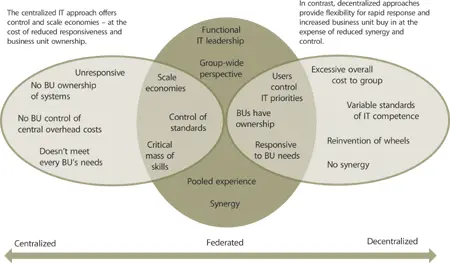
Figure 6.2 The centralized-decentralized spectrum
The process for major organizational change involves many event s and can be a matter of years rather than months. Leading this change is difficult and should not be reduced to quick or simple fixes. The ability to lead this change is an important competence for senior executives and managers. Understanding when a service strategy is too complicated and rigid is as important as any support process.
Case example 12 (solution)
1. Stage-5 or Matrix. A matrix structure is a very difficult form of lateral process used for stronger collaboration with the business .
2. Stage-1 or Network. The focus of this organization is on the rapid, informal and ad hoc delivery of services. Informal structures are far better suited for success.
Outside forces greatly influence an organization’s service strategy , which in turn determines the organizational structure. Where the lines are drawn depends on what the organization is attempting to accomplish. A service strategy then becomes an implicit blueprint for an organization’s design, shaping scale and scope . Scale refers to size. Scope refers not only to the broadness of service offerings – it also describes the range of activities the organization performs. When an organization decides on a make-or-buy strategy , for example, it is determining the scope of its activities. The trade-offs are control versus coordination.
An organization’s age and size affect its structure. As the organization grows and matures, changes in role s and relationships must be made or problems will arise. This is particularly important for organizations adopting a service orientation, as pressures for efficiency and discipline inevitably lead to greater formalization and complexity. The risk over time is that the organization becomes too bureaucratic and rigid.
Most IT organizations tend to grow for prolonged periods without severe setbacks. The term evolution describes the quieter periods while the term revolution describes the upheaval of management practices. Organization s are generally characterized by a dominant management style: Network, Directive, Delegative, Coordinated or Collaborative33 (Figure 6.3). Each style serves the needs of the organization for a period of time. As service requirement s evolve, the organization encounters a dominant management challenge that must be resolved before growth can continue. The organization can no longer address its service challenge with its current management style. Nor can it be successful by retreating to a previous style – it must move ahead.
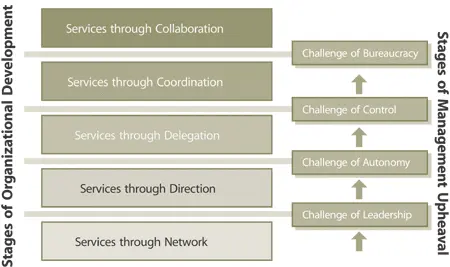
Figure 6.3 Stages of organizational development
6.1.1 Stage-1: Network
The focus of a Stage-1 organization is on the rapid, informal and ad hoc delivery of services. The organization is highly technology-oriented, perhaps entrepreneurial, and is reluctant to adopt formal structures. Innovation and entrepreneurship are important organizational values. The organization learns which processes and services work and adjusts accordingly. The organization believes that informal structures are far better suited to the resource s required to deliver services. Past successes reinforce this belief. As the service demands grow, this model is not sustainable. It requires great local knowledge and intense dedication on the part of the staff. Conflict is created as staff resist the creation of service structures.
As the organization grows and the need for efficient resource s increases, leaders are confronted with the task of having to manage an organization. This is a very different skill from technology and entrepreneurship and often a task for which leaders find themselves ill prepared.
A common structure in this stage is called a network (Figure 6.4). A network structure is a cluster whose actions are coordinated by agreement s rather than through a formal hierarchy of authority. The members work closely together to complement each other’s activities. The goal of the organization is to share its skills with the customer in order to allow them to become more efficient, reduce costs or improve quality .
Читать дальшеИнтервал:
Закладка:
Обсуждение, отзывы о книге «SS» и просто собственные мнения читателей. Оставьте ваши комментарии, напишите, что Вы думаете о произведении, его смысле или главных героях. Укажите что конкретно понравилось, а что нет, и почему Вы так считаете.