SS
Здесь есть возможность читать онлайн «SS» весь текст электронной книги совершенно бесплатно (целиком полную версию без сокращений). В некоторых случаях можно слушать аудио, скачать через торрент в формате fb2 и присутствует краткое содержание. Жанр: Справочники, на английском языке. Описание произведения, (предисловие) а так же отзывы посетителей доступны на портале библиотеки ЛибКат.
- Название:SS
- Автор:
- Жанр:
- Год:неизвестен
- ISBN:нет данных
- Рейтинг книги:5 / 5. Голосов: 1
-
Избранное:Добавить в избранное
- Отзывы:
-
Ваша оценка:
SS: краткое содержание, описание и аннотация
Предлагаем к чтению аннотацию, описание, краткое содержание или предисловие (зависит от того, что написал сам автор книги «SS»). Если вы не нашли необходимую информацию о книге — напишите в комментариях, мы постараемся отыскать её.
SS — читать онлайн бесплатно полную книгу (весь текст) целиком
Ниже представлен текст книги, разбитый по страницам. Система сохранения места последней прочитанной страницы, позволяет с удобством читать онлайн бесплатно книгу «SS», без необходимости каждый раз заново искать на чём Вы остановились. Поставьте закладку, и сможете в любой момент перейти на страницу, на которой закончили чтение.
Интервал:
Закладка:
Figure 5.30 SLPs composed of service components and component services
Making component services visible to customers on the Service Catalogue is a matter of policy with respect to pricing and bundling of services. Risk s described in Section 9.5 have to be considered for decisions on expanding the Service Catalogue .
Warranty SLP
Workspace SLP1
Workspace SLP2
Workspace SLP3
Availability SLP
24x7x365 Plan with High availability
Worldwide Mobility
PC Notebook
Wireless PDA Service
Desktop Phone
3G Wireless
24x7x365 Plan with Very High Availability
Worldwide Mobility
PC Notebook
Wireless PDA Service
Desktop Phone
3G Wireless
9-5 Weekday Plan with Standard Availability
Designated Office Location
PC Desktop
Desktop Phone
Standard Wireless
Capacity SLP
Large Mailbox
Priority Broadband
Extra large Mailbox
Priority Broadband
Basic Mailbox
Basic Broadband
Heavy Duty Print Service
Continuity SLP
PSTN backup
Level-2 backup and restore
Worldwide travel support
PSTN backupLevel-3 backup and restore Worldwide travel support
PSTN backup
Level-1 backup and restore
On-site support
Security SLP
Multi-factor authentication
Hardware tokens
Virtual Private Network
Secure FTP
Multi-factor authentication
Virtual Private Network
Table 5.10 Warranty SLPs composed of service components and component services
A Service catalogue is also a collection of Lines of Service (LOS), each under the control of a Product Manager. Section B.2 in Appendix B provides a description of the role s and responsibilities of Product Managers within the domain of service management . Each LOS provides a combination of utility and warranty most preferred by a segment of customers. Customer segments are defined in terms of business outcomes. This type of segmentation cuts across traditional market segments based on criteria such as demographics, location, size of business, purchasing behaviour, and perceived needs.23 The links between such criteria and actual business outcomes are often weak or unstable, whereas business outcomes of customers are permanently linked with customer ’s perception of value. Outcome -based segmentation improves the focus and specialization for service providers in truly meeting customer needs.
Each LOS has one or more service offerings (Figure 5.31). Each service offering is made up of CSPs and SLPs. This modular approach provides multiple control perspective s within the Service Lifecycle . CSPs and SLPs can be managed by separate specialized groups within the service provider. Utility SLPs and Warranty SLPs may similarly be assigned to groups with specialized capabilities and resource s, or to third parties.
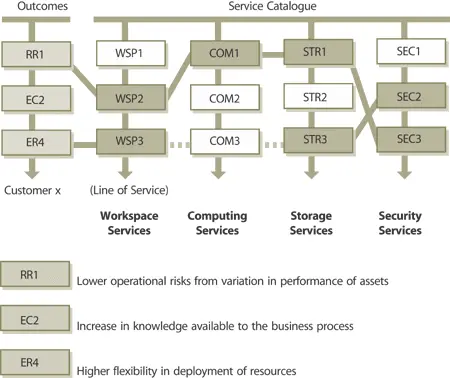
Figure 5.31 Mapping customer outcomes to lines of service
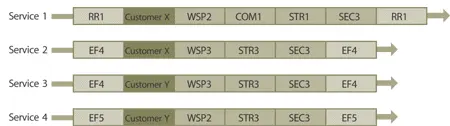
Figure 5.32 Services are framed by the customer outcomes they support
It is the responsibility of the Business Relationship Manager (BRM) to identify the most suitable combination of LOS and SLP for every customer outcome they are concerned with. BRMs relate customer outcomes to the supporting UP (Figure 5.32). Each UP is then matched to the appropriate SLP to create a customized service offering for every customer outcome (Figure 5.33). The Kano Model Method28 is applied to develop complex value-added service offerings based on service components and component services. CSPs and SLPs may be basic, performance or excitement service packages according to customer preferences and perceptions.
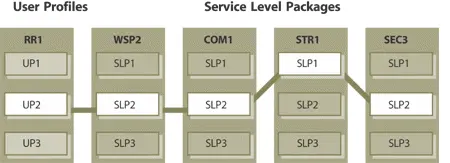
Figure 5.33 Mapping user profiles to service level packages
This component -based approach greatly reduces the cost of providing services while maintaining high levels of customer satisfaction. BRMs represent customers and work closely with Product Managers to ensure that the Service Catalogue has the right mix of LOS and SLP to fulfil the needs of the Customer Portfolio .
6 Strategy and organization
‘I was in a warm bed, and suddenly I’m part of a plan.’
Woody Allen in Shadows and Fog
Organizations
Organization s are goal-directed, boundary maintaining and socially constructed system s of human activity.29
Organizations are designed and built for a purpose. These goals drive the behaviours of an organization ’s many agents who dynamically interact with each other. The many interactions produce emergent macro-level patterns of organizational behaviour. IT organizations are complex systems embedded within the larger complex system of its business, customers and industry.
The transaction costs principle is a simple and yet powerful means for explaining organizations. It argues that, in certain circumstances, organizations are more efficient mechanisms for cooperation than contracting or sourcing. IT organizations are subject to transaction costs. They must search for, negotiate, monitor, coordinate and govern resource s in order to produce services. As people come together in an organization, they must learn what to do and how to work with others to perform. If this cooperation is done ineffectively, transaction costs rise. The better the organization manages its transaction costs, the better it justifies its existence. Further, certain risk s are better mitigated through organizations than through contract s:
Incomplete contracts – no contract can ever cover every possible contingency. The greater and more complex the cooperation needed with external contractors, the greater the possibility of an incomplete contract.30
The hold-up problem31 – services often require investments in specific asset s such as infrastructure or facilities. The problem of incomplete contracts implies that there is always a possibility that contracts will unravel. Contractors are then stuck with these hard-to-reverse assets and may then withhold access as they seek better terms.
Change endurance – organizations create structures that outlive the participation of their agents. These cooperative structures allow an organization to strive for complex strategies that may require years to enact.
Collective learning – much like individuals, organizations are capable of learning.32 Despite changes in individuals, organizations act as a stabilizing and collective storehouse for knowledge while in pursuit of their goals.
Adequate scarce resource s, a well-considered strategy and distinctiveness allow an organization to provide superior performance versus competing alternatives, in turn justifying the acquisition of still more scarce resources. This virtuous cycle is illustrated in Figure 6.1.
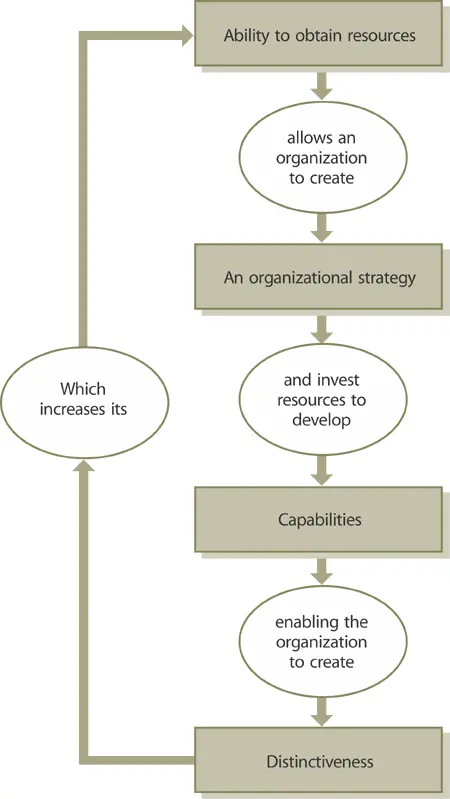
Figure 6.1 Organizational value creation cycle
Читать дальшеИнтервал:
Закладка:
Обсуждение, отзывы о книге «SS» и просто собственные мнения читателей. Оставьте ваши комментарии, напишите, что Вы думаете о произведении, его смысле или главных героях. Укажите что конкретно понравилось, а что нет, и почему Вы так считаете.