Rupert Thomson - Katherine Carlyle
Здесь есть возможность читать онлайн «Rupert Thomson - Katherine Carlyle» весь текст электронной книги совершенно бесплатно (целиком полную версию без сокращений). В некоторых случаях можно слушать аудио, скачать через торрент в формате fb2 и присутствует краткое содержание. Год выпуска: 2015, ISBN: 2015, Издательство: Other Press, Жанр: Современная проза, на английском языке. Описание произведения, (предисловие) а так же отзывы посетителей доступны на портале библиотеки ЛибКат.
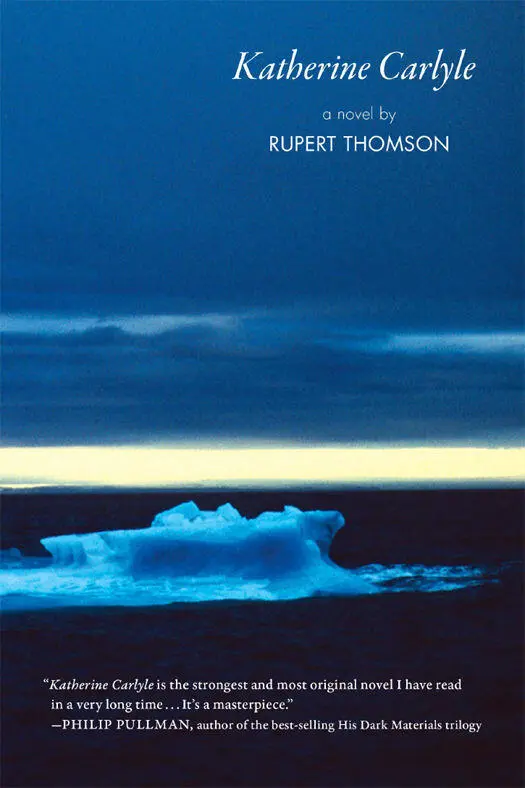
- Название:Katherine Carlyle
- Автор:
- Издательство:Other Press
- Жанр:
- Год:2015
- ISBN:9781590517390
- Рейтинг книги:5 / 5. Голосов: 1
-
Избранное:Добавить в избранное
- Отзывы:
-
Ваша оценка:
Katherine Carlyle: краткое содержание, описание и аннотация
Предлагаем к чтению аннотацию, описание, краткое содержание или предисловие (зависит от того, что написал сам автор книги «Katherine Carlyle»). Если вы не нашли необходимую информацию о книге — напишите в комментариях, мы постараемся отыскать её.
“[T]his road trip through a snow dome of mesmeric hallucinations is Thomson at his best.” —Richard Flanagan, author of The Narrow Road to the Deep North, winner of the 2015 Man Booker Prize
Katherine Carlyle is Rupert Thomson’s breakthrough novel. Written in the beautifully spare, lucid, and cinematic prose Thomson is known for, and powered by his natural gift for storytelling, it uses the modern techniques of IVF to throw new light on the myth of origins. It is a profound and moving novel about identity, the search for personal meaning, and how we are loved.
Unmoored by her mother’s death and feeling her father to be an increasingly distant figure, Katherine Carlyle abandons the set course of her life and starts out on a mysterious journey to the ends of the world. Instead of going to college, she disappears, telling no one where she has gone. What begins as an attempt to punish her father for his absence gradually becomes a testing ground of his love for her, a coming-to-terms with the death of her mother, and finally the mise-en-scène for a courageous leap to true empowerment.
Katherine Carlyle — читать онлайн бесплатно полную книгу (весь текст) целиком
Ниже представлен текст книги, разбитый по страницам. Система сохранения места последней прочитанной страницы, позволяет с удобством читать онлайн бесплатно книгу «Katherine Carlyle», без необходимости каждый раз заново искать на чём Вы остановились. Поставьте закладку, и сможете в любой момент перейти на страницу, на которой закончили чтение.
Интервал:
Закладка:
The sight of his upturned face, half inquisitive, half hopeful, is so poignant that I’m deceived into thinking I know him much better than I do, and that we’ve been friends for years, and in that moment I come close to loving him.
“No,” I say gently. “I don’t think so.”
“That’s what I thought.”
He looks back along the platform again, partly because he wants to see if the train is about to leave and partly to use up some time. There are only seconds left, and as with all goodbyes there is the pressure to do or say something moving, something unforgettable. Perhaps, also, it’s in his nature to squander what is precious to him, and then regret it later.
“Can we keep in touch?” he says. “Can I call you?”
“Best not.”
He nods. It’s the answer he expected.
“In fact, here,” I say, “take my phone.” I hold out the BlackBerry Cheadle gave me.
Oswald laughs, then shakes his head. “You can’t just give me your phone.”
“I don’t need it anymore.”
“You don’t need it?”
“No.”
His hand lifts into the air, then falters.
“Take it,” I say. “It’s probably stolen anyway.”
He reaches out and takes the BlackBerry, then he stares at it as if he has never seen one before.
“Maybe I’ll send you a postcard,” I say.
He looks at Josef who is sniffing at a puddle. I don’t think he believes me.
“How come you’re here?” I ask him. “I mean, it’s late.”
“I like stations.” He pulls Josef away from the wet patch. “Josef seems to like them too.”
“Gleich und gleich gesellt sich gern,” I say. Birds of a feather. It’s wittier in English but he still smiles. I lean out of the window. Farther up the platform a green light is showing.
“I never told you about the parcel,” Oswald says.
The train jerks, then checks.
“It wasn’t anything important,” he goes on, the words tumbling out. “It was just an excuse to talk to you. We’re not allowed to talk to customers, you see — not unless we’re serving them.”
I remember the weight of the package. “So what was inside?”
The train jerks again and starts to move.
Oswald seems calmer suddenly. Even though the train’s pulling away from him, even though the distance between us is increasing, he takes his time.
“Bones,” he calls out. “Bones for the dog.”
A smile cracks his face wide open.
He shouts something else but I can’t hear him above the hiss and screech of the departing train. The platform slides past, and his face becomes a pale dot. I watch until he’s hidden by a bend in the track, then I close the window and return to my seat. The train picks its way over the points like a drummer trying to find a rhythm. Bones for the dog . I’m smiling too.
THREE
We arrive in Warsaw just after three-thirty in the morning. I leave my compartment and walk along the platform. The low ceiling traps the scorched smell of trains. At a kiosk run by a woman with peroxide hair I buy a liter bottle of water. Cool and metallic, it has the same taste as the night.
No sooner has the train pulled out of the station than I doze off, only to be woken at dawn by a guard from Belarus who checks my transit visa. Though I have fled Berlin, memories of the Croatian still haunt me. I regret having told him about my mother; it’s not something he should know. I try to shut him out but the images keep coming. He hurls a lamp across his room. He opens the fridge and swallows the miniatures one by one — gin, vodka, whiskey, rum. He reaches for the phone and dials. Who’s he calling? I feel a growing apprehension about what might happen when we cross the border into Russia. What if Cheadle’s friends have seen to it that my visa is rescinded? What if I’m turned back?
Along with her will, my mother left a letter asking that her ashes be scattered in the Protestant Cemetery. We would often walk from Via Giulia. It was the Roman equivalent of going to the park. In the spring, when the daisies flowered, the grass was a dazzle of white. On summer afternoons the trees stood in deep pools of shade. We used to visit the famous people — Keats, Shelley, Goethe’s son — or watch stray cats eating pasta near the Pyramid of Cestius. My mother talked about the contrast between the peace inside the walls and the traffic jams and shouting just beyond. It was a cusp of a place, she said, removed from life yet still a part of it. Her wish made sense — it sounded like her — but my father told me that unauthorized scattering was forbidden, and also disrespectful. The urn containing my mother’s ashes could be “interred” in the cemetery wall, he said, but until that could be arranged it would be kept in a drawer in his bedroom.
One weekend, while he was out of the country, I took the urn from his chest of drawers and tipped the ashes into a plastic bag. Coarse and granular, like gravel, there was more than I had imagined there would be. I left the apartment with the bag hidden under my dress. It was an August afternoon. Gray and pale-orange clouds with messily torn edges bumped about in the sky, and my body ran with sweat where the plastic pressed against it. The streets were hot and quiet, everyone at the beach.
I had been worried the gatekeeper might search me, but when his eyes met mine he nodded and let me through. Inside the cemetery I wandered aimlessly, pausing at the place where Shelley’s heart is buried. Then I remembered how my mother and I would often settle beneath a certain cypress tree and snack on chocolate or figs. Once I had found the tree I dropped to my knees and trickled the ashes in a circle round the trunk. In daylight they looked obvious, a glaring white. Someone was bound to notice. I was just thinking I would have to cover them with blades of grass when the air shifted. Thunder banged overhead, loud as a dustbin lid. Seconds later, the rain came down. The ashes darkened and sank into the earth.
My father lost his temper when he found out what I had done but my anger more than equaled his.
“It’s what she wanted,” I shouted.
“You broke the law —”
“I don’t care. You think she was happy in a drawer ?”
I put my face close to the train window. Flat fields show through a mist of condensation. There are no primary colors anymore, only faded browns and greens, drained yellows, subtle shades of gray. No houses, no people. A kind of wilderness. Out in the corridor I slide a window open. The air smells of parsnips and stainless steel. I whisper the word Russia to myself, and a shiver travels up my spine.
That morning I slip into a trance, scarcely aware of my fellow passengers and oblivious to the landscape we’re passing through. I don’t talk to anyone, nor do I make a single entry in my notebook. There’s a force at work, something I failed to anticipate. Since the place I’m heading for is clear in my mind only as an idea, and isn’t, therefore, strictly speaking, a destination, I’m beginning to suspect that my eventual surroundings, whatever they might turn out to be, will have little or no relevance. The country I have chosen is hardly incidental, but this is not, at heart, a physical journey. It’s more like a journey back in time — or sideways, into another dimension. If the English couple in the cinema were messengers or heralds, pointing the way, then everything that has happened since is the fruit of those few moments — a gathering up, a realignment, a kind of distillation. My life is light and tidy now, like a rucksack that holds nothing but the bare essentials. The letters I wrote may have had their faults but they were as honest as I could make them. There will be no returning — at least, not in the geographical sense. This is a one-way ticket, a permanently ebbing tide.
Читать дальшеИнтервал:
Закладка:
Похожие книги на «Katherine Carlyle»
Представляем Вашему вниманию похожие книги на «Katherine Carlyle» списком для выбора. Мы отобрали схожую по названию и смыслу литературу в надежде предоставить читателям больше вариантов отыскать новые, интересные, ещё непрочитанные произведения.




Обсуждение, отзывы о книге «Katherine Carlyle» и просто собственные мнения читателей. Оставьте ваши комментарии, напишите, что Вы думаете о произведении, его смысле или главных героях. Укажите что конкретно понравилось, а что нет, и почему Вы так считаете.