Rupert Thomson - Katherine Carlyle
Здесь есть возможность читать онлайн «Rupert Thomson - Katherine Carlyle» весь текст электронной книги совершенно бесплатно (целиком полную версию без сокращений). В некоторых случаях можно слушать аудио, скачать через торрент в формате fb2 и присутствует краткое содержание. Год выпуска: 2015, ISBN: 2015, Издательство: Other Press, Жанр: Современная проза, на английском языке. Описание произведения, (предисловие) а так же отзывы посетителей доступны на портале библиотеки ЛибКат.
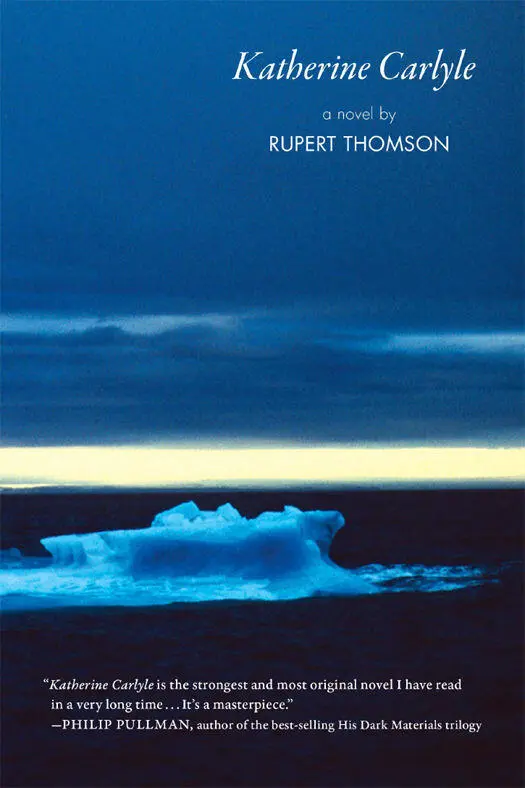
- Название:Katherine Carlyle
- Автор:
- Издательство:Other Press
- Жанр:
- Год:2015
- ISBN:9781590517390
- Рейтинг книги:5 / 5. Голосов: 1
-
Избранное:Добавить в избранное
- Отзывы:
-
Ваша оценка:
Katherine Carlyle: краткое содержание, описание и аннотация
Предлагаем к чтению аннотацию, описание, краткое содержание или предисловие (зависит от того, что написал сам автор книги «Katherine Carlyle»). Если вы не нашли необходимую информацию о книге — напишите в комментариях, мы постараемся отыскать её.
“[T]his road trip through a snow dome of mesmeric hallucinations is Thomson at his best.” —Richard Flanagan, author of The Narrow Road to the Deep North, winner of the 2015 Man Booker Prize
Katherine Carlyle is Rupert Thomson’s breakthrough novel. Written in the beautifully spare, lucid, and cinematic prose Thomson is known for, and powered by his natural gift for storytelling, it uses the modern techniques of IVF to throw new light on the myth of origins. It is a profound and moving novel about identity, the search for personal meaning, and how we are loved.
Unmoored by her mother’s death and feeling her father to be an increasingly distant figure, Katherine Carlyle abandons the set course of her life and starts out on a mysterious journey to the ends of the world. Instead of going to college, she disappears, telling no one where she has gone. What begins as an attempt to punish her father for his absence gradually becomes a testing ground of his love for her, a coming-to-terms with the death of her mother, and finally the mise-en-scène for a courageous leap to true empowerment.
Katherine Carlyle — читать онлайн бесплатно полную книгу (весь текст) целиком
Ниже представлен текст книги, разбитый по страницам. Система сохранения места последней прочитанной страницы, позволяет с удобством читать онлайн бесплатно книгу «Katherine Carlyle», без необходимости каждый раз заново искать на чём Вы остановились. Поставьте закладку, и сможете в любой момент перейти на страницу, на которой закончили чтение.
Интервал:
Закладка:
/
As the train rattles northeast, through endless, leafless forest, my father floats back into my thoughts. I can visualize the apartment on Via Giulia, though the blue sky is becoming harder to believe in, more unreal. There he is, standing on the roof terrace in a shirt and shorts. On his feet are his favorite red leather slippers, which he bought in Morocco. Kit , he mutters. A vertical crease appears between his eyebrows. He is holding my first letter — the short one — and he is clearly vexed. It’s quite possible that the meeting I have proposed is inconvenient. He might be working on a story that means he has to be elsewhere, in which case flights, accommodation, and interviews will already have been arranged. Should I have given him more notice? A choice of dates? Maybe I’m asking too much of him. Maybe all the letter will do is confirm his current view of me — namely, that I’ve become demanding and unreasonable, and that I seem determined to disrupt his life.
Still, I think he will travel to Berlin. It’s not so much that he loves me or feels responsible for me — or rather, those considerations won’t be in the forefront of his mind. No, I have presented him with a mystery, one he won’t be able to resist the urge to solve. My letter will back up anything Massimo might have said. What’s more, it’s brief and to the point, employing the kind of language he’s used to. It resembles an assignment, in fact. I have appealed, unwittingly, to the part of him he values most, the part that can be relied on.
Yes, he’ll go.
I see him booking himself onto a flight that arrives on the sixteenth, the day before our rendezvous. At the outset his journey echoes mine — Termini, then Fiumicino. He might even leave his umbrella on the train! During the flight he looks at mainland Europe far below and smiles because he’s once again in transit, but then he remembers the reason for the journey, and his mood sours. No, he won’t have any “hot or cold snacks.” No, he doesn’t want “a beverage.” No, he isn’t “interested in purchasing” any cigarettes or fragrances or teddy bears dressed up as pilots.
Kit, he thinks. What are you playing at?
On landing, he takes a taxi straight to the InterContinental. Since my letters were written on hotel stationery he might assume that I am still a guest, but when he asks for me at reception the woman with the doll’s eyes tells him they have no one by that name. He shows her my letter, dated October 9, and asks her to check her records. The natural emptiness of her gaze adds tension to the twenty-five or thirty seconds she spends scanning her computer screen. Katherine Carlyle stayed for two nights, she says at last, arriving in the early hours of October 8 and departing at midday on the ninth. She takes another look at the letter. She thinks she remembers posting it.
My father leans on reception, inviting a confidence. “Was she alone?”
“Yes.”
“Did she seem upset?”
The woman considers him.
“Was there anything unusual about her behavior?” my father says.
“Not that I remember —” She starts. “Someone spoke to her, just after she gave me the letter.”
“A man?”
“Yes.”
“Was it him?” He shows her the photo of me and Oswald.
“No.”
“Do you know who the man was?”
“No. He gave her a card. She threw it in the bin.” She looks past my father, towards the lift.
Oddly enough, for all his anxiety and irritation, he sleeps well that night.
If he does fly to Berlin it seems inevitable that he will read my second letter. I imagine him at the table where I used to sit, near the mirror with its pondlike glass. The atmosphere, as always, is restrained, bookish, faintly erotic. The second letter is hard for him to stomach, but he reads it twice, from beginning to end, and then looks up. The opposite direction . What do I mean by that? Unless he manages to trace either Oswald or Cheadle — and I can’t see that happening, not given the entirely coincidental nature of my encounters with the two men — he has no way of finding out where I have gone. The trail will go cold in Berlin — even, possibly, at the Einstein. But wait. What about Lydia? He’s a reporter with a keen intuitive sense and decades of experience. He looks at Lydia and wonders what she can tell him.
He looks at Lydia —
The train stops abruptly, jolting me forwards in my seat. We appear to have reached the border with Russia. I take out my passport and my letter of invitation and place them neatly on the table by the window, ready for inspection. The muscles in my stomach have tensed up. My mouth tastes of coins.
When the Russian border guard steps into my compartment I say good evening — Dobry vyecher — then I look straight ahead with my hands in my lap. He opens my passport to the page that holds my visa. I can hear his breathing, thick and steady, as if he’s asleep. A chill clings to his dark-green uniform; drizzle pearls his gray fur hat. At last he hands my passport back with a brisk nod. Outwardly I remain the same — calm expression, folded hands — but inside I’m bubbling over. My visa is still valid. He has let me in .
Even before the train begins to move again I’m back in the Einstein. My father signals to Lydia and she walks over. Her smile is professional, as usual. There’s an extra element, though — an intensity or luster. She knows she’s in a story, and that he’s part of it. Is he as attractive as she expected him to be? And what does he think of her?
He questions her as she stands beside the table, her left hip only inches from his right shoulder. She answers thoughtfully. He looks up, charmed by the freckles scattered across her nose. There is no way of avoiding the hackneyed line. What time do you finish work? When he leaves a few minutes later he insists on paying. She gets to keep my money.
At the end of her shift they meet outside the café. Though they don’t know each other at all, and are facing different ways, looking for a taxi, they are connected by something so vibrant that it’s almost visible. When I wrote my letter, did I know that it would throw them together?
In less than half an hour they are in his room at the InterContinental, with its wide bed, its floor-to-ceiling window, its soaring view over the Tiergarten. It’s all so obvious and effortless. Seamless, really. As the gap between their faces narrows, I turn away. It’s as if I’m standing at the window, looking out. Gray clouds swirling, trees stripped of all their leaves.
Later, he reaches across her bare shoulder for my letter. The hairs on his forearm glint in the light from the bedside lamp. The window black, the rush-hour traffic murmuring below. He begins to read. Halfway through, he puts the letter down.
“So you didn’t actually know my daughter …”
Lydia rolls on to her back and looks at him. She’s still wondering who he is, this glamorous older man she has allowed into her life. This stranger.
“I saw her three or four times,” she says.
“You think she was staying nearby?”
“It’s possible.”
“She didn’t mention a hotel?”
“No.”
“What about the last time you saw her, when she gave you the letter? Did she tell you where she was going?”
Lydia thinks back. “She said she couldn’t come to the café again. I had the feeling she was leaving that day. She looked at her watch. She was in a hurry.”
“That was two weeks ago?”
“Not so long. Eight days maybe.” She lifts herself higher on the pillows. “There was a kind of — I don’t know — Engültigkeit about the way she talked.”
“Engültigkeit?”
“Something final. She seemed to know what she was doing — in the future. It was all decided.”
Читать дальшеИнтервал:
Закладка:
Похожие книги на «Katherine Carlyle»
Представляем Вашему вниманию похожие книги на «Katherine Carlyle» списком для выбора. Мы отобрали схожую по названию и смыслу литературу в надежде предоставить читателям больше вариантов отыскать новые, интересные, ещё непрочитанные произведения.




Обсуждение, отзывы о книге «Katherine Carlyle» и просто собственные мнения читателей. Оставьте ваши комментарии, напишите, что Вы думаете о произведении, его смысле или главных героях. Укажите что конкретно понравилось, а что нет, и почему Вы так считаете.