Alexander Theroux - Darconville’s Cat
Здесь есть возможность читать онлайн «Alexander Theroux - Darconville’s Cat» весь текст электронной книги совершенно бесплатно (целиком полную версию без сокращений). В некоторых случаях можно слушать аудио, скачать через торрент в формате fb2 и присутствует краткое содержание. Год выпуска: 1996, Издательство: Holt Paperbacks, Жанр: Современная проза, на английском языке. Описание произведения, (предисловие) а так же отзывы посетителей доступны на портале библиотеки ЛибКат.
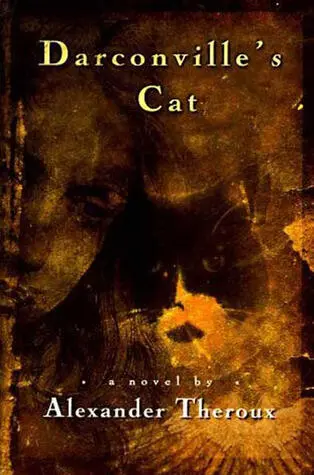
- Название:Darconville’s Cat
- Автор:
- Издательство:Holt Paperbacks
- Жанр:
- Год:1996
- ISBN:нет данных
- Рейтинг книги:3 / 5. Голосов: 2
-
Избранное:Добавить в избранное
- Отзывы:
-
Ваша оценка:
Darconville’s Cat: краткое содержание, описание и аннотация
Предлагаем к чтению аннотацию, описание, краткое содержание или предисловие (зависит от того, что написал сам автор книги «Darconville’s Cat»). Если вы не нашли необходимую информацию о книге — напишите в комментариях, мы постараемся отыскать её.
Darconville's Cat Its chapters embody a multiplicity of narrative forms, including a diary, a formal oration, an abecedarium, a sermon, a litany, a blank-verse play, poems, essays, parodies, and fables. It is an explosion of vocabulary, rich with comic invention and dark with infernal imagination.
Alexander Theroux restores words to life, invents others, liberates a language too long polluted by mutters and mumbles, anti-logic, and the inexact lunacies of the modern world where the possibility of communication itself is in question. An elegantly executed jailbreak from the ordinary,
is excessive; funny; uncompromising; a powerful epic, coming out of a tradition, yet contemporary, of both the sacred and the profane.
Darconville’s Cat — читать онлайн бесплатно полную книгу (весь текст) целиком
Ниже представлен текст книги, разбитый по страницам. Система сохранения места последней прочитанной страницы, позволяет с удобством читать онлайн бесплатно книгу «Darconville’s Cat», без необходимости каждый раз заново искать на чём Вы остановились. Поставьте закладку, и сможете в любой момент перейти на страницу, на которой закончили чтение.
Интервал:
Закладка:
Darconville, who didn’t want to, noticed everything. He fought not to notice. If the people there, however, could have known with what punctilious accuracy their every movement and mannerism was recorded by him, not through viciousness, not smugness, nor any premeditation, they’d have sued him on the spot. He couldn’t help it. Behavior is comment, the articulation of action, and these nopsters? With their fipple-fluting tongues? Their pretentious piety? Any satirist worth his salt would have banished them forthwith in a jingle, not as victims but as executioners : an authorized punishment, seeking to cure disease by remedies which produce effects similar to the symptoms of the complaint, for what to correct as hangmen they’d have to know as the hanged. There is not a bauble thrown by the silly hand of a dunce, thought Darconville, that may not be caught with advantage by the hand of art. Pausias, in painting a sacrifice, foreshortened the victim and threw his shade on part of the surrounding crowd to show its height and length, an offense that exaggerates a mood where defense, sickened, lies and, stricken, dies, for are we not all implicated in what we hate by what we otherwise might love? But I am no writer anymore, reasoned Darconville, so how would I know?
It was less for the observations he made, however, than the emotions he felt that gave Darconville an indication how extremely anxious he was that Isabel should come, so both of them could leave. The party was ridiculous. It was one fantastical opinion after another, mad fugitive theorizing-on-naught from bore to batman to boobie, and behind everybody, everywhere, was somebody, somewhere, making signs with his or her eyes which he or she meaningfully manipulated for another, anywhere, to meet and mock.
Miss Malducoit — the kind of woman who always says she’s going to make a long story short but doesn’t — stood in the middle of the dining-room, meanwhile, and not surprisingly de-edified her listeners as she plucked from the damnum fatale of her new feminist consciousness this remarkable theory, that, if women would become more like the men who thought they were better than women, then those men would become more like the women who thought they couldn’t become men than those women who, thinking they could, already had— a remark that Miss Ballhatchet, the college sapphonic, thought ironically aimed at her, whereupon she withdrew, reached into her pocket, and furiously began squeezing a handball, an action, misinterpreted, that took the attention of Drs. Knipperdoling and Pindle, who nudged each other knowingly, long having learned, both, from no less a hallowed shrine than their mothers’ knees that the wages of refusing “to make a decision for Christ” were clear, i.e., a faint mustache, an abridged haircut, and the penchant for wearing gym shorts with a zipper-fly.
“I wanna tell ya,” said Pindle.
“Breaks your heart,” agreed Knipperdoling, tossing some hazelnuts into his mouth.
“This mortal coil,” said Pindle.
They exchanged glances.
“ Life ,” they said in unison — and shook their heads.
Mr. Schrecklichkeit, blowing his huge white nose, heard the word. “That’s my field, life,” he muttered, “which is only another word for mortality.”
“Maybe that’s why”—everybody turned to this voice—”why everybody has an M on the palm of his hand?” faintly offered Miss Swint, peeking over her glasses, but the gentlemen to whom she was speaking all breezed past her and went to the foodtable.
Religion, of course, was the favorite staple of conversation at Quinsy College. Indeed, it has always been a subject that could touch off Southerners faster than’ anything else, creating a fellowship, however, that had less to do with binding them to a disposition to truth or Christian charity than with allowing them to turn with grateful relief to the one totally subjective, squibcrack-proof topic they could all pursue — every last self-ordained half-wit who wanted to — without the attendant personal humiliation of having to explain, clarify, or reconcile what the strict tests of either an informed intelligence or thinking heart, put into play, might serve to disprove and so disparage.
Miss Sally Bull Sweetshrub told everyone that art was religion. The Weerds, now upstairs in the attic, were each jointly confessing the other to be his and her religion. Crouching, Mr. Thimm was in the pantry being threatened by an infuriated Baptist minister with a raised fire-shovel for blasphemously having claimed that the greatest book on religion ever written was the privately printed (and, needless to say, dictated) edition worked out of his father’s deathbed confession, called Crows as Foreboders . And by the rosy punchbowl, Prof. Wratschewe, syntactitian and local authority on the shall/will rules, visibly disturbed several in a circle of blue-haired ladies gathered around him by posing to them the question that also happened to be the subject of a monograph he was only that afternoon swotting up: “Where Is the Christian Homer?”
Include me out, thought Darconville, hearing the question. Resigned that his own book would never be completed, he kept silent. But that was all right, he felt, for next to him who can finish is he who has hid that he cannot. Still, he wondered how long it had been since he’d last sat down and finished a page, the answer to which speculation, if there was one, immediately destructed in an explosion of sudden dismay at his elbow.
“O poo, I don’t believe it.”
“I thought everybody knew.”
“A fiction.”
“A fact ,” snapped Miss Gibletts, her neutral articulations rendered none the more fetching for the plain brown shift she wore that sagged from her like a punctured windsock.
“But, Lord,” asked Mrs. McAwaddle, snatching nervously at her pearls, “how in the world could she have done that?”
Miss Gibletts, closing her eyes, simply shrugged. She knocked back a small tumbler of Southern Comfort, then one more, and another— respectively her eighth, ninth, and tenth that evening — rather annoyed that Mrs. McAwaddle didn’t believe her. She set down the glass, audibly. “It is said, you know, that the poet Ovid — Publius Ovidius Naso — had the longest one in the world. It cast a shadow. It could accommodate pigeons.”
“I simply can’t believe it.”
“Read your Roman history.”
“No, I mean I can’t believe”—Mrs. McAwaddle swallowed— “ that .”
Darconville believed it when he’d heard it, however — and since he heard it everywhere he went, he walked to the far windows, leaving the subject of this conversation, along with the two ladies, behind. The topic was disturbing: fortuneless and dripstick-nosed Miss Gupse, the previous March having been asked to resign — the verdict was “overtired”—had been found apparently by the odor, stiff, on the business-end of a halter in the backroom of a Nashville doss house with a note safety-pinned to one of her anklesocks reading only “Because.” The police later gave out the information that, tied round her head on a string, had been found an item crocheted by her own hand — a pointed nose bag.
Peering out expectantly, Darconville could not see Isabel through the darkness of the window. He saw only Miss Gupse, somewhere, now beyond anyone’s poor power to add or detract, and bent over there, his hands on the panes like blinders, he thought: you can never love too early, you can only love too late.
* * * * *
Friday 8:58 P.M.: Tableau: Girl, With Door Ajar. Artist unknown. Round-eyed in fright, Isabel steps into Darconville’s dark office and seems to feel the room waiting and aeroferic with suspicion, that strange disturbing noise which sits at the heart of utter silence: white noise. Closing her eyes, she hears wounds in the doleful sounds of the bell tolling out nine leaden bongs from the old Smethwick clock and pauses in her cold shoes: no candle gutters, no shutters bang, no suit of armor creaks. Swallowing, she steps quietly out of her footprints— and waits again. O interminable! She decides to leave. The wireworm that has crept into her ear now moves: “ Why then was this forbid? Why but to awe, why but to keep ye low and ignorant, His worshippers .” There is some shame and remorse, less for finding the letter removed from the desk than in pinching out the fragments from the bottom of the wastebasket; thereafter, not so — the moves of the operation are then all swift and precise: excogitating, a vein like an S raised on her forehead, Isabel oops piece to piece, piece to piece. She inhumes a hot sigh. A letter comes up in lavender. A low moan rises up through Isabel to echo in a shrill piercing cry of agony matched only by the proclamation of the angel Hadraniel, dropping from somewhere, his voice penetrating through a million firmaments to plead, “Come back, come back!” But the door of the English building is already slamming, slams.
Читать дальшеИнтервал:
Закладка:
Похожие книги на «Darconville’s Cat»
Представляем Вашему вниманию похожие книги на «Darconville’s Cat» списком для выбора. Мы отобрали схожую по названию и смыслу литературу в надежде предоставить читателям больше вариантов отыскать новые, интересные, ещё непрочитанные произведения.







Обсуждение, отзывы о книге «Darconville’s Cat» и просто собственные мнения читателей. Оставьте ваши комментарии, напишите, что Вы думаете о произведении, его смысле или главных героях. Укажите что конкретно понравилось, а что нет, и почему Вы так считаете.