Alexander Theroux - Darconville’s Cat
Здесь есть возможность читать онлайн «Alexander Theroux - Darconville’s Cat» весь текст электронной книги совершенно бесплатно (целиком полную версию без сокращений). В некоторых случаях можно слушать аудио, скачать через торрент в формате fb2 и присутствует краткое содержание. Год выпуска: 1996, Издательство: Holt Paperbacks, Жанр: Современная проза, на английском языке. Описание произведения, (предисловие) а так же отзывы посетителей доступны на портале библиотеки ЛибКат.
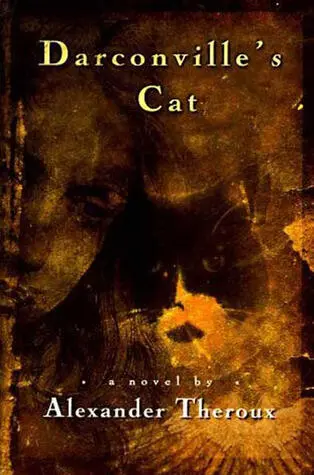
- Название:Darconville’s Cat
- Автор:
- Издательство:Holt Paperbacks
- Жанр:
- Год:1996
- ISBN:нет данных
- Рейтинг книги:3 / 5. Голосов: 2
-
Избранное:Добавить в избранное
- Отзывы:
-
Ваша оценка:
Darconville’s Cat: краткое содержание, описание и аннотация
Предлагаем к чтению аннотацию, описание, краткое содержание или предисловие (зависит от того, что написал сам автор книги «Darconville’s Cat»). Если вы не нашли необходимую информацию о книге — напишите в комментариях, мы постараемся отыскать её.
Darconville's Cat Its chapters embody a multiplicity of narrative forms, including a diary, a formal oration, an abecedarium, a sermon, a litany, a blank-verse play, poems, essays, parodies, and fables. It is an explosion of vocabulary, rich with comic invention and dark with infernal imagination.
Alexander Theroux restores words to life, invents others, liberates a language too long polluted by mutters and mumbles, anti-logic, and the inexact lunacies of the modern world where the possibility of communication itself is in question. An elegantly executed jailbreak from the ordinary,
is excessive; funny; uncompromising; a powerful epic, coming out of a tradition, yet contemporary, of both the sacred and the profane.
Darconville’s Cat — читать онлайн бесплатно полную книгу (весь текст) целиком
Ниже представлен текст книги, разбитый по страницам. Система сохранения места последней прочитанной страницы, позволяет с удобством читать онлайн бесплатно книгу «Darconville’s Cat», без необходимости каждый раз заново искать на чём Вы остановились. Поставьте закладку, и сможете в любой момент перейти на страницу, на которой закончили чтение.
Интервал:
Закладка:
“And these,” said host Felix Culpa, perspiring into his ascot, for though he was big of heart, his almost thrice three times thrice three feet in breadth sometimes got the better of it, “these are the Thisbites.”
“I’m sure,” smiled a few dears from the personnel office, gentle souls with shell-pink complexions, precise hairnets, and steel girdles, the type of women at parties who are always, for no particular reason, just leaving — and never, somehow, without a brown package tied with string under their arms and seventy-five goodbyes at the door.
Miss Thisbite, a Dixiebelle, was one of those girls of the beauty-pageant variety, with that typical Southern smile that is always just a bit too high. She had baby-blue eyes, a round face — piefacedness has always been the Southern ideal of feminine beauty — and had just come down from Richmond for the weekend, driven by her brother, a young blond ephebe with a perfect head and skin the color of moonlight who was also in attendance. She was being interviewed for an opening in the English department. “A real armful, huh? I know the type,” Felice said, playfully tapping Darconville and nodding in the direction of the girl whose short skirt revealed long lithe legs and stockings worked like the marquisette of a butterfly net. “Shapelier than Isabel in the legs, OK. But I’ll give you two to one she’d be harder to get into than the Reading Room of the British Museum.” Then she tweaked his nose and pranced away on an arc, very like the smile she sent him on the way out.
Southern women, it occurred to Darconville, were a case-study in extremes. They were in fact like sausages: some — the minority — were so soft and pink and moist they could be spread with a pliable knife; the others were as hard and dry as corundum, a kind of thin indurate Landjaeger , its groats tied off tight and cold as marble in the bung of a fierce, almost unbreakable coil. There seemed to be no other kind. In any case, most of the men at the party, old dodders, young dudes, immediately honed in on Miss Thisbite. They lit up trick bowties. They puffed the college’s reputation. They subjected her to rustic stories, pseudodoxies, tall tales.
“They are saying”—it was Prof. Fewstone, of course, sidling up to Miss Thisbite with his overfilled shirt and yogibogeybox-shaped head, the strange hairdressing of which gave him a big roach in front and a curled effect at the rear which he tucked under a roll—”they are saying you want to join the team, yes? First-rate! I tell you, we’re thick as three in a bed here at Quinsy. Wonderful! But now tell me, have you been told about the cutbacks over at the legislature, the budget, all ther—”
Miss Thisbite, kindly refusing his offer of a wheatcracker smeared with lobster pâté, circled the button of his jacket with her finger and softly asked if money was scarce.
“Scarce? Why, non-existent, gal, non-existent ! Listen, I was around this place when they paid you through a bean-blower, shoot yes, and it ain’t no better now. Thing is,” he said, moving closer, “I happen to have my foot in the door with the governor, see, and—”
He suddenly felt cold and looked up.
Mrs. Fewstone, standing across the room in hard brown shoes and wearing a dress that looked as if it had been cut out of zinc, had him transfixed with her snake-like eyes in a cruel fascinatio .
At this juncture, Darconville worked his way to the front room to see if Isabel had come. Mrs. DeCrow, noticing him, continued the shabby game of studied indifference she had played for almost a year now and turning cock-a-hoop, her nose sharp in the air, whisked past him with a face like the Uffizi Medusa. Shaking his head, he lit a cigarette: the tinker, his dam. But as the Great Snibber looked back — she had snibs in her, and snibs, and more snibs! — she banged smack into a bureau, eliciting a snoot of glee from the for-the-moment uncharacteristically joyous Mr. Schrecklichkeit who, not that he could know it, immediately joined both Darconville and Abraham Lincoln as a funeral urn in the necropolis of her mind. Bristling, she shoved the bu-reau with one swipe of her pipefitter-like arms. Schrecklichkeit was a simp, everybody knew that. But Darconville? He tasked her, he heaped her. She adjusted her breasts. She glowered around. She stepped to the table. Correct her, would he? She stabbed into a bowl of smoked oysters with a toothpick, spitted three, and, poor little beasts, they were mollusks no longer but now part and parcel of Mrs. DeCrow.
Meanwhile, Darconville looked around the dim front room, and looked, and looked.
* * * * *
Friday 5:40 P.M.: The shaft of light from the overhead lamp bleaches out a spot on the front steps of the library, where a figure is standing. Are you going to dinner? No. Have you finished your term-paper? No, no. Isabel Rawsthorne is staring through a nightfall thick as a fault to the outline of the tree in front of Darconville’s house, only a largeness of indifférence — not good, not evil — the pendulous boughs of which the wind jostles with the feverish excitement of a sacrilegious thief. All are not abed that have ill rest, and one of them, lacking most because longing most, begins to pace out notions. Of these notions one lodges itself finally in her mind with cautious exactitude as the very thing indicated by the occasion. It’s a cat’s walk, a little way up and back. Then it’s not a cat’s walk. The figure is gone.
* * * * *
Darconville soon began to get restless. At sixes and sevens, he wandered through the hall and went into the library; he half-pulled a book out of a shelf— The Gnomes of Zeeland by Rex Hout — and uninspiredly pushed it back. He stepped out on the veranda and looked at the sky. Strangely, an intuitional hindsight occurred to him, but it passed as he strained to count the distant peal of bells coming from the library. Nine o’clock. Thank God, Isabel would be coming soon.
“Titbits?”
“Kickshaws?”
“Kitcats?”
It was three horae from the home economics department at the veranda doors offering the hors d’oeuvres they’d brought. Impossible to avoid, these fructatory genii and inveterate tray-passers with fat dimpled elbows, polished faces, and smelling of soap and starched linen had been shoggling through the party since they’d got there, the ball-like contours of their heads revolving as they bowed and dipped from guest to guest with plates of airfoods. One of them who’d flunked Isabel first semester for absenteeism thought the grade confirmed in not seeing her there. She went on about it with some concern, embarrassing Darconville, having become her father-by-proxy, his proxy-by-placement. An hour passed. He checked his watch. It was 9:04.
The guests, meanwhile, circulated, mooning from room to room, discovering each other again in a different place but under the same circumstances to resume their similar chat. Taken altogether, it was not unlike any other faculty party, archetypal, to be sure — if more pronounced at Quinsy — with its predictable cast of poltroons, gum-beating fibsters, and others whose brains were kept in jars above the moon; to wit: the Funster with the double-jointed thumb which also serves — to everybody’s dismay — as a finger-puppet; the Trendy Wife (always from California) wearing hoop earrings and a bandanna who’s found the most fantastic recipe for sharksfin soup; the Good Ol’ Boy, a fox-snouted churl in a perpetual sulk who sits alone in the den misanthropically crunching pretzels and flipping through a five-year-old issue of Knife Digest ; the Female Poet, smoking a cheroot, who has a cat named “Cat” and calls her poems “friends”; the Foreigner, coddled by all, who is perfectly willing to talk about agrarian reform in his country; the Chubby-in-Residence who, after twenty-seven visits to the dog-whelk dip, publicly — and virtuously — refuses her dessert at dinner; the Etymologist, thoroughly bottomed in his Skeat, who is silent in any given conversation until that crucial point when he interrupts with, “Actually, I think you’ll find that—”; the Televisioniste, somebody’s boyfriend, who with more confidence than brains deathlessly mis-recapitulates for everyone the interminable plot of last night’s late movie; the Convenientologist who at some moment or other always comes striding out of the bathroom saying, “Why, Felice, you never told us you installed a bidet!” and then always, of course, the Favorite Child, the little towser with the cowlick dragged down from upstairs in his pajamas-with-feet, blinking and clutching a truck, who is called upon to sing in a voice like a puppetoon — and reluctantly—”Jesus Wants Me for a Sunbeam.”
Читать дальшеИнтервал:
Закладка:
Похожие книги на «Darconville’s Cat»
Представляем Вашему вниманию похожие книги на «Darconville’s Cat» списком для выбора. Мы отобрали схожую по названию и смыслу литературу в надежде предоставить читателям больше вариантов отыскать новые, интересные, ещё непрочитанные произведения.










Обсуждение, отзывы о книге «Darconville’s Cat» и просто собственные мнения читателей. Оставьте ваши комментарии, напишите, что Вы думаете о произведении, его смысле или главных героях. Укажите что конкретно понравилось, а что нет, и почему Вы так считаете.