Kingsley Amis - Dear Illusion - Selected Stories
Здесь есть возможность читать онлайн «Kingsley Amis - Dear Illusion - Selected Stories» весь текст электронной книги совершенно бесплатно (целиком полную версию без сокращений). В некоторых случаях можно слушать аудио, скачать через торрент в формате fb2 и присутствует краткое содержание. Год выпуска: 2015, Издательство: New York Review of Books, Жанр: Современная проза, на английском языке. Описание произведения, (предисловие) а так же отзывы посетителей доступны на портале библиотеки ЛибКат.
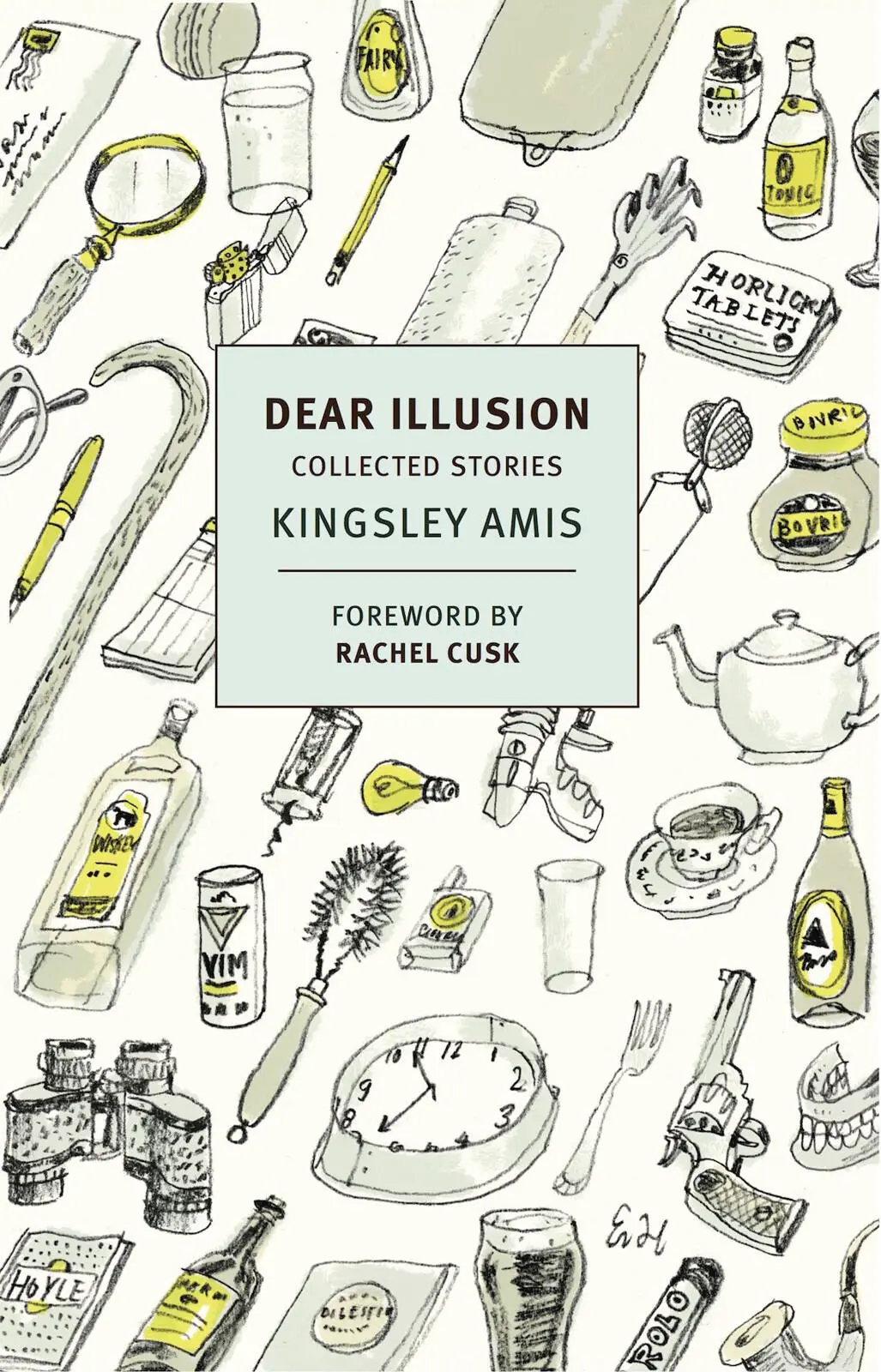
- Название:Dear Illusion: Selected Stories
- Автор:
- Издательство:New York Review of Books
- Жанр:
- Год:2015
- ISBN:нет данных
- Рейтинг книги:4 / 5. Голосов: 1
-
Избранное:Добавить в избранное
- Отзывы:
-
Ваша оценка:
Dear Illusion: Selected Stories: краткое содержание, описание и аннотация
Предлагаем к чтению аннотацию, описание, краткое содержание или предисловие (зависит от того, что написал сам автор книги «Dear Illusion: Selected Stories»). Если вы не нашли необходимую информацию о книге — напишите в комментариях, мы постараемся отыскать её.
Dear Illusion: Selected Stories — читать онлайн бесплатно полную книгу (весь текст) целиком
Ниже представлен текст книги, разбитый по страницам. Система сохранения места последней прочитанной страницы, позволяет с удобством читать онлайн бесплатно книгу «Dear Illusion: Selected Stories», без необходимости каждый раз заново искать на чём Вы остановились. Поставьте закладку, и сможете в любой момент перейти на страницу, на которой закончили чтение.
Интервал:
Закладка:
The meeting next door broke up. Betty and her children were hurried out of the place, the former carrying a tattered parcel my wife had furtively thrust into her hands. I found out afterwards that among other things it contained a tweed skirt of Jean’s I particularly liked her in and my own favourite socks. This was charity run riot.
At lunch, Mair said efficiently: ‘The trouble with girls like that is that they’ve got no moral fibre.’
‘How do you mean?’ I asked.
‘I mean this, John. They’ve no will of their own, you see. They just drift. Line of least resistance all the time. Now Betty didn’t really want to abandon those twins of hers — she was quite a good mother to them, apparently, when she was living with her parents and going out to work at this café. Then she went to a dance and met this dirty swine of a crane driver and he persuaded her to go and live with him — he’s got a wife and child himself, a real beauty, he is — and he wouldn’t take the twins, so she just went off and left them and let her parents look after them. Then the swine went off with another woman and Betty’s father wouldn’t have her back in the house. Said he’d forgiven her once when she had the twins when she was sixteen and he wasn’t going to forgive her again. He’s strong chapel, you see, believes in sinners being cast into the outer darkness, you know the kind of thing. It’s a tragic story, isn’t it?’
‘Yes,’ I said, and went on to talk about the conflict between generations, I think it was. Mair’s technique when others ventured beyond a couple of sentences was to start nodding, stepping up the tempo as long as they continued. When her face was practically juddering with nods I gave in.
‘Well,’ she went on in a satisfied tone, ‘going back to where I was just now, Betty’s father got into such a rage with her that he threw the twins out as well, and she got her job back at the café, which wasn’t really a good thing because it’s not a very desirable place, but at least it meant that there was some money coming in, but she couldn’t take the twins to work with her, so she parked them with the woman she was renting her room from. Then she, the woman, went out for the evening one time when she was working late, Betty I mean, and the twins were left unattended and they ran out into the street and wandered about and a policeman found them and that’s how we got brought into it. They were in a dreadful state, poor little dabs, half in rags and — quite filthy. I had the devil’s own job stopping them being taken into care, I can tell you. You see, while Betty was with her parents in a decent home she looked after them all right, but on her own, with bad examples all round her, she just let things slide. No moral fibre there, I’m afraid. Well, I fixed her up at the day nursery — didn’t know there were such things, she said, but I told her she’d just been too lazy to inquire — and after that things jogged along until this Norwegian came into the café for a cup of tea and saw Betty and bob’s your uncle.’
‘Hasn’t the Norwegian got to go back to Norway ever?’ Jean asked, her eyes on the forkful of fish that had been oscillating for some minutes between Mair’s plate and her mouth.
‘He’s going over for a few weeks soon, he says. He’s got a job at a chandler’s in Ogmore Street — it’s run by Norwegians, like a lot of them. Decent people. They’ve been married six weeks now, him and Betty, and he’s very fond of the twins and keeps her up to the mark about them, and of course I give her a good pep talk every so often.’
‘Of course,’ I said.
‘One job I had to do was take her out of that café. Lot of undesirables hang round the place, you know. A girl like Betty, quite pretty and none too bright, she’d have been just their meat. It’s something to have kept her out of their clutches. Oh, yes, I’m quite proud of myself in a way.’
One Sunday afternoon a couple of months later I was dozing in front of the fire — Jean had taken the kids out for a walk with a pal of hers and the pal’s kids — when the doorbell rang. Wondering if the caller mightn’t at last be some beautiful borrower come to avow her love, I hurried downstairs. The person on the doorstep was certainly a woman and probably on the right side of thirty, but she wasn’t beautiful. Nor — I’d have taken any odds — was she a borrower, not with that transparent mac, that vehement eye shadow, that squall of scent. ‘Good afternoon,’ I said.
The woman smiled, fluttering her Prussian-blue eyelids. ‘You remember me, don’t you, Mr Lewis? Betty Arnulfsen.’
I felt my own eyes dilate. ‘Why, of course,’ I said genially. ‘How are you, Betty? Do come in.’
‘Aw, all right, thank you. Thanks.’
‘Haven’t seen you for a long time.’ Not for several weeks, in fact. She’d turned up three more times to do our chores and then that had suddenly been that. Application to Mair Webster had produced an evasive answer — an extreme and, as I now saw it, suspicious rarity.
‘I was just passing by, see, so I thought I’d drop in and see how you was all getting along, like.’
‘Good. It’s very nice to see you again. Well, what have you been doing with yourself?’
It could have been more delicately put, for somebody, whether herself or not, had plainly been doing a good deal with Betty one way and another. As we stood confronted by the sitting-room fire I saw that her hair, which had been of a squaw-like sleekness, now looked like some kind of petrified black froth, and that her face was puffy underneath the yellowish coating of make-up. At the same time she’d altogether lost her hounded look: she seemed sure of herself, even full of fun. She wore a tight lilac costume with purple stripes on it and carried a long-handled umbrella that had elaborate designs on the plastic.
‘Aw, I been doing lots of things,’ she said in answer to my question. ‘Having a bit of a good time for a change. Soon got brassed off with that old cow Webster telling me what I must do and what I mustn’t do. I been keeping out of her way, going to live my own life for a change, see? I got a bit of money now. Here, have a fag.’
‘No, thanks, I don’t smoke.’
‘Go on, it’ll do you good, man.’
‘No, honestly, I never do.’
‘I can tell you’re one of the careful ones.’ She laughed quite a bit at this stroke, giving me a chance to notice the purplish inner portions of her lips where the lipstick had worn away or not reached. With a kind of indulgent contempt, she went on: ‘And how you been keeping? Still working down that old library?’
‘Oh, yes, I feel I ought to give them a hand occasionally.’
‘Don’t you get brassed off with it now and then?’
‘Yes, I do, but I keep going. Can’t afford to weaken.’
‘That’s the boy. Got to keep the dough coming in, haven’t you?’
‘Well, it helps, you know.’
‘What you pulling in down there? Never mind, don’t suppose you want to say. What you get up to after work?’
‘Nothing out of the ordinary.’
‘What you do, then, when you goes out for a night? Where do you go?’
‘Oh, just here and there. I sometimes have a few along at the corner, at the General Picton.’
‘I expect you got your own mates.’ Her cigarette had gone out and she relit it. She wasn’t really at home with it: smoking was something she was still in the process of taking up. After spitting out a shred of tobacco, she said: ‘Never go round the pubs in Ogmore Street, do you?’
‘Not as a rule, no.’
(Ogmore Street leads into the docks, and on these and associated grounds is usually steered well clear of during the hours of darkness by persons of refinement and discrimination.)
Читать дальшеИнтервал:
Закладка:
Похожие книги на «Dear Illusion: Selected Stories»
Представляем Вашему вниманию похожие книги на «Dear Illusion: Selected Stories» списком для выбора. Мы отобрали схожую по названию и смыслу литературу в надежде предоставить читателям больше вариантов отыскать новые, интересные, ещё непрочитанные произведения.











Обсуждение, отзывы о книге «Dear Illusion: Selected Stories» и просто собственные мнения читателей. Оставьте ваши комментарии, напишите, что Вы думаете о произведении, его смысле или главных героях. Укажите что конкретно понравилось, а что нет, и почему Вы так считаете.