Kingsley Amis - Dear Illusion - Selected Stories
Здесь есть возможность читать онлайн «Kingsley Amis - Dear Illusion - Selected Stories» весь текст электронной книги совершенно бесплатно (целиком полную версию без сокращений). В некоторых случаях можно слушать аудио, скачать через торрент в формате fb2 и присутствует краткое содержание. Год выпуска: 2015, Издательство: New York Review of Books, Жанр: Современная проза, на английском языке. Описание произведения, (предисловие) а так же отзывы посетителей доступны на портале библиотеки ЛибКат.
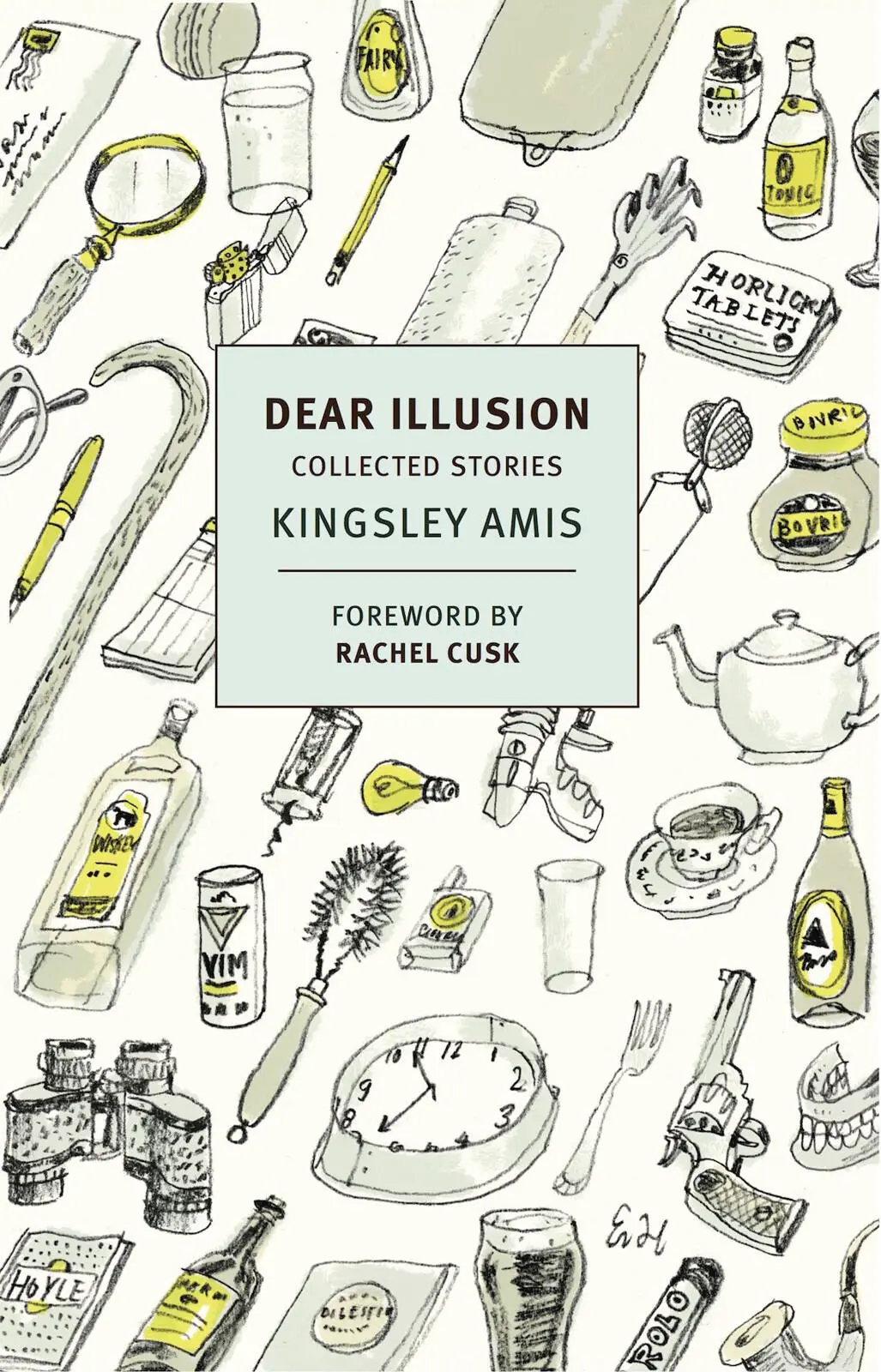
- Название:Dear Illusion: Selected Stories
- Автор:
- Издательство:New York Review of Books
- Жанр:
- Год:2015
- ISBN:нет данных
- Рейтинг книги:4 / 5. Голосов: 1
-
Избранное:Добавить в избранное
- Отзывы:
-
Ваша оценка:
Dear Illusion: Selected Stories: краткое содержание, описание и аннотация
Предлагаем к чтению аннотацию, описание, краткое содержание или предисловие (зависит от того, что написал сам автор книги «Dear Illusion: Selected Stories»). Если вы не нашли необходимую информацию о книге — напишите в комментариях, мы постараемся отыскать её.
Dear Illusion: Selected Stories — читать онлайн бесплатно полную книгу (весь текст) целиком
Ниже представлен текст книги, разбитый по страницам. Система сохранения места последней прочитанной страницы, позволяет с удобством читать онлайн бесплатно книгу «Dear Illusion: Selected Stories», без необходимости каждый раз заново искать на чём Вы остановились. Поставьте закладку, и сможете в любой момент перейти на страницу, на которой закончили чтение.
Интервал:
Закладка:
A little coal, too little to be worth expelling, had entered my shoe. I bore the scuttle upstairs to find Jean and Eira in the kitchen and Betty still holding the baby. Her demeanour had quietened and she was more like the Betty I had first met when she said: ‘You won’t tell Jean all what I been saying, will you?’
‘Of course I won’t.’
‘And you won’t tell that old Webster I been up?’
‘Christ, no. What do you think I am?’
‘She’s a cow.’
‘Oh, she’s a cow all right.’
Betty nodded slowly, frowning, half-heartedly jogging the baby on her knee. Then she said: ‘She’s a real cow.’
This refinement upon the original concept made me laugh. Betty joined in. We laughed together for some time, so that Eira came in from the kitchen to see what the joke was.
‘I don’t mind telling you I was very depressed about that girl at one time,’ Mair Webster said. ‘Quite frankly I thought we might be going to lose her. It upset me a good deal, one way and another. Once her husband was out of the way for a couple of months, as soon as his back was turned she just took the line of least resistance. Her old cronies at the café, you see, she took up with them again, and got things fixed up with another of them there with minding each other’s children while the other one was off after the men, turn and turn about and sharing the same flat, or couple of rooms rather, the most sordid den you could possibly imagine, I’m not exaggerating, I promise you. Well, I soon got Betty and the twins out of that hell hole and fixed them up in a decent place, good enough for the time being, anyway, until Arnulfsen got back from Norway. They’ve quite a nice little flat now — well, you’ll be able to judge, John. It’s nothing very grand, of course, but it’s a darned sight better than what people like that are used to. Oh, thank you, Jean dear.’
‘Everything looks pretty bright then, doesn’t it?’ my wife asked, pouring coffee. ‘Troubles seem to be over.’ Her manner showed a relief that I guessed to be partly personal. The strain of not telling Mair about Betty’s earlier visit hadn’t been lightly borne.
‘I don’t think I should say that exactly,’ Mair said. ‘Arnulfsen’s forgiven her all right, and she’s trying to make a go of it, quite seriously, I can tell. But they keep being bothered by the crowd she used to be in with before, girls who used to be in the same gang looking her up, and once they even had a lascar trying to force his way in; wanted to renew old acquaintance and got her address from the café, I suppose. There’ve been one or two things like that. And then some of the neighbours have got to hear about Betty’s past and they keep teasing her about it, call out in the street after her. Chapel spirit gone sour, you see. It makes Arnulfsen pretty wild.’
While Jean expressed her indignation, I was wondering fairly hard how I was going to ‘be able to judge’ the Arnulfsens’ flat. Was I in some way committed to a tea party there, or what? An answer couldn’t be long delayed, for Mair was draining her cup and rising. ‘Come along,’ she said to me. ‘We’ve not got too much time.’
‘Time for what, Mair? I’m sorry…’
She threw me a momentary leonine glare before dipping to pick up her handbag. When she spoke, it was with an incredulity to which those accustomed to plan for others must often be subject. Since what she had lined up for me was necessitated both by logic and by natural law, how could I conceivably not know what it was? ‘But surely you’re coming along to Betty’s with me? I’m only popping in to see how she is. Then I can drop you at the library by two-fifteen. Cheerio, Jean dear. Thank you for a lovely lunch. We must fix up a coffee date for next week. I’ll give John a ring, if I can manage to pick a time when he’s at the seat of custom.’
Wiggling her eyebrows at me to enjoin silence, Jean went into a vivacious speech which lasted more or less until I was sitting in Mair’s car next to its owner. Opened envelopes, typed lists, printed forms lay about us as at some perfunctory demonstration of bureaucracy at work. Jean continued her facial ballet until we left.
I knew Mair was going to tell me some more, or possibly run over a few familiar but essential points, about what being a social worker was like. She enjoyed getting me on my own and doing this because, it appeared, I was a man and, as such, easy to talk to. Sometimes her husband came into these conversations, but not often, and when he did it was likely to be as a feature of her exposition of what being married to a social worker’s husband was like. I hoped we were going to get the practical today; some of Mair’s case histories were of great anthropological interest, and those that weren’t were still a lot better than the theoretical.
We got the theoretical, but crossed with the autobiographical, which helped a bit. What had first attracted her to the idea of social work? Ah, there were many answers to this conundrum, every one of them demanding careful or at any rate lengthy consideration. Mair had taken a course in psychology, so she knew all about the power impulse and its tendency to be present in those who made a living out of good works. Several of her colleagues were prone to this affliction, and she had even detected it in herself before now. That was where psychological training was so useful: you knew how to examine your own motives and to guard against unworthy ones. With that out of the way, she felt safe in asserting that it was the duty of the mature and responsible elements of the community to do what they could for their less gifted fellows. At one time the more conscientious kind of squire had stood in a similar relation to his tenants, the right-minded employer to his workmen and their families, but the rise of the oligopoly (Mair kept up with Labour Party research pamphlets) had put paid to all that. One of the many all-important tasks of our society was the training of specialists for functions which at one time had been discharged as by-products of other functions. A case very much in point here was provided by the constantly expanding duties of — well, Mair recognized the term social workers , but for her own part she preferred (having once attended a Social Science Summer School in Cardiff) to think of herself and her associates as technicians in paternalism .
When she brought that one out I had the infrequent experience of seeing her face express only a limited satisfaction with what she’d said. We penetrated farther into an uncongenial district. Then Mair added: ‘Actually, John, I’m not altogether happy about that label.’
‘You’re not?’
‘No, I’m not. It’s a scientific term, of course, and so it’s quite accurate in a way, but like all scientific terms it’s incomplete, it doesn’t really say enough, doesn’t go far enough, leaves out a lot. It leaves out the thing that keeps us all going, sees us over the rough patches and stops us losing faith, which is the one thing we can’t afford to do in our job. It’s — well, I can’t think of any better name for it than… idealism. You can laugh if you like —’ she turned her profile far enough round to assure me that any such laughter had better remain internal — ‘but that’s what it is. Just a simple, old-fashioned urge to do good, not in a chapel way, naturally, but scientifically, because we know what we’re doing, but that’s the basis of the whole thing, no point in beating about the bush. I know that sort of talk makes you feel uncomfortable, but I believe in—’
Before she could mention calling a spade a spade, a mode of nomenclature she often recommended, I told her that that wasn’t quite it, and went on: ‘This isn’t aimed at you, Mair, but I think doing good to people’s rather a risky thing. You can lay up a lot of trouble, for yourself as well as the people who’re being done good to. And it’s so hard to be sure that the good you’re trying to do really is good, the best thing for that person, and the justification of the whole business is a bit—’
Читать дальшеИнтервал:
Закладка:
Похожие книги на «Dear Illusion: Selected Stories»
Представляем Вашему вниманию похожие книги на «Dear Illusion: Selected Stories» списком для выбора. Мы отобрали схожую по названию и смыслу литературу в надежде предоставить читателям больше вариантов отыскать новые, интересные, ещё непрочитанные произведения.












Обсуждение, отзывы о книге «Dear Illusion: Selected Stories» и просто собственные мнения читателей. Оставьте ваши комментарии, напишите, что Вы думаете о произведении, его смысле или главных героях. Укажите что конкретно понравилось, а что нет, и почему Вы так считаете.