Richard Lange - Sweet Nothing
Здесь есть возможность читать онлайн «Richard Lange - Sweet Nothing» весь текст электронной книги совершенно бесплатно (целиком полную версию без сокращений). В некоторых случаях можно слушать аудио, скачать через торрент в формате fb2 и присутствует краткое содержание. Год выпуска: 2015, Издательство: Mulholland Books, Жанр: Современная проза, на английском языке. Описание произведения, (предисловие) а так же отзывы посетителей доступны на портале библиотеки ЛибКат.
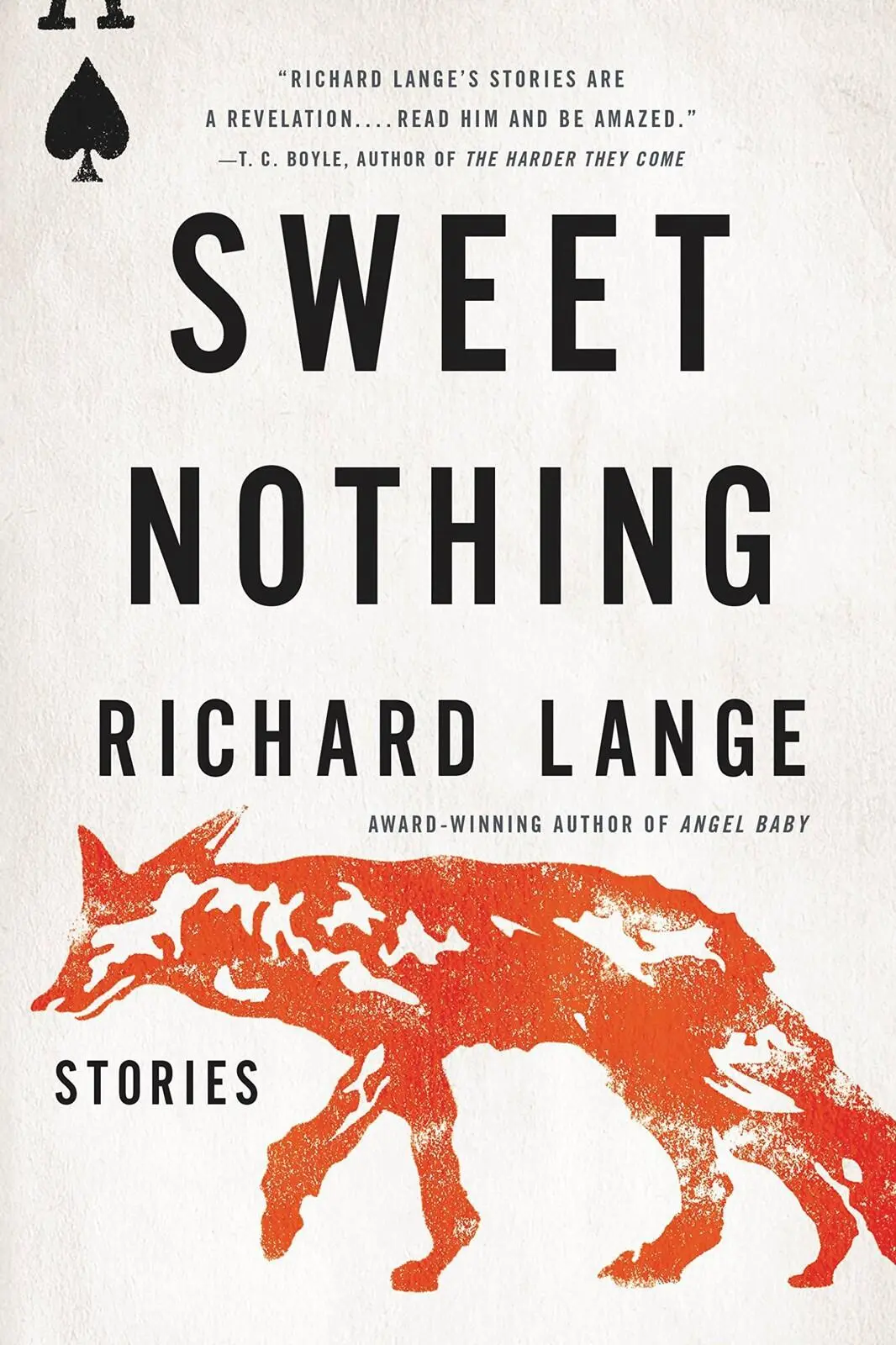
- Название:Sweet Nothing
- Автор:
- Издательство:Mulholland Books
- Жанр:
- Год:2015
- ISBN:нет данных
- Рейтинг книги:4 / 5. Голосов: 1
-
Избранное:Добавить в избранное
- Отзывы:
-
Ваша оценка:
Sweet Nothing: краткое содержание, описание и аннотация
Предлагаем к чтению аннотацию, описание, краткое содержание или предисловие (зависит от того, что написал сам автор книги «Sweet Nothing»). Если вы не нашли необходимую информацию о книге — напишите в комментариях, мы постараемся отыскать её.
Sweet Nothing
Sweet Nothing — читать онлайн бесплатно полную книгу (весь текст) целиком
Ниже представлен текст книги, разбитый по страницам. Система сохранения места последней прочитанной страницы, позволяет с удобством читать онлайн бесплатно книгу «Sweet Nothing», без необходимости каждый раз заново искать на чём Вы остановились. Поставьте закладку, и сможете в любой момент перейти на страницу, на которой закончили чтение.
Интервал:
Закладка:
So I say it.
“You wouldn’t have any proof, would you?”
“Proof of what?” Sophie says.
“That you’re pregnant,” I say.
Sophie’s expression doesn’t change as she reaches into her purse and pulls out a folded sheet of paper and hands it to me.
“I was wondering why you didn’t ask last time,” she says.
It’s a letter on stationery from a women’s health-care center stating that Sophie Ricard is pregnant and has a due date of February 11 next year. I pass her the envelope containing the money, but I’m still not satisfied. I’m still disappointed in her.
I point at the long-haired guy, who’s glaring at me like he’d like to tear my head off.
“Is that your boyfriend?” I ask Sophie.
“What’s it to you?” she says.
“How do I know it’s not his baby?” I say.
She slides the envelope into her purse.
“That’s right,” she snaps. “How do you know?”
I stand and walk out without saying another word. I plan to leave with an angry squeal of rubber, but my car is parked in the sun, and I have to sit with the air conditioner on until the steering wheel cools enough for me to drive away.
HERE’S HOW I’M going to think about it: You dodged a bullet; be grateful. And if I ever tell anybody the story, I’m going to say that the experience made me a better husband and father. I lift my gin and tonic to affirm this, salute the setting sun, the traffic roaring by, the ghetto simmering on the horizon.
The slider opens behind me, and Julie sticks her head out.
“Dinner’s ready,” she says.
We’re eating early tonight. She’s going to a movie with someone, a friend.
“I’m coming,” I say.
She leaves the door open. I set my glass on the railing of the balcony and shake my hand like it’s numb. Then I reach out and give the glass a nudge with my index finger, and another nudge, and another, until it falls. I lean over the railing and watch the glass shatter on the sidewalk below. Man, that was dumb, wasn’t it? I could’ve hurt somebody.
“Daddy.”
Eve comes onto the balcony through the open door. I pick her up and hold her at arm’s length.
“You know the rules,” I say. “You’re not supposed to be out here. It’s dangerous.”
“It’s time to eat,” she says.
“All right,” I say.
We step to the railing, a man and a child — no, a father and his daughter. I show her the view.
“Do you see a helicopter?” I say.
“Mmm, no,” she says,
“Do you see a car?”
“There.”
She points down at the traffic on Wilshire.
The dark inside me begins to bray, and I fight back as best I can. “We’re going to be okay,” I say, “we’re going to be great,” but I can barely hear myself over the din.
Instinctive Drowning Response
MARYROSE DIES ON WEDNESDAY, and on Friday Campbell dreams he was there when it happened. Tony said she passed out right after she fixed, slumped over on the couch, so that’s where that part comes from. And then Tony stuck her in the shower to try to revive her, and that part’s there too. In the dream, however, Campbell is with them, and Maryrose’s eyes pop open as soon as the cold water hits her, and she shakes her head and yells, “What the fuck’s going on?” “Nothing, baby, nothing,” Campbell replies, and — it’s a dream, remember — they live happily ever after. But dreams are bullshit. Dreams break your heart. When someone’s dead, she’s dead, and when it’s someone you loved, some of your world dies with her. The places Campbell went with Maryrose give him the creeps now. Everything that used to be fun isn’t anymore. He can’t bring himself to sit on their favorite bench in the park, and the tacos at Siete Mares taste like dirt. At least dope still does him right. Thank God for dope.
THEY MET AT a cemetery called Hollywood Forever where movies were shown in the summer. Friends of his and friends of hers brought blankets and Spanish cheese and splurgy bottles of wine, and everybody sprawled on the grass to stare at Clint Eastwood in a cowboy hat projected onto the wall of a mausoleum. Campbell got up to have a cigarette after the big shootout, and Maryrose asked if she could bum one. They smoked together under a palm tree and made fun of themselves for being degenerates. Somehow they got on the subject of drugs. It was kind of a game. Ever done this? Ever done that? Maryrose surprised Campbell when she said yes to junk. “That shit’ll kill you,” he said. “Well, yeah,” she said. “Someday.” A week later he moved into her place in Silver Lake. He hadn’t had a craft services gig in over a month and working the door at Little Joy paid mostly in drinks. Maryrose told him not to worry about it because her dad took care of the rent. The apartment overlooked a storefront church, the kind with a hand-painted sign and a couple of rows of battered folding chairs. Services started every night at seven. “O Dios, por tu nombre, sálvame,” the preacher would shout. “O precioso sangre de Jesús.” Maryrose liked to get stoned and lie in front of the open window and listen to the congregation send their hymns up to heaven. “It’s so beautiful,” she’d groan, tears as hot and bright as stars streaming down her cheeks.
CAMPBELL COPS FOR Martin now and then, and Martin hires Campbell to help him and his brothers serve food to film crews on location. They’re downtown today, where a sci-fi thing is shooting, and Campbell is handing out lattes and doughnuts to little green men and robot soldiers. He watches a couple of extras flirt and tries to see it as the sweet start of something but isn’t feeling expansive enough yet. Since Maryrose died, anything not rimed with sorrow is suspect; anything gentle, anything hopeful, is as deceptive as a thirteen-year-old girl’s daydream of love, a sugarcoated time bomb. Martin brings over one of the actors. He introduces him as Doc, but Campbell knows his real name, everybody does, he’s that famous. “Doc likes to party,” Martin says, and everybody knows what that means too. “Can you hook him up?” An explosion goes off on the set. Campbell and Martin and Doc all jump and giggle, and Doc points out a flock of startled pigeons wheeling overhead, scared shitless.
MARYROSE DIES ON Wednesday, and a week later her mother and sister show up at the apartment and kick Campbell out. He feels like a criminal, packing his stuff, the way they watch him to make sure he doesn’t take anything of Maryrose’s. “I blame you,” her mother says. “And I hope the weight of that crushes you.” He calls his own mother for money. She says no, and his dad doesn’t even answer the phone. They hope he gets crushed too, but they call it “tough love.” Tony lets him stay at his house, the same house where Maryrose OD’d. At night, from his bed in the spare room, Campbell hears Tony telling the story over and over to his customers. “She was gone, dude, just like that.” To pay his way he makes deliveries for Tony, drives him around, washes his dishes, and takes out his trash. Then they get high and watch tattoo shows on TV. Tony is covered with tattoos, even has one with some of his dead mother’s ashes mixed into the ink. “You know, she thought you were an idiot,” Campbell says one night when Tony’s so fucked up that he’s drooling. “Who?” Tony says. “Maryrose,” Campbell says. Tony nods for a second like he’s thinking this over, then says again, “Who?”
SHE’D DROPPED OUT of USC, dropped out of Art Center and dropped out of the Fashion Institute, and the six months her parents had given her to decide what she wanted to do with her life were almost up. If she wasn’t back in school by September, they’d cut her off. Some days she was defiant, shouting, “I’m proud to be a traitor to my class!” Other days she was too depressed to get out of bed. She’d stream sitcoms from her childhood, the laugh tracks taunting her as she buried her head under her pillow. Campbell worried about her when she was like this. He asked other girls he knew for advice. “She needs a project,” one of them said, so he bought her some clay. They sat together in the breakfast nook and made a mess sculpting little pigs and turtles and snakes. “You’re really good at this,” Campbell told her. The scorn that flashed across her face let him know she’d seen through him. She smashed the giraffe she’d been working on and locked herself in the bathroom with their last bindle of Mexican brown.
Читать дальшеИнтервал:
Закладка:
Похожие книги на «Sweet Nothing»
Представляем Вашему вниманию похожие книги на «Sweet Nothing» списком для выбора. Мы отобрали схожую по названию и смыслу литературу в надежде предоставить читателям больше вариантов отыскать новые, интересные, ещё непрочитанные произведения.






Обсуждение, отзывы о книге «Sweet Nothing» и просто собственные мнения читателей. Оставьте ваши комментарии, напишите, что Вы думаете о произведении, его смысле или главных героях. Укажите что конкретно понравилось, а что нет, и почему Вы так считаете.