Richard Lange - Sweet Nothing
Здесь есть возможность читать онлайн «Richard Lange - Sweet Nothing» весь текст электронной книги совершенно бесплатно (целиком полную версию без сокращений). В некоторых случаях можно слушать аудио, скачать через торрент в формате fb2 и присутствует краткое содержание. Год выпуска: 2015, Издательство: Mulholland Books, Жанр: Современная проза, на английском языке. Описание произведения, (предисловие) а так же отзывы посетителей доступны на портале библиотеки ЛибКат.
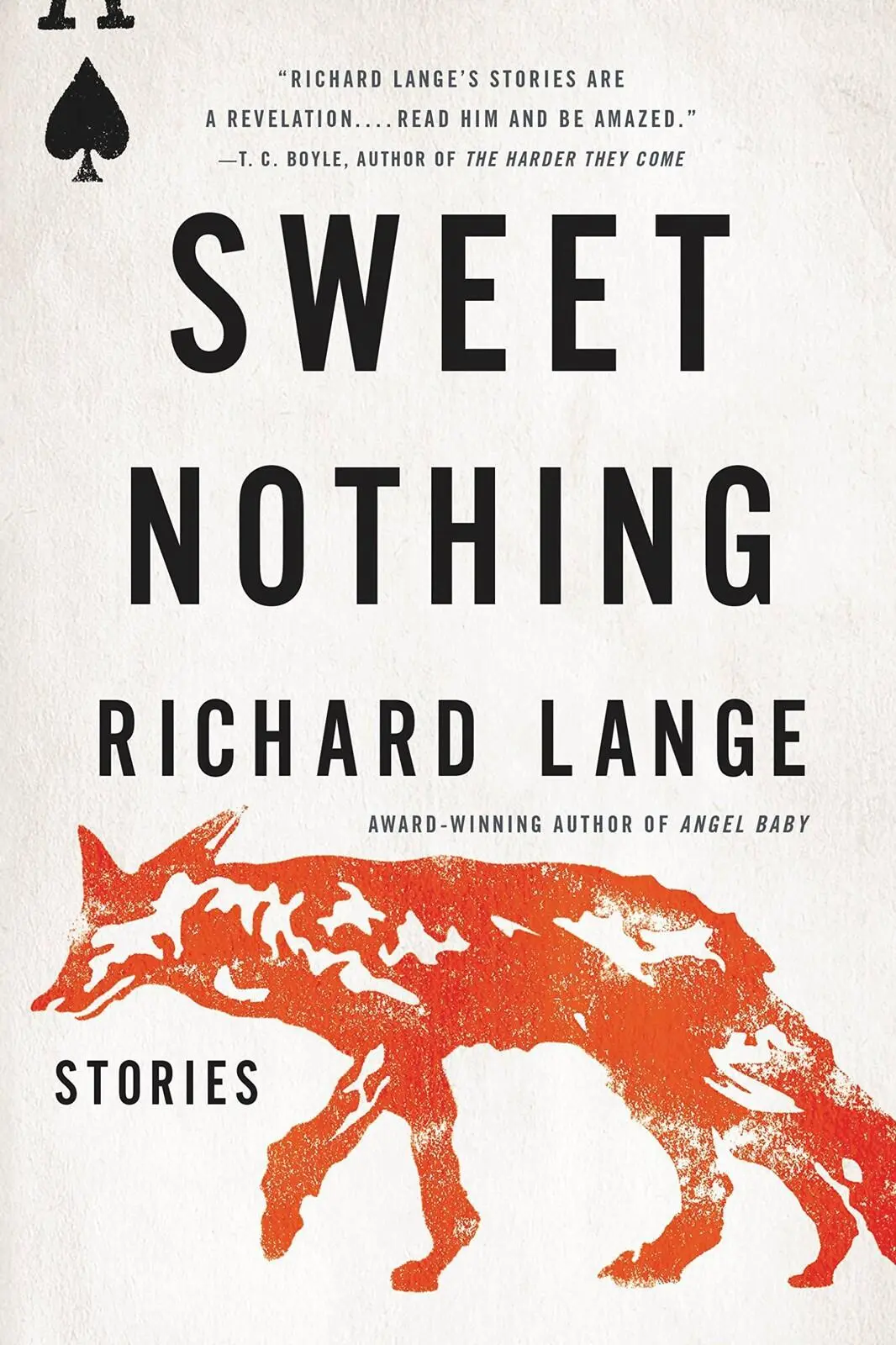
- Название:Sweet Nothing
- Автор:
- Издательство:Mulholland Books
- Жанр:
- Год:2015
- ISBN:нет данных
- Рейтинг книги:4 / 5. Голосов: 1
-
Избранное:Добавить в избранное
- Отзывы:
-
Ваша оценка:
Sweet Nothing: краткое содержание, описание и аннотация
Предлагаем к чтению аннотацию, описание, краткое содержание или предисловие (зависит от того, что написал сам автор книги «Sweet Nothing»). Если вы не нашли необходимую информацию о книге — напишите в комментариях, мы постараемся отыскать её.
Sweet Nothing
Sweet Nothing — читать онлайн бесплатно полную книгу (весь текст) целиком
Ниже представлен текст книги, разбитый по страницам. Система сохранения места последней прочитанной страницы, позволяет с удобством читать онлайн бесплатно книгу «Sweet Nothing», без необходимости каждый раз заново искать на чём Вы остановились. Поставьте закладку, и сможете в любой момент перейти на страницу, на которой закончили чтение.
Интервал:
Закладка:
“What’s going on?” Joseph says.
The girl whips off her jacket, turns it inside out — from white to black — and slips it back on. She opens the door and sticks her head out for a better view of the street.
“You want me to call the police?” Joseph says.
The girl disappears, is suddenly gone, running again.
Joseph shakes his head.
“Gypsies,” he says to me.
I nod like I know and sip my beer. But I don’t know anything. Joseph is from Lebanon. His brother was killed by a sniper one morning while walking home from the store with a loaf of bread and some eggs. His father was blown to pieces by a rocket.
“They are both making a long vacation, beautiful holidays,” he said to me once. “That is what I tell myself to keep from going crazy.”
CAL AND ESTHER live out in Highland Park, a neighborhood that used to be mostly working-class Latinos but is now filling up with young white couples who want affordable houses and yards for their dogs. Vince says he’ll drive. We take freeways and streets I’ve never heard of to get there, and when we do, taco stands and pawnshops alternate with art galleries and cupcake bakeries. It’s confusing.
The house is a tiny stucco box on a street lined with the kind of big, old trees you rarely see in L.A. Elms and things. We park down the block in front of a duplex with a Tinker Bell bounce house set up in the yard. Mexican music blares out of a pair of speakers in the bed of a pickup parked at the curb, and dozens of kids dart about in unison like flocking birds.
“That’s the party we should be going to,” Vince says. “Teach them youngsters how to do the ice cream and cake and cake.”
A sign on the front door of Cal and Esther’s house directs guests to the backyard. Music and the sound of voices grow louder as we pass through a gate in the wooden fence and walk down a narrow passage past the garbage cans and a wheelbarrow. We brush by a guy smoking in the shadows and pop out into the party, and I’m glad to see there’s a crowd. I worried we’d be the only ones.
The yard is much larger than the house, with a covered patio and a vegetable garden. Candy-colored Christmas lights are twined through the branches of the lemon trees and dangle from the eaves of a toolshed. I brought a bottle of wine as a gift for Cal and Esther, and Vince got them a book on home repairs. A girl Vince knows but I don’t shows us where to put them and points us toward the bar, which is set up on a picnic table.
Vince pumps the keg while I pour some Maker’s over ice. Cal appears out of the crowd. He has a beard now. He greets Vince with a slap on the back and picks up a corkscrew.
“How’s tricks?” I say to him.
His smile flickers, and he squints like he’s having trouble placing me.
“Danny?” he says.
He must be joking. We worked at the campus library together, took mushrooms in Disneyland with a bunch of people, went to Radiohead. He knows who I am.
“I heard you and Esther got married,” I say. “Congratulations.”
“Thanks,” he says, then looks past me. “Hey, Esther,” he calls out. “Did you see who’s here?”
“Oh my God,” she says and comes over to join us. I can tell she also has only a vague recollection of who I am, and I feel as if I’m disappearing from the past and the present at the same time, like an old photograph in which the people have faded into ghostly blurs. It’s not right. These two weren’t special enough to have forgotten me.
I tell them about Julie and Eve and my job, making everything sound better than it is. They nod and smile and say, “That’s great,” but they’re only being polite. Cal makes his escape first, then Esther, tossing “Keep in touch” over her shoulder as she walks away.
I finish my bourbon and pour myself another and decide to hide out in the bathroom. There are two women with babies in the kitchen. I tell them where I want to go, and they point me down the hall.
I lock myself in and sit on the edge of the tub with my head in my hands. After a while I get up and check the medicine cabinet and pocket a bottle of Xanax prescribed for Cal. Someone knocks, and I pretend to wash my hands, then let the girl in.
A handwritten sign on a door at the end of the hall catches my eye: Keep Out. I open the door and find myself in Cal and Esther’s bedroom. The walls are painted a funny color, like everyone was doing a few years ago, and a big blowup of that famous photo of a couple kissing in Paris hangs over the bed.
I walk to the dresser and lift the lid of a jewelry box sitting on top. I pick one pearl earring out of all the junk and hope Esther will go crazy trying to figure out where it went when she wants to wear it someday.
The door opens, and Cal is standing there, looking confused. “Hey,” he says. “This room is kind of off-limits.”
“Sorry,” I say. “There was someone in the bathroom, so I was looking for another.”
“There’s only one,” he says. “You’ll have to wait.”
I flush the earring down the toilet when I get into the bathroom again, then go out and tell Vince I’m not feeling well. And it’s true. I roll down the window and let the wind blow in my face as we race down the freeway, but no matter how much air I gulp, it isn’t enough. I want to turn myself inside out and shake myself clean. I want to sleep for years and wake with this life behind me.
THE CEILING OF my office collapses over the weekend. I come in on Monday morning to find the soggy panels lying on my desk and chair, and dirty water soaking the carpet. A broken pipe, the man from building maintenance says.
“You didn’t notice anything?” he asks.
“Nope,” I say, not mentioning the octopus.
Juan the IT guy moves my computer to an empty desk in a cubicle in the hall so I can keep working while they do repairs. I spend most of the morning updating the website, but people keep poking their heads in to ask what happened.
The councilman himself stops by around noon. He and Bob are just back from a press conference where the police announced the capture of some nut who’d been setting cars on fire in the district. The councilman is exuberant. He loves being in front of the cameras.
“I hear the sky is falling,” he says.
“It’s not a big deal,” I say. “They should be done fixing everything by three.”
“Good, good. You going to Taco Bell for lunch?”
“Maybe.”
He pulls a twenty out of his pocket.
“I saw a commercial for a new thing there,” he says. “The Beefy Crunch Burrito or something. Would you mind bringing me one back?”
“No,” I say. “Sure.”
He hands me the money.
“Get yourself one too, or whatever you want,” he says.
He’s talking down to me again, but that’s okay. He’ll be shitting in the streets with the rest of us soon enough.
SOPHIE IS SITTING at the same table she was last week, and that guy is there too, hunched over his phone in the corner by the window. He glances at me when I come in, then quickly looks away. I give Sophie a little wave and sit down across from her. She’s dressed for work again, her hair pulled back. A tiny gold crucifix hangs around her neck. I didn’t notice it last time, or that night at the club either.
“How are you?” I say.
“Fine,” she says.
“Everything okay?”
“Super-duper.”
I wasn’t going to say what I say next. I’d decided to ignore my suspicions and give her the money even after I looked it up and found out that an abortion only costs five hundred dollars. It’s a nasty procedure, and I was willing to throw in the extra for pain and suffering. She had to bring that guy, though. If it was just her, okay, but something about him sets me off.
Читать дальшеИнтервал:
Закладка:
Похожие книги на «Sweet Nothing»
Представляем Вашему вниманию похожие книги на «Sweet Nothing» списком для выбора. Мы отобрали схожую по названию и смыслу литературу в надежде предоставить читателям больше вариантов отыскать новые, интересные, ещё непрочитанные произведения.








Обсуждение, отзывы о книге «Sweet Nothing» и просто собственные мнения читателей. Оставьте ваши комментарии, напишите, что Вы думаете о произведении, его смысле или главных героях. Укажите что конкретно понравилось, а что нет, и почему Вы так считаете.