Hedi Kaddour - Waltenberg
Здесь есть возможность читать онлайн «Hedi Kaddour - Waltenberg» весь текст электронной книги совершенно бесплатно (целиком полную версию без сокращений). В некоторых случаях можно слушать аудио, скачать через торрент в формате fb2 и присутствует краткое содержание. Год выпуска: 2009, Издательство: Vintage, Жанр: Современная проза, на английском языке. Описание произведения, (предисловие) а так же отзывы посетителей доступны на портале библиотеки ЛибКат.
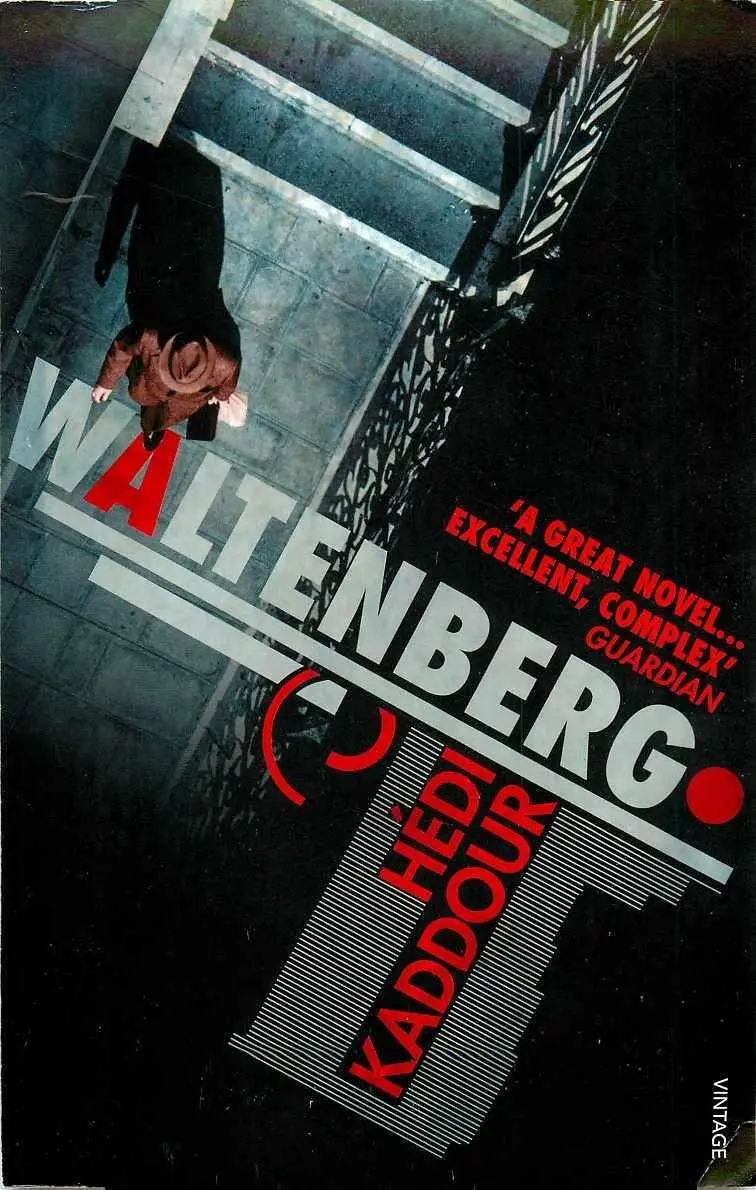
- Название:Waltenberg
- Автор:
- Издательство:Vintage
- Жанр:
- Год:2009
- ISBN:нет данных
- Рейтинг книги:3 / 5. Голосов: 1
-
Избранное:Добавить в избранное
- Отзывы:
-
Ваша оценка:
Waltenberg: краткое содержание, описание и аннотация
Предлагаем к чтению аннотацию, описание, краткое содержание или предисловие (зависит от того, что написал сам автор книги «Waltenberg»). Если вы не нашли необходимую информацию о книге — напишите в комментариях, мы постараемся отыскать её.
Waltenberg
Waltenberg — читать онлайн бесплатно полную книгу (весь текст) целиком
Ниже представлен текст книги, разбитый по страницам. Система сохранения места последней прочитанной страницы, позволяет с удобством читать онлайн бесплатно книгу «Waltenberg», без необходимости каждый раз заново искать на чём Вы остановились. Поставьте закладку, и сможете в любой момент перейти на страницу, на которой закончили чтение.
Интервал:
Закладка:
Why not just ask the woman in the red dress what it is, in a moment, as a conversation starter? meanwhile you turn to the next page and you’re bare-chested having just completed a month of the ‘Dynam’ method, a course of psychophysical culture which turns you into a real athlete, ‘think about muscles and Dynam will see you get them, work out in front of your mirror for just fifteen minutes a day — no cheating! — for the length of the course and the end results are amazing, thighs gain five centimetres on average!’ You look out again at the landscape, no, the grounds of the château, you’re strolling down a walkway shaded by heavy grape vines and reach a garden that has run wild.
A profusion of parasitic weeds, a few pale rose trees well spaced out, the silhouettes of women, bushes laden with fruit around a stagnant pond, you see specific things, peaches fat and dark, a wall covered with mauve flowers, the warm evening and Clara d’Ellébeuse, a flight of rooks, the splash of an otter by the water’s edge in the blue light, a few patches of golden yellow among the leaves, the woman is alone now, she is walking just ahead of you, she turns, her arms are very soft, a forest slides past in the window, you have the feeling that you’ve been asleep, you have been asleep, the woman in red is still there, indifferent.
You lay aside your copy of Paris-Match, if you have indeed been asleep you should be able to cope with La Nouvelle Pensée, it’s your review, you’re still a member of the editorial board, three weeks ago you were busy deciding the contents of the issue you now have in your hand, with your comrades, under the chairmanship, exceptionally, of a deputy member of the Politburo. It was bizarre, having a member of the Politburo there, a deputy member but from the Politburo, though not that bizarre in the circumstances, Warsaw, Budapest, these were bumpy times.
But the fascist attacks on the Party’s offices in Paris had closed up the ranks, and then there was Suez — and in the presence of a member of the Politburo no one had dared question the Party line, all the more so since, at the start of the meeting, the deputy member of the politburo had come out with two or three sentences astoundingly critical of Rakosi and the former Hungarian leadership, very trenchant sentences which went much further than anything the most outspoken comrade would have uttered on the subject.
Then they’d come to the business of settling the contents of the next issue, a discussion about a piece roughly ten pages or so long, a short story submitted by a bourgeois writer, it’s entitled ‘The Rehearsal’, the author is a foreigner, a German social-democrat, a Big Name in European literature as they say, Hans Kappler, a harmless enough tale, Kappler tries above all to achieve transparency, he explains everything, the love of a singer and a pianist, people with no worries beyond the accuracy of a note or the state of their feelings for each other, it was the opposite of what was required by the class struggle and socialist realism, a story of zero originality which nevertheless you’d liked and take great pleasure in rejecting.
It seemed bizarre to you that the Politburo should be so interested in the review, so interested that it had sent one of its members, a deputy member maybe but even so, to the last meeting of its editorial board, after all it’s only a highbrow review read in intellectual circles, the comrade member of the Politburo had wanted to attend ‘a noholds barred meeting’ of ‘real’ intellectuals who were ‘aware of their historical task’.
As to Kappler’s piece, some views had been very critical, others less so, you are the youngest member of the board, you were the most forthright, no doubt you were the one who liked the story best, you found it insubstantial but well-written and you were its toughest critic, as literature it was demotivating, its prose was fake-prole, the transparency was entirely bourgeois, Kappler almost made you forgive Proust, a comrade took up cudgels for Proust snobbish he might be but he understands feelings, besides he’s very critical of upper-bourgeois values, much more so than Kappler, do reread Time Regained , the same comrade also defended the story, a weak defence, he was all at sea, he always backed the Party’s political position one hundred and ten per cent, but he gave himself space on questions of culture.
But that day, with the comrade from the Politburo taking his time before saying anything on the subject, he wasn’t sure which way to jump, the discussion covered socialist humanism, reality, and false consciousness, you took delight in destroying something you liked in the presence of a deputy member of the Politburo, but it wasn’t important now since in all likelihood you’ll soon be leaving the Party, yes, you could have defended ‘The Rehearsal’ but it reminded you too strongly of the sort of thing your family liked both before and during the war, books that were well-written, genteel literature, you criticised without believing in what you were saying because you have also stopped believing in the things you love.
At the same time you revelled in your ability to lie joyfully and effectively as you set about destroying a piece of writing which took you back to the age of eighteen, and your comrades as they listened refused to be outdone, when a few of you got together you found you had the same ideas, the same eclectic tastes for bourgeois authors, but with this editorial board you felt as if you were part of some ceremony in which each member of the tribe brings his richest possession and proudly casts it into the flames in front of everyone else, the member of the Politburo nodded his head with great understanding and kindliness, when he spoke he did so hesitantly, especially during the general discussion which opened the proceedings.
He stumbled over quotations from Thorez, especially when he wanted to say something complex, he struggled for words, he quoted Thorez ‘there was no Stalinism’, he’d started out as a boiler-maker, ‘the word is part of our opponents’ vocabulary’, no one knew when he’d joined, he spoke slowly, hesitated, ‘there has come about … although the policy was right and just … rooted in the principles of Marxism-Leninism’, a comrade who was still young, about forty, a proletarian.
And the members of the editorial board took pleasure in prompting him with the quotes he found it hard to regurgitate whole, ‘there has come about a retreat from these Marxist-Leninist principles in given historical conditions’, they competed with each other, they vied to be the first to come up with the words the member of the Politburo was groping for, ‘these conditions now exist’, even statements they didn’t much care for, ‘there was no Stalinism’, a real joy, putting words into the mouth of an important Party official, even if he’s a deputy, being able to disappear behind words that could have no come-back, lending a helping hand to a comrade who was experienced but still young, a genuine member of the proletariat who was not in the habit of memorising essential quotes, no, he did remember one, it wasn’t Thorez, it was Casanova, ‘when we are fair and square with the revolutionary proletariat, then, and only then, will our conscience be clear.’
One comrade thought it funny to give only the first part of a Thorez quote, whereas all the comrades have always known that with Maurice it’s invariably the second part that matters, ‘The number of different roads to socialism has nothing to do with the content of the dictatorship of the proletariat’, this left the comrade deputy baffled by the violence of Maurice’s contention, it was clear that he was thinking of the possible implications of such an assertion, a few words more and it would be pure Titoism, that is, the idea that there could be purely national roads to socialism, even if Tito had never stopped being a traitor and a monster, the comrade deputy was a man who missed nothing.
Читать дальшеИнтервал:
Закладка:
Похожие книги на «Waltenberg»
Представляем Вашему вниманию похожие книги на «Waltenberg» списком для выбора. Мы отобрали схожую по названию и смыслу литературу в надежде предоставить читателям больше вариантов отыскать новые, интересные, ещё непрочитанные произведения.







Обсуждение, отзывы о книге «Waltenberg» и просто собственные мнения читателей. Оставьте ваши комментарии, напишите, что Вы думаете о произведении, его смысле или главных героях. Укажите что конкретно понравилось, а что нет, и почему Вы так считаете.