Hedi Kaddour - Waltenberg
Здесь есть возможность читать онлайн «Hedi Kaddour - Waltenberg» весь текст электронной книги совершенно бесплатно (целиком полную версию без сокращений). В некоторых случаях можно слушать аудио, скачать через торрент в формате fb2 и присутствует краткое содержание. Год выпуска: 2009, Издательство: Vintage, Жанр: Современная проза, на английском языке. Описание произведения, (предисловие) а так же отзывы посетителей доступны на портале библиотеки ЛибКат.
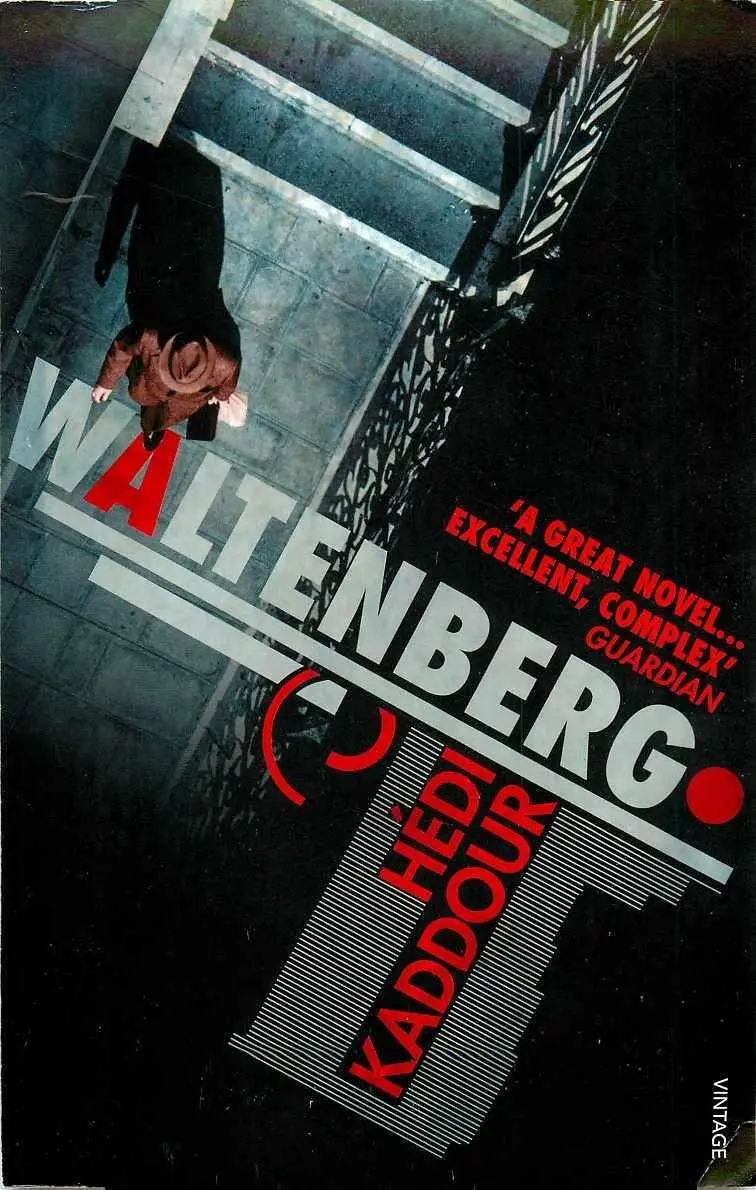
- Название:Waltenberg
- Автор:
- Издательство:Vintage
- Жанр:
- Год:2009
- ISBN:нет данных
- Рейтинг книги:3 / 5. Голосов: 1
-
Избранное:Добавить в избранное
- Отзывы:
-
Ваша оценка:
Waltenberg: краткое содержание, описание и аннотация
Предлагаем к чтению аннотацию, описание, краткое содержание или предисловие (зависит от того, что написал сам автор книги «Waltenberg»). Если вы не нашли необходимую информацию о книге — напишите в комментариях, мы постараемся отыскать её.
Waltenberg
Waltenberg — читать онлайн бесплатно полную книгу (весь текст) целиком
Ниже представлен текст книги, разбитый по страницам. Система сохранения места последней прочитанной страницы, позволяет с удобством читать онлайн бесплатно книгу «Waltenberg», без необходимости каждый раз заново искать на чём Вы остановились. Поставьте закладку, и сможете в любой момент перейти на страницу, на которой закончили чтение.
Интервал:
Закладка:
‘Childhood, young gentleman of France, does not interest you, not yet. Have you read Trakl, Georg Trakl? No? “Grodek”, a war poem, written in 1914, captures the whole of the gangrene in a few lines, and at the end the poem becomes still and passes the baton to children against a background of golden leaves on a field of midnight black, the children who will be born and grow big, and Trakl dies and it’s the war that grows big, our entire world was born in 1914, I was born in 1914.
‘What did I put across the general? Don’t you want me to tell you any more about my mother? Afraid you’ll lose the thread? I’m very fond of digressions, still, too bad, I’m in Rosmar in 1947 with the general, I’ve reconstructed the adults and the kids I’ve turned into “Pioneers”, quite delightful, the Internationale sung by corncrake voices along country lanes just before harvest-home, children returning with their little baskets full of poppies, a few wheat stalks, berries red and blue, and in town there were no more beggars on the streets.
‘What? There weren’t under Hitler either? That’s not funny, I had no idea you’d sunk so low, you’re being provocative, I’m not against it, and you wouldn’t be wrong, factually, no more beggars, but I persist in believing that it wasn’t the same, and so do you, of course. You know what the law was called that gave Hitler full powers to act, I know all about it, when the wonderful German elite went over wholesale to him, it was “the law for the elimination of poverty”, how had this poverty come about? I’m getting back to the point, digression is my besetting sin, with my general in 1947 I digressed, I digressed for nights on end, I digressed with the aid of vodka and Kummel and one day I wrote a report, in it I said that the general was too fond of the army.’
Again Lilstein cuts a morsel of tart, raises it to his mouth, slowly, turning his dessert fork around to examine it, he tastes it, then sets about his portion in earnest. You do the same. The tart crumbles easily when bit, the shortcrust is firm in your mouth but also yielding, it breaks up and scatters amid the taste of apple and raspberry. Lilstein looks at you:
‘You’ve tasted it before? Wasn’t as good? You know, the secret of good shortcrust pastry is to take your time, don’t go at it with too much vim, it must be left to prove for at least three hours, and you too, you must allow as long as it takes, I don’t want you to get all tensed up, people who live in a state of anxiety make bad workmen, you must be the absolute master of your own rhythm, no emergency stations, that’s what ruins the whole damn shoot, you really like this Linzer Tone? It’s very delicate, hand movements precise but never vehement, the proprietor’s wife does it without thinking, that’s why she always succeeds.
‘If you’re heavy-handed your shortcrust goes rubbery, don’t let the egg yolk be absorbed by the flour, it must first be beaten into the icing sugar, mix the flour and butter together lightly, ensuring that the flour is thoroughly coated in the butter to prevent it sticking, make a well in the middle for the egg yolks and add a mixture of sugar and vanilla, then you mix them together in the well with the tips of your fingers, lightly, like a cat’s paw playing… Do you like Waltenberg, the French people I ask usually answer “The Swiss Alps! Ah, Thomas Mann, those were the days!” But do you know what else happened here, in 1929, the year you were born?
‘The Waltenberg European Seminar? Great thinkers, philosophers, writers, politicians, industrialists, economists, beautiful women, a week on a tall mountain, great debates, seminars within the Seminar, economists at each other’s throats over the question of value, fiercest were the ones who talked about hot cakes, they sickened me, value was not work but what they called marginal value, the price of bread when you’re not hungry, and then there were the philosophers, a great philosophical tug-of-war between what bourgeois Europe had taken centuries to develop, the ideal of forms, the operation of rules, and, in the red corner opposite, a philosophy of Being, the notion of Being-in-the-World, which called for forms, rules and irony to be consigned to oblivion, while the participants stuffed themselves with chocolate creams, delicacies of the nouveaux riches, and tasteless, I personally have always been on the side of the Enlightenment.’
You can agree with Lilstein about the lure of the chocolate cream yet find it amusing that a communist should take up cudgels on behalf of the bourgeoisie of the Enlightenment, you might even smile a sceptical smile, but that doesn’t stop Lilstein droning on about the Waltenberg European Seminar, Regel, Merken, Maynes, 1929, the fur that flew.
‘Really? You never heard about it? But the French were there, there was a Madame de Valréas who financed the whole thing, gnarled hands, lips often dark red, violet eyes, very efficient, people said “the Waltenberg Seminar” or “the Valréas Conference”, present also were Europe’s lunatics, Wolkenhove, Van Ryssel of the steelworks, and Moncel, the great Christian metaphysician who is mad about theatre.
‘He was young at the time, not as young as me, but a tyro, clenched, very reactionary, much more so than he is today, the philosophers asked one question, what was to be done about Kant’s legacy ten years after the butchery in the trenches? “Dare to think”, a small self-sufficient world of thinkers and writers, Hans Kappler, Edouard Palude, and politicians, Briand was there, it was the time of his “away with the cannon, away with the machine guns” and the United States of Europe, and scientists, wonderful lectures on the theory of relativity, the whole of Europe, the economists drew blood as they argued about the theory of value and their talk of hot cakes, in the end everything clashed, mingled, a whole world, along with the wives, the children, the mistresses, the catamites, they also knew how to have a good time, some went at it enthusiastically, and on occasions there were the imprints of knees in the snow.
‘The coats of the women were fawn, grey, black, the hems, collars and cuffs trimmed with magnificent soft white fur, I found them very arousing, they wore small hats, and the men carried tomes bristling with bookmarks, between them in the space of a few days they redrew the intellectual map and reconfigured their wonderful Europe while they strolled, really major confrontations!
‘And as usual behind the war of ideas lay questions of jobs, the presidencies of learned societies, arguments about finance and reputation, the sort of thing that drives the frailer brethren mad, and that’s not reckoning with what was going on behind the scenes, in the streets of Germany, there was even one of the leading participants who had a manic outburst, a man who rushed into the hotel lounge shouting, “Infamy, infamy!” like something out of King Lear, there were also snowball fights, I was there with my brother, I was just sixteen, my brother had brought me, it was supposed to be good for my lungs, any excuse was enough for a snowball fight, I slipped, a woman was chasing me, she fell on top of me, I’ve been about a bit since then but I can still recall her breath on my neck, my brother was keen on the new philosophy, like many good people who “dared to think”, not knowing that they were baring their throats for the dogs.’
Outside the window, the jackdaw was still visible and holding his own against the wind, suddenly he wheels on his right wing, rocks and dives, Lilstein closes his eyes as he chews a mouthful of tart:
‘She’s put something else in it, she’s changed the recipe today, what can you smell, over the raspberry, apple, butter, vanilla and cinnamon? Something else, try hard, trust yourself, say what’s this on my tongue, ah yes, rum, a very good rum, you know what that back taste of rum means? No? What happened to the Russian general after I submitted my report? Are you really that fond of the army? Wouldn’t you prefer to know the secret of the presence of rum in the Linzer, or a brief philosophical interlude or the story of my mother? The general first? Very well!
Читать дальшеИнтервал:
Закладка:
Похожие книги на «Waltenberg»
Представляем Вашему вниманию похожие книги на «Waltenberg» списком для выбора. Мы отобрали схожую по названию и смыслу литературу в надежде предоставить читателям больше вариантов отыскать новые, интересные, ещё непрочитанные произведения.





Обсуждение, отзывы о книге «Waltenberg» и просто собственные мнения читателей. Оставьте ваши комментарии, напишите, что Вы думаете о произведении, его смысле или главных героях. Укажите что конкретно понравилось, а что нет, и почему Вы так считаете.