Hedi Kaddour - Waltenberg
Здесь есть возможность читать онлайн «Hedi Kaddour - Waltenberg» весь текст электронной книги совершенно бесплатно (целиком полную версию без сокращений). В некоторых случаях можно слушать аудио, скачать через торрент в формате fb2 и присутствует краткое содержание. Год выпуска: 2009, Издательство: Vintage, Жанр: Современная проза, на английском языке. Описание произведения, (предисловие) а так же отзывы посетителей доступны на портале библиотеки ЛибКат.
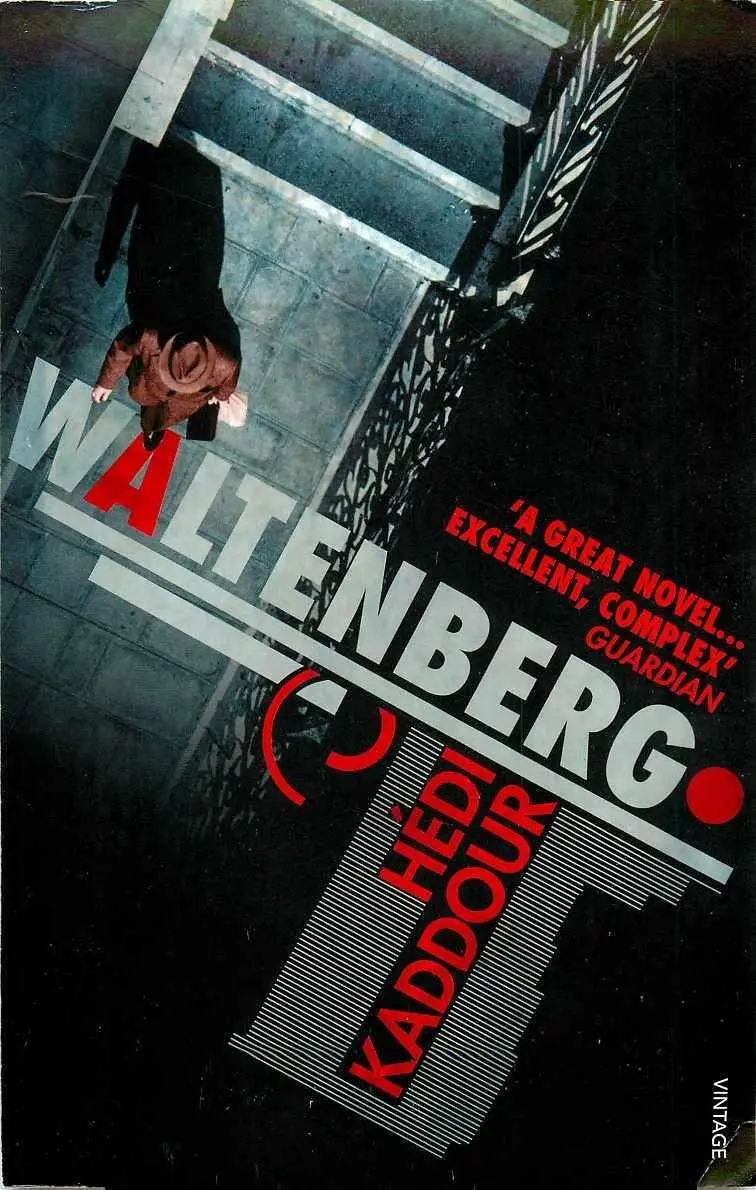
- Название:Waltenberg
- Автор:
- Издательство:Vintage
- Жанр:
- Год:2009
- ISBN:нет данных
- Рейтинг книги:3 / 5. Голосов: 1
-
Избранное:Добавить в избранное
- Отзывы:
-
Ваша оценка:
Waltenberg: краткое содержание, описание и аннотация
Предлагаем к чтению аннотацию, описание, краткое содержание или предисловие (зависит от того, что написал сам автор книги «Waltenberg»). Если вы не нашли необходимую информацию о книге — напишите в комментариях, мы постараемся отыскать её.
Waltenberg
Waltenberg — читать онлайн бесплатно полную книгу (весь текст) целиком
Ниже представлен текст книги, разбитый по страницам. Система сохранения места последней прочитанной страницы, позволяет с удобством читать онлайн бесплатно книгу «Waltenberg», без необходимости каждый раз заново искать на чём Вы остановились. Поставьте закладку, и сможете в любой момент перейти на страницу, на которой закончили чтение.
Интервал:
Закладка:
After leaving the restaurant, you went on talking as you walked with Hatzfeld towards the Place de la Bourse, a friendly stroll, you were flattered, you know he was part of a resistance network during the war, he was one of its leaders, they told you the day the network was blown Hatzfeld deliberately allowed himself to be captured, passing himself off as a simple messenger to point the Gestapo in the wrong direction, he was sent to Buchenwald. As you strolled along the Boulevard des Capucines, an almost tender note crept into Hatzfeld’s voice.
He talked about struggle, never give up the struggle, stay on the side of life, currently he is defending a Frenchman facing charges of aiding the NLF who may very well be guillotined.
‘I’ve been to see Coty, about a pardon, he said nothing but he told me a story, in 1917 he was present at the execution of a soldier who had refused to go up the line. To comfort the man, a general told him affectionately, “You’re dying for France, my boy.” ’
Roland Hatzfeld also spoke about what he called the Great Mess, he gestured to a front page of Paris-Presse in the window of a newspaper kiosk, ‘In the Hell that is Budapest’. You went pish! … to show that you wouldn’t go that far, Hatzfeld told you that people shouldn’t tell each other tales.
‘Overall, you know, the bourgeois press is right, that’s really what has happened, there are also barbed crosses, Horthyites, the return of the Whites, but it was the people that rebelled, sometimes I get so sick of it all… Go and see Lilstein and even if he fails to convince you, come back and tell me what he said, because I need to know. In 1930 I travelled from Berlin to Moscow by rail, it was interminable, a coach full of young people, Prussia, the Polish steppe, at one moment we passed under a triumphal arch made of wood, plain and simple.
‘In the corridor of the train, a young German actress started singing the Internationale as she looked out at the landscape, I was happy, you should never be happy, today I no longer know what I should be doing. In 1949, in Paris, in court, I faced another woman, a German revolutionary, Katrin Bernheim, she’d fled to Moscow after Hitler came to power, she said that in 1936 she had been held in a camp in the USSR, at Karaganda; she called it a concentration camp, and she also said that in 1940 Stalin had handed her back to the Nazis who had sent her to Ravensbrück, you know what I did? I made a case showing that she herself had demanded to be returned to Germany, I was quite sure of what I was saying, she was a turncoat.
‘Then one day, in 1954, Lilstein told me about the camp where he’d been held, we were just walking in Berlin, anywhere, an avenue, not the Stalinallee, that would have been too rich, but it was thereabouts, it was a sobering story, what they did to him, what he had seen being done to others, for two years he was in camp in Siberia, the two years that preceded Stalin’s death, and the last months in particular, when he realised that things were getting tougher and tougher, until then he’d felt that the powers which had arrested him nevertheless wanted to go easy on him, but there came a moment when he realised that he was going to die, he told me that Siberia wasn’t like Auschwitz, there was no Selektionslager for the kids, women, the sick, but from that moment on as far as he was concerned there was the same feel about things as at Auschwitz, he knew he would die during the coming month, he no longer tried to keep his head down, he took all the beatings, at Auschwitz he was saved by Stalin’s troops, in Siberia it was Stalin’s death, when Beria ordered the camps to be opened. Lilstein told me that, kept it very low key.
‘All that was part of the information I needed, the turncoat Bernheim had been right, I made a mental note, but it was only a month later that I thought about her and what she’d said about the camps, I could tell you about breaking out in a cold sweat as I slept, recurring nightmares featuring female apparitions, about how memory takes its revenge at night, but it didn’t happen that way, one day she simply came into my mind and ever since she has been part of my thinking, a great lady, she said Ravensbrück was cleaner and warmer than Karaganda, the Russians worked the prisoners to death by feeding them next to nothing, when they didn’t fulfil the fixed work-quota their rations were halved, at Ravensbrück the food was better but prisoners died of the beatings they got, the guards were sadists, they were there to exterminate, the Russians were decent, scrupulous, they simply applied their system.
‘She thought Karaganda was worse than Ravensbrück, Lilstein didn’t grade them, I was only at Buchenwald, no one was gassed there, it was inside the Reich’s own territory, gas was for the camps situated more to the east but all the same Buchenwald was hell, Nazi power with a hell all of its own, not the kind of hell to be used as a threat for the after-life, no, a hell in the here-and-now, a few hours away in a train from Berlin, and she said that Karaganda was worse, and the worst is that perhaps she was right, sometimes I get sick of it all … but can you really see us standing shoulder to shoulder with those bastards, while children are dying in Algeria?’
Hatzfeld motioned towards another newspaper with the headline: ‘Our Flags Still Fly Over Port Said’.
By now you’d got as far as the Bourse, Hatzfeld stopped and looked at you:
‘Never let virtue strangle virtue, make the trip, you can decide once you know the facts, leave the Party, don’t leave the Party, whatever. Go on, it’s a birthday present, your twenty-seventh, and your tenth as a Party member.’
Before taking your leave of Hatzfeld you asked him where he’d met Lilstein, he stared up at the front of the Bourse as he gave you his answer:
‘In a very smart place, a real debating club.’
‘More specifically?’
Hatzfeld went into an English accent:
‘In Buchenwald, in the latrines, a short while before they sent Lilstein to Auschwitz.’
Two days later, you went to the Gare de l’Est and caught the train, you got there with bags of time to spare, and just before you walked into the main concourse you gave yourself a moment to contemplate the huge picture by Herter which shows the departure of the soldiers for the war in 1914, contemplate is hardly the word, a daub, metre after metre, of grim-faced women, resolute men, it was painted in 1926, flowers, not so much enthusiasm as duty, there is something unintentional about the picture which for all its faults wins you over, in the centre of the composition, standing on the steps of a carriage, facing you, is a man holding his arms out wide and angled heavenwards, a bouquet in his left hand, a rifle in his right, with flowers in the spout of the gun, light shirt, eyes turned upward, towards Country and Values, and at the same time this man in the shirt, with his arms stretched out wide makes you think inevitably of Goya’s condemned man, the man in the Très de mayo , the civilian shot by a firing-squad of Napoleon’s soldiers.
The war has not yet begun in the painting in the Gare de l’Est but that soldier in 1914 already has the look of a man condemned to death by firing-squad. With one difference: here, there is no firing-squad, the killers are out of the frame, they might be Prussians or whoever gave the order to go up against the Prussians, or again the killer could come from the heaven the man is looking at, it’s not what Herter intended, but don’t linger here, you know what you’ve got to do, you came early for a purpose, opposite the end of platform 1 is a small door, nothing remarkable about it, between two union posters, no sign on the door, it’s closed, entry is restricted as you know, you wait discreetly until another man comes along and opens it with his key and then you slip in behind him as if you’d arrived at the same moment he did.
Читать дальшеИнтервал:
Закладка:
Похожие книги на «Waltenberg»
Представляем Вашему вниманию похожие книги на «Waltenberg» списком для выбора. Мы отобрали схожую по названию и смыслу литературу в надежде предоставить читателям больше вариантов отыскать новые, интересные, ещё непрочитанные произведения.











Обсуждение, отзывы о книге «Waltenberg» и просто собственные мнения читателей. Оставьте ваши комментарии, напишите, что Вы думаете о произведении, его смысле или главных героях. Укажите что конкретно понравилось, а что нет, и почему Вы так считаете.