Hedi Kaddour - Waltenberg
Здесь есть возможность читать онлайн «Hedi Kaddour - Waltenberg» весь текст электронной книги совершенно бесплатно (целиком полную версию без сокращений). В некоторых случаях можно слушать аудио, скачать через торрент в формате fb2 и присутствует краткое содержание. Год выпуска: 2009, Издательство: Vintage, Жанр: Современная проза, на английском языке. Описание произведения, (предисловие) а так же отзывы посетителей доступны на портале библиотеки ЛибКат.
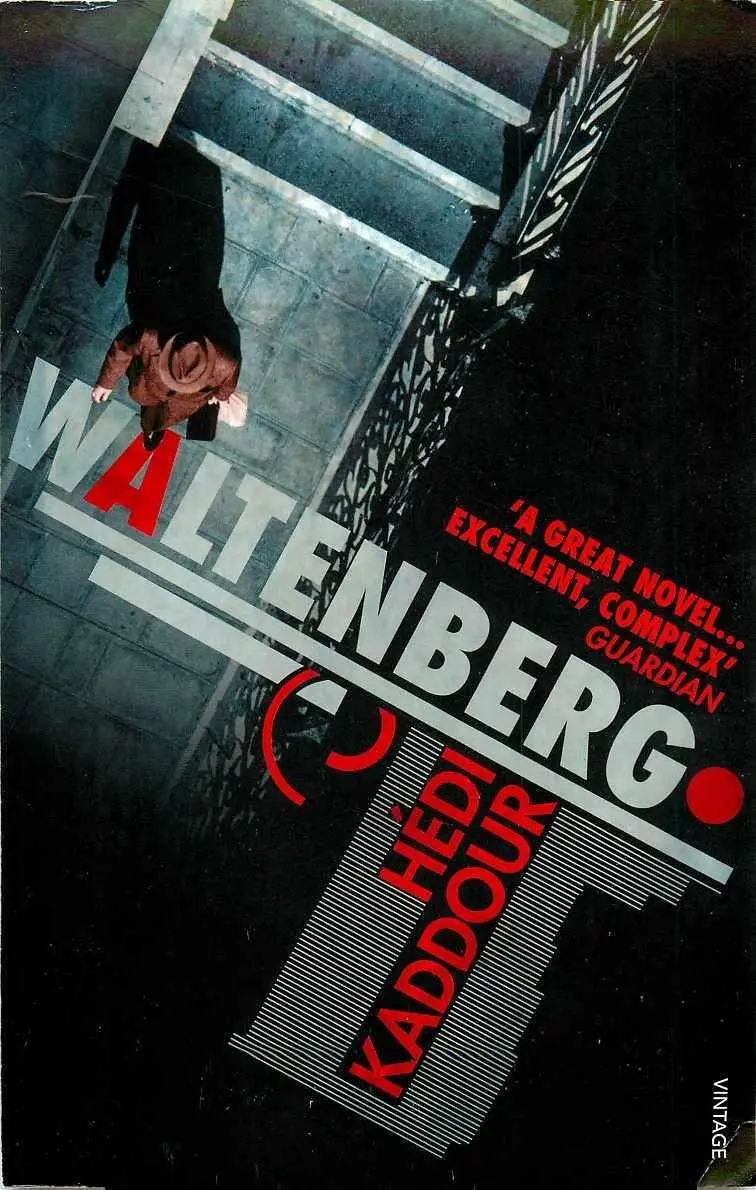
- Название:Waltenberg
- Автор:
- Издательство:Vintage
- Жанр:
- Год:2009
- ISBN:нет данных
- Рейтинг книги:3 / 5. Голосов: 1
-
Избранное:Добавить в избранное
- Отзывы:
-
Ваша оценка:
Waltenberg: краткое содержание, описание и аннотация
Предлагаем к чтению аннотацию, описание, краткое содержание или предисловие (зависит от того, что написал сам автор книги «Waltenberg»). Если вы не нашли необходимую информацию о книге — напишите в комментариях, мы постараемся отыскать её.
Waltenberg
Waltenberg — читать онлайн бесплатно полную книгу (весь текст) целиком
Ниже представлен текст книги, разбитый по страницам. Система сохранения места последней прочитанной страницы, позволяет с удобством читать онлайн бесплатно книгу «Waltenberg», без необходимости каждый раз заново искать на чём Вы остановились. Поставьте закладку, и сможете в любой момент перейти на страницу, на которой закончили чтение.
Интервал:
Закладка:
In any case, Kappler will go his own sweet way, so how do I manage to get him to trust me? no good talking reasons, Herr Kappler, there are three reasons why you should abandon this plan, Kappler won’t even try to argue, he’ll just say I don’t give a damn, young Lilstein.
Why try to get him to change his mind? it’s risky, virtually impossible, you’d be better off concentrating on the meeting with the other party, the appointment after lunch at the Waldhaus with the young Frenchman: the future.
Soon it will be eleven o’clock, Lilstein is outside the Konditorei, you’re going to have to give Kappler something, a secret, that’s it, people trust you if you confide in them, give Kappler something in confidence, but what? that you don’t care for your Minister? Or get round to asking him the question he’s expecting to be asked: have you seen her again?
*
It is three in the afternoon in the main lounge of the Waldhaus, you’ve come from Paris, you’re not yet thirty but you’re tired, you’re sitting opposite a man named Michael Lilstein, his movements are unhurried and he says to you straight off:
‘I’m particularly anxious that you don’t become a spy, young gentleman of France. Spy is the word for the ones who get caught.’
A glance out of the window, the mountains of the Grisons, the high Swiss Alps, the peaks of the Rikshorn, Lilstein’s face is smoothskinned, hair blond, complexion fine, eyes foxy, eyebrows unruly at the ends, has the look of a student who’s spent years dawdling here in the great lounge of the Waldhaus, which is deserted and dark once you move away from the windows, a few cabinets made of some heavy wood, which have already retreated into the shadows for the night, and a vast rack stacked with crockery standing just behind Lilstein, everywhere the smell of childhood, floor polish and beeswax, you winced when he said ‘young gentleman of France’. Lilstein adds: ‘Spies are voyeurs, thieves, miscreants, but you’re different, I invite you to be my equal.’
Lilstein says ‘I’ very freely, not at all the sort of thing you’d expect from an East German, and he tells you a great deal about himself:
‘My dear fellow, I’m forty-two but I’m already very old, I was over thirty when the Soviets liberated me from Auschwitz, it’s not the sort of thing you ever forget, they also saved my mother and installed her in Moscow in a nice two-roomed flat, and me they sent to one of their Eastern steppes, to patch me up, goat’s milk, mutton grilled over a wood fire with cumin, long walks, the plain stretching away as far as the eye could see, made the head spin, I marched through oceans of marguerites, growing close to the ground to keep death away, here it’s more aggressive. So it wasn’t you, young Frenchman, and comrade, who asked for this meeting?
‘It wasn’t me either, let’s say it was good old Roland Hatzfeld who fixed it up, you don’t know? The name means nothing to you? Forgotten it already? Oh, that’s very good but, just between ourselves, quite unnecessary, you can trust me. Why? Because you want to and because I’ve a splendid story to tell you while we sit here looking out on this magnificent view which is so friendly to untruth.’
Lilstein gestures to the Rikshorn:
‘Tremendous, isn’t it? Crystalline rock fractured by layers of ice over millions of years so that today a man can whizz blithely down it in five or six seconds, it’s not all over yet you know, it should yield a new peneplain in due course, the time-spans of physical geography are a comfort, so soothing, after all, man did not lose his tail overnight, but forgive me, that’s the language of the guard-room and the Rikshorn ought to bring out the poetry in us, so, to say sorry, I shall now tell you my splendid story.’
A waitress with strong hands has set down two Tee mit Rum , Lilstein drinks his in tiny sips, lifts his head, looks towards the far end of the room, lowers his voice like a conspirator:
‘Do you smell that scent of warm apple, slightly acid, rather pert, that comes from afar? The wife of the hotel owner has taken the tart out of the oven, a Linzer, Linzer Torte is her speciality, to me it’s a drug, I can hold out for six, eight months without coming for a fix, and then I invent a mission for myself, a meeting, anything, just so that I can come here. Are there other places in Europe? Of course there are, but there’s nothing to compare with what the owner’s wife makes here. Before the war, I wasn’t very interested in food, nowadays I love going to tea-rooms, pastries, I never let tea-times go by, but I only eat Linzer here. Smell it? Beneath the fragrance of the apple, an accompaniment of raspberry, sharp, sweet? Not too much raspberry, the raspberry should know its place, as an accompaniment, Gut , whether it was Hatzfeld or no, we can talk, and if you’ve come this far you’re not going to turn down the chance of a good argument, even so at your age you should be ready to move things on, I’m not asking for your soul, young gentleman of France, we’ll just work together to move things on.’
Lilstein has said ‘work’, he has placed the elbow of his right arm on the table, his hand is level with his eyes, fingers up, he gently rubs the end of his thumb against the tips of the other fingers, like a baker assaying the quality of flour, as if what he is about to propose is the product of some subtle craft:
‘Work together, each on his own side, like equals, I won’t ask for your soul, actually thanks to me you’ll have two, two souls, the one you shaped for yourself, the one that’s fine and great and revolutionary, the one that wants the good of all mankind because human nature is basically good and because all that’s required is a better way of organising needs, means and talents, some day all that could be sweeter than springtime, you’d not forgive yourself for giving up your great soul, so idealistic, at last, the classless society.’
A pause. Lilstein really seems to believe in the classless society, and at the same time you sense that he doesn’t believe in it wholeheartedly, though you’d be hard put to say what it is that makes you feel he doesn’t believe in it and, on reflection, if you consider closely the impression he gives of believing in it, you’d find it just as impossible to put what he does mean into words, is he doing it on purpose? he looks straight at you and goes on:
‘All the things you dreamed of in that great revolutionary soul of yours, my dear fellow, and then crash! the wretched let-down of Budapest. Whereupon you feel like dumping your great soul, if you do, you’ll have to adjust to a life of emotional inertia, you’ll give up selling Humanité on Sundays in the market, reject the friendly greeting of the comrades, the roast chestnuts, I’ll spare you the rest, it’s so kitsch, you have problems justifying tanks that roll over civilians, and lurking behind soul number one is the other one, the soul that’s realistic, lucid, disenchanted, bourgeois, cynical, the one that enables you to get an important job, to fulminate against the Russians and strikes, to remind yourself that solid obstacles must be placed in the way of human desires because human nature and so on and so forth.’
There’s no one else in the room, Lilstein speaks slowly, in measured terms, it’s dangerous, the place might be bugged, the waitress at the far end of the lounge who comes and goes at intervals might overhear snatches of their conversation, a professional like Lilstein must know, but it doesn’t stop him:
‘When soul number two, the soul of a young, concerned Frenchman, is thwarted, it might go as far as to declare that life is a struggle, just as the old one used to be actually, but now it’s a different struggle, the triumph of the strong, the struggle for survival — you don’t much like this second soul, it was bequeathed to you, it’s the family soul, the soul of the nice part of town where you live, at first you hated it, but it’s not always wrong, it is very effective, you might say it has the effectiveness of capitalism, it’s in Marx:
Читать дальшеИнтервал:
Закладка:
Похожие книги на «Waltenberg»
Представляем Вашему вниманию похожие книги на «Waltenberg» списком для выбора. Мы отобрали схожую по названию и смыслу литературу в надежде предоставить читателям больше вариантов отыскать новые, интересные, ещё непрочитанные произведения.












Обсуждение, отзывы о книге «Waltenberg» и просто собственные мнения читателей. Оставьте ваши комментарии, напишите, что Вы думаете о произведении, его смысле или главных героях. Укажите что конкретно понравилось, а что нет, и почему Вы так считаете.