Thomas Mallon - Finale - A Novel of the Reagan Years
Здесь есть возможность читать онлайн «Thomas Mallon - Finale - A Novel of the Reagan Years» весь текст электронной книги совершенно бесплатно (целиком полную версию без сокращений). В некоторых случаях можно слушать аудио, скачать через торрент в формате fb2 и присутствует краткое содержание. Год выпуска: 2015, ISBN: 2015, Издательство: Knopf Doubleday Publishing Group, Жанр: Современная проза, на английском языке. Описание произведения, (предисловие) а так же отзывы посетителей доступны на портале библиотеки ЛибКат.
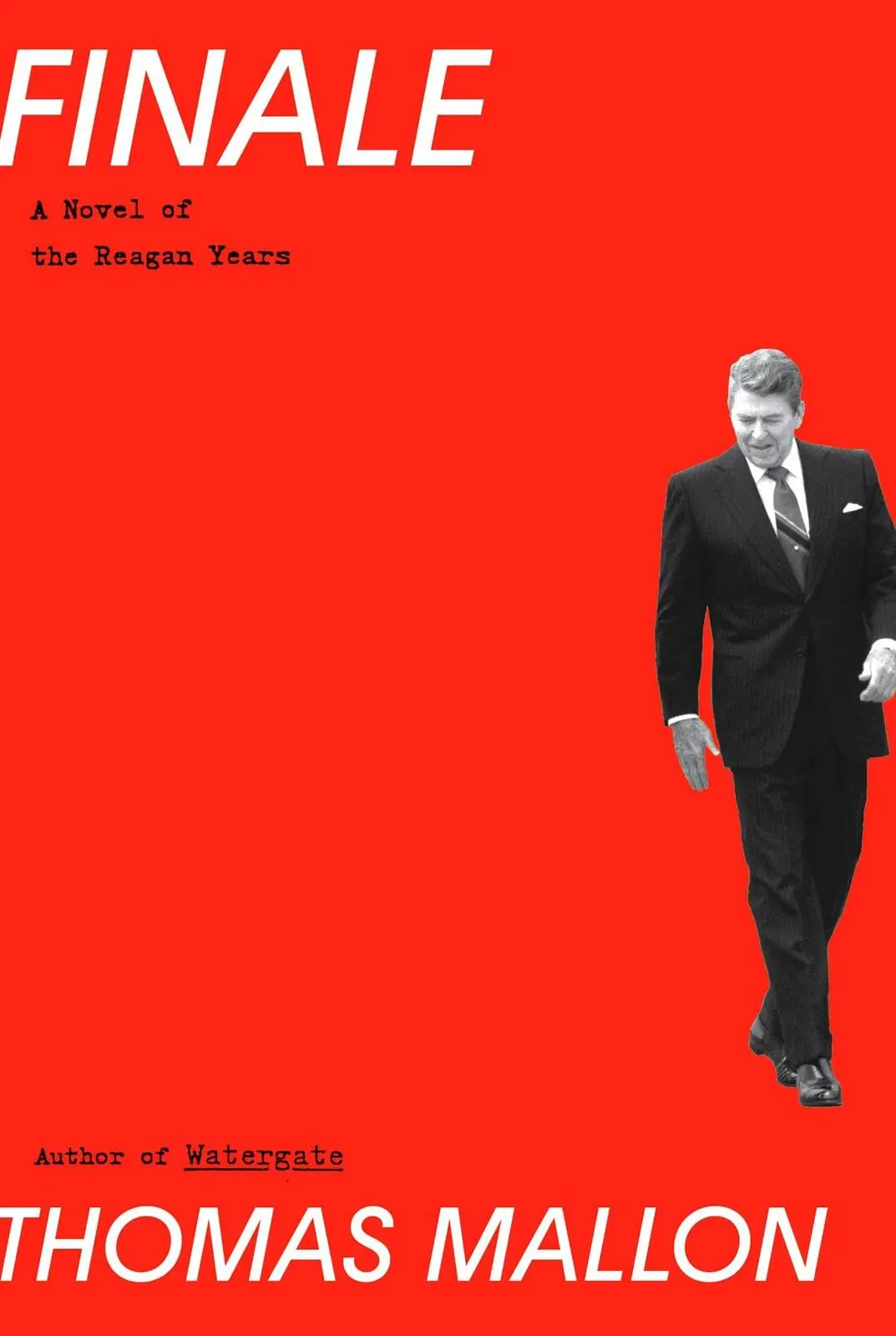
- Название:Finale: A Novel of the Reagan Years
- Автор:
- Издательство:Knopf Doubleday Publishing Group
- Жанр:
- Год:2015
- ISBN:9780307907936
- Рейтинг книги:3 / 5. Голосов: 1
-
Избранное:Добавить в избранное
- Отзывы:
-
Ваша оценка:
Finale: A Novel of the Reagan Years: краткое содержание, описание и аннотация
Предлагаем к чтению аннотацию, описание, краткое содержание или предисловие (зависит от того, что написал сам автор книги «Finale: A Novel of the Reagan Years»). Если вы не нашли необходимую информацию о книге — напишите в комментариях, мы постараемся отыскать её.
Finale captures the crusading ideologies, blunders, and glamour of the still-hotly-debated Reagan years, taking readers to the political gridiron of Washington, the wealthiest enclaves of Southern California, and the volcanic landscape of Iceland, where the president engages in two almost apocalyptic days of negotiation with Mikhail Gorbachev.
Along with Soviet dissidents, illegal-arms traders, and antinuclear activists, the novel’s memorable characters include Margaret Thatcher, Jimmy Carter, Pamela Harriman, John W. Hinckley, Jr. (Reagan’s would-be assassin), and even Bette Davis, with whom the president had long ago appeared onscreen. Several figures — including a humbled, crafty Richard Nixon; the young, brilliantly acerbic Christopher Hitchens; and an anxious, astrology-dependent Nancy Reagan (on the verge of a terrible realization) — become the eyes through which readers see the last convulsions of the Cold War, the beginning of the AIDS epidemic, and a political revolution.
At the center of it all — but forever out of reach — is Ronald Reagan himself, whose genial remoteness confounds his subordinates, his children, and the citizens who elected him.
Finale is the book that Thomas Mallon’s work has been building toward for years. It is the most entertaining and panoramic novel about American politics since Advise and Consent, more than a half century ago.
Finale: A Novel of the Reagan Years — читать онлайн бесплатно полную книгу (весь текст) целиком
Ниже представлен текст книги, разбитый по страницам. Система сохранения места последней прочитанной страницы, позволяет с удобством читать онлайн бесплатно книгу «Finale: A Novel of the Reagan Years», без необходимости каждый раз заново искать на чём Вы остановились. Поставьте закладку, и сможете в любой момент перейти на страницу, на которой закончили чтение.
Интервал:
Закладка:
“Hey, Andy Panda, how ya been?”
Anders smiled. It was the nickname he’d been given at Bud McFarlane’s farewell party, when he’d made the mistake of letting it be known how much he’d love a place on the next China trip, if Reagan ever made one.
“I gave up half my morning to give somebody a tour,” Anders explained.
“Tell me about it,” said Neal, striking a tragic attitude. “I had two ladies from my mother’s garden club last week. Sort of fun, actually.”
“Not too different from what I had.” Anders didn’t mention the Nixon connection: détente remained suspect around here, and Nixon was, well, Nixon. “So,” he asked, “what did I miss while I was gone?”
“Daniloff’s wife got in to see him again. And so did his boss, the U.S. News editor. Tell me this isn’t a bonanza for them. Maybe they’ll get a couple of readers next week.” Neal paused while remembering a more important development. “Somebody on Nitze’s staff called. So far everything still looks hunky-dory. Karpov showed up on schedule, and they’ve been talking as if nothing’s wrong.”
Viktor Karpov, the Soviet arms negotiator, was supposed to be laying the groundwork, with his counterpart, Paul Nitze, for a meeting between the two countries’ foreign ministers, Shultz and Shevardnadze, here in Washington a couple of weeks from now. Staffers called the process the “stairway to heaven”: if it got built, Reagan and Gorbachev would meet again, for the first time since getting acquainted in Geneva last year.
Anders nodded. He wished he’d had the Karpov news to tell Jeane — instead of that idiotic business about Daniloff working out on the prison roof — but she no doubt already knew everything Grover did, and more.
“The Soviets are treating Shultz better than Harvard is,” said Neal, a USC man. The secretary of state was up in Cambridge for the university’s 350th anniversary and was being hounded by demonstrators backing both the Sandinistas and divestment from South Africa.
Anders shook his head, disgustedly. “He should show them the Princeton tiger he’s got tattooed on his ass.” Neal guffawed over this little-known fact about George P. Shultz. “And he should tell them to kiss it,” Anders added.
“Ish,” said Neal, campily.
Anders laughed. In what he soon realized was too obvious a segue, he asked, “How’s Terry?”
Terry Dolan, brother of the president’s chief speechwriter and still the nominal head of the National Conservative Political Action Committee, once the fiercest of all the PACs on the right, was in and out of Georgetown Hospital these days. Everyone knew why, even if nobody said. Neal was Terry’s friend, but Anders now worried, on top of everything else, if he might be showing too much interest by asking about the sick man.
“Terry’s got so few T cells — about three, I think — that I just named them for him: MX, Cruise, and Pershing.”
Anders laughed, nervously. He averted his eyes from Neal’s and looked instead at the Tower Records bag, knowing it more likely contained Peter Allen or Puccini than Bon Jovi. “Well, give him my best.”
He had met Terry Dolan only a couple of times, one of them in Dallas during the ’84 convention. There in the Fairmont Hotel he had quickly realized that he’d wandered into the “wrong” nomination-night party. But he’d gotten lit, stayed late, and enjoyed himself. He’d liked the feeling of being admired, teased, of not having to do anything himself to keep the party alive. God, could those guys drink — and there was no denying they were pretty damned funny.
Now back in room 380A, he glanced up at ubiquitous CNN before noticing, sure enough, a phone message from the Federal Plaza number. He made sure to answer it right away.
“Where the hell is Speakes on this hijack thing?” asked the former president. “Ziegler would have been out in front of the cameras already,” he declared, comparing his old press secretary to Reagan’s.
Anders braced himself for a short fulmination about the incumbent’s excessive vacationing, and he tried to head it off by saying, “I ran into Dr. Kirkpatrick in the Mess.”
“What did she have to say?”
“That there’ll be more attention paid to Daniloff now. By the press.”
“Well, she’s right. You guys are blowing this. You can afford to put pressure , a lot of it, on the Soviets. If Karpov is still showing up at State”— how did he know that? — “it means they still want another summit. I told you there’d be a test, and so far Reagan and Poindexter are failing it. The test is not to determine how tough we can be without having them scrap the summit. Hell, I mined Haiphong Harbor in May of ’72 and Brezhnev still showed up! The test is to gauge how Reagan will behave at the summit. And so far, believe me, the Soviets like what they’re seeing. Anyway, what was Cox’s wife like?”
Anders had to think for a moment before realizing that he meant Anne Macmurray. “Oh, she’s a nice lady. And very attractive. But she didn’t really want a tour. She’s actually a freezenik, and she wants me for an interview. She sort of played a trick, sir.”
The line was quiet for a moment, the way it would go before Nixon did his own version of laughter. “Send her one of those signed copies of Real Peace that I left with you. And tell her I said Touché! Hasta luego , Andy!”
6. SEPTEMBER 14, 1986
The first lady wished the two of them were watching Murder, She Wrote . They’d have their feet up on hassocks and would be nibbling at some of the rose sorbet left over from Wednesday’s dinner for the Brazilian president. Instead, she and Ronnie were in front of the camera, on a couch in the upstairs residence, making the biggest Just Say No pitch ever. Ronnie, a moment ago, had begun speaking “from our family to yours.”
The setting, along with the choice of Sunday night, was a good idea — worthy of Mike Deaver in his better days — but, really, who out there from sea to shining sea really believed this bit about “our family”? Anyone paying the least attention knew that she and Patti hadn’t spoken in the six months since her daughter’s hateful book had appeared. Even so, certain fictions had to be maintained. This morning on Meet the Press , in a taped teaser for this joint speech, Nancy had told Marvin Kalb that her children “tried marijuana” back “in college” and that “that was it.” Oh, brother. If the red light of the camera weren’t on her right now, she’d be shutting her eyes, trying to dispel a mental image of Patti snorting lines of cocaine off the coffee table of some man she’d met half an hour ago.
Whatever the political necessity of this speech, Nancy all at once felt overwhelmed by a sense of its pointlessness. She resented all the chairs that had been moved, all the cables now taped to the carpet; things would never be straightened up before it was time to go to bed. She could also see, out of the corner of her eye, a bag of microwaved popcorn that some technician had opened up near a tool box. Since last year’s cancer surgery, Ronnie had been forbidden that snack, and she’d made clear that it was never to be anywhere around. Once the red light went off, if she didn’t remember to stop him, Ronnie would go over to thank the crew and scoop up a handful of kernels. She was further worried that the chrysanthemums in here — more leftovers from the Brazil dinner — would set off his allergies and make him sneeze mid-speech. If that were to happen — one sneeze! — it would become the entirety of tomorrow’s coverage, and all of yesterday’s rehearsal at Camp David would have been for nothing.
Читать дальшеИнтервал:
Закладка:
Похожие книги на «Finale: A Novel of the Reagan Years»
Представляем Вашему вниманию похожие книги на «Finale: A Novel of the Reagan Years» списком для выбора. Мы отобрали схожую по названию и смыслу литературу в надежде предоставить читателям больше вариантов отыскать новые, интересные, ещё непрочитанные произведения.












Обсуждение, отзывы о книге «Finale: A Novel of the Reagan Years» и просто собственные мнения читателей. Оставьте ваши комментарии, напишите, что Вы думаете о произведении, его смысле или главных героях. Укажите что конкретно понравилось, а что нет, и почему Вы так считаете.