Thomas Mallon - Finale - A Novel of the Reagan Years
Здесь есть возможность читать онлайн «Thomas Mallon - Finale - A Novel of the Reagan Years» весь текст электронной книги совершенно бесплатно (целиком полную версию без сокращений). В некоторых случаях можно слушать аудио, скачать через торрент в формате fb2 и присутствует краткое содержание. Год выпуска: 2015, ISBN: 2015, Издательство: Knopf Doubleday Publishing Group, Жанр: Современная проза, на английском языке. Описание произведения, (предисловие) а так же отзывы посетителей доступны на портале библиотеки ЛибКат.
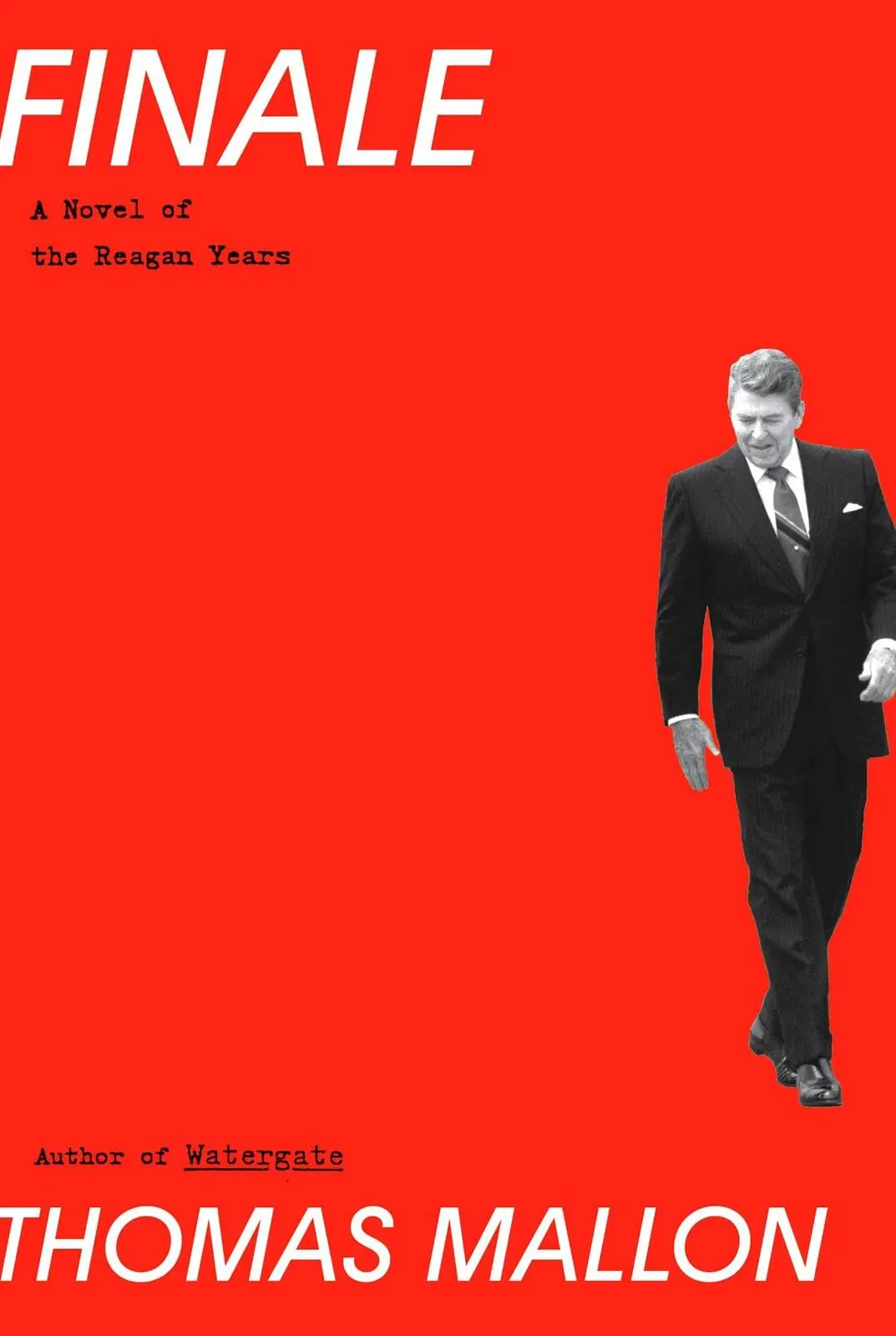
- Название:Finale: A Novel of the Reagan Years
- Автор:
- Издательство:Knopf Doubleday Publishing Group
- Жанр:
- Год:2015
- ISBN:9780307907936
- Рейтинг книги:3 / 5. Голосов: 1
-
Избранное:Добавить в избранное
- Отзывы:
-
Ваша оценка:
Finale: A Novel of the Reagan Years: краткое содержание, описание и аннотация
Предлагаем к чтению аннотацию, описание, краткое содержание или предисловие (зависит от того, что написал сам автор книги «Finale: A Novel of the Reagan Years»). Если вы не нашли необходимую информацию о книге — напишите в комментариях, мы постараемся отыскать её.
Finale captures the crusading ideologies, blunders, and glamour of the still-hotly-debated Reagan years, taking readers to the political gridiron of Washington, the wealthiest enclaves of Southern California, and the volcanic landscape of Iceland, where the president engages in two almost apocalyptic days of negotiation with Mikhail Gorbachev.
Along with Soviet dissidents, illegal-arms traders, and antinuclear activists, the novel’s memorable characters include Margaret Thatcher, Jimmy Carter, Pamela Harriman, John W. Hinckley, Jr. (Reagan’s would-be assassin), and even Bette Davis, with whom the president had long ago appeared onscreen. Several figures — including a humbled, crafty Richard Nixon; the young, brilliantly acerbic Christopher Hitchens; and an anxious, astrology-dependent Nancy Reagan (on the verge of a terrible realization) — become the eyes through which readers see the last convulsions of the Cold War, the beginning of the AIDS epidemic, and a political revolution.
At the center of it all — but forever out of reach — is Ronald Reagan himself, whose genial remoteness confounds his subordinates, his children, and the citizens who elected him.
Finale is the book that Thomas Mallon’s work has been building toward for years. It is the most entertaining and panoramic novel about American politics since Advise and Consent, more than a half century ago.
Finale: A Novel of the Reagan Years — читать онлайн бесплатно полную книгу (весь текст) целиком
Ниже представлен текст книги, разбитый по страницам. Система сохранения места последней прочитанной страницы, позволяет с удобством читать онлайн бесплатно книгу «Finale: A Novel of the Reagan Years», без необходимости каждый раз заново искать на чём Вы остановились. Поставьте закладку, и сможете в любой момент перейти на страницу, на которой закончили чтение.
Интервал:
Закладка:
Maureen said nothing in response to Merv’s mention of Deaver, and Nancy appreciated that, truly.
“I don’t think I need a great backdrop,” Nancy finally replied. “What I need is a great speech .”
“Maybe we need to postpone Miss Noonan’s retirement,” suggested Maureen, with a roll of her eyes. Nancy also disliked the peppy, self-aggrandizing speechwriter — those schoolgirl skirts! — but even so, she wished she weren’t planning to depart the administration, taking her skills with her prematurely, just as Mike had.
“Don’t mind me,” said Maureen to Merv, who’d detected her cattiness. “I can be ‘a real pain in the ass.’ Don Regan’s exact words to me last spring, before the Contras vote, when I thought he was screwing up and told him so.”
“I never heard that,” said Nancy, genuinely surprised. She turned her lambent, watery eyes toward her stepdaughter. “That dreadful man.”
Maureen, a sometimes shrewd if failed politician, looked at her stepmother and said: “You know what you should do? Kill two birds with one stone: help your drug bill and help Dad with the Senate. Go down and put in an appearance for Paula Hawkins in Florida. She’s strong against drugs and on missing kids and all that good stuff. Graham — the governor she’s running against — isn’t. Paula is in trouble and you could help her turn things around.”
And lose what few allies I have? thought Nancy. Defending Ronald Reagan was one thing — her worst detractors gave her points for loyalty — but campaigning against individual Democrats was another.
“You know,” said Maureen, when she failed to get a response, “I’m sure Don Regan would hate the idea.”
“Oooh,” said Merv, laughing as his tongue tickled his teeth. “Great argument . Reverse psychology.”
Nancy shook her big, pretty head and looked across Betsy’s dining room carpet, as green as the Stanford foothills where the library would be built. From the drawing room she could hear loud, fawning laughter over some Hollywood story Ronnie was telling.
She changed the subject for the last time tonight; pretended to be interested in what was going on with Dennis, Maureen’s young, third husband. The clock said a quarter to nine and she wished it were later. She was too jittery for more conversation; she would rather be in the dark of the hotel suite, looking down at the fountains, sorting her thoughts like a solitaire deck. She rose from the table and urged Merv and Maureen to follow her into the drawing room.
“…and I told them,” Ronnie was saying, “ ‘That introduction was so long, I haven’t had this much trouble getting on since I did a picture with Errol Flynn.’ ”
Eva laughed the loudest. Her magnificent wig, not anything like the cheap ones she sold through catalogues, caught the light from Betsy’s teardrop chandelier.
“Think it could be time to head home?” asked Nancy.
Ronnie, for all that he might be enjoying himself, liked the idea of an early departure even better. “I think we may even have a ride,” he told her.
“Mr. President,” said Annenberg, “a word before you go?”
Ronnie looked surprised. But Nancy wasn’t. Nixon’s old ambassador to Great Britain cherished his supposed prerogatives as a member of the Foreign Intelligence Board and was forever bringing up matters he wanted to appear involved in.
“I talked to George this afternoon,” said Annenberg, before pausing gravely. Everyone knew he meant Shultz, not Bush; the secretary of state was, at bottom, a trusted California businessman who could almost pass for one of their own crowd. “Casey tells him that the Soviets are all over two or three American journalists in Moscow; they’re practically following them to the toilet.”
“I haven’t heard that yet,” said Ronnie.
Annenberg looked from side to side, as if a private word might make more sense.
“It’s okay,” said the president. “We’ve got a lot of high officials here. Even my old chief of protocol,” he said, with a wink to Lee.
“You’ll have to svear me in as some-sing!” cried Eva.
Nancy had by now had it with her — even with Walter — but she did want to know what he was talking about.
“Shultz is sure one of the journalists is going to be picked up,” Annenberg explained. “To retaliate for Zakharov.”
The president nodded and pursed his lips.
“I know you’ll give them a strong response,” Annenberg added.
“Well,” said Ronnie, moving toward the door, “it’s a good thing there’s no Olympics this year. That way we won’t have to settle just for canceling them.” This time, making his dig at Carter, he winked at Thomas Jones’s wife.
“We’re not going to cancel anything ,” Nancy said, with a firmness that surprised her. “You can take this up with Gorbachev at the next summit.”
“You really vant more of Raisa?” asked Eva.
Nancy gave her a thin smile. Whatever Walter was talking about, she didn’t want Ronnie being forced by his advisors to blow it out of proportion. Forget Walter; she would talk to George Shultz herself. She wasn’t going to let Ronnie’s chance of being a peacemaker evaporate just to keep one more reporter loose in the world.
The president, moving toward the door, gave the guests his what-can-I-do? look, as if they were reporters watching him get off the helicopter and point, apologetically, to the noisy rotors. Seeing him now, Nancy recalled the distressed look he’d had just the other day, when peering out the window of the helicopter between the ranch and Los Angeles. She’d pressed him to tell her what was the matter. He was unable, he said, to remember the name for what lay below them, no matter that he’d seen it ten thousand times. “Topanga Canyon,” she’d had to answer. And both of them had been rattled for a long minute.
“Bets,” he now said, giving the hostess a kiss.
Nancy brushed cheeks with Lee, Merv, and Walter: “I can’t believe I may not see you until Christmastime!” she told the latter. Annenberg responded that Sunnylands, his giant desert estate, would be waiting for her and Ronnie and everybody else who always came to the long New Year’s house party.
How would they get through these next four months? she suddenly wondered. The preliminary charts that Joan had done for fall, and which she’d just seen, were not good. They were so bad, in fact, that Nancy now wondered: Was it just a bad patch they were approaching after so much good? Or was everything , from world peace to Just Say No, about to fall apart under the watchful but blind eyes of Don Regan?
She had to do something .
She kissed Maureen last and found herself saying, truthfully, “I want to talk more about Paula Hawkins.”
5. SEPTEMBER 5, 1986
“I’d recommend the navy bean soup,” said Anders Little.
After an hour of nodding gratefully at everything he’d pointed out — the wallpaper in the Green Room; the Coolidge portrait hanging in the empty Oval Office — Anne Macmurray decided, here in the White House Mess, to be slightly contrary: “I think I’m going to have the chicken salad.”
“Sounds good,” said Anders, neutrally.
He had been amusingly house-proud when showing her the West Wing and the public rooms, and he’d certainly bent over backwards to make her feel well cared for. Taking her to lunch here was above and beyond the call of duty, even if the gesture was meant to win him additional points with Richard Nixon, the person for whom he was ultimately doing the whole favor.
But never mind Nixon. Anders Little’s real focus — like that of everyone else in the building; you could feel it — remained on another man, another president, the one who hadn’t been here in weeks.
Читать дальшеИнтервал:
Закладка:
Похожие книги на «Finale: A Novel of the Reagan Years»
Представляем Вашему вниманию похожие книги на «Finale: A Novel of the Reagan Years» списком для выбора. Мы отобрали схожую по названию и смыслу литературу в надежде предоставить читателям больше вариантов отыскать новые, интересные, ещё непрочитанные произведения.












Обсуждение, отзывы о книге «Finale: A Novel of the Reagan Years» и просто собственные мнения читателей. Оставьте ваши комментарии, напишите, что Вы думаете о произведении, его смысле или главных героях. Укажите что конкретно понравилось, а что нет, и почему Вы так считаете.