Thomas Mallon - Finale - A Novel of the Reagan Years
Здесь есть возможность читать онлайн «Thomas Mallon - Finale - A Novel of the Reagan Years» весь текст электронной книги совершенно бесплатно (целиком полную версию без сокращений). В некоторых случаях можно слушать аудио, скачать через торрент в формате fb2 и присутствует краткое содержание. Год выпуска: 2015, ISBN: 2015, Издательство: Knopf Doubleday Publishing Group, Жанр: Современная проза, на английском языке. Описание произведения, (предисловие) а так же отзывы посетителей доступны на портале библиотеки ЛибКат.
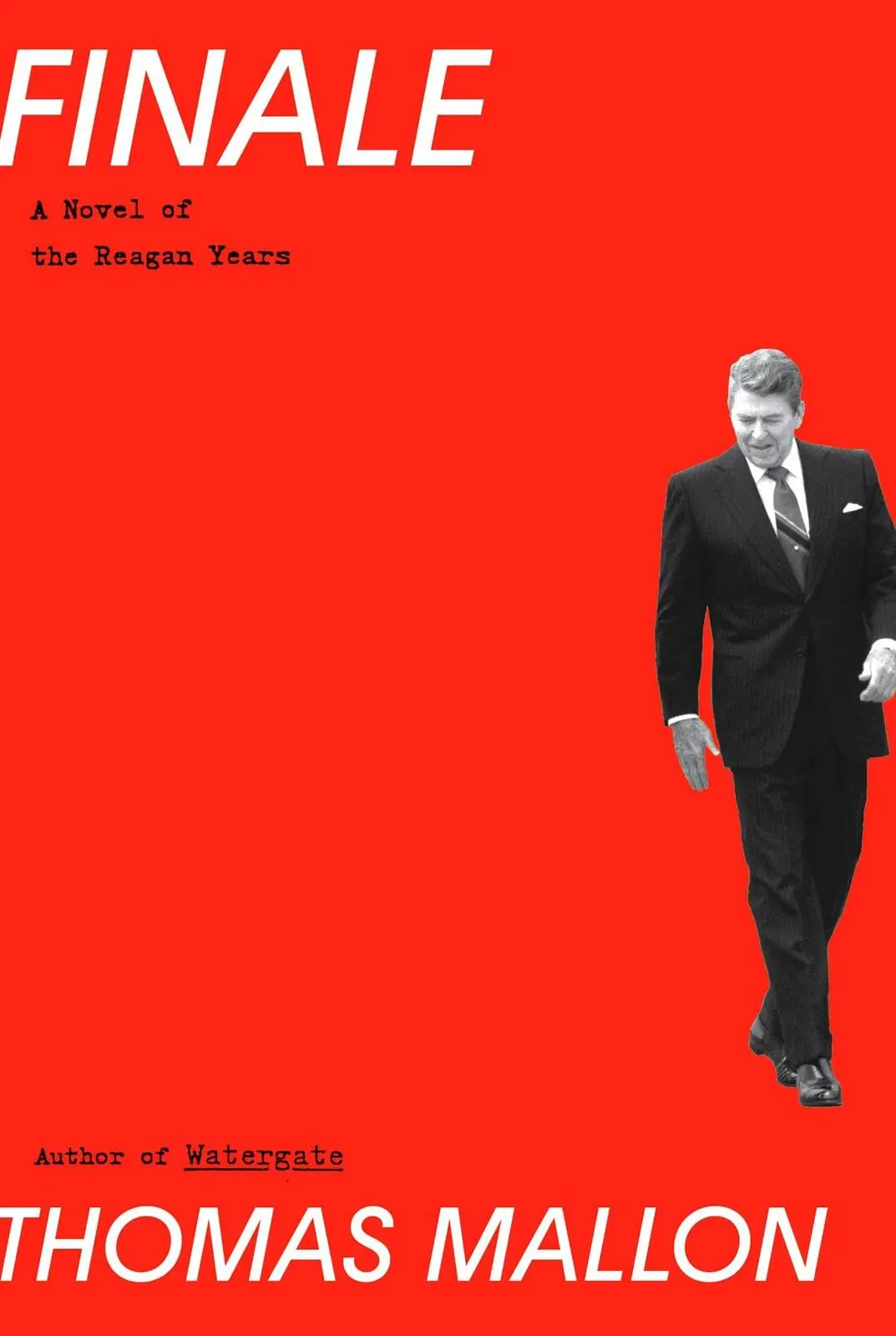
- Название:Finale: A Novel of the Reagan Years
- Автор:
- Издательство:Knopf Doubleday Publishing Group
- Жанр:
- Год:2015
- ISBN:9780307907936
- Рейтинг книги:3 / 5. Голосов: 1
-
Избранное:Добавить в избранное
- Отзывы:
-
Ваша оценка:
Finale: A Novel of the Reagan Years: краткое содержание, описание и аннотация
Предлагаем к чтению аннотацию, описание, краткое содержание или предисловие (зависит от того, что написал сам автор книги «Finale: A Novel of the Reagan Years»). Если вы не нашли необходимую информацию о книге — напишите в комментариях, мы постараемся отыскать её.
Finale captures the crusading ideologies, blunders, and glamour of the still-hotly-debated Reagan years, taking readers to the political gridiron of Washington, the wealthiest enclaves of Southern California, and the volcanic landscape of Iceland, where the president engages in two almost apocalyptic days of negotiation with Mikhail Gorbachev.
Along with Soviet dissidents, illegal-arms traders, and antinuclear activists, the novel’s memorable characters include Margaret Thatcher, Jimmy Carter, Pamela Harriman, John W. Hinckley, Jr. (Reagan’s would-be assassin), and even Bette Davis, with whom the president had long ago appeared onscreen. Several figures — including a humbled, crafty Richard Nixon; the young, brilliantly acerbic Christopher Hitchens; and an anxious, astrology-dependent Nancy Reagan (on the verge of a terrible realization) — become the eyes through which readers see the last convulsions of the Cold War, the beginning of the AIDS epidemic, and a political revolution.
At the center of it all — but forever out of reach — is Ronald Reagan himself, whose genial remoteness confounds his subordinates, his children, and the citizens who elected him.
Finale is the book that Thomas Mallon’s work has been building toward for years. It is the most entertaining and panoramic novel about American politics since Advise and Consent, more than a half century ago.
Finale: A Novel of the Reagan Years — читать онлайн бесплатно полную книгу (весь текст) целиком
Ниже представлен текст книги, разбитый по страницам. Система сохранения места последней прочитанной страницы, позволяет с удобством читать онлайн бесплатно книгу «Finale: A Novel of the Reagan Years», без необходимости каждый раз заново искать на чём Вы остановились. Поставьте закладку, и сможете в любой момент перейти на страницу, на которой закончили чтение.
Интервал:
Закладка:
“We’re right underneath him, you know,” said Anders. He pointed to the Oval Office above the Mess.
“But he isn’t there,” Anne said. Even when he is, she wanted to add, though politeness restrained her.
“You wouldn’t hear him if he were,” said Anders. “He has a famously soft footfall. They used to say he glided onto soundstages in Hollywood.”
“Well,” said Anne, who’d had enough idolatry by now. “The carpet up there is pretty thick. I imagine that down here people didn’t even hear LBJ thrashing around.”
Anders smiled, with a hint of surprise at the shift in her spirit. “So,” he asked, as the steward took their menus, “you went to the symphony last night?”
“Yes,” she answered. “Rostropovich was at the podium. Very exciting.”
“A brave man,” said Anders. “The press has gotten people so excited about Gorbachev’s supposed liberalizations, they forget how many dissidents are still trapped there.”
And of course only Reagan can free them. “Yes,” said Anne. “I’m pretty sure Rostropovich got out under Peter’s friend, Mr. Nixon.”
“ My friend, too, I’m happy to say,” said Anders.
“I admired a lot of what Nixon did in foreign affairs. But I’m afraid Gerald Ford was the last Republican I voted for. I was even a Ford delegate at the ’76 convention.”
“Really?” asked Anders, brightening up unexpectedly. “I was there for the last night of that. Up in the grandstands thanks to my new job at the UN. Mrs. Black — Shirley Temple — was leading a bunch of diplomats around, and I helped.”
She noted the tone to that “bunch of diplomats” and could only imagine what he would think of the political crowd she now ran with. “Things have changed a lot since then,” she said, cautiously.
As the years apart from Peter lengthened, she had shaken off most of the bitterness. For a while, during the late seventies, while Jimmy Carter was installed in the room above, she had even — mostly for fun — gone back to work at Leo Abner’s bookshop in Owosso, where she’d sometimes sparred with Peter during their courtship thirty years before.
“How so?” asked Anders. “What’s changed for you?”
“Oh,” said Anne, coming out of her moment’s reverie, “grandchildren, mostly. I’ve now got two of them.”
“Wonderful,” said Anders.
“Worrisome,” she replied.
“In what way?”
“Oh, I just fret about the kind of world they’ll inherit. If there’s any world to inherit.”
She saw a suspicious look come over his face, different from the one old friends in Owosso, and even her son (very pro-Reagan) would sometimes give her: a look that merely asked, with a certain amusement: What’s happened to you ? But young Mr. Little looked as if he’d gone, in a split second, to DEFCON 3.
“Well,” he said, stiffly, “the president believes that the best guarantee of a peaceful world is a strong defense, along with an assertive foreign policy.”
Absorbing this bit of hostility, she felt less liberal than maternal. She wanted to pat the hand with which this handsome, straight arrow was holding his soup spoon, wanted to tell him to stop being so pompous, that he would live longer — nuclear war or not — if he ceased talking like a press release.
She also felt it was time to put at least a few of her cards on the table. “Right after the second grandchild was born, I went to a lecture in Ann Arbor on nuclear war, by Dr. Helen Caldicott. It really opened my eyes.”
Mr. Little actually braced his shoulders; they could have been missile silos. He had raised the DEFCON level even higher and was one step away from firing. As the steward approached to refill Anne’s water glass, she half expected the Secret Service to be coming up behind.
“The president,” said Anders, very evenly, “met with Dr. Caldicott. In ’82, I believe.”
“Yes, as a favor to his daughter Patti.”
“He found Dr. Caldicott — who’s a pediatrician, not a physicist — unpersuasive.”
“She found him ill-informed.” She’d also found him frighteningly forgetful.
Having suckered Anders Little into this meeting, Anne now decided to come clean. “I joined a chapter of WAND not long after I went to that lecture. Women’s Action for Nuclear Dis—”
“I know what the letters stand for.”
“Good!” Her smile was sudden and genuine. “We must be making more of an impact than we thought!”
The young man smiled, too, enough to let her hope that things would remain friendly.
“I’ve actually moved to Washington to take a job in WAND’s office,” Anne confessed.
Mr. Little’s smile faded. “I thought you were visiting friends.”
“I fibbed.”
“To President Nixon?”
“Well,” said Anne, “to Peter. My ex-husband. He still thinks I’m just making a visit down here, and I guess that’s what he told Mr. Nixon. But when I learned of your existence, and your position here, I got an idea.”
“What was that?” asked Little. He was speeding through his soup.
“I’d like to interview you for Turnabout .”
“What’s Turnabout ?”
“A WAND publication. It’s what I was hired to work on. So far we’ve put out only one issue. But if I could get an interview with someone on the NSC, like yourself, it would be a big help to me, and, well, I suppose, helpful to dialoguing. I hate that as a verb, but you know what I mean.” As she heard herself getting flustered, she could see his expression trying, but still refusing, to soften.
“I’m afraid I wouldn’t be an appropriate person for that,” he replied. “I doubt that anyone around here would be.”
“Why not?”
“For one thing, Dr. Caldicott routinely insults the president. And, for another, our positions are probably even farther apart than they were in ’82. The two of us are proceeding from completely different premises, and—”
“Are we?” asked Anne. “Really so far apart? The president believes in a strong economy, doesn’t he?”
“Of course.”
She hoped she could now correctly quote what she had in mind, or at least come close: “ ‘Just one Soviet warhead set off two hundred and fifty miles above Kansas could cover the whole country with an electromagnetic pulse, fifty thousand volts per square yard. That would knock out all power and telephone service in the U.S.’ ” She had, more or less at her command, dozens of facts like this, almost all of them from books by Helen, as they all called Dr. Caldicott, even if they’d met her only once.
“ Missile Envy ,” said Anders, rolling his eyes over the title. “I’ve skimmed it. You’ve noticed, I hope, that she spends ninety-five percent of her time worrying about American missiles. I’m surprised you could find that one little bomb of theirs .”
“The United States has thirty thousand nuclear weapons,” Anne replied, as pedagogically as she could. She didn’t want to sound like an angry TV talking head.
“There’s a reason we need to have more nuclear weapons than the Soviets,” countered Mr. Little, his voice adopting the same patience and restraint. “ They have an enormous advantage when it comes to conventional forces in Europe. That nuclear freeze you want so much will freeze the U.S.S.R. into a position of permanent superiority.”
“Your pres — excuse me — the president also believes that with just a little pressure from us, the Soviets will collapse onto ‘the ash heap of history.’ ”
“Yes, he said that to the British Parliament.”
“It’s a fantasy, Mr. Little. We’ll all be ashes.”
Читать дальшеИнтервал:
Закладка:
Похожие книги на «Finale: A Novel of the Reagan Years»
Представляем Вашему вниманию похожие книги на «Finale: A Novel of the Reagan Years» списком для выбора. Мы отобрали схожую по названию и смыслу литературу в надежде предоставить читателям больше вариантов отыскать новые, интересные, ещё непрочитанные произведения.









Обсуждение, отзывы о книге «Finale: A Novel of the Reagan Years» и просто собственные мнения читателей. Оставьте ваши комментарии, напишите, что Вы думаете о произведении, его смысле или главных героях. Укажите что конкретно понравилось, а что нет, и почему Вы так считаете.