Thomas Mallon - Finale - A Novel of the Reagan Years
Здесь есть возможность читать онлайн «Thomas Mallon - Finale - A Novel of the Reagan Years» весь текст электронной книги совершенно бесплатно (целиком полную версию без сокращений). В некоторых случаях можно слушать аудио, скачать через торрент в формате fb2 и присутствует краткое содержание. Год выпуска: 2015, ISBN: 2015, Издательство: Knopf Doubleday Publishing Group, Жанр: Современная проза, на английском языке. Описание произведения, (предисловие) а так же отзывы посетителей доступны на портале библиотеки ЛибКат.
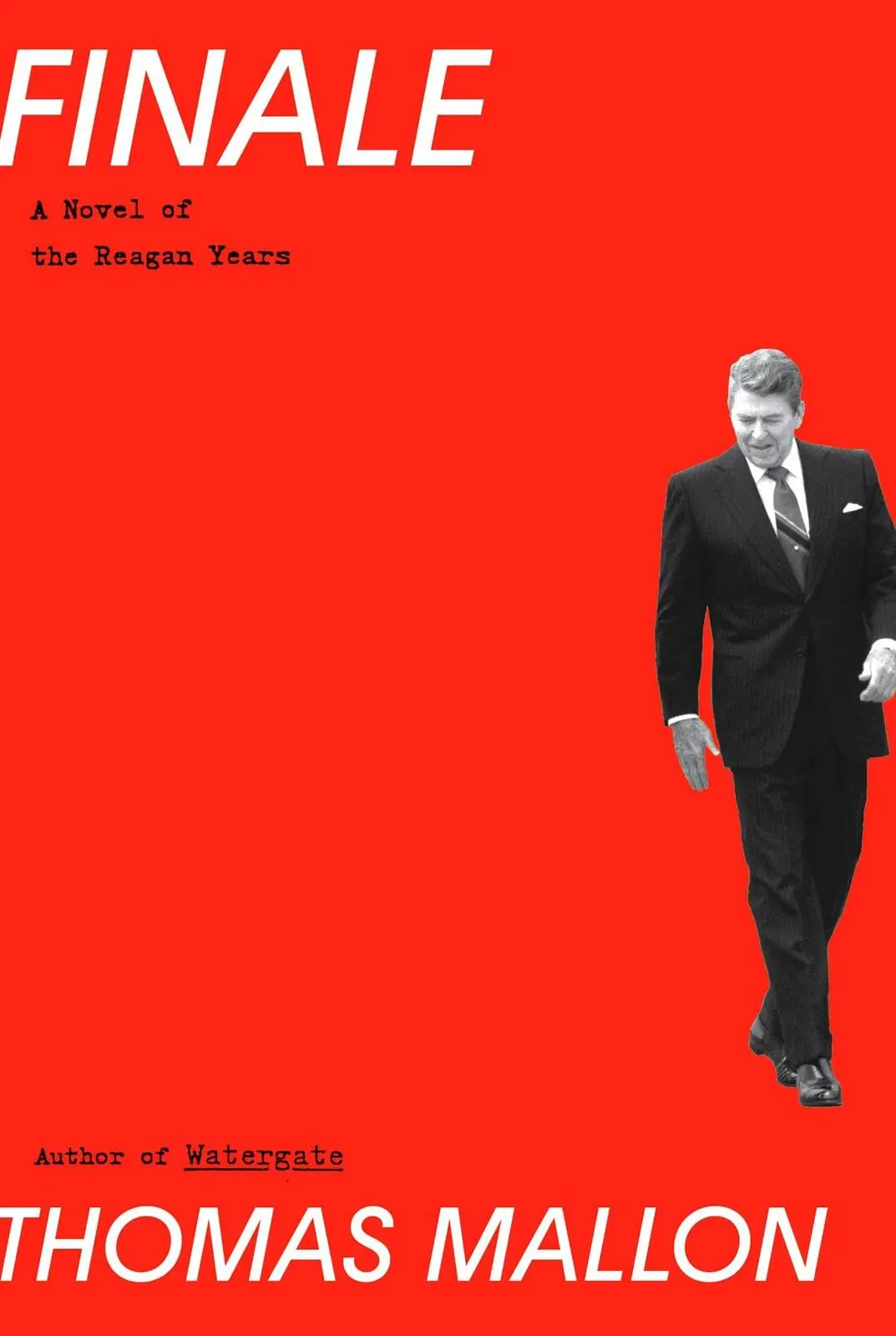
- Название:Finale: A Novel of the Reagan Years
- Автор:
- Издательство:Knopf Doubleday Publishing Group
- Жанр:
- Год:2015
- ISBN:9780307907936
- Рейтинг книги:3 / 5. Голосов: 1
-
Избранное:Добавить в избранное
- Отзывы:
-
Ваша оценка:
Finale: A Novel of the Reagan Years: краткое содержание, описание и аннотация
Предлагаем к чтению аннотацию, описание, краткое содержание или предисловие (зависит от того, что написал сам автор книги «Finale: A Novel of the Reagan Years»). Если вы не нашли необходимую информацию о книге — напишите в комментариях, мы постараемся отыскать её.
Finale captures the crusading ideologies, blunders, and glamour of the still-hotly-debated Reagan years, taking readers to the political gridiron of Washington, the wealthiest enclaves of Southern California, and the volcanic landscape of Iceland, where the president engages in two almost apocalyptic days of negotiation with Mikhail Gorbachev.
Along with Soviet dissidents, illegal-arms traders, and antinuclear activists, the novel’s memorable characters include Margaret Thatcher, Jimmy Carter, Pamela Harriman, John W. Hinckley, Jr. (Reagan’s would-be assassin), and even Bette Davis, with whom the president had long ago appeared onscreen. Several figures — including a humbled, crafty Richard Nixon; the young, brilliantly acerbic Christopher Hitchens; and an anxious, astrology-dependent Nancy Reagan (on the verge of a terrible realization) — become the eyes through which readers see the last convulsions of the Cold War, the beginning of the AIDS epidemic, and a political revolution.
At the center of it all — but forever out of reach — is Ronald Reagan himself, whose genial remoteness confounds his subordinates, his children, and the citizens who elected him.
Finale is the book that Thomas Mallon’s work has been building toward for years. It is the most entertaining and panoramic novel about American politics since Advise and Consent, more than a half century ago.
Finale: A Novel of the Reagan Years — читать онлайн бесплатно полную книгу (весь текст) целиком
Ниже представлен текст книги, разбитый по страницам. Система сохранения места последней прочитанной страницы, позволяет с удобством читать онлайн бесплатно книгу «Finale: A Novel of the Reagan Years», без необходимости каждый раз заново искать на чём Вы остановились. Поставьте закладку, и сможете в любой момент перейти на страницу, на которой закончили чтение.
Интервал:
Закладка:
“Ms. Macmurray, do you see how this is getting us nowhere?”
“On the contrary! Wouldn’t it be good for readers to be shown an exchange like this? And please call me Anne. May I call you Anders?”
“We’re so busy with short-term crises here, we’ve got no time to spend on unbridgeable divides. Do you know that the Soviets have been holding an American journalist in a military prison for the past six days? Nicholas Daniloff, no more a spy than you or I.”
“I do read the newspaper, Anders.”
“I apologize — Anne.” He spoke her first name as if it were a forced concession rather than a reciprocal privilege. “People are preoccupied and frustrated here.”
Their real frustration, Anne knew, came from an awareness that they were looking a bit soft. The administration had offered to turn Zakharov, the real spy, over to the Soviets, in exchange for Daniloff, who’d been arrested for accepting some newspaper clippings and harmless photos from an old friend. Even George Will was on the president’s case about the proposed swap.
Anders could see that she was pretty well informed, and after a last spoonful of navy bean he rebutted an objection she hadn’t made but was no doubt thinking: “The Soviets would only get Zakharov temporarily . Pending his trial.”
She could tell he didn’t believe that any more than George Will did, but she decided to say nothing. He soon changed the subject. “Where will you be living?” he asked.
“I’ve found a nice apartment in Arlington. Over on Clarendon Boulevard.”
He smiled and said, “I’m right nearby, on Wilson,” before adding, more grimly, “since my, uh, separation.”
He looked surprised to have said it, as if the personal information were another concession wrung from him over this little lunchtime negotiating table. He would be more comfortable, Anne realized, with a resumption of the statistical skirmishing.
“You know, Anders, over seventy percent of Americans say they’re for a nuclear freeze.”
“And the president still carried forty-nine states.”
“I know,” said Anne, with a sigh. “I’ve been depressed ever since.”
Seeing her reach into her purse, he shook his head. “Your money’s no good here. Literally.” He waved for the check and fixed his employee number to it before signing with a flourish that seemed to restore his authority.
Then, suddenly, real excitement appeared on his face. Anne turned to see whatever had caught his eye. “Is that—?”
“Yes, it is,” he said, not removing his gaze from Jeane Kirkpatrick, who’d just come in with one of the vice president’s foreign-policy advisors.
“You know her, don’t you?” Anne thought she could recall hearing that fact from Peter.
“Yes,” said Anders, getting up. “I’ll introduce you.”
As soon as he made the offer his expression changed, from something masterful to something frightened. He realized what he might be letting himself in for.
“I’ll behave,” Anne assured him.
On their way to Dr. Kirkpatrick’s table they passed two speechwriters, to whom Anders also introduced Anne.
“Working on the UN address?” he asked one of them.
“I wish,” said the very young man. “I spent the morning cranking out a proclamation for National Grandparents’ Day. It’s this Sunday, if you guys are looking for something to celebrate.”
Anders backtracked and explained to Anne: “The president will be addressing the United Nations on September twenty-second.”
“I know,” she answered. “We’re planning to demonstrate.”
He gave her a plaintive look, reminding her of her promise, as they continued on toward Jeane Kirkpatrick’s table.
“ Anders ,” said the former ambassador in her deep, peculiarly alluring voice. Anne was fascinated by the look of her — the heavy eyebrows, the pursed but full lips. She was a caricaturist’s dream, handsome and villainous, her butchness somehow deeply feminine. Without bothering to introduce her own lunch companion, Dr. Kirkpatrick shook Anders’s hand and smiled at Anne.
“This is Anne Macmurray,” said Anders. “She’s here from Michigan.” Anne noted the slight pause within the sentence, the momentary effort he made to omit the word “visiting,” so that, strictly speaking, he was still telling the truth.
“Welcome to Washington,” said Dr. Kirkpatrick.
“Thank you.”
Silence followed. “So,” said Anders, in a jaunty panic to fill it. “How are you? And how, dare I ask, is the book coming?”
Dr. Kirkpatrick dismissed his second question with a wave of her hand. “ I’m fine — or I was until about fifteen minutes ago.” The eyebrows went up. “I’d be feeling better if this hijacking hadn’t ended.”
The remark seemed both shocking and obscure. Before entering the Mess, Anne had seen, on a CNN monitor, that the Pakistani military had subdued some Palestinian hijackers holding a plane in Karachi. About twenty passengers had been killed.
“You’ll forgive my bloody-mindedness,” Dr. Kirkpatrick elaborated. “But now that that’s over, the press’s full attention will be back on Daniloff. That’s mostly bad.”
“How so?” asked Anders — reduced to being the eager student, Anne noticed.
With no visible agitation other than a forward extension of her already-pouting lips, Dr. Kirkpatrick explained: “It will return the public’s full focus to a perfectly limp response to the Soviets by this administration I was once part of.”
Shamefaced, Anders offered the only update about Daniloff that he had: “We’ve heard that they’re allowing him to exercise on the prison roof.”
His vividly severe mentor looked away and sipped from her water glass, before saying: “Anders, to someone who runs five miles every morning, like yourself, I’m sure that that information is terribly comforting and compelling. But I’m not worried about Mr. Daniloff getting a little flabby. I’m worried about the president looking that way.”
The navy steward hovered nearby with his order pad.
“I hope I’ll see you soon,” said Anders, extending his hand. Dr. Kirkpatrick shook it, said, “Yes, that would be nice,” and ordered a salade niçoise .
Outside the building, after passing the Marine guard and crossing the driveway, Anders still looked crestfallen. He prepared to take leave of Anne on the steps of the EOB.
“Do you have a card?” she asked.
“Yes, of course,” he said, pulling one from his wallet. “I suppose you’re going to call and take another crack at me. About the interview.”
“I’m not sure,” Anne answered. “But I am going to call and say that I’m cooking you dinner. As mother figures go, I’m a lot easier than that one.” She pointed back in the direction of the Mess.
—
Though he’d not had so much as a roll with his soup, Anders double-timed it up the staircase to the third floor. On the way, he passed Tawny-Dawn-or-Whatshername. She was wearing a tight business suit, a frilly blouse, and a pair of Reebok high-tops, and he could hear Bon Jovi coming out of her Walkman: “You Give Love a Bad Name.”
Did he ? Give love a bad name? He supposed his ex-wives — two of them! — and ex-girlfriends would say yes. If he did, could Anne Macmurray detect it — like some telltale condition, a kind of chronic dry skin? He almost felt that she had; he just hoped he’d been sufficiently polite. No one could blame him for getting hot under the collar over all that Helen Caldicott garbage — and then Jeane had thrown him completely off balance.
He did two fast laps of the third floor before getting stopped in front of room 368 by Neal Grover, who worked under Jack Matlock in European and Soviet Affairs. Neal was just getting back from some lunchtime errands; a yellow Tower Records bag dangled from his wrist.
Читать дальшеИнтервал:
Закладка:
Похожие книги на «Finale: A Novel of the Reagan Years»
Представляем Вашему вниманию похожие книги на «Finale: A Novel of the Reagan Years» списком для выбора. Мы отобрали схожую по названию и смыслу литературу в надежде предоставить читателям больше вариантов отыскать новые, интересные, ещё непрочитанные произведения.












Обсуждение, отзывы о книге «Finale: A Novel of the Reagan Years» и просто собственные мнения читателей. Оставьте ваши комментарии, напишите, что Вы думаете о произведении, его смысле или главных героях. Укажите что конкретно понравилось, а что нет, и почему Вы так считаете.