Charlie Smith - Ginny Gall
Здесь есть возможность читать онлайн «Charlie Smith - Ginny Gall» весь текст электронной книги совершенно бесплатно (целиком полную версию без сокращений). В некоторых случаях можно слушать аудио, скачать через торрент в формате fb2 и присутствует краткое содержание. Год выпуска: 2016, Издательство: Harper, Жанр: Современная проза, на английском языке. Описание произведения, (предисловие) а так же отзывы посетителей доступны на портале библиотеки ЛибКат.
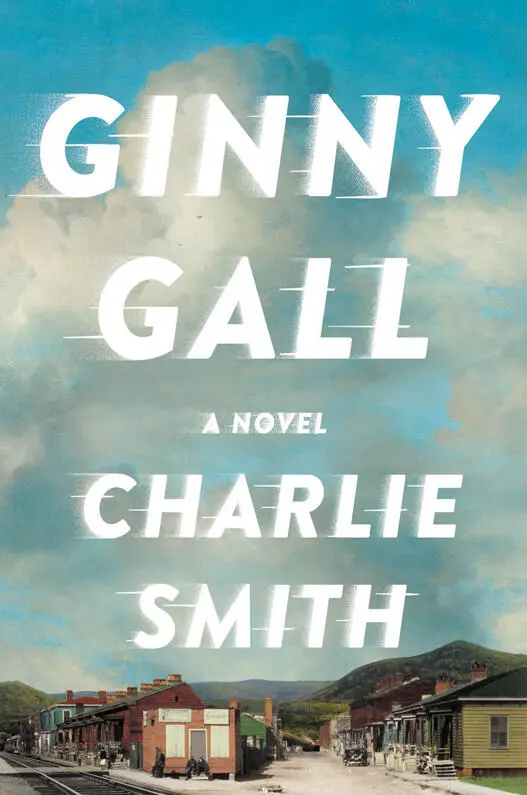
- Название:Ginny Gall
- Автор:
- Издательство:Harper
- Жанр:
- Год:2016
- ISBN:нет данных
- Рейтинг книги:5 / 5. Голосов: 1
-
Избранное:Добавить в избранное
- Отзывы:
-
Ваша оценка:
Ginny Gall: краткое содержание, описание и аннотация
Предлагаем к чтению аннотацию, описание, краткое содержание или предисловие (зависит от того, что написал сам автор книги «Ginny Gall»). Если вы не нашли необходимую информацию о книге — напишите в комментариях, мы постараемся отыскать её.
Delvin Walker is just a boy when his mother flees their home in the Red Row section of Chattanooga, accused of killing a white man. Taken in by Cornelius Oliver, proprietor of the town’s leading Negro funeral home, he discovers the art of caring for the aggrieved, the promise of transcendence in the written word, and a rare peace in a hostile world. Yet tragedy visits them near-daily, and after a series of devastating events — a lynching, a church burning — Delvin fears being accused of murdering a local white boy and leaves town.
Haunted by his mother’s disappearance, Delvin rides the rails, meets fellow travelers, falls in love, and sees an America sliding into the Great Depression. But before his hopes for life and love can be realized, he and a group of other young men are falsely charged with the rape of two white women, and shackled to a system of enslavement masquerading as justice. As he is pushed deeper into the darkness of imprisonment, his resolve to escape burns only more brightly, until in a last spasm of flight, in a white heat of terror, he is called to choose his fate.
In language both intimate and lyrical, novelist and poet Charlie Smith conjures a fresh and complex portrait of the South of the 1920s and ’30s in all its brutal humanity — and the astonishing endurance of one battered young man, his consciousness “an accumulation of breached and disordered living. . hopes packed hard into sprung joints,” who lives past and through it all.
Ginny Gall — читать онлайн бесплатно полную книгу (весь текст) целиком
Ниже представлен текст книги, разбитый по страницам. Система сохранения места последней прочитанной страницы, позволяет с удобством читать онлайн бесплатно книгу «Ginny Gall», без необходимости каждый раз заново искать на чём Вы остановились. Поставьте закладку, и сможете в любой момент перейти на страницу, на которой закончили чтение.
Интервал:
Закладка:
“You think the negro man is designed to carry the world’s burden?” Delvin said.
“If we are I spect we need to bulk up,” Mr. Oliver said, looking down his ample front. He flipped open a wing of his black vest, revealing the red silk underlining. Casey lay on the floor putting another jigsaw puzzle together. Assembled, so Delvin recalled, the puzzle would become a picture of lions resting under a tree in Africa. The tree had a squashed gray top that always seemed to Delvin a mistake until he saw a photo of such a tree in the professor’s museum. Acacia. They grew in Africa where everybody in this house was from. Everybody came from Africa, the professor had told him. White man caught the first train out, he said.
Tomorrow he would be back on the rails. Mr. Oliver had asked where he was off to this time. Delvin had told him about Celia. “Good, good,” Mr. Oliver had said, grinning broadly, “it’ll probably help take your mind off rounding up ladies for yours truly,” and they both had laughed. Delvin had talked a little about how painful the situation was. “What matters to us always makes us a little nervous and spooky when we draw up to it,” the funeral director said. “Look at me. I still live above my shop, like some old grocer off in the big city. I keep thinking I am about to move on to something that will be better, but when I think I am getting there. . I get shaky.”
Delvin hadn’t known exactly what he was talking about, or maybe he did. In his eyes the real mournfulness under the professional one. Off to the side most folks had a little sparkle, most folks he knew. Some little graced and heroic frolic. But not Mr. O. He had never criticized Delvin for getting into trouble with the white boys (or the no-trouble). But he knew without being told that he had been the heir apparent and was no longer. This hurt him and at the same time he felt relieved to be free. He had never wanted to run a funeral home. Now there was little Casey. Twelve years old — not ten as he’d thought — and quiet-minded, an able boy who liked to do what he was told, seemed to get satisfaction out of it. The boy already smelled faintly of formaldehyde (always the smell around here, even in the kitchen where Mrs. Parker kept some in a mix for cleaning — except on Mr. Oliver, who was obsessive about cleanliness and well-perfumed — except on him, who had bathed readily out in the stable, washing at the pump).
He smiled, nodding in the old way, got up and asked if there was anything he could get his benefactor.
“The sight of you is enough,” Oliver said. The old man — he was not so old, but there was a look in his eyes now, something abashed and wavering. He raised his hand and his hand, wide and furrowed down the back, trembled. They both saw this and Delvin wanted to take the hand and kiss it, press it hard to his heart, but he didn’t, he pretended he didn’t see the tremor, didn’t see the vexed look in Oliver’s eyes, only squeezed the hand, softly, like a promise, instead of with the jocosely competitive pressure they had used since he was a little boy. He didn’t want to hurt him and he didn’t want to let go. From somewhere off in the dark an owl called. The call was followed by the hesitant, falling cry of a widow bird, answering, or commenting, it wasn’t clear.
6
In the late dark of early morning Delvin slipped out the back door. He walked through the quiet streets to the rail yards. The westbound freight was finishing its assembly. A long string of red and yellow boxcars, flatcars and a hook of four black gondolas, all with their big bellies empty, clanked as they were coupled to the big red freight engine. Southern Railroad, Piedmont portion: Bitter Biscuit Line, the breezers called it. Delvin watched from the long grassy hillside above Wainwright Avenue. Two men, one short, the other tall, in striped overalls, carried small suitcases to the dull red caboose and climbed the three steps to the back porch. He wished he was riding in the caboose. From the cupola the brakemen were supposed to watch for jumpers, but they didn’t always do anything if they spotted them. Yard bulls were always a problem, but they too were off somewhere else this morning. A few dozen stampers sat around in the greasy yellow grass waiting for time to board. It was a wonder hawkers didn’t work the crowd. In a way they did. There was Little Simp, a middle-aged hoop chiseler from Georgia, offering tiny handmade dolls for sale. He made them out of gunnysacks stuffed with cotton and colored-in their faces with paints he made himself. There were women in the crowd too, bo-ettes, burlap sisters, zooks, shanty queens, blisters and hay bags they were called by the hobo crowd, janes looking for lost husbands or lovers, mop marys and buzzers. A little boy sold strips of sugar cane. Other men sold whatever anyone wanted to buy, personwise. Most of the shifters it looked like this trip were young, white and colored, boys mostly, looking for work — he overheard a young white boy talking about a big box factory opening in Memphis — and the rest members of the increasing crowd of the out-of-work, troubled or desperate or worn out or knocked to their knees, or slaphappy tourists, workers or lazers or bindlestiffs and beefers, dousers and cons, boys eager to make a start, posseshes joyriding into their cranky destinies. He had written about these travelers in his notebook. Truth was, you could find just about anybody on the road these days.
The morning came up sunny, with only a few shredded clouds in the south. They weren’t high enough in the mountains to miss the humidity. It lay like a film of grease on everybody’s skin. In his notebook he had written sun plowing the night under. . day touching itself everywhere. . Were they his words, or had he copied them from somewhere? Tapping at the page, he couldn’t remember now. He looked around for familiars. Maybe one would show. He recognized a boy from over on the west side, Calvin Binger, and he waved to him. Calvin gave him a slow sweep of wave back, which was his style. They both kept their seat. A man standing in the grass scratching his thigh through new blue jeans looked familiar, but not from here. He looked like a yegg he’d run across, or no, somebody, maybe it was the line foreman Trobilly had pointed out to him in Baton Rouge. They had been eating coon meat sandwiches, a first for Delvin, over near the closed-down rendering plant in the Larusse district near where Molly Picone got killed that time in November when the weather turned foul and her hincty boyfriend turned foul with it. That had been a rough time for everybody. They had tried to pull her out of the rot-choked slough she’d been thrown into — coax her out — but she was more scared of her boyfriend than she was of drowning and wouldn’t come. She was wearing a long yellow dress like a wool nightgown and the dress spread out all around her and as she went under she was singing the Bessie Smith song “One More Good Time with You.” They had stood on the bank crying like babies. That was where that man he was looking at now, hunched up under a peaked gray cap, had been pointed out to him — not the first such a one — as somebody to stay away from. They were the ones you wanted to avoid on these trips. Wolves and high jackets and crazy men, desocialized tramps of evil intent and slimy ways, the rail fighters, croakers who traveled the circuit looking for somebody to whale away on, beat to death and then stomp on the corpse. Few were like that, but there were always those good sense and kindness had never reached. It wasn’t always easy to tell, not at first anyway, not until you got a feel for it.
Delvin took out his volume of Du Bois essays and began to read. Du Bois was writing about the threads that bound a people together. Delvin stopped. He was thinking about skin color. The photographs in the professor’s museum. Black-and-white photos sure, the mix like out here, but not like out here because here the colors didn’t mix, or if they did you were still only the one color, no matter how you fractionalized it; if there was any negro in you, you were negro only. Just a drop would do. Like we were tainted, he thought. But him, Delvin the Dark, he loved the rich deep colors best. His own face was among the blackest. But even among africano folks the light-skinned got the biggest portion. They were treated with more respect. As a tiny child he had sometimes been laughed at, called a dewbaby.
Читать дальшеИнтервал:
Закладка:
Похожие книги на «Ginny Gall»
Представляем Вашему вниманию похожие книги на «Ginny Gall» списком для выбора. Мы отобрали схожую по названию и смыслу литературу в надежде предоставить читателям больше вариантов отыскать новые, интересные, ещё непрочитанные произведения.










Обсуждение, отзывы о книге «Ginny Gall» и просто собственные мнения читателей. Оставьте ваши комментарии, напишите, что Вы думаете о произведении, его смысле или главных героях. Укажите что конкретно понравилось, а что нет, и почему Вы так считаете.