Charlie Smith - Ginny Gall
Здесь есть возможность читать онлайн «Charlie Smith - Ginny Gall» весь текст электронной книги совершенно бесплатно (целиком полную версию без сокращений). В некоторых случаях можно слушать аудио, скачать через торрент в формате fb2 и присутствует краткое содержание. Год выпуска: 2016, Издательство: Harper, Жанр: Современная проза, на английском языке. Описание произведения, (предисловие) а так же отзывы посетителей доступны на портале библиотеки ЛибКат.
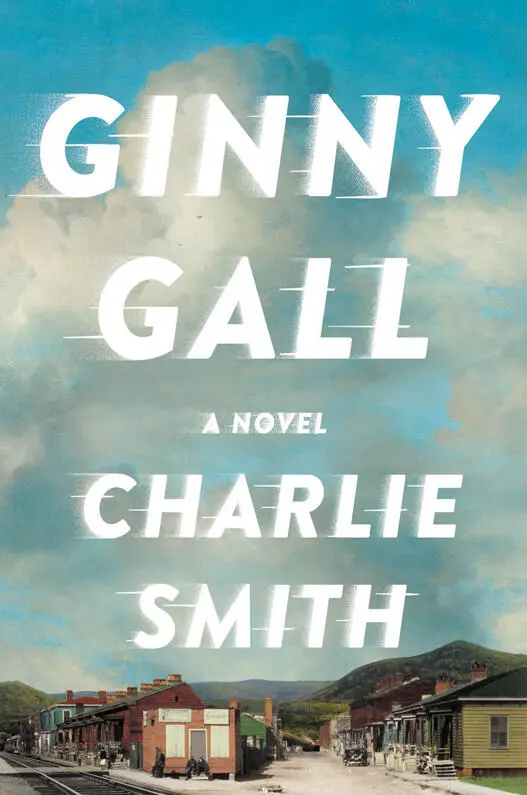
- Название:Ginny Gall
- Автор:
- Издательство:Harper
- Жанр:
- Год:2016
- ISBN:нет данных
- Рейтинг книги:5 / 5. Голосов: 1
-
Избранное:Добавить в избранное
- Отзывы:
-
Ваша оценка:
Ginny Gall: краткое содержание, описание и аннотация
Предлагаем к чтению аннотацию, описание, краткое содержание или предисловие (зависит от того, что написал сам автор книги «Ginny Gall»). Если вы не нашли необходимую информацию о книге — напишите в комментариях, мы постараемся отыскать её.
Delvin Walker is just a boy when his mother flees their home in the Red Row section of Chattanooga, accused of killing a white man. Taken in by Cornelius Oliver, proprietor of the town’s leading Negro funeral home, he discovers the art of caring for the aggrieved, the promise of transcendence in the written word, and a rare peace in a hostile world. Yet tragedy visits them near-daily, and after a series of devastating events — a lynching, a church burning — Delvin fears being accused of murdering a local white boy and leaves town.
Haunted by his mother’s disappearance, Delvin rides the rails, meets fellow travelers, falls in love, and sees an America sliding into the Great Depression. But before his hopes for life and love can be realized, he and a group of other young men are falsely charged with the rape of two white women, and shackled to a system of enslavement masquerading as justice. As he is pushed deeper into the darkness of imprisonment, his resolve to escape burns only more brightly, until in a last spasm of flight, in a white heat of terror, he is called to choose his fate.
In language both intimate and lyrical, novelist and poet Charlie Smith conjures a fresh and complex portrait of the South of the 1920s and ’30s in all its brutal humanity — and the astonishing endurance of one battered young man, his consciousness “an accumulation of breached and disordered living. . hopes packed hard into sprung joints,” who lives past and through it all.
Ginny Gall — читать онлайн бесплатно полную книгу (весь текст) целиком
Ниже представлен текст книги, разбитый по страницам. Система сохранения места последней прочитанной страницы, позволяет с удобством читать онлайн бесплатно книгу «Ginny Gall», без необходимости каждый раз заново искать на чём Вы остановились. Поставьте закладку, и сможете в любой момент перейти на страницу, на которой закончили чтение.
Интервал:
Закладка:
“I don’t believe you.”
And he didn’t, wouldn’t, until the Ghost walked him aside, led him into the shade of a a big half-peeled sycamore and there told him what was so: there’d been no trouble anybody’d been looking for him about. No Chattanooga white folks had even mentioned negroes shooting. “They’s probably too ashamed to,” the Ghost said.
Delvin had stretched both hands out and eased himself close against the tree. The bark smelled of tree life. He pressed his face against the smooth skin. The Ghost took a step closer but he didn’t touch him. “We’d uv told you but we didn’t know where to write.”
Delvin felt a loose trailing feeling like the ragged tail on a kite falling across the sky. He’d heard this, stray asides or a word let slip, but he realized none of that had he believed. Now what was so swung on him like a club and got through. It was as if he was hearing it for the first time. Tears welled in his eyes, a few, small, crisp as berries. He waited for them to fall but they didn’t. They made a smear where his fingers touched them. He felt a wobbling in his chest, a raveling. The feeling that had come over him in the train yard — of happiness and relief and anger and dumbfoundedness and a solemn castigation that melted as he felt it into a smooth and easygoing slide, of sorrow mixed with joy — came on him again. Lord, I’ve survived. That boy survived. He wanted to go find him — if there ever was a boy, that one who had shouted — and kiss his face. What luck. And what a shamfaced, goddamn— Agh. The professor. Celia. Celia. What luck. When he turned around from the tree, he was laughing — shaking and laughing and crying and about to fall over; the Ghost had to hold him up by the shoulders.
They would sit out in the yard on sunny days drinking Miss Foster’s Punch and talking about what they’d experienced in the world. The Ghost had taken to wearing big Redtone boots, and he did a stomp around the yard to show Delvin how well they fit. He carried keys on a long yellow chain that he said was gold but wasn’t. He was still an angel turnip, though he lied about this and claimed he had the girls at the Emporium eating out of his hand.
“Those caledonias do anything for a man in a big car,” he said, and they both laughed. It was like they could make up anything they wanted and have it be true.
Delvin, leaning back in the big canvas folding chair, breathed in the smell of pine seeds and sun-baked grass and felt for a moment that he was in heaven. A few feathered clouds with an unchased, slowpoke, summery look seemed like they’d still be there tomorrow. The lilt of the new boy’s sweet voice came from the porch, interrupted now and again by Mr. Oliver’s rich barreltone correcting a pronunciation or offering a remark on some aspect of the latest reading. Like Delvin, the boy — and Mr. Oliver — preferred the parts concerning trips and traveling. Delvin missed his old intimacy with Mr. O, but he was not particularly jealous. To have it again he would have to return to being the boy he once was and he was no longer that boy.
What he was now was shaky and fraught; confused, he thought, about half the time, scared — jumpy, he told Winston, the Ghost — full of excuses and plans. . and desires, he said, speaking the word softly as if afraid just the word would invoke some bustling overriding particular; itching, he said, thinking as he spoke of his attempts to appear blasé, indolent even, while at the same time — as he thought, and spoke — flexing the muscles in his forearms until the Ghost told him to quit showing off what he didn’t have. He picked pine seeds out of their little single wings and ate them one at time and listened to the easy spell of the old knights and waited for what was coming.
For a time he wrote Celia every day and for a while he was engrossed in this, this job really, he thought, his work for now, or part of it; he was deeply involved in what he thought of as the proper way of life. He told the Ghost about her, and the Ghost, who fantasized nightly of high-yella women crossing the yard to find him, was rightly appreciative and admiring.
“I spect you want to marry her and open up a business of your own,” he said.
“I might,” Delvin said. The rosiness of possibility swelled in his heart. He had begun to believe again — sense, suspect, guess — that he was being followed. “Somebody’s tailing me,” he said to the Ghost, nervously. . hopefully.
“Somebody sus-pect you of somethin?” the Ghost said. “Somethin else?”
“No, I don’t feel that way. And besides I hadn’t done anything. Not a thing.”
“People follow me a lot too,” the Ghost said congenially. “I got lots of admirers these days. That’s probably what it is in your case — admirers. These girls, when they get a whiff of your abilities, they come slinking along after yuh.”
“I don’t know if it’s that. Besides, in yo case I heard it was a snort of that old three jacks and a king.”
“I don’t need no potion.” He shook his head. His greased orange hair shone in the low sunlight. “You rob a bank or something? Shoot somebody again?”
Delvin gave him a look. “No. But I did see a man get stabbed.”
“They want you for a witness?”
“It wadn’t like that.”
He told the Ghost about his experience on the freight.
“You think the fall killed him?” the Ghost asked, referring to the living murderer they threw off the train. “Wonder why they didn’t just kill him outright.”
“People don’t want blood on their hands.”
“Even murderer blood? Seems like that would be a badge of honor.”
“They don’t want nothing on their hands.”
Somebody’d tossed a handful of corn dust on a little spill of blood. Delvin’d had a bitter taste in the back of his throat. But after a while it passed. The man who grabbed him at the door and saved him, the little jeff; the man’s hands had shook. Lying makes violence, the professor always said.
The Ghost scratched his freckled cheek. He began a story of dash and devilment, familiar to Delvin before he heard it. Women, shiny-eyed girls, who loved him. “Got one over at the Emporium who wears a gold bracelet I give her.” Out this way he was ready to take on more responsibility, just as soon as Mr. O thought he was ready for it. Actually not when, but right now, if Delvin knew what he meant. He had a sly look under thick orange eyebrows. Something in his face heretofore hidden had worked its way to the surface. Delvin had seen it before with boys their age. Boys who had once been sweet and shy now become rough customers who pushed others around. Mostly it was the cowed ones, the frightened boys who weren’t quick or strong, who stayed gentle, the over-friendly boys who agreed with everything you said. He preferred the older boys — the men really — he’d met on the trains, riders toughened by experience. They scared him but they gave him somebody to follow. And he too pushed and poked and shouted out his readiness to take on the world. He thought of Celia, who had looked at him as a boy who couldn’t be trusted yet. Who didn’t have the power to — to what? He never could be sure. Protect her, he guessed. I can do that, he thought, but then he wasn’t sure, considered himself too rangy-minded, too loose in his ways. He was what she thought he was — a drifter, picking up jobs where he could, a day worker anywhere, in any town — the world’s day worker, he thought — picking peaches, sweeping out the back, raking a yard, filling baskets with sycamore and oak tree leaves. But still he wanted to write things down, in books maybe. He didn’t just have this in mind. He wadn’t no drifter there. He got down hard on the stories he was jotting down these days, applications of effort and detail, some loose-jointed boy walking by a string of wild grapevine trailing up a fence, talking to a brindle cow on the other side about loneliness, taking the cow’s part, taking it back so he could say how he lived over in the town. Story about a man living in a grass house in a ditch, about a little girl singing to herself as the house next door burned down. He didn’t show these stories to anybody, but some time he would.
Читать дальшеИнтервал:
Закладка:
Похожие книги на «Ginny Gall»
Представляем Вашему вниманию похожие книги на «Ginny Gall» списком для выбора. Мы отобрали схожую по названию и смыслу литературу в надежде предоставить читателям больше вариантов отыскать новые, интересные, ещё непрочитанные произведения.










Обсуждение, отзывы о книге «Ginny Gall» и просто собственные мнения читателей. Оставьте ваши комментарии, напишите, что Вы думаете о произведении, его смысле или главных героях. Укажите что конкретно понравилось, а что нет, и почему Вы так считаете.