Charlie Smith - Ginny Gall
Здесь есть возможность читать онлайн «Charlie Smith - Ginny Gall» весь текст электронной книги совершенно бесплатно (целиком полную версию без сокращений). В некоторых случаях можно слушать аудио, скачать через торрент в формате fb2 и присутствует краткое содержание. Год выпуска: 2016, Издательство: Harper, Жанр: Современная проза, на английском языке. Описание произведения, (предисловие) а так же отзывы посетителей доступны на портале библиотеки ЛибКат.
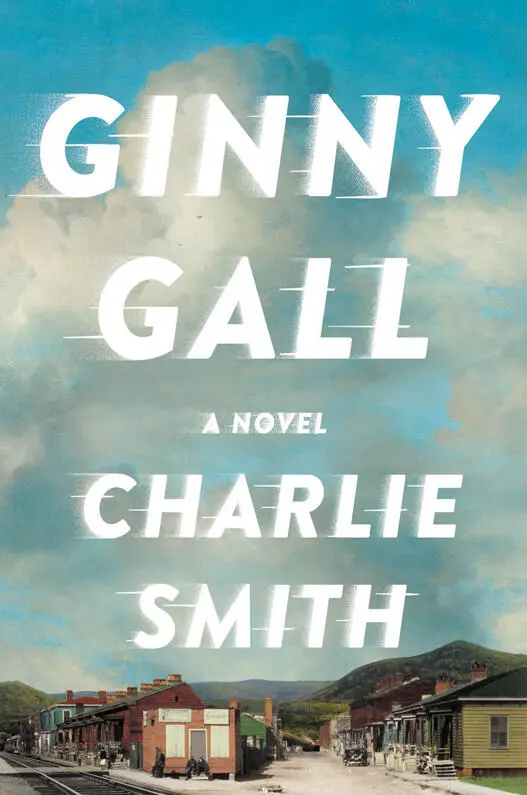
- Название:Ginny Gall
- Автор:
- Издательство:Harper
- Жанр:
- Год:2016
- ISBN:нет данных
- Рейтинг книги:5 / 5. Голосов: 1
-
Избранное:Добавить в избранное
- Отзывы:
-
Ваша оценка:
Ginny Gall: краткое содержание, описание и аннотация
Предлагаем к чтению аннотацию, описание, краткое содержание или предисловие (зависит от того, что написал сам автор книги «Ginny Gall»). Если вы не нашли необходимую информацию о книге — напишите в комментариях, мы постараемся отыскать её.
Delvin Walker is just a boy when his mother flees their home in the Red Row section of Chattanooga, accused of killing a white man. Taken in by Cornelius Oliver, proprietor of the town’s leading Negro funeral home, he discovers the art of caring for the aggrieved, the promise of transcendence in the written word, and a rare peace in a hostile world. Yet tragedy visits them near-daily, and after a series of devastating events — a lynching, a church burning — Delvin fears being accused of murdering a local white boy and leaves town.
Haunted by his mother’s disappearance, Delvin rides the rails, meets fellow travelers, falls in love, and sees an America sliding into the Great Depression. But before his hopes for life and love can be realized, he and a group of other young men are falsely charged with the rape of two white women, and shackled to a system of enslavement masquerading as justice. As he is pushed deeper into the darkness of imprisonment, his resolve to escape burns only more brightly, until in a last spasm of flight, in a white heat of terror, he is called to choose his fate.
In language both intimate and lyrical, novelist and poet Charlie Smith conjures a fresh and complex portrait of the South of the 1920s and ’30s in all its brutal humanity — and the astonishing endurance of one battered young man, his consciousness “an accumulation of breached and disordered living. . hopes packed hard into sprung joints,” who lives past and through it all.
Ginny Gall — читать онлайн бесплатно полную книгу (весь текст) целиком
Ниже представлен текст книги, разбитый по страницам. Система сохранения места последней прочитанной страницы, позволяет с удобством читать онлайн бесплатно книгу «Ginny Gall», без необходимости каждый раз заново искать на чём Вы остановились. Поставьте закладку, и сможете в любой момент перейти на страницу, на которой закончили чтение.
Интервал:
Закладка:
He turned on his belly and looked up at the porch where the new boy, Casey, named after the dead burned boy—“My real name is Henry,” he told Delvin, “but Daddy”—speaking of Mr. O—“likes Casey”—read outloud from antique adventures. He had a thin, pleasant voice. Delvin was a little jealous of him, but he tried not to let it show. The worry over vengeful pursuit by white boys had faded away, leaving an irresolute calm. Mr. Oliver was afraid his return might stir things up — vague things, stirred in a vague way — but Delvin saw this was as much because he wanted to be settled in with the new boy, some new boy, as anything else. He wouldn’t be able to stay here long, and this saddened him. He only half wanted to move on, though he figured it was time for him to. He sat in the kitchen with Mr. Oliver and Polly — who herself was married now, living with her husband, Curtis Rodell, a plumber’s helper, in a little cottage behind the big house — discussing what he planned to do. Polly wanted him to stay, but Mr. Oliver encouraged him to put his plans into action. He recommended college, but they both knew he was not really a candidate for that. Delvin had told him he wanted to write books and Mr. Oliver had been happy for him. That was just the sort of profession that appealed to him. Get right into it, he said. Don’t delay a minute. Start up and build you a head of steam. Mr. Oliver offered to stake him, to give him an allowance for a year or two while he got going. Delvin was reluctant to agree to this because he wasn’t sure how he wanted to go about things. I have more traveling to do, he said. I want to gather more information. Novels? Mr. O had asked, and Delvin had said he wasn’t even sure about that. He thought he might like to write about real things.
“Thus your travels, eh?” Mr. O said.
“I feel like I’m winding string onto a ball.”
He told them a little of what he had seen. It was, he thought, a rich but narrow vein, and not very deep.
“Deep’s in the heart, son,” Mr. O said. “But you already know that.” He reached across the red-striped oilcloth and patted Delvin on the arm and ran his thumb over the bone. His eyes were lively. Casey sat on a stool at the counter putting together a jigsaw puzzle: the Parthenon — in New York City, he told Delvin when he asked.
Sylvia, the new assistant, had told Delvin that these days Mr. Oliver was using a preparation he got from the doctor to get to sleep and he had other drugstore remedies to perk himself up, but Delvin saw no real sign of the preparations affecting him. There was the same risive look as always (riding like a pretty boat on his sea of sadness), maybe a tad more hectic. The boy Casey had his own room — Delvin’s old room — but he slept mostly in a little box bed in the corner of Mr. Oliver’s bedroom. Oliver kept the boy like somebody’d keep a fluffy little dog. The boy was generally sullen and fretful, but he had a pretty, clear yellow face and shiny hazel eyes that seemed to weigh everything they saw, not always favorably. As they were talking the boy got up without a word, grabbed a cracker from a plate of Graham crackers and honey Mrs. Parker was putting together and scooted out the back door.
“Just like you used to,” Mr. Oliver said, looking nervously out the kitchen window.
Delvin laughed. “Don’t strain yourself there, Pop.”
Mr. Oliver laughed. “I get so attached to you boys.”
“And who wouldn’t,” Delvin said, grinning ferociously.
The old man laughed again, his laugh slightly wheezy, a little hollowed out by time. The world was receding from him, leaving a space that nothing had quite filled in. Life in the end thievery’s fool. It made Delvin sad, gave him a trembling in his heart that he thought about on the pallet, smelling the thin sweetness of the hay in his nostrils, and he wanted to write these things down, or no, thought he should, maybe take some notes, but it was hard to do, hard while the facts stared him in the face, panting and wheezing. He would have to wait. Some things he could jot down: the patchiness in Mr. O’s face, the smell in the kitchen of roast meat and baking, the wooden counters worn with stains, the petunias in little boxes in the window, Polly reaching back to rub herself low in the back, her hands when she bent them looking like bunched-up brown chicken skin, the faraway look in Mr. O’s eyes, the way his mouth worked sometimes without anything in it. Sadness creeps , he wrote. But then they laughed too, told stories, lingered on the porch in the twilight listening on the radio to The Acousticon Hour or King Biscuit Time , featuring Sonny Boy Williams, nobody wanting to go back in the house, even in the sadness something sweet and alive, life itself rounding out like the moon. They turned the radio off and listened to the horses whinnying in their stalls, to somebody down the street calling for May Ella with something sweet in his voice.
Delvin walked the streets. He felt like a sailor home from a long voyage. He still had the feeling that he was being followed. Don’t be crazy, he said to himself, but he couldn’t completely shake it. At the picture show the couples seemed huddled together in fright. Pedestrians looked lost. Just past the lights of a store he stopped to look back for his trailer, his devotee. There was no one. He was touched by how shabby the buildings were — the Empire office building with its entablatures and foamy cornices, the Western States building with its red brick front and tiny windows that caught the west-tending, falsely glamorous sunlight. The courthouse looked like something left over from the worst of Roman times, a building no one thought enough of even to tear down. Goldman’s offered anoraks and Maine jackets and low-priced formal wear. Dark stains on the mock Greek front of the Mountaineer Bank. The Peacock Hotel with its jowly stone face and its gazebos set like little guardhouses on the corners at the top of its six stories seemed to brood. He noted familiar trees. Cracked buckeyes and thick-waisted poplars and hickories that looked bitter and worn by life. He had always loved city bushes and patches of urban grass and flowers in window boxes and as he walked he recalled these, mostly gone now except for a big patch of red-throated nandina bushes over on Story street planted by the wife of the owner of Holston Hardware to decorate a blank gray brick wall, and pittisporum at Mott’s, Mrs. Combine’s mock banana bushes. He looked in on still-vacant lots spotted with pokeweed and goat sorrel and stopped to gather seeds from bolted morning glories in a fence on Governor Piddle street, where the Munger house, a large building with peeling french doors and concrete vases stuffed with ragged azaleas, had been torn down to put up a center for state culture. He noted broken walls and bellied chicken wire fences, alleys where old men propped themselves against stacked crates, splashing their water on the unwashed bricks. People were living out in the open now, in tents and board shacks and residing in crannies behind buildings and tucked into holes in embankments and under the bridge down on Custer where the street dipped low and made a pond on the rainiest days and down by the river where the muddy water foamed against the pilings of the Converse Bridge. Along a yellow wall with the words CHESTER APPLIANCES written in black letters on it, white men lined up. What were they waiting for? Tractor wheels propped in a row against a wall behind Puckett Machine Shop. Broken metal parts and black, oily ground and a big tub used to cool off the hotwork. He breathed in the rich, heavy, fluid stink of burning metal and thought he too was becoming a man like the other men walking the streets, peering into alleys and vacant lots. In the yard of Manger Auto Repair skeletal cars rested, waiting for armorers to refit them. He preferred — no, not preferred, felt a wobbly, living nostalgia for — the old wagons, returning to the city in force now, horses and mules pulling milk carts and Murphy and Studebaker wagons and buckboards piled with farm produce and, layered under gunny sacks and crushed ice, seafood hauled up by night train from the Gulf. At the ice plant big cloudy blocks coughed out of the chute and were grabbed by shirtless men with tongs and swung onto the back of Carson wagons and stacked in trucks that had ISSOM ICE COMPANY written in gold on their green sides. Here too men hung around, sucking ice slivers, waiting for something to happen. Pointless lines of men, men in bunches and listless groups, solitary men picking shreds of tobacco from their teeth, idlers, worriers, cashed-out men, strong men grown weak and sluggish, skeezing into bars and restaurant doorways. He marked the tremor of a bottom lip, the troubled brow, the picked-at sore on the face of a man reading a newspaper folded to a dozen lines of type; noted the africano lady who looked familiar — but he wasn’t quite able to place — with a cast in her left eye that gave her a cockeyed aspect that didn’t interfere with the small eager smile she directed toward the Embers Supper Club on Mareton Avenue; traced the harried looks, the looks of displacement and earnest willingness to do anything that might engender money or kindness or love or simply a few moments without being shamed or hit; caught the brokenhearted, the outright weepers, with or without handkerchiefs; scoped the cornered, the effusively lying, the desperate making wild claims. He marked the practiced liars, the hard-pressed guilty, the twitching and fluttery humiliated, the dazed, the obnoxious attempting to pass themselves off as simply loud, the ones with stone faces that hid nothing really, checked the self-mocking and envious. He studied the faces swollen by beatings or tears or genetic malformations, birthmarks and such; angled the ones battered into cripples, or the natural cripples, the deaf and dumb, the palsied, the blind, including the blind seller of peanuts, Willie Perkins, still sitting in his little cupped tractor seat by his stand over on Montgomery street; and Ethel Beck, great beauty of the east side, blinded at age eight by an overdose of wood alcohol supplied by her father, still tapping along — more rapping than tapping — with her bamboo cane painted white. He observed the pinched places in people’s cheeks, their noses pointed up sniffing for a change in the weather; considered women barely able to hold back screams, women raging at the mouths of alleys, old ladies pressing their backs against brick walls, mothers crying, laughing, scolding children, harlots with melted ice cream dripping from a paper cup onto stone steps, women without stockings, women with — and men: men resting, waiting, men telling uneasy stories, men shouting into barrels, picking up pennies from the street, men hitting horses, men shaving in alleys, spitting into their hands. . men waiting for what wasn’t coming. . or what was. .
Читать дальшеИнтервал:
Закладка:
Похожие книги на «Ginny Gall»
Представляем Вашему вниманию похожие книги на «Ginny Gall» списком для выбора. Мы отобрали схожую по названию и смыслу литературу в надежде предоставить читателям больше вариантов отыскать новые, интересные, ещё непрочитанные произведения.









Обсуждение, отзывы о книге «Ginny Gall» и просто собственные мнения читателей. Оставьте ваши комментарии, напишите, что Вы думаете о произведении, его смысле или главных героях. Укажите что конкретно понравилось, а что нет, и почему Вы так считаете.