Charlie Smith - Ginny Gall
Здесь есть возможность читать онлайн «Charlie Smith - Ginny Gall» весь текст электронной книги совершенно бесплатно (целиком полную версию без сокращений). В некоторых случаях можно слушать аудио, скачать через торрент в формате fb2 и присутствует краткое содержание. Год выпуска: 2016, Издательство: Harper, Жанр: Современная проза, на английском языке. Описание произведения, (предисловие) а так же отзывы посетителей доступны на портале библиотеки ЛибКат.
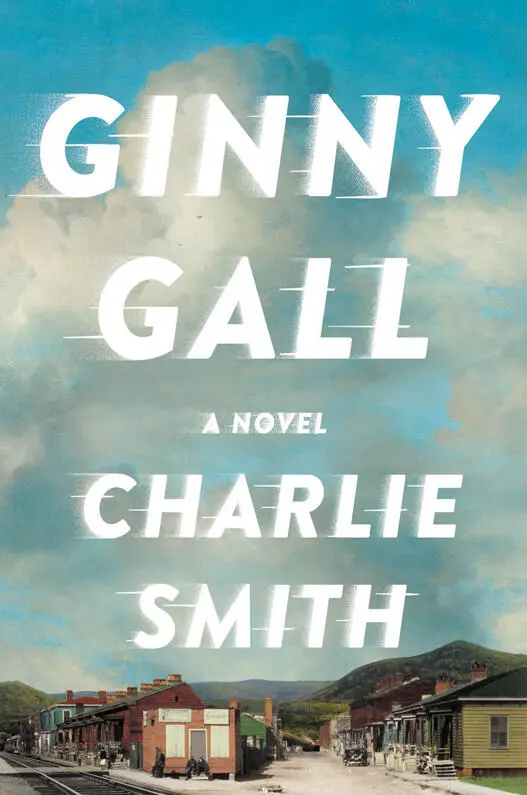
- Название:Ginny Gall
- Автор:
- Издательство:Harper
- Жанр:
- Год:2016
- ISBN:нет данных
- Рейтинг книги:5 / 5. Голосов: 1
-
Избранное:Добавить в избранное
- Отзывы:
-
Ваша оценка:
Ginny Gall: краткое содержание, описание и аннотация
Предлагаем к чтению аннотацию, описание, краткое содержание или предисловие (зависит от того, что написал сам автор книги «Ginny Gall»). Если вы не нашли необходимую информацию о книге — напишите в комментариях, мы постараемся отыскать её.
Delvin Walker is just a boy when his mother flees their home in the Red Row section of Chattanooga, accused of killing a white man. Taken in by Cornelius Oliver, proprietor of the town’s leading Negro funeral home, he discovers the art of caring for the aggrieved, the promise of transcendence in the written word, and a rare peace in a hostile world. Yet tragedy visits them near-daily, and after a series of devastating events — a lynching, a church burning — Delvin fears being accused of murdering a local white boy and leaves town.
Haunted by his mother’s disappearance, Delvin rides the rails, meets fellow travelers, falls in love, and sees an America sliding into the Great Depression. But before his hopes for life and love can be realized, he and a group of other young men are falsely charged with the rape of two white women, and shackled to a system of enslavement masquerading as justice. As he is pushed deeper into the darkness of imprisonment, his resolve to escape burns only more brightly, until in a last spasm of flight, in a white heat of terror, he is called to choose his fate.
In language both intimate and lyrical, novelist and poet Charlie Smith conjures a fresh and complex portrait of the South of the 1920s and ’30s in all its brutal humanity — and the astonishing endurance of one battered young man, his consciousness “an accumulation of breached and disordered living. . hopes packed hard into sprung joints,” who lives past and through it all.
Ginny Gall — читать онлайн бесплатно полную книгу (весь текст) целиком
Ниже представлен текст книги, разбитый по страницам. Система сохранения места последней прочитанной страницы, позволяет с удобством читать онлайн бесплатно книгу «Ginny Gall», без необходимости каждый раз заново искать на чём Вы остановились. Поставьте закладку, и сможете в любой момент перейти на страницу, на которой закончили чтение.
Интервал:
Закладка:
“That was too scary,” she said.
“Wadn’t much to it.”
“I’m so thankful you knew what to do.”
“Me too,” he said and smiled.
“You’re a curious boy.”
“Not in a bad way.”
“No, no, I don’t mean that. It’s just. . you’re out here in the world wandering around on your own.”
“I got the professor. I got a job.”
“I don’t mean to insult you.”
“It’s all right.”
They were silent. The pine woods streamed by. A distant hawk, drifting in its singleness, tipped and slid off to the west.
“Thank you for telling me everything you have,” she said. “I love listening to you.”
“You said you didn’t really want to become a doctor. What is it that you want to be?”
“I’d like to do something like you’re doing,” she said, reaching over and touching his hand. “I’d like to ride around showing people things.”
“Why don’t you come along with us?”
She smiled at him and then she tossed her head in an artificial way. “I probably will become a doctor if they’ll let me. A nurse if that’s all they’ll allow. And then I’ll travel around helping sick people.”
He could offer her a lot of things better than that, he thought.
“What people really want,” he said, “is to hook up with somebody they feel comfortable with and then get on with living.”
“I don’t really think much about that,” she said.
“But you don’t have to. We got it in our nature already. You don’t have to cozen it up.”
“But I have other things to do first.” She smiled again, fondly; distantly. “And so do you.”
“No,” he said emphatically, hurriedly. “The somebody you hook up with goes right along with all this other business we got to do. They’re a natural fit. One helps the other.”
“Still, I don’t think I quite would be. .” She stopped talking. They were passing a small cane syrup mill. The press turned by a single gray mule attached to the end of a long pole. A white man wearing overalls and no shirt fed stalks of purple cane into the mill.
“You want some syrup?” Delvin asked.
“Oh, I’d love some. . but I don’t know.”
“Sho. Pull on in.”
She parked on the road shoulder just beyond the cooking shed and they got out and the man watched them walk back to him as he continued to stuff stalks into the press. He was a thin white man, his skin clammy pale where it showed under the overalls.
“Could we buy a jug of your syrup, mister?” Delvin asked.
The man went on feeding the long purple stalks into the press. Delvin could see his left nipple, like a dark brown button, slip in and out of view as he worked.
“Excuse me, suh.”
The man just looked at them and went on feeding in the stalks. The mule, head down, had nothing on his mind but muleness.
“Do you sell cane syrup, mister?”
The man stopped feeding, stepped to the press, unsnagged the full bucket of dark juice from under the slot and walked with it past them to the cooking shed. He poured the juice into the kettle, stoked the fire with a billet of whiteoak wood and then stood looking across the fields that were planted in cotton. He did not appear any longer to be aware of their presence.
They got back in the car. They drove a couple of miles down the road before Delvin said, “Sometimes a white man will act like a human being, sometimes he won’t.”
“He didn’t like to see negro folk riding around in their own fine car.” She laughed and then they both laughed. It seemed so funny and ridiculously humiliating to be treated like that, so crazy to them both, that they couldn’t help but laugh. He reached over, fumbled with her face, managed to turn it toward him and kissed her partially on the lips.
She smiled again, the fond now slightly askew distant smile, and said, “That’s sweet.”
He drew instantly back and looked straight ahead at the road that seemed to be running through exotic green country. He didn’t feel any more like laughing.
Soon they were back in town, bumping along the main street of the quarter. The day was hot. Two lines of sweat ran down her face as she laughed at his story about a peg-legged man who, in Fitzgerald, Georgia, had challenged him to a foot race and beat him.
“He wanted to wrestle,” he said, “but I told him I didn’t think I could take being mortified twice.”
They parked behind the van, through the open door of which the prof could be seen sitting in his collapsible canvas chair drinking from a tall glass. Without getting up he waved at them. They didn’t get out of the car.
“You think you want to have children anytime soon?” Delvin asked.
Instead of mocking or laughing she looked searchingly at him and said, “I’m troubled about all that.”
“How so?”
She made a discarding motion with the gathered fingers of one hand and said, “I sometimes feel this yearning for children — it’s like, I don’t know, a searchlight of happiness has found me out in some swamp of myself and I think a child is that light, but then I feel very calm and cool about the whole thing and believe I have so much to do in this life that I am not interested in children or not interested right now or in this situation or in that person and I just let it sink away from me. Like when you’re thinking about eating a peach and don’t for some reason and you just forget it.”
“What is that?”
“Oh, I’m not making sense, am I?”
She was speaking rapidly and almost frantically, as if she had herself caught on to something and wanted to elude it.
“The professor says it’s good to marry early and have children early and all that — get started,” he said, “on what life’s really about.”
“I don’t think you can avoid that — or avoid the opportunity.”
“Shoot. You ought to ride the trains. Wasted lives. Ruined folk. And then you come to town and you see most people — those that got a chance — white or colored — can’t get away from that study quick enough.”
He too was talking fast. He didn’t want her to go away, that was why. Probably she wouldn’t come back. Maybe if he tried everything she would go for one something. But he was going too fast.
“Can I buy you a lemonade?” he said.
She would sit up nights trying to feel at ease enough on the earth to go to sleep. Some nights she thought the fighting in her would never stop. It was always the same: whether or not she was a good girl, a girl God could love. Girl a man could love. She didn’t believe she was that girl. In the half light of her college room, with her roommate’s little tuk. . tuk. . tuk snores gently percolating in the next bed, she would wrestle with herself and always lose. She would rediscover herself as a bad person who could never get free of her badness. Always she would begin silently to apologize: I’m sorry I’m sorry I’m sorry. But not even this let her sleep. Only the vague exhaustion that came over her, thoughts like musty gray shadows settling around her, tucking the space like moss. This boy pushing her was scary.
A breeze felt around in the trees. Down the street a couple of little girls playing hullygully.
“No, I can’t do that,” she said.
“No lemonade? Everybody needs lemonade. Except for my foster uncle Herman who got his stomach tore out during the war — everybody but him.”
“I have to be at Annie’s for supper.”
“It’s still early.”
She gave him a look that stopped him.
“All right,” he said, dashed. Then, brightly, “Can I ride with you over to your house? I’d like to air out a little and I can start from there.”
“Oh yes,” she said, abruptly lighthearted. She put the car in gear and they drove slowly through the narrow, tree-lined streets.
Читать дальшеИнтервал:
Закладка:
Похожие книги на «Ginny Gall»
Представляем Вашему вниманию похожие книги на «Ginny Gall» списком для выбора. Мы отобрали схожую по названию и смыслу литературу в надежде предоставить читателям больше вариантов отыскать новые, интересные, ещё непрочитанные произведения.







Обсуждение, отзывы о книге «Ginny Gall» и просто собственные мнения читателей. Оставьте ваши комментарии, напишите, что Вы думаете о произведении, его смысле или главных героях. Укажите что конкретно понравилось, а что нет, и почему Вы так считаете.