Charlie Smith - Ginny Gall
Здесь есть возможность читать онлайн «Charlie Smith - Ginny Gall» весь текст электронной книги совершенно бесплатно (целиком полную версию без сокращений). В некоторых случаях можно слушать аудио, скачать через торрент в формате fb2 и присутствует краткое содержание. Год выпуска: 2016, Издательство: Harper, Жанр: Современная проза, на английском языке. Описание произведения, (предисловие) а так же отзывы посетителей доступны на портале библиотеки ЛибКат.
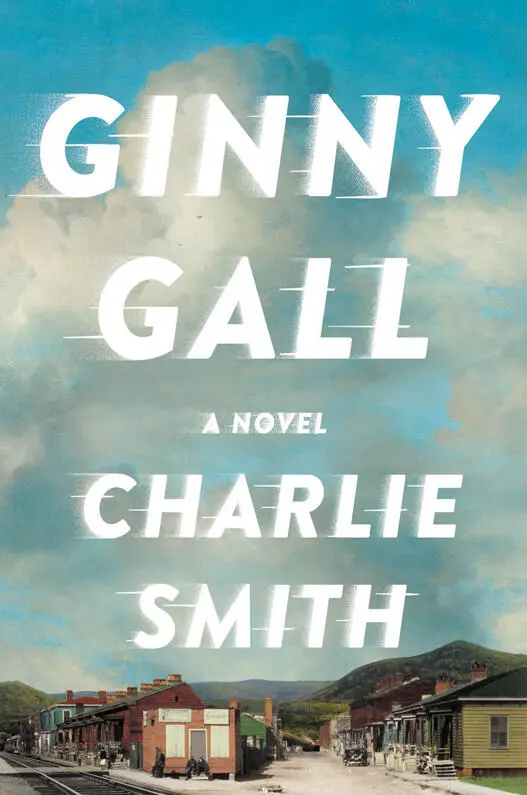
- Название:Ginny Gall
- Автор:
- Издательство:Harper
- Жанр:
- Год:2016
- ISBN:нет данных
- Рейтинг книги:5 / 5. Голосов: 1
-
Избранное:Добавить в избранное
- Отзывы:
-
Ваша оценка:
Ginny Gall: краткое содержание, описание и аннотация
Предлагаем к чтению аннотацию, описание, краткое содержание или предисловие (зависит от того, что написал сам автор книги «Ginny Gall»). Если вы не нашли необходимую информацию о книге — напишите в комментариях, мы постараемся отыскать её.
Delvin Walker is just a boy when his mother flees their home in the Red Row section of Chattanooga, accused of killing a white man. Taken in by Cornelius Oliver, proprietor of the town’s leading Negro funeral home, he discovers the art of caring for the aggrieved, the promise of transcendence in the written word, and a rare peace in a hostile world. Yet tragedy visits them near-daily, and after a series of devastating events — a lynching, a church burning — Delvin fears being accused of murdering a local white boy and leaves town.
Haunted by his mother’s disappearance, Delvin rides the rails, meets fellow travelers, falls in love, and sees an America sliding into the Great Depression. But before his hopes for life and love can be realized, he and a group of other young men are falsely charged with the rape of two white women, and shackled to a system of enslavement masquerading as justice. As he is pushed deeper into the darkness of imprisonment, his resolve to escape burns only more brightly, until in a last spasm of flight, in a white heat of terror, he is called to choose his fate.
In language both intimate and lyrical, novelist and poet Charlie Smith conjures a fresh and complex portrait of the South of the 1920s and ’30s in all its brutal humanity — and the astonishing endurance of one battered young man, his consciousness “an accumulation of breached and disordered living. . hopes packed hard into sprung joints,” who lives past and through it all.
Ginny Gall — читать онлайн бесплатно полную книгу (весь текст) целиком
Ниже представлен текст книги, разбитый по страницам. Система сохранения места последней прочитанной страницы, позволяет с удобством читать онлайн бесплатно книгу «Ginny Gall», без необходимости каждый раз заново искать на чём Вы остановились. Поставьте закладку, и сможете в любой момент перейти на страницу, на которой закончили чтение.
Интервал:
Закладка:
“Wait—”
“No. I can’t.”
He reached out his hand — as if it was the last, the only thing he could do — and touched the sleeve of her cotton shirt, but she was already turning away, already walking.
They returned along the path to the car they had parked under the short wooden bridge. Instead of getting in she walked to the creek and stood gazing at it. The water was black and shiny like the skin of fox grapes. He followed and stood beside her. He wanted to take her hand, but she was holding it in a way — clasping her left wrist with her right hand — that made it difficult. Across the creek three buzzards resting in a tall cypress got clumsily up and rowed off. Delvin watched them go, thinking that they were so black and large and ponderous that you wanted them to have some big meaning. He said this to Celia.
“Like something tragic,” she said.
“Like a sign of death or something.”
“Well, they are that.”
“Since they eat dead animals. But you’d think that creatures so striking ought to have an independent meaning.”
“You don’t think they do?”
“No. In the funeral business you hear a lot about remarkable meanings. People talk about premonitions of dying and about what the deceased had to say before he or she passed or how the death means something special was or did or is about to happen.”
“And you don’t believe any of that.”
“I believe dying strikes people really hard, most of them, and sometimes it shakes them loose from what they were holding on to.”
“You’re pretty smart.”
“Well, in some areas I’ve seen a lot.”
“Dying scares me. I don’t like to think about it.”
“I guess it would scare you.”
She gave him a searching look. “They told you all about my father.”
“Yes. What little a stranger could tell.”
“I shouldn’t talk about him as if he was still alive, but I always do. I’m one of those who got shook loose by somebody dying.”
“Me too,” he said. “Dying — or missing.”
“What do you mean?”
He told her about his mother’s flight.
“Did you look for her in the photographs?”
He brightened at her thinking that. “Yes. She wasn’t there. But I wondered last night — again — if I might have overlooked her.”
“I don’t want to think you might have a picture of my father.”
“We don’t.”
“How do you know?”
“We don’t have anybody who fit the description.”
She clasped herself in her arms and turned away from him. A truck rumbled over the wooden bridge, making running slapping sounds as the tires went over the boards. Around the creosoted wooden pilings the current displayed little brown froth collars. At any minute, he thought, the water could pull the bridge away. A thin shiver went through him; he wanted to run. But he made himself stay still. His head had begun to hurt.
“Are you all right?” she asked.
“I’m okay.”
“You look discomposed.”
“Sometimes I feel like everything is about to collapse. As if the next second it’ll all be knocked down and swept away.”
“I feel that way too sometimes.”
“Or sometimes I feel like it’s already happened. As if I’m standing in havocs and confusions.”
“Yes.”
“I used to sit at night out on the back steps of this orphan’s home I lived in and it would seem like if I got up I wouldn’t be able to prevent myself from stepping off into the dark that would swallow me up. Nothing I could do to hold myself from it. I’d sit there shivering, afraid to move at all. I could hardly call myself. Somebody’d have to come get me.”
He’d not talked like this to anybody before. And it was as if he’d not thought this way or felt this way or had these things happen before he said them. As if his life was not something that occurred out in the world, but instead was a collection of stories that came to him out of his heart and mind. He thought of telling this to Celia, but he knew he wouldn’t say it correctly.
“Sometimes,” he said, “I touch some living thing, like a bush or a bit of slick grass, or a. . cricket. . and I feel like I’m going to disappear.”
This was no better, and he flushed as he said the words. She was silent. He could not put properly what he felt. With a feeling that he must or die he wanted to tell her how it felt to be pulled into the state he was trying to describe, but he couldn’t. Maybe every part of this had only to do with her being here.
Below the low gray bank they stood on was a narrow stretch of white sand. He had seen this before, white sand under cutback dark soil. It too had given him a peculiar feeling. He was full of peculiar feelings. He didn’t want to let her know what a curioussome person he was, but then he did.
She put her hand again on his bare wrist. The touch felt so powerfully delightful that he thought he could run up the steps of it right into her heart. But it was only a friendly touch, a pat. She smiled at him and her smile was congenial, nothing more. Way back in the woods a bird, some unidentifiable, ridiculous creature, let loose a single cry, round and sweet as a scuppernong grape. He jumped down to the sandy bar and stood there peering upstream under the bridge. Big clots of brush tucked under the eaves. He had a great desire to jump into a boat and float away down the stream, but the stream was too shallow, the dark water turned thin and copper colored as it washed the sand edge, and he had no boat. A turtle with a saucer-shaped black and yellow shell perched on a slanted log. It wobbled and fell into the water; he didn’t know they were so ungainly.
She walked away, but still he stood there. He picked up a piece of pine bark and sailed it at the water. It flipped and parried off, catching on the surface as he stood thinking. Everybody he met had a different dream. Every dream was strong and secret and clung-to and hoped for with all the dreamer’s might. One wanted a little patch of good soil, another folding money on the section, another a hazel-eyed baby with a burblous laugh, another rescue rolling in from a far country. Each thought he could find his soul’s satisfaction in a single scrap of creation. . and build his life on it. But the air or water or bit of ground that separated you from the dream. . how could you cross it?
He climbed the bank and walked back to the car where she sat waiting. He had hoped she would look up, look away from where she had stored herself these last moments, look at him with delight, but she only looked half pleased at seeing him, half annoyed at having to wait. He got in the car and leaned toward her to kiss her anyway, but halfway there he stopped and smiled at her. It was a forced smile that felt cracked and stiff on his face.
“You know,” he said, “I think you and I fit together better than any two. .” And then stopped. He slumped back into his seat as she started the car. She didn’t need a crank, the machine fired right up.
“I like you,” she said, understanding everything, he thought, seeing right into him, “but I am older than you. I feel kind of sisterly toward you.”
Oh no, he wanted to say and raised his hand as if to stop her: Don’t talk that way. “You and I would be perfect together,” he said.
“None are perfect,” she said, “and we both have other plans, other lives we want.”
He turned away, for the moment defeated. The car chugged, creaking and shaking up the bank and stopped; the bank was too steep. She gave him a scared look. He told her to drive it back down and turn around. After she did this he took the wheel and backed it up the slope, something he had seen a driver do before. Her face was flushed a hidden, rising red, strongest in the point of her cheeks, and a bead of sweat slid down under her ear. At the top, after he’d wheeled around and stopped, as he leaned back in the seat under big mossy oaks, a smoothness, a calm in his body, she darted in and kissed him on the cheek. They changed places and then sat a minute on the grassy shoulder. The dirt road was a soft orange dusty color. She looked as if she wanted to kiss him again but she only put the car in gear and they started out.
Читать дальшеИнтервал:
Закладка:
Похожие книги на «Ginny Gall»
Представляем Вашему вниманию похожие книги на «Ginny Gall» списком для выбора. Мы отобрали схожую по названию и смыслу литературу в надежде предоставить читателям больше вариантов отыскать новые, интересные, ещё непрочитанные произведения.








Обсуждение, отзывы о книге «Ginny Gall» и просто собственные мнения читателей. Оставьте ваши комментарии, напишите, что Вы думаете о произведении, его смысле или главных героях. Укажите что конкретно понравилось, а что нет, и почему Вы так считаете.