Charlie Smith - Ginny Gall
Здесь есть возможность читать онлайн «Charlie Smith - Ginny Gall» весь текст электронной книги совершенно бесплатно (целиком полную версию без сокращений). В некоторых случаях можно слушать аудио, скачать через торрент в формате fb2 и присутствует краткое содержание. Год выпуска: 2016, Издательство: Harper, Жанр: Современная проза, на английском языке. Описание произведения, (предисловие) а так же отзывы посетителей доступны на портале библиотеки ЛибКат.
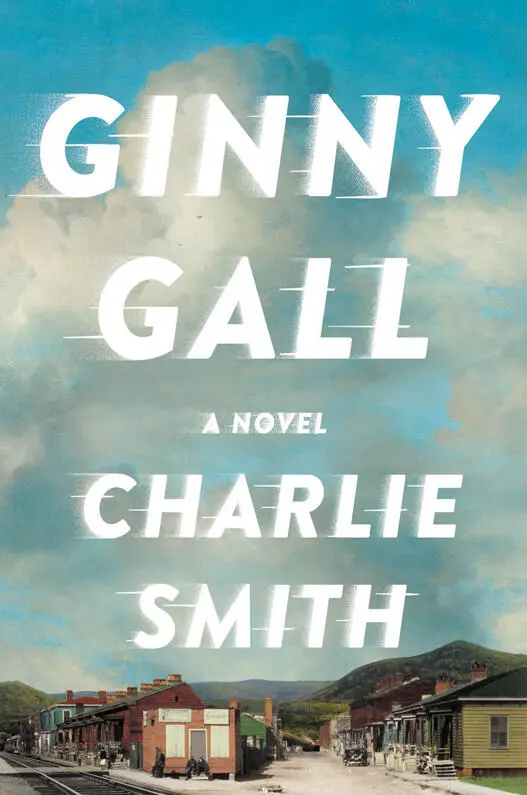
- Название:Ginny Gall
- Автор:
- Издательство:Harper
- Жанр:
- Год:2016
- ISBN:нет данных
- Рейтинг книги:5 / 5. Голосов: 1
-
Избранное:Добавить в избранное
- Отзывы:
-
Ваша оценка:
Ginny Gall: краткое содержание, описание и аннотация
Предлагаем к чтению аннотацию, описание, краткое содержание или предисловие (зависит от того, что написал сам автор книги «Ginny Gall»). Если вы не нашли необходимую информацию о книге — напишите в комментариях, мы постараемся отыскать её.
Delvin Walker is just a boy when his mother flees their home in the Red Row section of Chattanooga, accused of killing a white man. Taken in by Cornelius Oliver, proprietor of the town’s leading Negro funeral home, he discovers the art of caring for the aggrieved, the promise of transcendence in the written word, and a rare peace in a hostile world. Yet tragedy visits them near-daily, and after a series of devastating events — a lynching, a church burning — Delvin fears being accused of murdering a local white boy and leaves town.
Haunted by his mother’s disappearance, Delvin rides the rails, meets fellow travelers, falls in love, and sees an America sliding into the Great Depression. But before his hopes for life and love can be realized, he and a group of other young men are falsely charged with the rape of two white women, and shackled to a system of enslavement masquerading as justice. As he is pushed deeper into the darkness of imprisonment, his resolve to escape burns only more brightly, until in a last spasm of flight, in a white heat of terror, he is called to choose his fate.
In language both intimate and lyrical, novelist and poet Charlie Smith conjures a fresh and complex portrait of the South of the 1920s and ’30s in all its brutal humanity — and the astonishing endurance of one battered young man, his consciousness “an accumulation of breached and disordered living. . hopes packed hard into sprung joints,” who lives past and through it all.
Ginny Gall — читать онлайн бесплатно полную книгу (весь текст) целиком
Ниже представлен текст книги, разбитый по страницам. Система сохранения места последней прочитанной страницы, позволяет с удобством читать онлайн бесплатно книгу «Ginny Gall», без необходимости каждый раз заново искать на чём Вы остановились. Поставьте закладку, и сможете в любой момент перейти на страницу, на которой закончили чтение.
Интервал:
Закладка:
He got up, stepped across the creek, climbed the low bank and headed back to the van.
Over the next few days he spent time with her. Due to his putting together a small concession with the negro primary and elementary schools that brought their classes over to look at the exhibits, the professor wanted anyway to stay over.
“It’s a sure two maybe three dollars a day,” he said.
He planned to head northward, summer coming, the wild magnolia trees already blossoming in the woods.
Celia seemed to like walking with Delvin. They drove to the country in her car (she was the first africano woman he had met who owned her own car, a small Chevrolet coupe). They had to be mindful of where they went; they didn’t want to upset the white folks by alarming them with a couple of out-of-town africanos in an automobile. You got along if you smiled and said yessir and put on a humble front. But even so, the white folks were sometimes spooked by the appearance of a strange africano person. Her cousin Samuel had been beat up in Shelby, where she was from, because he let his irritation at the dumbness of a white store clerk show through.
They had put a couple of cane fishing poles in the rumbleseat, and when they wanted to walk some they would carry the poles with them. Fishing negroes were a familiar and reassuring sight in this part of the world. Delvin had never fished in his life, except for the comical trip he took to a pond with Mr. Oliver, where they both fell in, but he enjoyed walking along with Celia carrying a pole.
It would be pleasing to catch their dinner, maybe sometime they would do that. But neither had brought bait and they didn’t know how to find any. Worms, Delvin had read, or grasshoppers, were good, but where might they be? It was early in the summer for grasshoppers anyway. Celia was no help and they chided each other in a familiar way that made them tense and happy and they tossed their unbaited lines into this or that murky body of water nonetheless. They had remembered hooks and the bobbers made of bits of cork. They liked best, as today, simply to walk along the side of a stream with the poles on their shoulders, and Celia didn’t seem to mind the water dripping off the wound fishing line onto her blouse; he liked that. They spoke of the lives they lived — the traveling in his case, school in hers — and of the towns they were from and each told the other little almost secret details that thrilled them to say and to hear and their skin tingled and their eyes shone and each more than once felt a sudden joyful weepiness come on that each stalled and then rushed past, scattering details and sudden declamatory claims about life and themselves.
Celia’s stepfather was a doctor — as her father had been — trained in Chicago. (“My favorite town,” Delvin crowed, though he allowed under questioning that he’d never been there—“but I have read much about it,” he said.) Her family lived in the little town of Shelby in Louisiana just south of the Mississippi line, and also in Chicago. She found the South strange and scary (“Like living in a perilous fairy tale,” she said), but the people, “the africano people down here,” she said, were warmhearted, even if they were nosy and gossipy and often chuckleheaded folk; they gave you the feeling they had found a way to some happiness about themselves that she missed up north.
“Everything there split up?” Delvin wanted to know. “Between the white folks and the colored?”
“You could say yes,” she said, but it wasn’t quite so open. The races could sit together in the picture show or even eat together in some restaurants, but there was a feeling that was always there that you might at any minute be called for trespassing. People didn’t pay attention to colored folk like they did to white; you were overlooked, left out. They didn’t mind if you got a little successful, but they didn’t want you getting too close to them.
“Down here we’re all jumbled up together,” Delvin said. He didn’t know why he said that, but it seemed so as he said it.
“Long as you return to the Land of Darkness,” Celia said and laughed. That was what everybody called the quarter, in most every town.
They had stopped under a big oak that had a peltlike green moss growing on its limbs.
“What are you going to do with yourself?” he said. She was at least two years older than him and he could see she looked on him as a boy or tried to. Long streaks of pale cloud ran east to west. Near one a little double-winged airplane chugged along. Only last year, he thought, he had begun to notice airplanes flying; before last year you never saw them, except maybe at fairs and exhibitions.
“I guess I’ll be a doctor too,” she said, switching the end of her pole against some dusty tickseed plants.
“Can you do that?”
“I don’t know for sure. There are places in the east maybe, but I don’t know.”
“You don’t sound too red-hot about it.”
“I know. I’ve always thought I would be a doctor like my father. .” She bit her lip. “I used always to say Father , but now I say my father. . I just realized that a couple of months ago.”
“It’s natural, idn’t it? My mama ran off when I was little, and I always say my. .”
Her silence stopped him. She stood looking down at the little brush-tangled creek.
“What does your mother do?” he asked.
“She teaches in the negro women’s college in Shelby, english literature.”
“I knew it. I knew she had a job too. I’d like to meet her.”
Celia’s nose was long and straight, her lips had a thin sculptured rim. She opened her mouth but didn’t speak.
“You were talking about being a doctor.”
“No, I’m not. .”
“It’s all right. I want to know.”
“I think about going to medical school, but when I do — think about it — it seems as if I’m just marching. . you know, as if I am following orders.”
“Does your stepfather want you to be a doctor?”
“No, I don’t think. . well, he never speaks of it. I guess he would like. . I don’t know. . it’s some feeling I get that I ought to be doing something important, when I don’t know if I really want to do anything at all.”
She looked at him in a slightly embarrassed way and he could see in her shining black eyes that she thought she’d said too much.
“Nothing’s clear to me,” he said and laughed.
“Well, you’re young.” Saying this her mouth turned down in something like chagrin and she touched his wrist, lightly, a touch he would later recall, little pats not of electrical fire but of restoration.
“It’s not that,” he said. “I mean I know what I want to do, but. .”
“What’s that?”
“What do I want to do?”
“Yes.”
“I want to write books.”
She didn’t laugh but her face became serious and she turned her head away. A flock of blackbirds streamed westward. They were walking again, passing in and out of shade. The grass where the sun touched it was the color of brass. The earth under the trees gave off a musty smell, smell of mushrooms and the drifting underworld.
“A couple years ago I started keeping a notebook,” he said.
“Do you write stories?”
“Mostly I take notes, write down facts, the names of things. I make a lot of lists.”
“Of what?”
“The names of railroad companies. Flowers. Different kinds of rocks. People’s names, their accents, hometowns, words they use a lot.” It sounded silly as he said it.
She glanced at him out of the corner of her eye — something wild in there — turned abruptly and said she had to go back. Had she changed — what was it? He wanted to stop her, to kiss her, but he couldn’t believe she’d let him.
Читать дальшеИнтервал:
Закладка:
Похожие книги на «Ginny Gall»
Представляем Вашему вниманию похожие книги на «Ginny Gall» списком для выбора. Мы отобрали схожую по названию и смыслу литературу в надежде предоставить читателям больше вариантов отыскать новые, интересные, ещё непрочитанные произведения.








Обсуждение, отзывы о книге «Ginny Gall» и просто собственные мнения читателей. Оставьте ваши комментарии, напишите, что Вы думаете о произведении, его смысле или главных героях. Укажите что конкретно понравилось, а что нет, и почему Вы так считаете.