Roberto Arlt - The Seven Madmen
Здесь есть возможность читать онлайн «Roberto Arlt - The Seven Madmen» весь текст электронной книги совершенно бесплатно (целиком полную версию без сокращений). В некоторых случаях можно слушать аудио, скачать через торрент в формате fb2 и присутствует краткое содержание. Год выпуска: 2015, Издательство: Serpent's Tail Classics, Жанр: Современная проза, на английском языке. Описание произведения, (предисловие) а так же отзывы посетителей доступны на портале библиотеки ЛибКат.
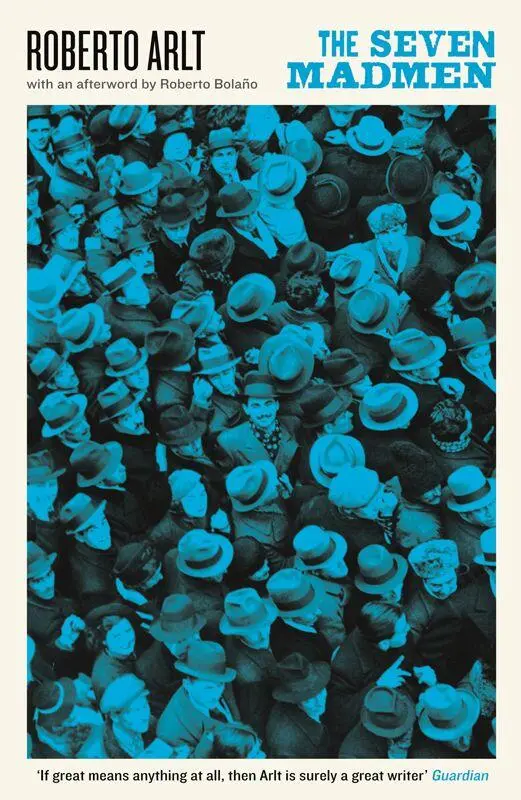
- Название:The Seven Madmen
- Автор:
- Издательство:Serpent's Tail Classics
- Жанр:
- Год:2015
- ISBN:нет данных
- Рейтинг книги:4 / 5. Голосов: 1
-
Избранное:Добавить в избранное
- Отзывы:
-
Ваша оценка:
The Seven Madmen: краткое содержание, описание и аннотация
Предлагаем к чтению аннотацию, описание, краткое содержание или предисловие (зависит от того, что написал сам автор книги «The Seven Madmen»). Если вы не нашли необходимую информацию о книге — напишите в комментариях, мы постараемся отыскать её.
Written in 1929, The Seven Madmen depicts an Argentina on the edge of the precipice. This teeming world of dreamers, revolutionaries and scheming generals was Arlt's uncanny prophesy of the cycle of conflict which would scar his country's passage through the twentieth century, and even today it retains its power as one of the great apocalyptic works of modern literature.
The Seven Madmen — читать онлайн бесплатно полную книгу (весь текст) целиком
Ниже представлен текст книги, разбитый по страницам. Система сохранения места последней прочитанной страницы, позволяет с удобством читать онлайн бесплатно книгу «The Seven Madmen», без необходимости каждый раз заново искать на чём Вы остановились. Поставьте закладку, и сможете в любой момент перейти на страницу, на которой закончили чтение.
Интервал:
Закладка:
Erdosain could feel himself being swept along by the other man’s enthusiasm. The Gold Prospector talked in great gulps, his eyes twitching as he lifted first one eyebrow then the other, and he kept pumping Erdosain’s arm in a friendly way.
“Believe me, Erdosain … there’s a lot of gold … more than you could even dream of … but that’s not the point. The point is this: time is slipping by. Esquel, Arroyo Pescado, Rio Pico … Campo Chileno … league upon league … travelling for day after day … and as you know, just to get a certificate for a horse not even worth ten pesos you have to travel for weeks: time is meaningless … everything is huge … enormous … eternal down there. You have to believe it. I remember when the Mask and I were down near Arroyo Pescado. Not just gold … red gold. That’s where souls made sick by civilisation can be cured. We should send all our friends to the mountains. Look … I’m twenty-seven … and I’ve risked my life with a pistol several times” — so saying, he drew out his revolver — “See that sparrow over there?” — it was about fifty paces away — he raised his gun level with his chin, pulled the trigger, and as the shot rang out, the bird fell out of the tree. “See that? That’s how I’ve risked my life time and again. There’s no reason to be sad. Look, I’m twenty-seven now. Arroyo Pescado, Esquel, Rio Pico, Campo Chileno … all those vast empty spaces can be ours … we can organise the escort for a New Joy … the Order of the Knights of Red Gold … You think I’m getting carried away. No! You have to have been down there to understand. It’s the kind of experience that makes you aware that what’s needed more than anything else is a natural aristocracy. When you’re up against solitude, all the dangers, sadness, the sun, the infinite empty plains, you become a new man … completely different from the herd of slaves eking out an existence in the city. Do you know what the anarchist, the socialist proletariat of our cities really is? Nothing more than a herd of cowards. Instead of going to put their souls to the test in the mountains or the empty plains, they prefer comfort and entertainment; they don’t want to know about the heroic solitude of the wilderness. What would become of all the factories, the fashion houses, the city’s thousand parasites, if everyone left for the wilderness … if everyone set up their own tent down there? D’you understand now why I am with the Astrologer? It’s up to us young people to create this new life. We’ll set up a bandit aristocracy. We’ll shoot all the intellectuals infected with Tolstoy’s idiotic ideas, and put the rest to work for us. That’s why I admire Mussolini. He used a stick across the back of all those mandolin players, and from one day to the next that comic-opera kingdom was transformed into the mastiff of the Mediterranean. Cities are the world’s cancer. They destroy men; they make them cowards who are sly and envious — and it’s envy that makes them assert their rights, envy and cowardice. If those herds had any noble, courageous beasts among them, they would have smashed everything to bits long before now. To believe in the masses is to believe you can reach out and bring down the moon. Look what happened to Lenin with the Russian peasants. But everything has been organised now, and all that’s left to say is: in this century, anyone who does not feel at home in the city should head out for the wilderness. That’s what the Astrologer is suggesting. And he’s right. When the first Christians could not bear life in the cities, they went into the desert. There they found their own kind of happiness. Nowadays though, the lumpen prefers to bray in committees.”
“You know something? I like your comparison with the desert.”
“That’s right, Erdosain. As the Astrologer says: those who don’t fit in in the cities shouldn’t spoil it for those who do. For the unhappy and the misfits there are the mountains, the plains, the banks of the great rivers.”
Erdosain had not expected such a passionate outburst. The Gold Prospector seemed to read his mind, because he said:
“We will preach violence, but we won’t allow any theorists of violence in our cells: anyone who wants to show his hatred of present society will first have to give us proof of his loyalty. Can you see now what the point of the training camp is? Isn’t gold another wonderful illusion? Anyone wanting to join must sacrifice himself for us. The effort will make a superman of him. And that’s when he will be given power. Isn’t that what happens in monastic orders? Isn’t that the way the army is organised? No, don’t gawp at me like that! Even in big stores, like Gath & Chaves or Harrods, employees have told me the staff accept a level of discipline that makes the army look like a joke in comparison. So you can see, Erdosain, we’re not inventing a thing. All we’re doing is exchanging a banal goal for an extraordinary one.”
The Gold Prospector made Erdosain feel ashamed. He envied him his violence; he was irritated by his sweeping, incontrovertible truths, and wanted above all to be able to contradict him. But he said to himself: “I am not cut out for a starring role like him, I’m one of those miserable cowards who live in the city. Why can’t I feel his fervour and loathing? Yes, what he says is true. And I just smile politely at him, as if I was afraid he’d beat me up, and it’s true his violence does frighten me, I am scared by his passion.”
“What are you thinking, pal?” the Gold Prospector said.
Erdosain looked at him long and hard, then said:
“I was thinking how sad it is to have been brought up a coward.”
The Gold Prospector shrugged.
“You reckon you’re a coward because the life you’ve lived has never forced you to risk your hide. I’d like to see you the day your life depends on pulling a trigger, then I’d know whether you were one or not. The thing is no-one in the city can be brave. You know very well that if you punch some wretch the police are going to hound you so much that you prefer to be tolerant rather than take justice into your own hands. That’s the way things are. So you get used to accepting everything, to checking your impulses …”
Erdosain looked at him:
“You’re remarkable, you know that?”
“Don’t worry, pal. You’ll see how you yourself wake up soon enough … you’ll find your courageous side … all you need is to take the first step.”
It was one in the afternoon when the two men parted company.
THE CRIPPLE
That same day, just as Erdosain reached the last flight of the spiral staircase up to his room, he saw a woman dressed in an otter fur coat and a green hat talking to his landlady on the landing. A “here he comes” told him he was the person they were waiting for, and as he halted in front of them, the stranger turned her lightly freckled face towards him and asked:
“Are you señor Erdosain?”
“Where have I seen that face before?” Erdosain wondered, answering that indeed he was. The woman then presented herself:
“I’m señor Ergueta’s wife.”
“Oh, so you’re the Cripple, are you?” he said, then ashamed at his rudeness, which had even led the astonished landlady to stare at the other woman’s feet, Erdosain apologised:
“I’m sorry, you took me by surprise … you must understand I wasn’t expecting … won’t you come in?” Before opening the door, Erdosain apologised for the state she would find it in, but Hipólita merely gave a wry smile and said:
“It’s no problem.”
Erdosain felt irritated by the cold look filtering from her light verdigris eyes, and he thought to himself:
“There’s something perverse about her” — he had noticed that underneath her green hat, Hipólita’s red hair fell in two smooth bands covering the tips of her ears. He looked again at her fine red eyelashes, at her plump lips that looked out of place in the pink softness of her freckled face. “How different from that photo of hers!” Erdosain thought.
Читать дальшеИнтервал:
Закладка:
Похожие книги на «The Seven Madmen»
Представляем Вашему вниманию похожие книги на «The Seven Madmen» списком для выбора. Мы отобрали схожую по названию и смыслу литературу в надежде предоставить читателям больше вариантов отыскать новые, интересные, ещё непрочитанные произведения.




Обсуждение, отзывы о книге «The Seven Madmen» и просто собственные мнения читателей. Оставьте ваши комментарии, напишите, что Вы думаете о произведении, его смысле или главных героях. Укажите что конкретно понравилось, а что нет, и почему Вы так считаете.