Nicola Gardini - Lost Words
Здесь есть возможность читать онлайн «Nicola Gardini - Lost Words» весь текст электронной книги совершенно бесплатно (целиком полную версию без сокращений). В некоторых случаях можно слушать аудио, скачать через торрент в формате fb2 и присутствует краткое содержание. Год выпуска: 2016, Издательство: New Directions, Жанр: Современная проза, на английском языке. Описание произведения, (предисловие) а так же отзывы посетителей доступны на портале библиотеки ЛибКат.
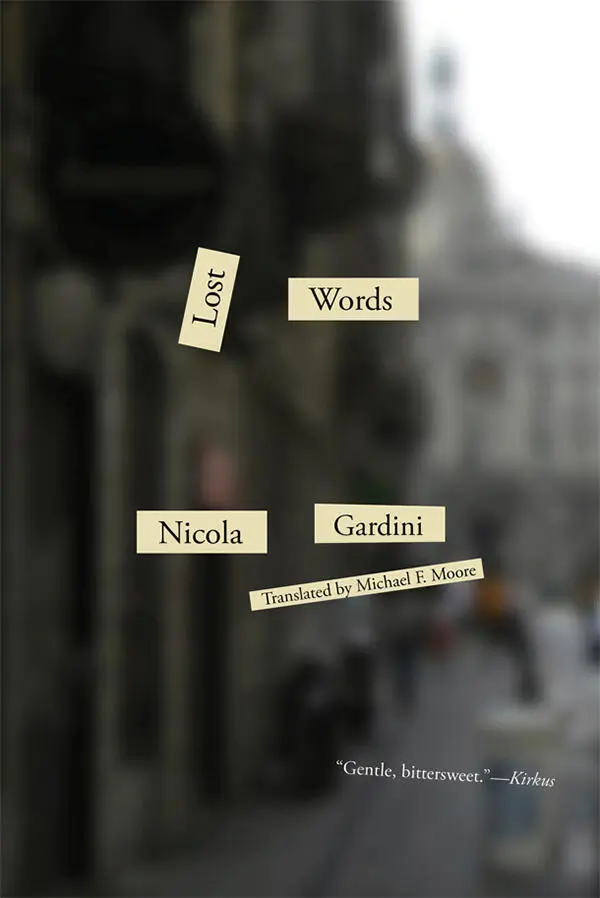
- Название:Lost Words
- Автор:
- Издательство:New Directions
- Жанр:
- Год:2016
- ISBN:нет данных
- Рейтинг книги:5 / 5. Голосов: 1
-
Избранное:Добавить в избранное
- Отзывы:
-
Ваша оценка:
Lost Words: краткое содержание, описание и аннотация
Предлагаем к чтению аннотацию, описание, краткое содержание или предисловие (зависит от того, что написал сам автор книги «Lost Words»). Если вы не нашли необходимую информацию о книге — напишите в комментариях, мы постараемся отыскать её.
Lost Words — читать онлайн бесплатно полную книгу (весь текст) целиком
Ниже представлен текст книги, разбитый по страницам. Система сохранения места последней прочитанной страницы, позволяет с удобством читать онлайн бесплатно книгу «Lost Words», без необходимости каждый раз заново искать на чём Вы остановились. Поставьте закладку, и сможете в любой момент перейти на страницу, на которой закончили чтение.
Интервал:
Закладка:
*.
We would work all morning, and at one o’clock go downstairs for lunch. Unlike the Maestra, Ippolito ate heartily. He never refused a second helping. During lunch he liked asking my mother about her work, her interests, her opinions. And although the Professor never eased up his argumentative or teasing tone, she would answer cheerfully. Someone was finally taking her seriously and listening to her.
She was curious about his life, too, and she, too, had a lot of questions for him, but the Professor had an exceptional talent for always changing the subject to something else. He didn’t enjoy talking about himself, just like the Maestra. My mother tried anyway. We learned that he had stopped teaching a few years earlier, choosing to retire early so he could dedicate himself wholly to the dictionary. We also learned that he was fifty years old… My mother was amazed he was already so old —the exact word she used — and she immediately tried to make amends, saying that he still looked like a youth: he had all his hair, no signs of a belly, he moved with agility, dressed like a boy. She added that age didn’t matter — and, in fact, her husband was much older than her, too. Finally, after many questions that skirted the subject, she managed to ask him the one closest to her heart: “Ippolito, were you ever married?”
He didn’t answer. Without explanation, he dropped onto his plate the slice of watermelon into which he had been biting — leaving a pattern in the rind not unlike the decorative motif of a wood inlay — and stood up from the table. My mother felt awful. She stood up, too.
“Where are you going?… Don’t you want a coffee?” she proposed, in an attempt to salvage the situation.
“No thank you. It’s time for me to get back to my Olivetti typewriter. Mille grazie , I’ll return the favor…”
My mother came to the conclusion that the Professor had gotten burned when he was young. He was too good — women weren’t interested in men like him, so considerate and understanding… And they didn’t deserve him! With women, especially certain kinds of women, you need to take the upper hand… Women are witches!
She’d finally stopped acting like her life was over. The Vignolas’ apartment, the building, her husband — all was forgotten. With just a touch of make-up, she hid the last vestiges of disappointment, highlighting her charming and open facial features, and kept her hair gathered in a bun, exposing her pretty neck to the light of day. Rather than her usual faded cotton T-shirt, she put on a colorful sleeveless top that emphasized her breasts and hips, and on her finger she wore her diamond. I became aware of her beauty and even found myself worrying about her, as if she were a delicate flower that would fall apart at the first breeze.
Nor did my mother’s sudden transformation escape the notice of Ippolito. He noticed her diamond, too. How could he not, when she was always waving it under his nose?
“I hope you don’t think that it’s fake?” she teased.
“Of course I don’t. You’re so mean! Is it a present from your husband?”
“It’s a gift I made to myself ! I’m still paying for it… My husband doesn’t appreciate certain things. In the evening, before he comes home, I have to take it off and hide it in the closet. Otherwise all hell will break loose.”
“You’re kidding…”
“That’s the way husbands are. What can we do? Paride has no love for the things I care about. In his opinion I just want to imitate the signore. I know, I’m not a signora. I’m a working woman. But why shouldn’t I have a ring, too? I work hard morning, noon, and night, I keep my household running — why, I keep a whole five-story building running! I don’t even go on vacation! I have the right to indulge myself every now and then, don’t I? But you understand certain things. I’ve never had anything. Look how shiny it is! Do you like it?”
“Very much… of course… you did the right thing, Elvira.”
Two seconds later he burst out laughing.
“What is it?” my mother asked, dismayed. “Don’t you like my ring? Were you lying to me just now?”
Ippolito shook his head. “No, it has nothing to do with the ring.” And he kept laughing. He couldn’t stop.
“So what is it, then? Why won’t you tell me? Now you’re starting to make me angry…”
He held his stomach, as if he were losing his mind. “I’m sorry, Elvira, I’m so sorry.” he said, when he finally calmed down. “Do you want to know why I was laughing? Do you really want to know? But you have to promise you won’t get upset, because you’re so touchy! I was laughing because you have the whole world.”
My mother glowered. “And you think it’s funny?”
“Very,” he reiterated, breaking into new fits of laughter. “I’m sorry, I’m sorry…”
“If you want me to forgive you, you’ll have to accompany me to the market… This time of year they sell tomatoes for nothing… We can buy a whole lot and I’ll prepare enough sauce to last us all winter… And if you promise to stop teasing me, I’ll give a few jars to you, too…”
For two days crates of tomatoes were boiling in every pot and pan in the house. My mother puréed them and, after the sauce started to cool down, poured them into glass bottles she had saved. In the bathroom one of them exploded because of fermentation and imprinted a blood-red stain on the wall next to the mirror. Not even soap could wash it away.
The warm scent of the sauce saturated our two tiny rooms, stuck to our skins, and wafted throughout the building, making it all the way to the nostrils of Signor Biondo — and poor paralytic’s.
“Mmmm, it smells so good!” my mother said.
*.
A second before getting up from the table, the Professor took a small oblong packet from the back pocket of his jeans, and with a sly smile he pushed it toward her.
“What is it?”
“A little something for you… Go on, see if you like it.”
My mother tore open the tissue paper.
“But what is it?”
“Open it!”
She opened the velvet box and let out a cry.
“It belonged to my grandmother,” Ippolito explained.
“Your grandmother? No, I couldn’t possibly accept it… Thank you so much but… I swear to God… Thank you so much, but I couldn’t… A necklace like this is worth a lot of money. It’s a family heirloom and family heirlooms are supposed to go to your fiancée. What’s this got to do with me? What did I do to deserve such a gift?”
“Do you always have to do something to receive a gift? Put it on, otherwise the necklace will remain in the drawer for another hundred years.”
My mother hesitated. First she wanted to make sure she really was the intended recipient: “You could always give it to some lovely lady…”
“What do you think I’m doing now? Am I not giving it to a lovely lady?”
“Stop making fun of me! I can never be sure whether you’re telling the truth!”
She pretended to make a joke of it, but she was filled with emotion. Her hands were shaking so badly that I had to help her with the clasp.
“I always tell the truth.”
She didn’t notice his peremptory tone.
“What would the Maestra say if she knew that the family jewels would end up around the neck of someone like me, a… doorwoman? ”
Ippolito furrowed his brow. He didn’t like the conversation shifting to his mother. My mother tried to remedy the situation.
“Your shirt is missing a button…”
He shrugged his shoulders. “I know. I’m always telling myself that I should fix it and then I forget.”
“I’ll sew it back on. Bring it to me tomorrow and we’ll also touch it up with the iron. I bet you never iron.”
Читать дальшеИнтервал:
Закладка:
Похожие книги на «Lost Words»
Представляем Вашему вниманию похожие книги на «Lost Words» списком для выбора. Мы отобрали схожую по названию и смыслу литературу в надежде предоставить читателям больше вариантов отыскать новые, интересные, ещё непрочитанные произведения.


Обсуждение, отзывы о книге «Lost Words» и просто собственные мнения читателей. Оставьте ваши комментарии, напишите, что Вы думаете о произведении, его смысле или главных героях. Укажите что конкретно понравилось, а что нет, и почему Вы так считаете.