Boualem Sansal - The German Mujahid
Здесь есть возможность читать онлайн «Boualem Sansal - The German Mujahid» весь текст электронной книги совершенно бесплатно (целиком полную версию без сокращений). В некоторых случаях можно слушать аудио, скачать через торрент в формате fb2 и присутствует краткое содержание. Год выпуска: 2009, Издательство: Europa Editions, Жанр: Современная проза, на английском языке. Описание произведения, (предисловие) а так же отзывы посетителей доступны на портале библиотеки ЛибКат.
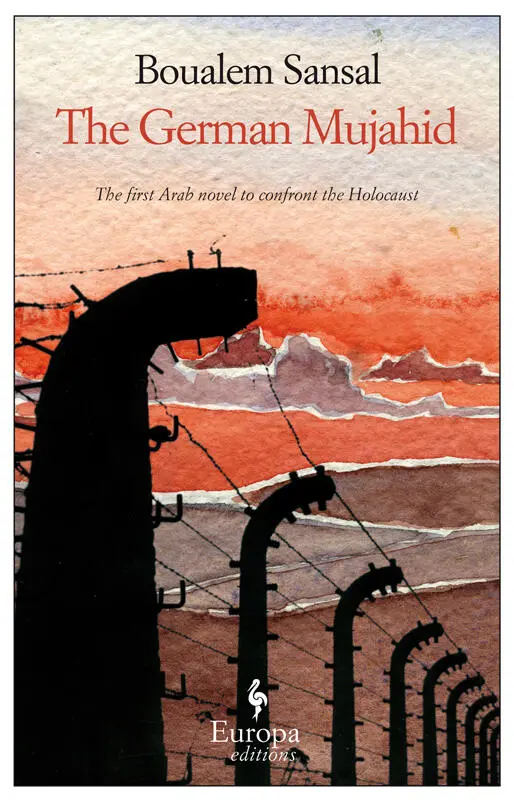
- Название:The German Mujahid
- Автор:
- Издательство:Europa Editions
- Жанр:
- Год:2009
- ISBN:нет данных
- Рейтинг книги:4 / 5. Голосов: 1
-
Избранное:Добавить в избранное
- Отзывы:
-
Ваша оценка:
The German Mujahid: краткое содержание, описание и аннотация
Предлагаем к чтению аннотацию, описание, краткое содержание или предисловие (зависит от того, что написал сам автор книги «The German Mujahid»). Если вы не нашли необходимую информацию о книге — напишите в комментариях, мы постараемся отыскать её.
is a heartfelt reflection on guilt and the harsh imperatives of history.
The two brothers Schiller, Rachel and Malrich, couldn't be more dissimilar. They were born in a small village in Algeria to a German father and an Algerian mother, and raised by an elderly uncle in one of the toughest ghettos in France. But there the similarities end. Rachel is a model immigrant — hard working, upstanding, law-abiding. Malrich has drifted. Increasingly alienated and angry, his future seems certain: incarceration at best. Then Islamic fundamentalists murder the young men's parents in Algeria and the event transforms the destinies of both brothers in unexpected ways. Rachel discovers the shocking truth about his family and buckles under the weight of the sins of his father, a former SS officer. Now Malrich, the outcast, will have to face that same awful truth alone.
Banned in the author's native Algeria for of the frankness with which it confronts several explosive themes, The German Mujahid is a truly groundbreaking novel. For the first time, an Arab author directly addresses the moral implications of the Shoah. But this richly plotted novel also leaves its author room enough to address other equally controversial issues; Islamic fundamentalism and Algeria's "dirty war" of the early 1990s, for example or the emergence of grim Muslim ghettos in France's low-income housing projects. In this gripping novel, Boualem Sansal confronts these and other explosive questions with unprecedented sincerity and courage.
The German Mujahid — читать онлайн бесплатно полную книгу (весь текст) целиком
Ниже представлен текст книги, разбитый по страницам. Система сохранения места последней прочитанной страницы, позволяет с удобством читать онлайн бесплатно книгу «The German Mujahid», без необходимости каждый раз заново искать на чём Вы остановились. Поставьте закладку, и сможете в любой момент перейти на страницу, на которой закончили чтение.
Интервал:
Закладка:
It was pointless traipsing around here. Racing around all Germany. The terrible history I was looking for had been erased, forgotten, swept under the carpet. I was just about to turn back. I had come completely unprepared, I had nothing to guide me but grief and a battered military record. But I hadn’t reckoned on fate, which suddenly intervened. Taking the sandwich I bought at the delicatessen — my way of thanking the owner — I went and sat in a small park for the mothers and children of Landorf. It was empty. I was grateful. I needed to be alone. I already felt more alone than anyone else in the world. Then an old man in cap and slippers, unshaven, came over — the poor creature was just looking for some company. Old men are the same the world over, always looking for someone to talk to, always quick to spot a straggler. “ Guten appetit! ” He had his opening gambit prepared. “ Danke ,” I said in the same cheery tone, hoping he might leave me in peace. He sat down next to me and rolled a cigarette, slow as a wet weekend. By the time I finished my sandwich and he stubbed out his cigarette, we knew all there was to know about each other — by which I mean nothing. We looked like tramps sharing a park bench. We talked about the weather, about life, about the Franco-German alliance. His position was straightforward: he had never believed any of that rubbish. To him the French franc was just monopoly money, but he worried about the mighty Deutschmark, the bedrock of German power, and bitterly resented the rise of the European Union which was slowly but surely chipping away at it. “The only ones who make money out of it are conmen and feckless idlers,” he concluded. I was well used to this kind of right-wing diatribe, Ophélie’s mother comes out with this stuff all the time. “Not to mention all the illegal immigrants!” I egged him on. When I casually mentioned I was part German, part French and part Algerian, his mouth dropped open. What can you say to a chameleon without riling him? You talk about this and that, you chat as though you have all the time in the world. He’d been retired for years, he told me, his beloved Hilda had died in her sleep at seventy and his one dream was to see the Château de Versailles again before he died. I told him I had been in Hamburg on business and had come down because I’d always dreamed of seeing Uelzen, especially the beautiful suburb of Landorf where my father, Hans Schiller, had been born seventy-six years ago. Papa’s name clearly rang a bell. The old man’s face lit up. “Did you say Hans Schiller?” I believe that this man was sent by heaven just as surely as I believe that two plus two equals four. He had known papa, and papa’s family and his old friends. Best of all, his memory was perfect, accurate, encyclopedic. I could not let him get away. I took him to a café for some hot chocolate and bombarded him with questions. Actually, he asked most of the questions, I played it safe, I wasn’t about to wade in and start talking about papa’s past, I wanted to find out who this man was — was he a former Nazi, a victim of the Nazis or just some poor devil who had come through it all without knowing anything? I wanted to know what his politics were. I played the dutiful grandson listening wide-eyed to his grandfather’s stories. I let things roll. Nudging him gently, I managed to get him to reminisce, persuaded him to trust me. I painted him an idyllic picture of the Schiller family, the perfect blend of Germany, Algeria and France — three countries with a long history of mutual friendship and mutual slaughter — three countries which had produced my father, my mother, my wife and all the principles I held dear. I made it sound as poetic, as exotic, as I could. A quick brushstroke transformed my Paris suburb into a haven of tranquility, another transformed Aïn Deb into a glorious oasis where old men basked like lizards in the sun, listening to the song of the wind, watching the dance of the dragonflies. This was how I had imagined Aïn Deb before the massacre of 24 April 1994. “Hans Schiller’s son!” Over and over the old man clapped me on the back. “It’s a miracle. . ”
“The real miracle is meeting one of papa’s friends on a park bench. . Who would believe it?”
After this, and after another hot chocolate, we picked up the thread of our conversation.
“Good old Hans! What did he die of?”
“Oh. . you know, he was old. . he hadn’t been very well, but his death was very sudden.”
“ Ach, das tut mir leid . . he should have stayed here in Germany. The fresh air here is like a fountain of youth. What was he doing over in Africa? Where did you say he lived?”
“Algeria. He was a weapons instructor, he trained soldiers. .”
“ Ach . . that is not good. . these countries, they do not need armies, it sucks the blood from them. There is war in Algeria, nicht war ?”
“Yes, a brutal war, but it is fought in the name of Allahu Akbar and His Holiness the Raïs, so that justifies the exterminations and the rest of it. Tell me what Landorf used to be like, tell me about you and my father and his friends.”
“Back when?”
“During the war. . ”
“ Ach . . that’s all so long ago. They’re all gone now, I am the last and. . well, you can see for yourself, we don’t really lead an exciting life.”
Silence. His face clouded over. Selective amnesia. It seemed clear to me that he and his friends went the same way as papa. Or maybe the opposite. Boys are like that, they follow each other blindly, hopping on the first bandwagon without looking to see where it’s headed. The estate Malrich and I grew up on is just the same, it’s like a station where all the trains read Destination: Paradise and they go straight to hell. You have to dodge the fare to get off.
“You were saying. .?”
“Hans was a good boy, he was loyal, he did his duty, we all did. . that’s all there is to it.”
“Papa used to talk to us a lot abut his duty, he’d tell us stories about his time in the Hitlerjugends , the pranks he and his friends used to play, the parties and the torchlight processions. He talked about his time in the Wehrmacht , too, about the war. . all of it. In fact, when I was a boy, back in Aïn Deb, I was in the youth wing of the FLN, the FLNjugends , and I was a real activist. I miss it sometimes, we were obsessed with it, we were always arguing about this and that, we drilled morning, noon and night, we were passionate about purging the ranks and we celebrated our victories howling with the wolves. . ”
“The wolves?”
“Figure of speech.”
“What is this FLN?”
“The National Liberation Front, the National Socialist party of the great leader. . you haven’t heard of it? Anyway, we were talking about you, about the Reich.”
“There’s nothing to tell, Jugend , it’s ancient history. When the war came, we all went our separate ways, we all did our duty, that’s all there is to say.”
“That’s it?”
“I didn’t see your father after that. The last time I saw him was in Paris. . June 1941. We took some leave so we could spend time with our old friends, then we all went back to our units. When I came back here after the war, Uelzen was nothing but rubble. My family and your family and many other families had died in the bombings. . ”
“Just like Aïn Deb, the village I come from. And the war in Algeria is only just starting.”
“Hans is buried there?”
“Yes, with my mother and all our neighbours.”
Silence. A nod. The man was lost in memories of the past, now was the moment to strike.
“After the Wehrmacht, papa joined the SS, he was posted to Dachau, Buchenwald, Auschwitz. . Did you know about that?”
Читать дальшеИнтервал:
Закладка:
Похожие книги на «The German Mujahid»
Представляем Вашему вниманию похожие книги на «The German Mujahid» списком для выбора. Мы отобрали схожую по названию и смыслу литературу в надежде предоставить читателям больше вариантов отыскать новые, интересные, ещё непрочитанные произведения.




Обсуждение, отзывы о книге «The German Mujahid» и просто собственные мнения читателей. Оставьте ваши комментарии, напишите, что Вы думаете о произведении, его смысле или главных героях. Укажите что конкретно понравилось, а что нет, и почему Вы так считаете.