Arturo Fontaine - La Vida Doble
Здесь есть возможность читать онлайн «Arturo Fontaine - La Vida Doble» весь текст электронной книги совершенно бесплатно (целиком полную версию без сокращений). В некоторых случаях можно слушать аудио, скачать через торрент в формате fb2 и присутствует краткое содержание. Год выпуска: 2013, Издательство: Yale University Press, Жанр: Современная проза, на английском языке. Описание произведения, (предисловие) а так же отзывы посетителей доступны на портале библиотеки ЛибКат.
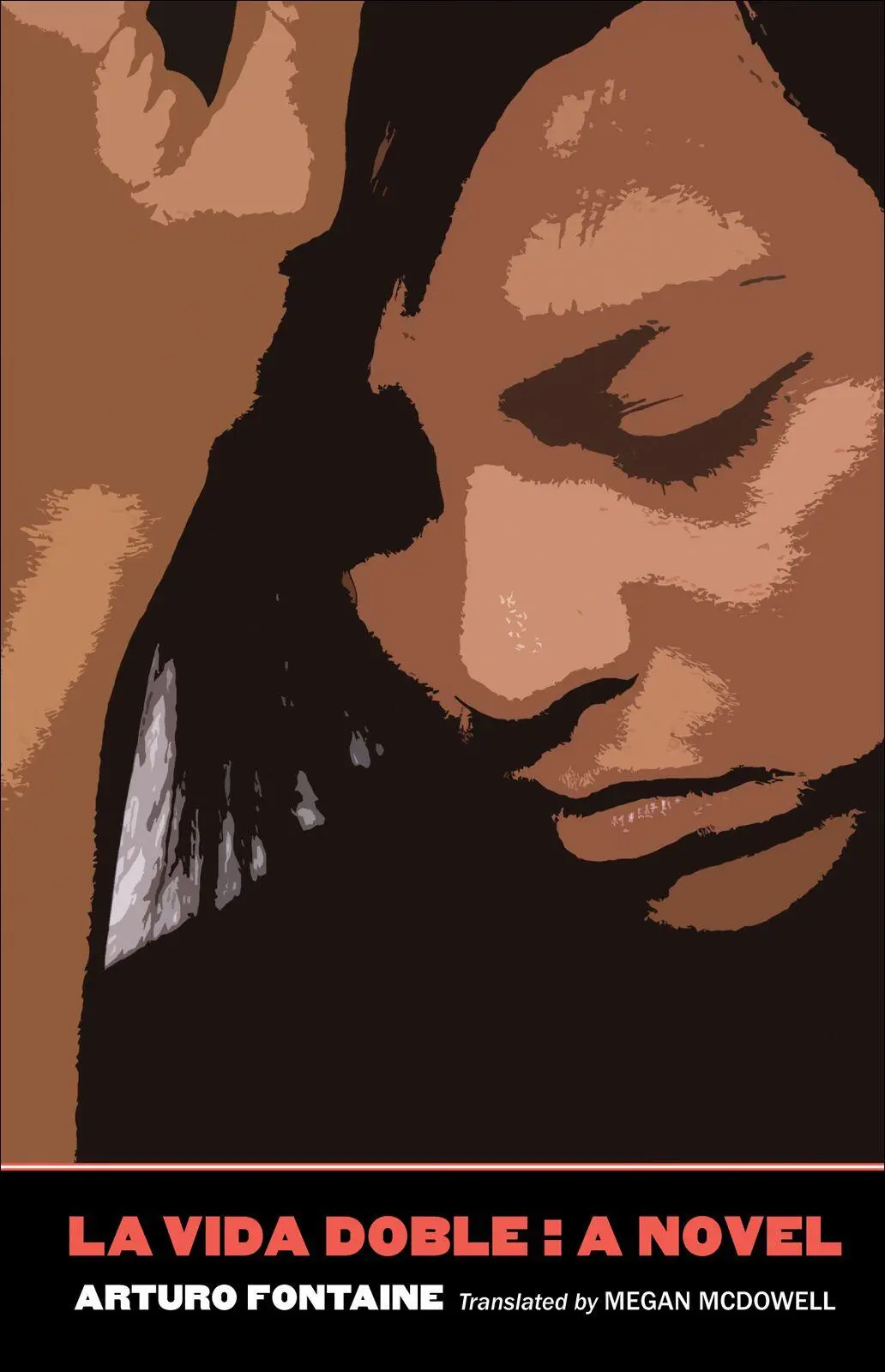
- Название:La Vida Doble
- Автор:
- Издательство:Yale University Press
- Жанр:
- Год:2013
- ISBN:нет данных
- Рейтинг книги:3 / 5. Голосов: 1
-
Избранное:Добавить в избранное
- Отзывы:
-
Ваша оценка:
La Vida Doble: краткое содержание, описание и аннотация
Предлагаем к чтению аннотацию, описание, краткое содержание или предисловие (зависит от того, что написал сам автор книги «La Vida Doble»). Если вы не нашли необходимую информацию о книге — напишите в комментариях, мы постараемся отыскать её.
is the story of Lorena, a leftist militant who arrives at a merciless turning point when every choice she confronts is impossible. Captured by agents of the Chilean repression, withstanding brutal torture to save her comrades, she must now either forsake the allegiances of motherhood or betray the political ideals to which she is deeply committed.
Arturo Fontaine’s Lorena is a study in contradictions — mother and combatant, intellectual and lover, idealist and traitor — and he places her within a historical context that confounds her dilemmas. Though she has few viable options, she is no mere victim, and Fontaine disallows any comfortable high moral ground. His novel is among the most subtle explorations of human violence ever written.
Ranking with Roberto Bolaño and Mario Vargas Llosa on Latin America’s roster of most accomplished authors, Fontaine is a fearless explorer of the most sordid and controversial aspects of Chile’s history and culture. He addresses a set of moral questions specific to Pinochet’s murderous reign but invites us, four decades later, to consider global conflicts today and question how far we’ve come.
La Vida Doble — читать онлайн бесплатно полную книгу (весь текст) целиком
Ниже представлен текст книги, разбитый по страницам. Система сохранения места последней прочитанной страницы, позволяет с удобством читать онлайн бесплатно книгу «La Vida Doble», без необходимости каждый раз заново искать на чём Вы остановились. Поставьте закладку, и сможете в любой момент перейти на страницу, на которой закончили чтение.
Интервал:
Закладка:
The master’s gaze is burned into the slave’s forehead. And the slave sees himself in that gaze, he begins to exist within it. How to break away from it, if it’s the very thing that creates him and sustains him? We hang over an abyss, and the thread that holds us and keeps us from falling is the gaze of our masters. But then, the wound that splits your face and gives it shape also gives you the right to the ax, understand? It gives you the right to turn your fire on them, understand? You wanted me to talk to you about politics, right? You wanted to understand how we thought back then, right?
We paid dearly for our attempt. We paid with our lives. Or, as in my case, with a perversion of life. That day I threw myself to the ground instead of fleeing, I knew more than I would have been able to admit.
I knew that divisions were growing among our people. The virus had entered. We didn’t know how to believe anymore. The very idea of our communion of equals was being diluted. What was it about now? The solution of the compromisers, who were gaining ground, was to shake hands with the party leaders of the repressive regime — trying all the while, of course, not to be spattered by the fresh blood — and to negotiate in their salons with tails between their legs. That’s what our newsletter said. They became objective allies of Washington money. The victory went to the bigwigs of the big business of “peaceful” negotiation, the scam that the press worldwide was to applaud with hands and feet, and that would allow the tyrant to die in his home, peacefully in his bed. Do they think that without us, without our attacks, bombings, our injuries, torture sessions, and deaths without coffins or funerals or graves, do they think there would have been any room for their filthy negotiation? Don’t those cowards realize that without our sticks of dynamite affixed under cover of night five or six yards up on the high-voltage towers to blow them up, cables snapping; without the sudden, tremendous, and terrifying darkness that covered Santiago, or half of Chile; don’t they realize that without us, there would never have been any massive protests? Don’t they remember that anonymous blackness that brought the people out into the streets and terrified the bourgeois, terrified the soldiers themselves, who couldn’t contain the barricades and the looting? It was then, only then, that the profiteering gentlemen decided they had to change horses, and they and their lackeys started looking for a “democratic exit.” There were overreaches, stampeding lumpen, you say? Of course! The revolution frees people’s instincts. Cruelty blossoms along with free love, song blooms along with the garbage in the streets, hate along with poetry. Revolution is chaos. It’s a torrent that, if it doesn’t swallow you, lifts you up.
We called those nights of barricades aucaye nights, rebel nights. Because in that darkness that we created, equality existed for a few hours, and the city once again belonged to everyone. The bonfires transformed the impersonal, estranged city of Santiago into our quitrahue, our hearth, our home. From the dark depths of the race awoke the primordial fascination with fire, and we recognized each other’s faces and genotypes in the light of the flames; in the shrill whistles we could hear the fateful wail of the pifilca flutes made from the tibias of dead Spanish conquistadors, calling out for an ancestral, murderous war. That’s what people forget now. The military bastards didn’t dare stop us. On those nights, carnival and combat intermingled. The blackout created a situation of objective risk. And over our heads flew the rattling helicopters shredding the air with their sharp blades, shaking the windows, deafening us with the unbearable, dirty roar of their rotors; they filmed us with their infrared lenses, but didn’t dare to get out or to use their machine guns for fear of a massacre, for fear of the aucayes, fear of the rebels. Our instructions were not to look at the helicopters so we wouldn’t be photographed and identified. The same went for the press photographers’ cameras that multiplied on those blackout nights. We were careful. We disguised ourselves, we used hoods. Aucaye nights, those were really our nights. The lords of the commerce of concession have forgotten all that now.
So then the attack from our cowardly and pragmatic branch came at us. Many of our own went over to their side, the majority. For them, we now represented the “maximalist temptation.” Our acts of “sabotage and recovery of funds legitimized the repression.” We only wanted to bear witness. We were prophets, we were nostalgic, we were not politicians with a future. And, of course, our armed approach was “unviable.” We’d heard it all before. Their knees didn’t bend out of fear, oh, no; it was because they were “realists.” As if it were human to renounce hope, as if reality were not precisely that which waits to be shaped by human beings. What they proposed meant: now there is no place for the beauty of the hero. But as it happens, history always leaves room for heroes. We know their dream; enough / to know they dreamed and are dead. Heroes are the ones who carve out that space. Allende’s death is proof. At the last second, he, alone, transformed a political and military defeat into a moral victory. He made himself into a hero when it seemed that there was no time or place left for it. Because he had to die before seeing the tyrant’s face.
When Canelo fought back, covering my escape as he had been ordered to do, he went toward death instead of letting it catch him. And what if excess of love / bewildered them till they died? He fell with a Smith and Wesson.44 Magnum in hand. That revolver, shot from a few yards away, will lift a man off the ground. It has a tremendous stopping power. They got Canelo, but he was already an inert mass, not a living combatant. Angels of fire and ice. He was equal to our oath and to what was repeated in the monthly communications that each cell had to decode and read out loud. One who allows himself to be taken prisoner puts the entire apparatus at risk; one who lets himself be captured will face torture and will merely postpone his death, which will come as the enemy wishes, without dignity or historical significance; one who lets himself be captured breaks our vow and concedes a moral victory to the enemy. Conversely, one who dies in combat will claim a moral victory that can never be taken from him; his blood will be the fount of history.
Did Canelo believe that? He fulfilled it, there’s no doubt about that. But hadn’t he been, for a long time, courting death as if it were the solution? Sometimes, when I looked at his face, I sensed that he wouldn’t last long; a dullness in his eyes, I don’t know.
Then, as Canelo said we would, as he warned us sometimes in our meetings, we ended up with the odious outcome, the one we would get if we came up short, if our revolutionary violence wasn’t enough to incite the masses beyond the level of protest, nocturnal barricades, and vandalism. Canelo intuited that, and in fact, he mentioned it sadly to me just a few days before he was killed. In the end we were useless idiots, we were involuntary accessories of exploitation. The meanness of the petite bourgeoisie won. Their miserliness won, the hard and cold selfishness that petrifies the hearts of the rich and makes them feel themselves to be good. It’s unfair to judge us only by the outcome. We lost, no doubt about it, but we came so close to winning. You have to understand ex ante the ambiguity of the situation. There was a moment when history opened a door to us. The invisible, our dream, for a while was there, pulsating in the visible. Now is the time / for what tomorrow can be. . It wasn’t an illusion. Though it seems like one now. We thought: we are what we haven’t yet become. The low drum of Quilapayún marked time for our invincible march. . La luz, de un rojo amanecer, / The light of a red dawn / announces now the life to come. The omelet was about to flip. . the rich would, finally, eat shit. But just like that, dawn turned into twilight. And when I think about it, the rage still rises up like foam within me. We paved the way for the treacherous and filthy pact of the hogs with their slaughterers. The Great Whore of capitalism won, we were fucked by the Great Slut. And I wonder: Did Canelo let himself be killed the same as I let myself be caught? And wasn’t it because of that?
Читать дальшеИнтервал:
Закладка:
Похожие книги на «La Vida Doble»
Представляем Вашему вниманию похожие книги на «La Vida Doble» списком для выбора. Мы отобрали схожую по названию и смыслу литературу в надежде предоставить читателям больше вариантов отыскать новые, интересные, ещё непрочитанные произведения.





Обсуждение, отзывы о книге «La Vida Doble» и просто собственные мнения читателей. Оставьте ваши комментарии, напишите, что Вы думаете о произведении, его смысле или главных героях. Укажите что конкретно понравилось, а что нет, и почему Вы так считаете.