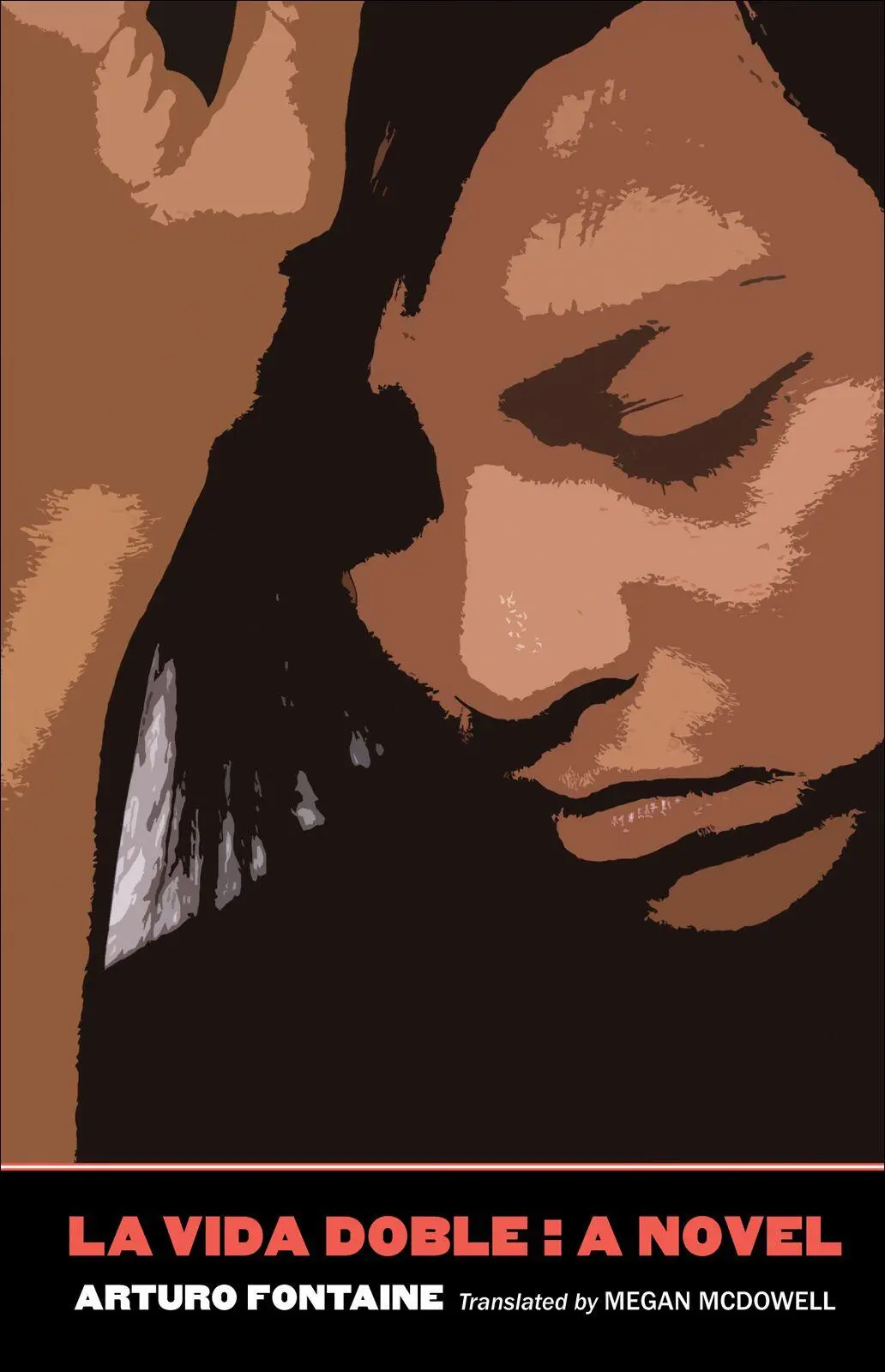
Arturo Fontaine - La Vida Doble
Здесь есть возможность читать онлайн «Arturo Fontaine - La Vida Doble» весь текст электронной книги совершенно бесплатно (целиком полную версию без сокращений). В некоторых случаях можно слушать аудио, скачать через торрент в формате fb2 и присутствует краткое содержание. Год выпуска: 2013, Издательство: Yale University Press, Жанр: Современная проза, на английском языке. Описание произведения, (предисловие) а так же отзывы посетителей доступны на портале библиотеки ЛибКат.
- Название:La Vida Doble
- Автор:
- Издательство:Yale University Press
- Жанр:
- Год:2013
- ISBN:нет данных
- Рейтинг книги:3 / 5. Голосов: 1
-
Избранное:Добавить в избранное
- Отзывы:
-
Ваша оценка:
La Vida Doble: краткое содержание, описание и аннотация
Предлагаем к чтению аннотацию, описание, краткое содержание или предисловие (зависит от того, что написал сам автор книги «La Vida Doble»). Если вы не нашли необходимую информацию о книге — напишите в комментариях, мы постараемся отыскать её.
is the story of Lorena, a leftist militant who arrives at a merciless turning point when every choice she confronts is impossible. Captured by agents of the Chilean repression, withstanding brutal torture to save her comrades, she must now either forsake the allegiances of motherhood or betray the political ideals to which she is deeply committed.
Arturo Fontaine’s Lorena is a study in contradictions — mother and combatant, intellectual and lover, idealist and traitor — and he places her within a historical context that confounds her dilemmas. Though she has few viable options, she is no mere victim, and Fontaine disallows any comfortable high moral ground. His novel is among the most subtle explorations of human violence ever written.
Ranking with Roberto Bolaño and Mario Vargas Llosa on Latin America’s roster of most accomplished authors, Fontaine is a fearless explorer of the most sordid and controversial aspects of Chile’s history and culture. He addresses a set of moral questions specific to Pinochet’s murderous reign but invites us, four decades later, to consider global conflicts today and question how far we’ve come.
La Vida Doble — читать онлайн бесплатно полную книгу (весь текст) целиком
Ниже представлен текст книги, разбитый по страницам. Система сохранения места последней прочитанной страницы, позволяет с удобством читать онлайн бесплатно книгу «La Vida Doble», без необходимости каждый раз заново искать на чём Вы остановились. Поставьте закладку, и сможете в любой момент перейти на страницу, на которой закончили чтение.
Интервал:
Закладка:
I want, I need to be precise: those seventy tons of weapons could have altered the course of history. You know? The famous general of Special Troops in Cuba, Patricio de la Guardia, personally negotiated their acquisition. They traveled from Vietnam to Cuba, from Cuba to Nicaragua and from Nicaragua to the north of Chile aboard the Cuban ship Río Najasa. I don’t want to bore you with numbers, but a writer like you would have no reason to know this and I, like I said, must be exact. They found, I remember it well, 3,383 M-16 rifles with ammunition, 2,393 TNT explosives, over three hundred LAW and RPG-7 missile launchers, two thousand hand grenades. . A respectable arsenal for any revolutionary movement anywhere in the world.
Later, the sinister Operation “Albania” wiped out several leaders of the Front, depriving it of their best and most experienced officers. Canelo would have been furious if he’d seen how, in the news reports, they depicted Juan Waldemar Henríquez and Wilson Henríquez as mere rebellious citizens killed by the dictatorship and not as combatants who fell defending the school of urban warfare on Calle Varas Mena. Those two fought back. It was thanks to them the other ten combatants escaped. You see what I mean? Heroes made into victims; instead of honor, there was regret and compassion; instead of lions, lambs. . Tyrannicide and rebellion, which even some priests thought warranted based on ancient scholarly theories, lost their moral and political legitimacy. I’m being too literal, I’m being pedestrian. This doesn’t help you, it’s not part of the book you want to write, it’s just documentary context. Fine.
But then there was armed resistance, and there wasn’t. The uprising never took hold. Light the fuse that would enable the poor of the earth to free themselves from fear and rise up — that was the idea. But when it actually happens, the soldiers start killing and nothing is accomplished. And beauty, where was it? Ah Beauty, do you come from the deep heavens or have you sprung from the abyss?
If the ambush on the way to Melocotón had killed the tyrant. . Listen, can you imagine how José Valenzuela Levy must have felt when he had the dictator in the crosshairs of his LAW rocket-launcher, for those tenths of a second when the idling Mercedes was a sure target? There were, I’ve been told, two previous failed attempts. But no one except José Valenzuela Levy had quite that experience. Having him right there, just a few yards away, in the sights of his antitank missile launcher. He was saved by the bulletproofing on the Mercedes-Benz, he was saved by the shouts of “Back! Back!” that the head of the escort repeated over the radio, and by the chauffer’s agility and quick reactions; he was saved by the LAW rocket that didn’t explode: Click. Click. Why didn’t it explode? It was the last chance. And it is what it is: there was no triumphant overthrow, only transition; the epic revolution never came, just a tired and pedestrian reform.
Though maybe I’m being too harsh. Maybe we just didn’t get it. Years and years of pain and hate and terror had sown a longing for brotherhood and reconciliation and democracy and peace and agreement. Because, as the entire world knows, that was what they ended up prioritizing in my country: the search for a new civic accord. Even if it meant swallowing shit. We were excluded from that process, you see?
Listen well: don’t be constrained by this historical anecdote I’m telling you, or by Chile’s narrow geography, either. You’re looking at me with intelligent eyes. You know I’m giving you more information, more political and social context than you need in order to understand the situation, right? I’m too long-winded, I’m obsessed with detail. Because ultimately, all of this is happening all the time. I don’t want to seem presumptuous. What would Clementina be saying if she were here with you? This is just raw material that you’ll have to shape into fiction. And, please. . I’m talking to you from a moral place. Do you understand? I’m talking to you about the truth that lives in collective mythologies. When I read about the prisoners in Guantánamo, held for months and months without trial or due process, when I see the photographs on TV of the people they tortured in Abu Ghraib, in Iraq, I think I know what that’s about, I think I recognize patterns and procedures. Déjà vu. What they did to us in that miserable back alley called Chile, the Yankees had done before in Vietnam, and the military did in Brazil, in Uruguay. Later, it would be repeated in Argentina, in Peru. Now it’s the Iraqis’ turn. . The mujahideen know it.
Look, these days no one’s going to buy a pig in a poke. You have to tell your reader: you are reading a novel, these are pure lies. That’s what Clementina would demand. And you keep going from there and you do it in such a way, with such magic, that the reader gives himself over and goes along with you. And then, you destroy his innocence again. The texture gives way, it breaks like a torn sack, you’ve betrayed him. It was just one more ingenious lie built on top of the other one, you tell him. And the reader gets dizzy and nothing seems real or unreal and he’s a prisoner among your amazements and inventions, he has no way out, he can only go on cooperating in this other thing, the new texture of the new sack, the new mantle that masks the combatant. . That’s what you are if you are a writer: a liar who tells the truth in order to lie once more. It’s the power, mon chéri, the thankless power that always shows itself in disguise. Or no?
So, greed won. Exactly what we wanted to prevent with our complicated clockwork of sympathizers, militants, collaborators, and the hundreds of combatants who entered the country with meticulously falsified passports and their corresponding alibis, with their military training in Cuba, Bulgaria, Vietnam, Moscow, or East Germany, and our charges of explosives and coded messages on cigarette paper, and our AK-47s and our martyrs and our stipends paid with the dollars or pesos taken from banks and currency exchanges, like we were doing when they killed Canelo, Samuel, Kid Díaz, and they captured me. You walk upon the dead with scornful glances, Beauty, / Among your gems horror is not least fair.
It wasn’t enough. The poor were too suspicious or cowardly or wise. A humanity of cowardly monkeys and wet dogs. They were too realistic, a frightening realism just like the one that grabbed hold of me the instant I should have crossed Calle Moneda and instead I threw myself to the ground and waited, in surrender, for my captor. That quick and irreversible decision imposed itself on me as the truth of my very being. It was a betrayal, but a sincere betrayal. I mean to say: my betrayal sprang from the truth. Now I think that, deep down, I didn’t want to go on living the life of a clandestine combatant, I didn’t want to go on living on the run, always on the verge of being caught; I had no hope because I’d lost my faith in the people, in their revolutionary heart. Although I denied it, of course. Notice that phrase, “the people,” I choke on it now. Brassens’s irony, as I looked at Giuseppe and focused on his long, lively nose in Pauline’s apartment: Mourrons pour des idées, d’accord, mais de mort lent . . I wanted to live. I wanted to go peacefully to the supermarket and the beauty parlor, to fix my hair and paint my nails, to buy new clothes and go to the movies. I wanted to spend more time with Anita. Of course, that’s what I say now.
Hearts with a single purpose. That’s why I admired them, and for that same reason I would hate them later, and myself as well. That society of equals we believed in would never exist. The nation of before was dead. They killed it. You can murder a country, too. You only had to look at the workers. Before, happily crowded into trucks, fists raised on the way to the march, waving their red banners. Now, coming out of the mall, fists lowered, carrying shopping bags and frustration back home. What did they want? To recognize themselves when they looked in the store windows overflowing with objects they could never buy? That’s something in itself, a piece of the dream. Ours isn’t the only utopia. But there always is a utopia, you know?
Читать дальшеИнтервал:
Закладка:
Похожие книги на «La Vida Doble»
Представляем Вашему вниманию похожие книги на «La Vida Doble» списком для выбора. Мы отобрали схожую по названию и смыслу литературу в надежде предоставить читателям больше вариантов отыскать новые, интересные, ещё непрочитанные произведения.



Обсуждение, отзывы о книге «La Vida Doble» и просто собственные мнения читателей. Оставьте ваши комментарии, напишите, что Вы думаете о произведении, его смысле или главных героях. Укажите что конкретно понравилось, а что нет, и почему Вы так считаете.