Olga Grushin - Forty Rooms
Здесь есть возможность читать онлайн «Olga Grushin - Forty Rooms» весь текст электронной книги совершенно бесплатно (целиком полную версию без сокращений). В некоторых случаях можно слушать аудио, скачать через торрент в формате fb2 и присутствует краткое содержание. Город: New York, Год выпуска: 2016, ISBN: 2016, Издательство: Penguin, Жанр: Современная проза, на английском языке. Описание произведения, (предисловие) а так же отзывы посетителей доступны на портале библиотеки ЛибКат.
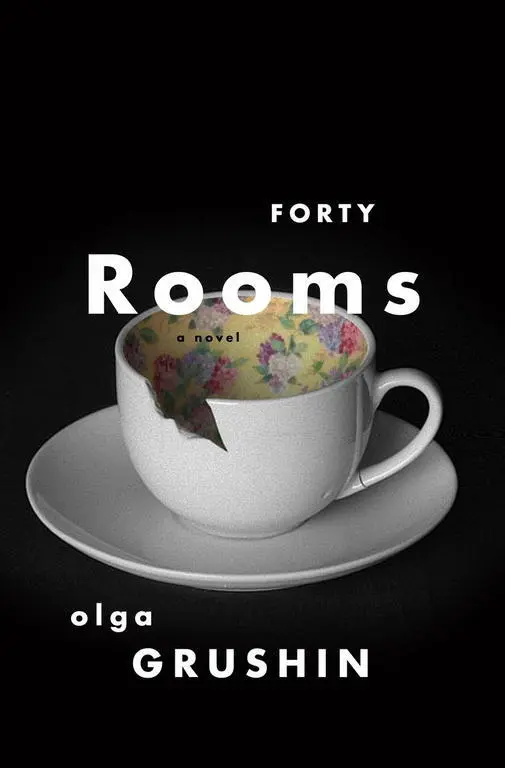
- Название:Forty Rooms
- Автор:
- Издательство:Penguin
- Жанр:
- Год:2016
- Город:New York
- ISBN:978-1-101-98309-6
- Рейтинг книги:3 / 5. Голосов: 1
-
Избранное:Добавить в избранное
- Отзывы:
-
Ваша оценка:
Forty Rooms: краткое содержание, описание и аннотация
Предлагаем к чтению аннотацию, описание, краткое содержание или предисловие (зависит от того, что написал сам автор книги «Forty Rooms»). Если вы не нашли необходимую информацию о книге — напишите в комментариях, мы постараемся отыскать её.
now returns to gift us with
, which outshines even that prizewinning novel. Totally original in conception and magnificently executed,
is mysterious, withholding, and ultimately emotionally devastating. Olga Grushin is dealing with issues of women’s identity, of women’s choices, that no modern novel has explored so deeply.
“Forty rooms” is a conceit: it proposes that a modern woman will inhabit forty rooms in her lifetime. They form her biography, from childhood to death. For our protagonist, the much-loved child of a late marriage, the first rooms she is aware of as she nears the age of five are those that make up her family’s Moscow apartment. We follow this child as she reaches adolescence, leaves home to study in America, and slowly discovers sexual happiness and love. But her hunger for adventure and her longing to be a great poet conspire to kill the affair. She seems to have made her choice. But one day she runs into a college classmate. He is sure of his path through life, and he is protective of her. (He is also a great cook.) They drift into an affair and marriage. What follows are the decades of births and deaths, the celebrations, material accumulations, and home comforts—until one day, her children grown and gone, her husband absent, she finds herself alone except for the ghosts of her youth, who have come back to haunt and even taunt her.
Compelling and complex,
is also profoundly affecting, its ending shattering but true. We know that Mrs. Caldwell (for that is the only name by which we know her) has died. Was it a life well lived? Quite likely. Was it a life complete? Does such a life ever really exist? Life is, after all, full of trade-offs and choices. Who is to say her path was not well taken? It is this ambiguity that is at the heart of this provocative novel.
Forty Rooms — читать онлайн бесплатно полную книгу (весь текст) целиком
Ниже представлен текст книги, разбитый по страницам. Система сохранения места последней прочитанной страницы, позволяет с удобством читать онлайн бесплатно книгу «Forty Rooms», без необходимости каждый раз заново искать на чём Вы остановились. Поставьте закладку, и сможете в любой момент перейти на страницу, на которой закончили чтение.
Интервал:
Закладка:
Curtain rods: fluted or smooth?
Antique pewter or ancient gold?
Double-pleated or double-ruffled?
Finials: square or round?
Rings: leaf-carved or plain?
Paint: Inner Balance or Paris Rain?
And what width should the rods have?
And what shape should the brackets be?
And how much will the tassels cost?
Eugene’s school bus screeched to a stop outside their gate. But I shouldn’t rush into anything, Mrs. Caldwell thought as she set her notebook aside and went downstairs to meet him. Because whatever choices I make, these window treatments will be forever.
27. Master Closet
The large walk-in closet, upholstered in striped damask of pale beige and cream, had a satin-covered settee at one end, beneath a wall of precisely arranged shoes, and a second settee at the opposite end, by a floor-length mirror. On the left, Mr. Caldwell’s suits and shirts hung in a neat procession of muted grays and blues; on the right, somber bags of sturdy plastic concealed the bright plumage of Mrs. Caldwell’s evening dresses.
Her most recent acquisition, a long gown of crimson velvet, had matching high heels, which sparkled with tiny crystals along delicate crisscrossing straps. Mrs. Caldwell finished struggling with the left clasp and took a tentative twirl in front of the mirror. She had chosen the dress for an evening of gambling at a Monte Carlo casino: the dark red velvet would look dramatic, she thought, against the backdrop of green-clothed tables and tuxedoed men. “Shaken, not stirred,” she said in a throaty voice to her reflection, narrowing her eyes in the manner of a dangerous woman who might or might not be an enemy secret agent. After taking a few more twirls, she stepped out of the heels, pulled the gown off in fits and starts, and, somewhat flushed with the effort, ran her hands down the luxurious fabric before zipping the plastic cocoon back up. Then, sipping at her vodka tonic, she listened for baby cries or toddler steps.
All was thankfully quiet.
She looked with renewed deliberation down the long row of garment bags, selecting her next outing, her next adventure. Should she have cocktails under palm trees on a Caribbean beach (the light silk sheath hand-painted with flowers, and the pineapple-shaped bag that cost a small fortune)? Or go yachting off a Greek island (the turquoise beaded tunic, with the golden gladiator sandals)? Or indulge in a romantic evening at a Paris restaurant where soft jazz would mix with the aroma of lobster bisque and she would look so enticing in a tight black number with a plunging neckline?
Ever since Cecilia’s birth, Mrs. Caldwell found herself engaging in fervid bouts of late-night shopping, compulsively clicking the “Complete your purchase” button after Paul had gone to bed. She bought only special-occasion dresses, stiletto heels, evening bags—fancy things of useless, extravagant beauty, of which she had not the slightest need (and which hardly even fit her properly: she chose all her clothes two sizes too small, for when she was thin again). She liked to envision a specific occasion before each new acquisition, the particular place and time she would use it if she led the kind of life that called for the use of such things; and she was then free to imagine the outings in the privacy of the closet, a well-deserved drink close at hand, posing before the mirror in that short, blissful interval after her five children had fallen asleep and before Paul returned from the office and one, or two, or three of the children awoke, wailing with wordless hunger, or asking for water, or frightened by a nightmare, or needing to pee.
Sometimes she thought: Perhaps, when I am ninety years old and my mind is failing, I will find a trunk crammed full of chiffon and glitter in the attic. I will stare at the moth-eaten gowns and the dusty shoes with dimming eyes, and I will mistake my long-ago closet fantasies for actual memories. For what, after all, is the difference between a memory and a fantasy? Are not both a succession of imprecisely rendered images further obscured by imprecisely chosen words and animated only by the wistful effort of one’s imagination? And who is to say that a vividly imagined moment of happiness is not, in the end, more enriching to the spirit than a hazy semi-recollection of some pallid pastime?
She had just squeezed into a full skirt of iridescent peacock-blue taffeta (she had to leave the zipper half undone) and was searching for a suitable top when the telephone shrieked. Frantic, she groped in the pile of discarded shoe boxes. One ring, two rings—and, panting, she grabbed at the receiver, gasped a breathless, slightly slurred “Hello?”
The woman’s accented voice on the other end was unfamiliar.
“Wrong number,” she said curtly, and was hanging up already when the voice resolved into Olga’s briskness.
“Did I catch you at a bad moment?” Olga asked.
Mrs. Caldwell felt a sudden surge of hostility. She has all the time in the world, she thought, so why must she intrude upon what little time I have to myself? But the house lay still; the children, mercifully, went on sleeping; she resigned herself. Clearing the nearby settee of gauzy accumulations of scarves, she settled down and, clutching her half-finished drink, spent a few minutes taking stock of her life. Paul was well, the children were fine, Emma was reading far beyond her years, Eugene enjoyed science, the twins really did have their own language, Celia had not yet begun to sleep through the night. Having dispensed with the obligatory questions, Olga plunged into chatter. Her latest relationship was over but she had just met someone new, she was planning to quit her job and travel for a while, go to Egypt, to Argentina… Mrs. Caldwell barely listened, as ever on the alert for the sounds of her children waking; and when, in an offhand, “Oh and I nearly forgot” manner, Olga delivered her real news at last, Mrs. Caldwell caught only the tail end of the sentence.
“What do you mean, three years ahead of schedule?” she had to ask.
“With my novel,” Olga replied. “Remember how I always said I’d write one when I was forty? Well, it’s coming out next spring.”
“Really? That’s great, congratulations… Oh no, the baby is crying, I must run… Talk soon!”
She finished the vodka tonic in one gulp and sat frowning at her half-dressed reflection in the mirror, and in another minute Paul strode in, shrugging off his jacket. She had not heard him come home.
“God, what a day!” He bent to peck her cheek. “They fired two more guys, and now Mark’s worried that—”
“Paul,” she said. “Remember how we were going to go to Thailand or Greece or China for our honeymoon, but my passport still hadn’t arrived, and anyway you had too much work, so we just went to that bed-and-breakfast in the middle of nowhere instead, and you told me we’d do the real thing later? We never did, though.”
“You got pregnant,” he said, inspecting his tie for stains.
“I know.” She glanced at her reflection, gave the skirt’s zipper a surreptitious upward tug. “Do you… do you ever think about that place?”
“What place?”
“The bed-and-breakfast. We were there for three days, and we never even left the room, remember, we had all our meals brought in… Well, no, we did drive down to the only bar in town on our first evening, but we were afraid to show our faces there again after we beat all the local high scores on their trivia machine. Oh, we had such a wonderful time—do you remember, Paul? The bed was too soft and too narrow, and it made the floors creak, but we didn’t care.” She laughed a small laugh, gave her empty glass a shake, watched the ice cubes shift and resettle. He was busy sorting through a cluster of suits. She sighed. “And the railroad, remember the railroad?”
Читать дальшеИнтервал:
Закладка:
Похожие книги на «Forty Rooms»
Представляем Вашему вниманию похожие книги на «Forty Rooms» списком для выбора. Мы отобрали схожую по названию и смыслу литературу в надежде предоставить читателям больше вариантов отыскать новые, интересные, ещё непрочитанные произведения.







Обсуждение, отзывы о книге «Forty Rooms» и просто собственные мнения читателей. Оставьте ваши комментарии, напишите, что Вы думаете о произведении, его смысле или главных героях. Укажите что конкретно понравилось, а что нет, и почему Вы так считаете.