Carrie Brown - The Stargazer's Sister
Здесь есть возможность читать онлайн «Carrie Brown - The Stargazer's Sister» весь текст электронной книги совершенно бесплатно (целиком полную версию без сокращений). В некоторых случаях можно слушать аудио, скачать через торрент в формате fb2 и присутствует краткое содержание. Год выпуска: 2016, Издательство: Knopf Doubleday Publishing Group, Жанр: Современная проза, на английском языке. Описание произведения, (предисловие) а так же отзывы посетителей доступны на портале библиотеки ЛибКат.
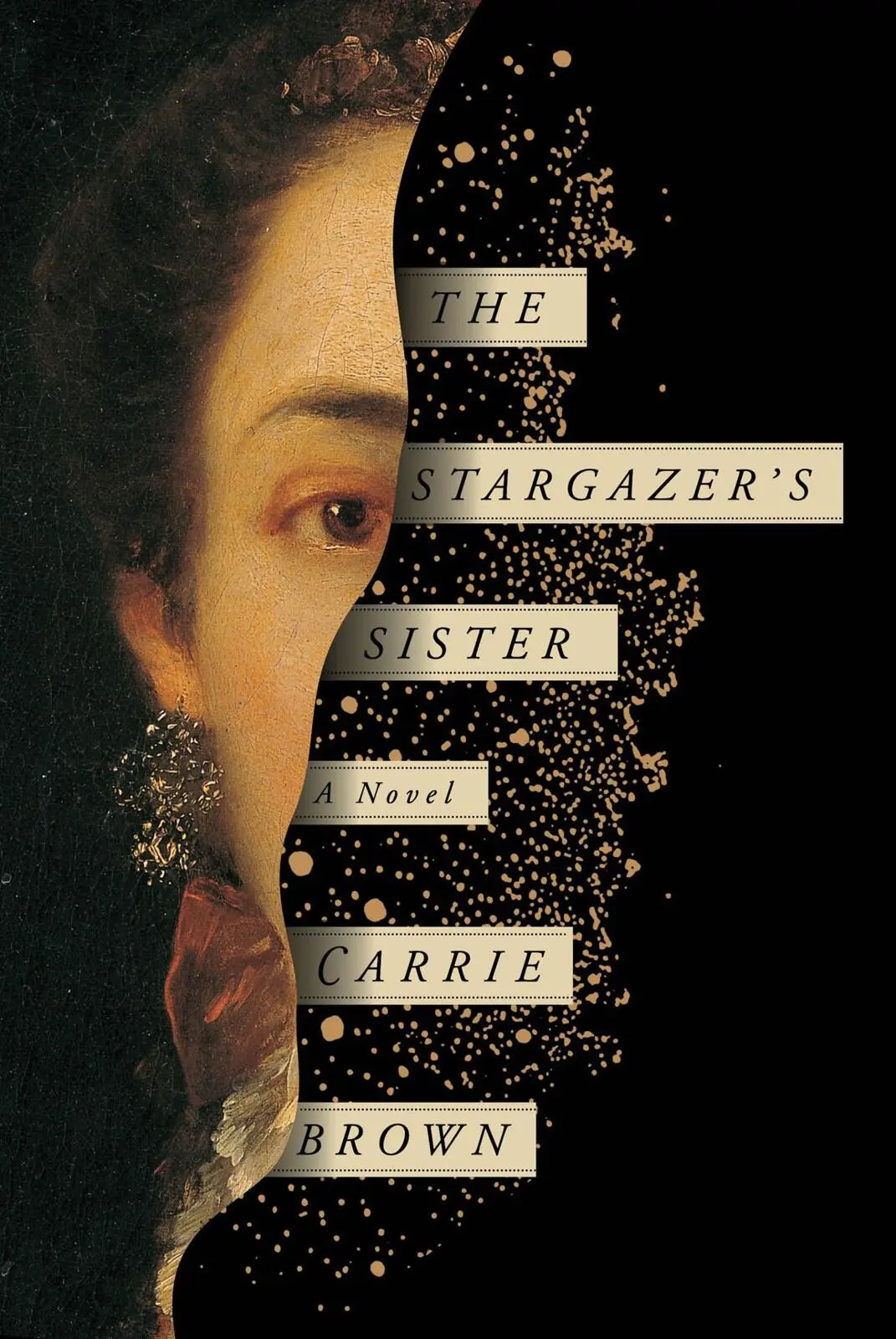
- Название:The Stargazer's Sister
- Автор:
- Издательство:Knopf Doubleday Publishing Group
- Жанр:
- Год:2016
- ISBN:нет данных
- Рейтинг книги:5 / 5. Голосов: 1
-
Избранное:Добавить в избранное
- Отзывы:
-
Ваша оценка:
The Stargazer's Sister: краткое содержание, описание и аннотация
Предлагаем к чтению аннотацию, описание, краткое содержание или предисловие (зависит от того, что написал сам автор книги «The Stargazer's Sister»). Если вы не нашли необходимую информацию о книге — напишите в комментариях, мы постараемся отыскать её.
a beautiful new period novel — a nineteenth-century story of female empowerment before its time — based on the life of Caroline Herschel, sister of the great astronomer William Herschel and an astronomer in her own right. This exquisitely imagined novel opens as the great astronomer and composer William Herschel rescues his sister Caroline from a life of drudgery in Germany and brings her to England and a world of music-making and stargazing. Lina, as Caroline is known, serves as William’s assistant and the captain of his exhilaratingly busy household. William is generous, wise, and charismatic, an obsessive genius whom Lina adores and serves with the fervency of a beloved wife. When William suddenly announces that he will be married, Lina watches as her world collapses.
With her characteristically elegant prose, Brown creates from history a compelling story of familial collaboration and conflict, the sublime beauty of astronomy, and the small but essential place we have within a vast and astonishing cosmos. Through Lina’s trials and successes, we witness the dawning of an early feminist consciousness, of a woman struggling to find her own place among the stars.
The Stargazer's Sister — читать онлайн бесплатно полную книгу (весь текст) целиком
Ниже представлен текст книги, разбитый по страницам. Система сохранения места последней прочитанной страницы, позволяет с удобством читать онлайн бесплатно книгу «The Stargazer's Sister», без необходимости каждый раз заново искать на чём Вы остановились. Поставьте закладку, и сможете в любой момент перейти на страницу, на которой закончили чтение.
Интервал:
Закладка:
She recoils when she unwraps the apron. One of William’s fingernails has been ripped off completely. The exposed flesh is the white of a fish’s belly and pulsing blood.
William turns aside.
“Yes,” she says. “ You cannot look, but I will have to.”
—
SHE DOES NOT SPEAK again while she dresses the wound and wraps it in a length of clean linen. When she submerges the bloody rags in a bucket, the water blooms bright red. Standing to lift the bucket and carry it out to the garden, she realizes her legs are shaking. Outside, she stands in the cold air, breathing hard. She feels sweat break out on her forehead and over her scalp.
A moment later, she leans over and is sick onto the grass.
When she straightens finally, the world spinning before it settles, she looks up, tilting back her head and breathing deeply. The clouds have parted in places, revealing scraps of black glittering with stars. An acquaintance of William’s, an astronomer from whom he has purchased some grinding and polishing tools, has written to William recently about the notion of “dark stars,” as he calls them — chasms of deep darkness like wells in space — where the force of gravity is so powerful that no light can escape. She and William have discussed this idea. She finds the notion as terrifying as it is compelling. Again now she has the sensation of looking not up but down, as if into well water that reflects the sky, stars floating there.
She stares up at the sky for a few minutes, trying to conquer the old sense of this unsteadiness that sometimes possesses her when she thinks about the universe, the “island universes,” as William calls them, beyond the Milky Way, stellar systems he believes to be in the process of formation or death. There are, he surmises, thousands — perhaps thousands upon thousands — of suns lighting up distant worlds.
The white tail of a rabbit running across the garden startles her. She looks down and sees that William has left his tools in the grass. If they stay there all night, they will rust.
She gathers them up and returns them to the workshop, drying them with rags before putting them away.
When she goes back into the kitchen, William is standing before the fire and pouring two glasses of spirits. He has taken off his bloody shirt and stands bare-chested, his belly slack. His face is very white, and the pupils of his dark eyes, when he turns to her, have dilated.
He hands her a glass, and then he turns away.
She looks down and sees that her nightdress is streaked with William’s blood.
“You can say it,” he says. “I am a trial. I know it.”
She says nothing. The muscles in his arms and chest are well defined and powerful. His regimen of physical work has made him strong. There are a few gray hairs on his chest. Yet as he ages he becomes only more beautiful, she thinks.
He lifts his arm to drink, and she sees a corresponding movement in the dark window across the room, where their reflections are captured. Their images are almost comically disproportionate. She is so small. She has yet another apprehension at that moment of the distance between them, the gifts that William has been given, her own portion scaled as if to fit her size. Perhaps this distance between them will only increase, no matter how much she learns. Certainly she will never be less ugly than she is now.
She tilts the glass to her mouth and downs the sherry in one swallow.
“Oh,” she says, surprised at the heat in her chest. She puts her fingertips to her lips.
“I’m going to bed,” she says, when she can speak.
She turns away from William, his expression of confusion and contrition, and puts her glass down on the table. She knows that he is sorry for worrying her, sorry for injuring himself. Yet she also knows that he does not believe those costs constitute any reason to compromise his ambitions, nor will they change his behavior. He will go on this way until it kills him.
He follows her up the stairs, however. When they reach the door to his bedroom on the second-floor landing, he puts a hand on her arm.
“There is no one else, Lina,” he says. “There is no one on whom I depend, as I depend on you.”
She softens, looking at him. He is still very pale; his hand must hurt terribly.
“Good night,” he says. She pats his arm, but she turns away and climbs the stairs without speaking to him.
He will not be satisfied, she knows, until he has done the thing that everyone says is impossible, until he has built a telescope so large and powerful that he can look beyond the perimeter of the known world and into the infinite — into worlds of light separated by unfathomable moats of darkness, she imagines — until he can make a mirror large enough to reflect all the light in the universe.
It occurs to her again that perhaps she is not ready for what will be revealed, if he can do as he hopes. She dislikes this coward who crouches inside her and sometimes bleats forth a protest. Her hesitancy reminds her of her mother’s ignorance and fear, those two qualities so inevitably linked. Still, sometimes she has bad dreams, nightmares in which she falls through an endless sky, the trails of comets brushing past her — soft hands closing her eyes — as she reels into an abyss.
She does not like to think of endless, she has told William.
“Consider it bounded, if you like,” he has said. “But, so, what is beyond the boundary, then? Nothing? How can there be…nothing?”
She strips off her bloody nightdress and exchanges it for a clean one. She does not want to return to the kitchen to put the filthy one to soak. It will have to be used for rags if she cannot wash out the blood tomorrow.
One cannot conceive of nothing, she thinks. One cannot imagine forever.
But she will have to, if she stays at William’s side.
ELEVEN Shadow
The holidays come and go. Lina avoids having to perform by coming down with a sore throat and then with a bad cough that lasts for weeks. One day early in March, as she is tipping a bowl of peeled potatoes into a pot of water in the kitchen, William appears in the doorway. He is holding a letter and smiling. She scarcely has time to set down the bowl before he picks her up and heaves her over his shoulder. He carries her down the passageway and outside to the garden.
“What are you doing?” she cries. “William!”
He has recently conducted two oratorios, and the household is once again flush with money. The relief for them both has been great. After a period when construction on the bigger workshop had to stop for lack of funds and William was morose, now James and two other men — newcomers to the household — have been hired to continue the work. They turn at the sight of William jogging around the patch of grass in the garden with Lina over his shoulder. In his free hand, he holds the letter. Stanley, kneeling in the beds at Lina’s instruction and mulching the cabbages with additional leaves for protection, looks up.
“It is from the Royal Society,” William announces. “At last.”
He sets Lina down. Then he embraces her, lifting her from the ground for a moment. When he lets her go, she staggers backward and puts her hands to her head. Her hair has slipped loose.
Stanley falls over into the grass, holding his sides and laughing.
“And what is so funny to you?” She turns to Stanley, pushing the pins back into her coiled braids and brushing down her skirts, but she is laughing as well.
William turns to the others. “Today we will celebrate,” he says. “Lina, let us have cider for everyone.”
Читать дальшеИнтервал:
Закладка:
Похожие книги на «The Stargazer's Sister»
Представляем Вашему вниманию похожие книги на «The Stargazer's Sister» списком для выбора. Мы отобрали схожую по названию и смыслу литературу в надежде предоставить читателям больше вариантов отыскать новые, интересные, ещё непрочитанные произведения.











Обсуждение, отзывы о книге «The Stargazer's Sister» и просто собственные мнения читателей. Оставьте ваши комментарии, напишите, что Вы думаете о произведении, его смысле или главных героях. Укажите что конкретно понравилось, а что нет, и почему Вы так считаете.