Carrie Brown - The Stargazer's Sister
Здесь есть возможность читать онлайн «Carrie Brown - The Stargazer's Sister» весь текст электронной книги совершенно бесплатно (целиком полную версию без сокращений). В некоторых случаях можно слушать аудио, скачать через торрент в формате fb2 и присутствует краткое содержание. Год выпуска: 2016, Издательство: Knopf Doubleday Publishing Group, Жанр: Современная проза, на английском языке. Описание произведения, (предисловие) а так же отзывы посетителей доступны на портале библиотеки ЛибКат.
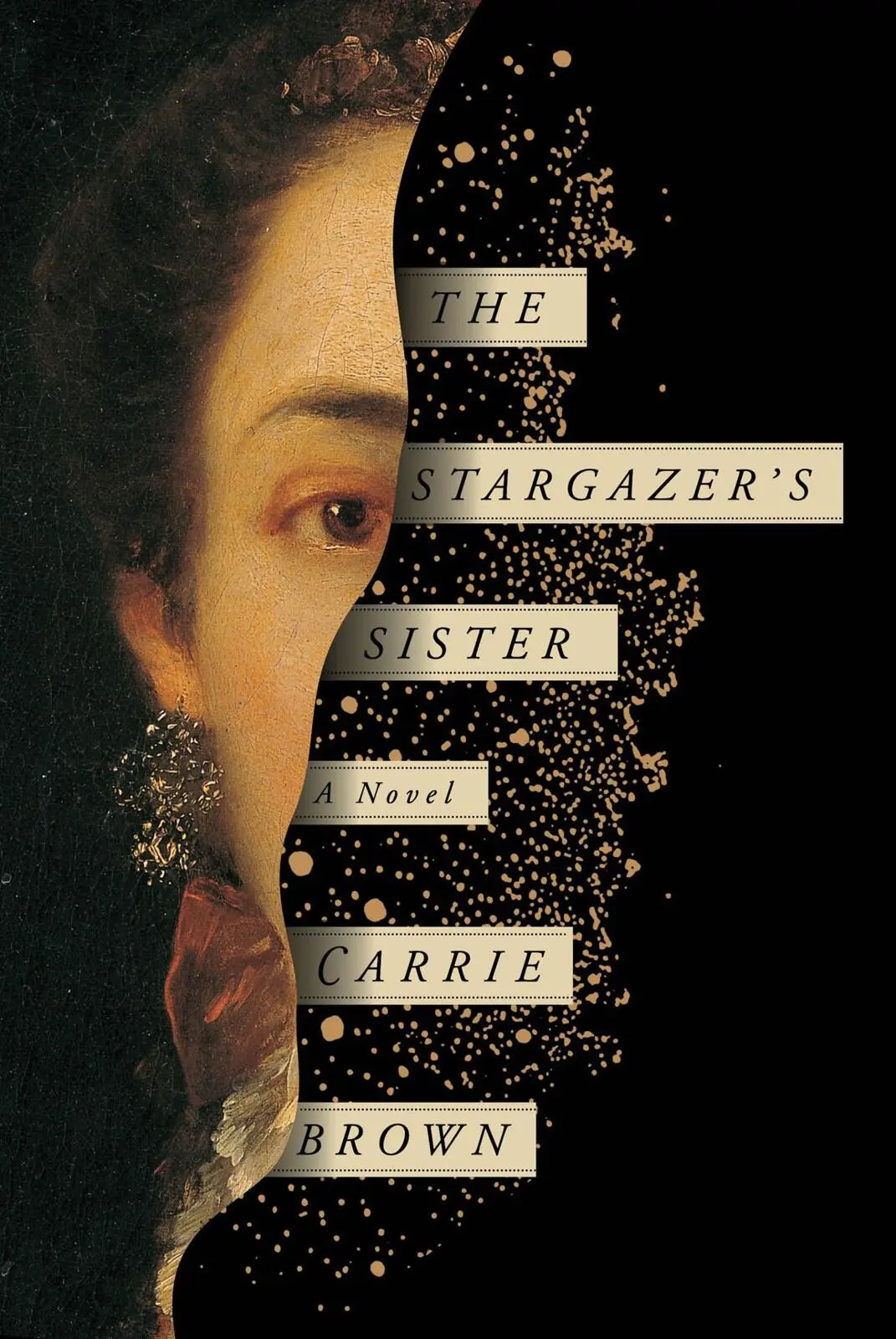
- Название:The Stargazer's Sister
- Автор:
- Издательство:Knopf Doubleday Publishing Group
- Жанр:
- Год:2016
- ISBN:нет данных
- Рейтинг книги:5 / 5. Голосов: 1
-
Избранное:Добавить в избранное
- Отзывы:
-
Ваша оценка:
The Stargazer's Sister: краткое содержание, описание и аннотация
Предлагаем к чтению аннотацию, описание, краткое содержание или предисловие (зависит от того, что написал сам автор книги «The Stargazer's Sister»). Если вы не нашли необходимую информацию о книге — напишите в комментариях, мы постараемся отыскать её.
a beautiful new period novel — a nineteenth-century story of female empowerment before its time — based on the life of Caroline Herschel, sister of the great astronomer William Herschel and an astronomer in her own right. This exquisitely imagined novel opens as the great astronomer and composer William Herschel rescues his sister Caroline from a life of drudgery in Germany and brings her to England and a world of music-making and stargazing. Lina, as Caroline is known, serves as William’s assistant and the captain of his exhilaratingly busy household. William is generous, wise, and charismatic, an obsessive genius whom Lina adores and serves with the fervency of a beloved wife. When William suddenly announces that he will be married, Lina watches as her world collapses.
With her characteristically elegant prose, Brown creates from history a compelling story of familial collaboration and conflict, the sublime beauty of astronomy, and the small but essential place we have within a vast and astonishing cosmos. Through Lina’s trials and successes, we witness the dawning of an early feminist consciousness, of a woman struggling to find her own place among the stars.
The Stargazer's Sister — читать онлайн бесплатно полную книгу (весь текст) целиком
Ниже представлен текст книги, разбитый по страницам. Система сохранения места последней прочитанной страницы, позволяет с удобством читать онлайн бесплатно книгу «The Stargazer's Sister», без необходимости каждый раз заново искать на чём Вы остановились. Поставьте закладку, и сможете в любой момент перейти на страницу, на которой закончили чтение.
Интервал:
Закладка:
In the daylight, the extreme paleness of Henry’s skin is even more noticeable than had been revealed by lantern light the night before. His eyes are red-rimmed, his nose red also.
She feels sorry for him. It looks as if being in his skin pains him.
Outside the garden wall, William helps her to mount, her boot in his cupped palm. As soon as she is seated, she realizes she has forgotten how wonderful it feels to be on horseback, the sense of the animal moving beneath her, her body in contact with that of another living creature.
Her pleasure must be evident, for William laughs up at her.
“Lina will enjoy herself today,” he says to Henry, as if she is up to some mischief.
She gives her brother a look — she feels embarrassed enough already by the extravagance of Henry’s gift to her, the prospect of their time alone together without a chaperone — but he only laughs.
They begin at a walk, moving into the meadows along the Avon, where the tall grasses near the water have fallen and form a brittle surface that shatters beneath the horses’ hooves.
She expects that Henry will speak. It seems polite to wait for him to begin, but he says nothing, and after a few minutes the silence has lasted so long that she cannot imagine how to break it. She looks at the river in despair. The swans have kept pace alongside them for some time. When Henry moves a little distance ahead on his horse, she lies down quickly for a moment over the mare’s neck and rests her cheek along the horse’s mane. The pleasure feels secret, stolen, a comfort in the face of the strained awkwardness she feels in Henry’s presence.
Finally, as they emerge from a copse into a long meadow, he turns to her. “You are comfortable if we let them run?” he asks.
She is nervous — her experience is limited — but when they rein in the horses after a few minutes, Lina is breathless.
“Oh, thank you, Henry Spencer,” she says. “I had forgotten it, how much I like it.”
He reaches to pat his horse’s neck. He glances her way, smiling, but he says nothing further. Silence descends between them again. They turn around and begin toward home. Perhaps William pressured Henry into this generous gift after all, she thinks. Or perhaps Henry is sorry to have had to commit an afternoon to her company. She thinks of her scarred face; could even a man as unattractive as Henry Spencer be made unhappy by her appearance?
Why should it matter — she feels a momentary anguish — what a person looks like? She would be willing to be Henry Spencer’s friend, as ugly as he is. She can do nothing about her face.
They ride side by side along the river. After a few moments, looking away from her over the water, he says, “Forgive me, Miss Herschel. Your brother will tell you. I am a poor conversationalist.”
She does not look at him.
“I, also,” she says. “And of course my English is still…Do not worry.”
No more words are exchanged between them. They have disappointed one another, she thinks. They have mortified one another in some way she cannot fully understand.
William comes out from the workshop to greet them when they return.
“Join me at the telescope tonight?” he says to Henry.
“With pleasure,” Henry says. He turns to Lina and bows from the saddle.
“I am very grateful to you,” she says, but she feels her face color, and still she cannot look at him. Things between them had been so difficult.
William helps her dismount. She strokes the horse’s neck. She would kiss her nose, but the presence of the men embarrasses her.
They wave goodbye to Henry as he rides off. As they walk into the house, William puts a hand on her shoulder.
“He is a very good man, is he not?” he says. “But I think he is — how do they say it? Not of this world, exactly.”
—
THAT EVENING CLOUDS MOVE in and the sky is too overcast for observing. William sends Stanley with a message for Henry that their viewing will have to be postponed. Lina is glad that she will not have to face Henry Spencer again immediately.
But William is annoyed, pacing restlessly through the house. Finally, near midnight, he announces that he will use the time instead to polish his tools on the grindstone in the garden. He is frustrated, Lina knows, with the bad weather, nights of rain or now, possibly, snow. All evening the temperature has been dropping.
She is in the kitchen, scrubbing one of William’s shirts, watching him march around the room, rubbing his head.
“You need sleep, William,” she says. She feels weary from her afternoon with Henry, despite its pleasures. “ I need sleep.”
He has worked several days at the lathe — she has lost count of how many hours — as well as at the telescope each night. He must be tired, she thinks.
William ignores her and moves past her down the passage to the workshop.
She leaves his shirt soaking and follows him. He begins to gather his tools.
“Why don’t you rest tonight?” she says. “Surely that can wait. What are you doing?”
“If you are in need of sleep,” he says, “no one is preventing you from taking it. I will just sharpen some of these. They are no good to me if they are dull.”
She watches him for another minute. She has the sense that he has insulted her in some way, accused her of laziness.
“Fine,” she says. “Go sharpen your dull tools.”
She leaves him, untying her apron as she goes and dropping it on the floor of the kitchen. She has had enough for the day. Suddenly their life — the constant work, William’s obsessive ambition and drive — makes her feel profoundly, unmistakably lonely.
She climbs the stairs to her attic and washes her face in the basin. She sits on the bed, looking at the stack of books on the floor. Yet what she feels is not just anger at William, she knows. She had hoped that Henry Spencer would bring into their lives a third party who might sometimes distract William from work, that he would be someone with whom she could converse as well. She puts her face in her hands for a moment.
She has, she admits it to herself, entertained foolish romantic fantasies about him.
She does not mind that he is ugly or shy. These are superficial qualities that should mean nothing to a person of discernment. It means nothing to her, what Henry Spencer looks like. But he is not interested in her company. William is right; Henry Spencer is not of this world in some way. He doesn’t need to work, so he may choose what medical cases interest him. Like William’s, perhaps, his head is occupied with a higher order of thought than that of ordinary people, ordinary people who want — what? What? she thinks. What does she — an ordinary person — want?
Ordinary comforts.
So she is full of a woman’s common stupidity after all, she thinks. But why can she and William not lead a more normal life? Every month they are out of money, and progress on the new workshop has ceased until he can procure further funds by performing somewhere. Night after night they spend in the cold and dark, looking at the stars; her labor of recording William’s observations is never-ending.
Only Stanley is a joyful presence to distract her from William’s needs.
She picks up a book and leafs through the pages in a desultory way. She has decided to blow out her candle when she hears William downstairs, calling to her.
In the kitchen she finds him white-faced, holding one hand wrapped in her discarded apron. Blood has soaked through the cloth and drips onto the floor.
“Sit down,” she says, frightened at the amount of blood. “Sit down, William. For god’s sake.”
She fetches hot water, a basin. He is too stubborn! It is a selfishness in him to be so obstinate, to sacrifice his health and safety in these ways. On the nights when he cannot go out to look at the stars, he is morose and silent, withdrawn. He reminds her at those moments of their father. And what would she do if anything were to happen to William? What would happen to her life? She is entirely dependent on him. Once her music career commences, there may be some income there, but she still feels that she is not ready yet, and that the likelihood of her supporting herself by her voice is so small as to be worth nothing. Perhaps it will never come to pass at all. And of course there will be no husband for her, none of that protection — whatever its price — which is afforded most women.
Читать дальшеИнтервал:
Закладка:
Похожие книги на «The Stargazer's Sister»
Представляем Вашему вниманию похожие книги на «The Stargazer's Sister» списком для выбора. Мы отобрали схожую по названию и смыслу литературу в надежде предоставить читателям больше вариантов отыскать новые, интересные, ещё непрочитанные произведения.









Обсуждение, отзывы о книге «The Stargazer's Sister» и просто собственные мнения читателей. Оставьте ваши комментарии, напишите, что Вы думаете о произведении, его смысле или главных героях. Укажите что конкретно понравилось, а что нет, и почему Вы так считаете.