Carrie Brown - The Stargazer's Sister
Здесь есть возможность читать онлайн «Carrie Brown - The Stargazer's Sister» весь текст электронной книги совершенно бесплатно (целиком полную версию без сокращений). В некоторых случаях можно слушать аудио, скачать через торрент в формате fb2 и присутствует краткое содержание. Год выпуска: 2016, Издательство: Knopf Doubleday Publishing Group, Жанр: Современная проза, на английском языке. Описание произведения, (предисловие) а так же отзывы посетителей доступны на портале библиотеки ЛибКат.
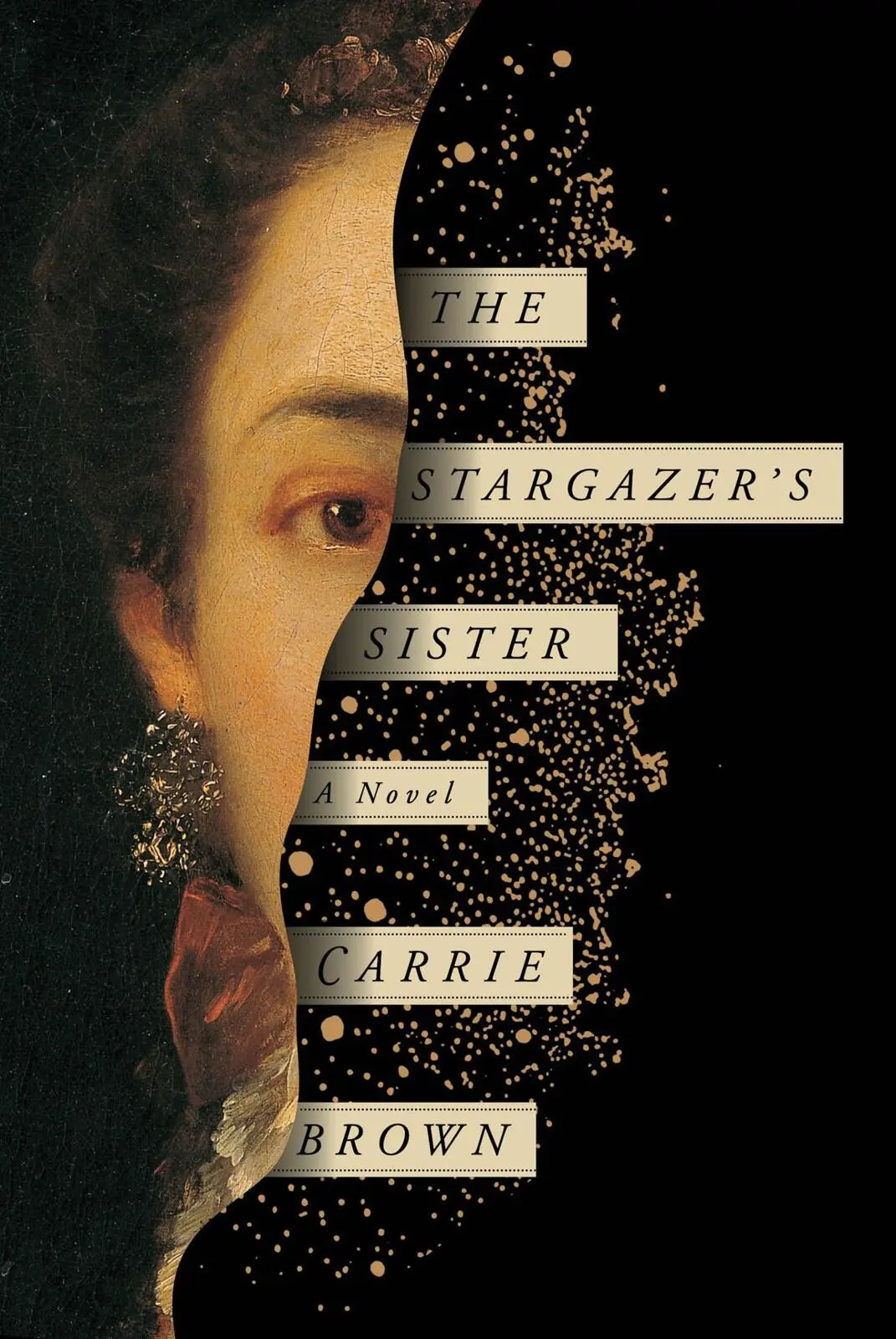
- Название:The Stargazer's Sister
- Автор:
- Издательство:Knopf Doubleday Publishing Group
- Жанр:
- Год:2016
- ISBN:нет данных
- Рейтинг книги:5 / 5. Голосов: 1
-
Избранное:Добавить в избранное
- Отзывы:
-
Ваша оценка:
The Stargazer's Sister: краткое содержание, описание и аннотация
Предлагаем к чтению аннотацию, описание, краткое содержание или предисловие (зависит от того, что написал сам автор книги «The Stargazer's Sister»). Если вы не нашли необходимую информацию о книге — напишите в комментариях, мы постараемся отыскать её.
a beautiful new period novel — a nineteenth-century story of female empowerment before its time — based on the life of Caroline Herschel, sister of the great astronomer William Herschel and an astronomer in her own right. This exquisitely imagined novel opens as the great astronomer and composer William Herschel rescues his sister Caroline from a life of drudgery in Germany and brings her to England and a world of music-making and stargazing. Lina, as Caroline is known, serves as William’s assistant and the captain of his exhilaratingly busy household. William is generous, wise, and charismatic, an obsessive genius whom Lina adores and serves with the fervency of a beloved wife. When William suddenly announces that he will be married, Lina watches as her world collapses.
With her characteristically elegant prose, Brown creates from history a compelling story of familial collaboration and conflict, the sublime beauty of astronomy, and the small but essential place we have within a vast and astonishing cosmos. Through Lina’s trials and successes, we witness the dawning of an early feminist consciousness, of a woman struggling to find her own place among the stars.
The Stargazer's Sister — читать онлайн бесплатно полную книгу (весь текст) целиком
Ниже представлен текст книги, разбитый по страницам. Система сохранения места последней прочитанной страницы, позволяет с удобством читать онлайн бесплатно книгу «The Stargazer's Sister», без необходимости каждый раз заново искать на чём Вы остановились. Поставьте закладку, и сможете в любой момент перейти на страницу, на которой закончили чтение.
Интервал:
Закладка:
He has recommended that she copy phrases in her journal from time to time to practice her hand. That night before going to sleep, she opens one of the many books gathered at her bedside. She reads, even after only a few months, with improved command now. For her copybook she searches for sentences whose meanings not only do not elude her but also hold some significance for her.
Great joy, she reads, especially after a sudden change of circumstances, is apt to be silent, and dwells rather in the heart than on the tongue.
She copies these words, blowing on the page to dry the ink. She thinks about her joy. It is a great joy, whatever the complications.
Then she blows out the candle.
—
AGAIN AND AGAIN in these early months William mentions Sir Henry Spencer. Lina learns that he owns a farm in Hampshire and, like William, is an avid astronomer, as well as a physician. He is apparently a frequent visitor to Bath, where his mother, a widow, enjoys the company of society, but Henry himself is rather shy, William reports. He sees patients, though mostly those men and women and children who belong to his estate. He prefers to spend his free hours at home at the telescope rather than at parties and balls. He is also an excellent horseman; on several occasions that fall he has loaned William a horse for his travels, sending a well-dressed groom from the family’s stable in Bath.
Lina looks forward to meeting this Henry Spencer, this man who appears to revere William as she does.
Through Henry’s influence, William has been elected to join the Bath Literary and Philosophical Society. She has already copied one of William’s papers—“On the Utility of Speculative Enquiries”—for the edification of this group.
“Oh, you will admire Henry,” William assures her. “His mind is very quick.”
A quick mind, Lina has learned, is William’s highest praise.
Yet Henry Spencer does not come. His mother has been indisposed, William reports, and Henry has not wanted to leave her. He has had trouble with flooding on some of his fields. He is engaged in the purchase of some new horses. He has had difficulty with his farm manager. There has been an outbreak of measles in the village, and he has had business dealings in London. Every time Lina asks about him, there is some reason he will not visit them in Bath.
“You are very interested in Henry Spencer,” William comments once.
She colors. “I am not,” she says. “It is only that he is a friend to you.”
But she knows that it is also true that she has imagined Henry will be a friend to her as well.
Other than Stanley and the men working for William, she has met few people since her arrival in Bath. She avoids her brother’s music pupils, hiding in the kitchen when they come to the house, to his annoyance. She fears she will be forced into social circumstances during the approaching holidays. But she wants an intimate, she knows, not meaningless polite chatter. Henry Spencer with his quick mind and his affection for William might be an intimate.
She has purchased material for new dresses at last, but she has had no time to sew for herself. She will not show herself to the finely attired young women who come for singing lessons, often accompanied by their mothers, until she can put forth a better appearance, she decides. But to make a new dress requires hours, and there is always something else to do.
She is aware of their neighbors, of the glances of passersby who surely are acquainted with her brother. She wonders what they think of the handsome organist and choirmaster sitting all night at the telescope in the center of the street with his sister at his side. To those who wake from sleep and cross to the window to close the curtains against the moonlight, William and his huge telescope mounted on its rolling platform must seem, she imagines, like a strange invention from a dream.
—
OFTEN AFTER HIS HOURS at the telescope, William likes to sit in bed working for another hour or so. When he deems her proficient enough in English, he asks her to join him and to write as he speaks, because then he can be drawing or writing something else at the same time.
“How can your mind do two things at once?” she says to him.
“Two?” he says. “Why not three or four?”
To sustain them she goes down to the kitchen and heats a basin of milk or barley water. She sits beside him on the bed. He drinks and talks. He spills milk on the sheets.
Her eyelids droop.
“You are asleep,” William chides. “Wake up.”
He likes to read aloud to her from his transactions, the conclusions he is reaching, the assumptions he is making, as if by hearing the sound of his voice advancing his arguments, he can come to a greater understanding of his own mind: he is trying to calculate the height of the lunar mountains by measuring their shadows. He is obsessed with attempting to determine a method for measuring the distance between stars, information he is certain will help him begin to approach a correct scale of the universe. He is eager to prove the existence of some form of life on the moon or the other planets. She understands during these nights that it does not matter that he speaks to her, only that the ideas in his head need a voice.
All the rest of the world is asleep, she thinks. She and William are the only people on earth.
His shoulder beside her is warm.
She cannot help it. She is so tired.
When she wakes in the morning, William already gone and the sheets beside her cold, she is aware that he has allowed her to spend the whole night at his side.
—
ONE NIGHT, William retires early, after only a few hours at the telescope. Clouds have moved in, cutting short their viewing, and they are both weary. William has been working on a symphony, along with his usual labors, and Lina is glad to see him agree to climb the stairs to bed at midnight. Yet she feels unusually alert and restless.
She goes to the kitchen for the fire’s warmth. She has begun to develop greater facility with the lamp-micrometer, the device William has built to arrive at more precise measurements of double stars he sees through the telescope. A flat wooden disk, three feet in diameter, the micrometer has mounted on it two oil lamps inside separate tin boxes; each box is pierced with a single pinhole and situated on an arm that can be rotated on the disk. At the telescope, William sights two stars and then adjusts the boxes on the arms and moves the arms on the disk so that the pinpricks of light emanating from the boxes appear identical in orientation and separation to the two stars seen through the telescope. From night to night it is Lina’s job to measure the changing separation of the illuminated pinholes using a string stretched between the boxes. Then she must perform calculations to deduce the true angular separation of the two stars from the measured distance between the two boxes. The calculations are time-consuming, and in the beginning her mind is slow-moving.
Yet this evening it is as if the formulas have become second nature to her; she does not have to refer to them again and again to remember them. She makes coffee for herself, pulls the table close to the fire. By two a.m. — in just over an hour — she has all the evening’s observations fully calculated and recorded. Already with the fourteen-foot telescope William has been able to see much more in the sky than anyone before him; the number of double stars in their atlas increases weekly.
She goes upstairs to slide the papers under William’s door, holding her boots in her hand. She likes imagining what he will think when he sees what she has been able to do.
The next morning William looks up at her when she comes into the dining room with tea for him.
Читать дальшеИнтервал:
Закладка:
Похожие книги на «The Stargazer's Sister»
Представляем Вашему вниманию похожие книги на «The Stargazer's Sister» списком для выбора. Мы отобрали схожую по названию и смыслу литературу в надежде предоставить читателям больше вариантов отыскать новые, интересные, ещё непрочитанные произведения.











Обсуждение, отзывы о книге «The Stargazer's Sister» и просто собственные мнения читателей. Оставьте ваши комментарии, напишите, что Вы думаете о произведении, его смысле или главных героях. Укажите что конкретно понравилось, а что нет, и почему Вы так считаете.