A. Barrett - Blackass
Здесь есть возможность читать онлайн «A. Barrett - Blackass» весь текст электронной книги совершенно бесплатно (целиком полную версию без сокращений). В некоторых случаях можно слушать аудио, скачать через торрент в формате fb2 и присутствует краткое содержание. Год выпуска: 2016, ISBN: 2016, Издательство: Graywolf Press, Жанр: Современная проза, на английском языке. Описание произведения, (предисловие) а так же отзывы посетителей доступны на портале библиотеки ЛибКат.
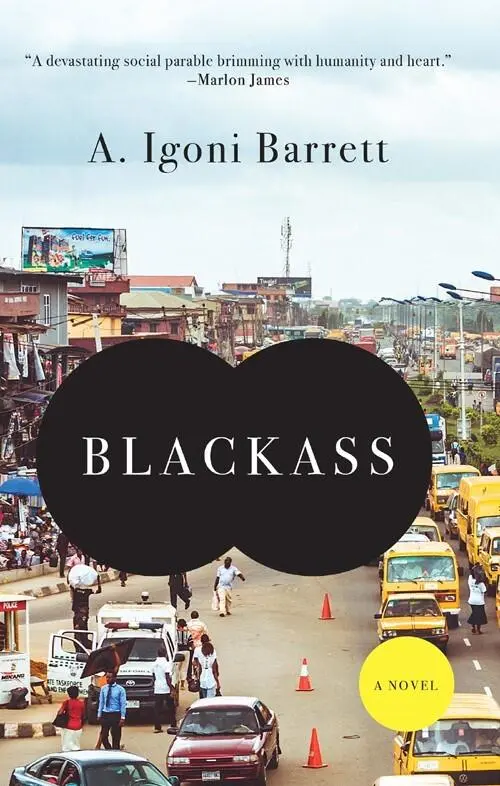
- Название:Blackass
- Автор:
- Издательство:Graywolf Press
- Жанр:
- Год:2016
- ISBN:9781555979263
- Рейтинг книги:4 / 5. Голосов: 1
-
Избранное:Добавить в избранное
- Отзывы:
-
Ваша оценка:
Blackass: краткое содержание, описание и аннотация
Предлагаем к чтению аннотацию, описание, краткое содержание или предисловие (зависит от того, что написал сам автор книги «Blackass»). Если вы не нашли необходимую информацию о книге — напишите в комментариях, мы постараемся отыскать её.
A. Igoni Barrett's
is a fierce comic satire that touches on everything from race to social media while at the same time questioning the values society places on us simply by virtue of the way we look. As he did in
, Barrett brilliantly depicts life in contemporary Nigeria and details the double-dealing and code-switching that are implicit in everyday business. But it's Furo's search for an identity-one deeper than skin-that leads to the final unraveling of his own carefully constructed story.
Blackass — читать онлайн бесплатно полную книгу (весь текст) целиком
Ниже представлен текст книги, разбитый по страницам. Система сохранения места последней прочитанной страницы, позволяет с удобством читать онлайн бесплатно книгу «Blackass», без необходимости каждый раз заново искать на чём Вы остановились. Поставьте закладку, и сможете в любой момент перейти на страницу, на которой закончили чтение.
Интервал:
Закладка:
13:13 | Ooh yes please! RT ‘@_igoni: Tobra, @pweetychic_tk. I’ll buy you ice cream. Least I can do after you provided my Sunday entertainment.’
13:14 | @_igoni I’m at the Winners Chapel on Akowojo Road in Egbeda.
13:49 | Just got off the phone with my new Twitterpal @_igoni … #crazyexcited
13:57 | @_igoni arrives! twitpic.com/bzBvv3h
15:43 | Eating ice cream with @_igoni at The Palms in Lekki! twitpic.com/bzFu2dl
20:03 | Today’s stupid rain couldn’t spoil all the fun I had with @_igoni! Now heading home in one of those new metro cabs! #enjoyment
20:14 | 4,743 RTs & 86 favs of my first-ever tweet about #Furo (You guys ROCK!!!)
21:37 | Mum needs to chillax! I can’t go out again because Furo got lost???
22:31 | I’m thinking about the long talk @_igoni and I had about #Furo today.
22:35 | @_igoni And imiete for the @ColdStone ice cream!!!
23:22 |:o))) RT ‘@_igoni: @pweetychic_tk The pleasure was mine. See you again soon.’
23:45 | Ooooh just 2 followers short of 7,000!!!
23:46 | *staggers across bedroom * *flops on bed * *hugs teddy bear *#happy #goodnight
Five days after I found her on Twitter, I got a chance to meet @pweetychic_tk. I was conflicted about that move — should the artist probe too deeply into the mundane lives of their characters — but grabbed the chance anyway. We met by arrangement at the gate of her church in Egbeda on an overcast Sunday afternoon after the close of service and, at her suggestion, I took her to The Palms in Lekki for ice cream. Her name was Tekena. (When she asked what she should call me, @_igoni or just plain Igoni, I joked, ‘Call me Morpheus.’)
BLACKASS
‘I scarcely dared to look to see what it was I was.’
— Elizabeth Bishop, In the Waiting RoomOn Thursday, 21 June, Syreeta gave Furo an old phone that she no longer used, and after she loaded it with airtime, she made a call to someone she knew at the passport office in Ikoyi. A new passport would cost nine thousand naira and take three months to process, but through her contact it would take three days and cost seventeen thousand. Furo didn’t have the money, and he said so in a voice shocked into loudness after hearing Syreeta say into the phone, ‘We’ll come tomorrow,’ but she shushed him with a finger pressed to her lips, then muffled the phone against her chest and whispered to him, ‘At least see the man first, get the application form.’ Furo shut up in agreement, and on Friday morning she drove him to the passport office, parked the car by the gate, and handed him an unsealed envelope. ‘That’s twenty thousand,’ she said, and when his outpourings of gratitude had dragged on too long, she interrupted, ‘Go on. The man is waiting.’
The arrangement was for Furo to wait by the flagpole at the passport office entrance until Syreeta’s contact came to fetch him. Easy instructions to follow: so easy that Furo dreaded the difficulties that must arise. It seemed to him imprudent, provoking — a clear-cut case of trouble dey sleep, yanga go wake am — to walk into the lair of immigration officials and stand under the Nigerian flag. But the previous day, after the set-up phone call, when he disclosed his misgivings to Syreeta, she had laughed them off. Her confidence only served to bolster his doubts, which grew even bigger after he got down from the car and watched her drive off to her appointment at the beauty salon. But he had no time to dwell on his superstitions, as his appearance had caused a tidal wave of excitement in the horde of informal agents, the hustlers, young men and the odd woman who rushed about offering help to everyone who approached. When this crowd fell on him with their frenzied cawing, their begging stares and smarmy smirks, he hurried forwards with his hands guarding his pockets and his lowered head shaking no until he entered the gate of the passport office, through which none of the hustlers ventured. After he halted beside the flagpole, he placed the call. ‘It’s Syreeta’s friend. I’m here, under the flag,’ he said into the phone, and the man grunted in acknowledgement, then ended the call. Furo glanced around, searching for a face that matched that voice. The man’s number was stored in the phone as Passport Man. Furo had asked Syreeta for his real name, but she didn’t know it and neither did her friend who had recommended his services to her. For safety from sting operations and disgruntled customers, Furo supposed. Another reason to worry.
The passport office comprised two long rows of office blocks whose patios were sealed off by wrought-iron bars. Immigration officials in khaki uniforms marched down the patios and into the open doorways of the front office block, through which Furo could see desks and queues of people. A man, a uniformed officer, emerged from one of the doorways. After staring in Furo’s direction for meaningful seconds, he lifted his nametag from around his neck, stowed it in his trouser pocket, and started forwards. Though he looked younger than Furo had imagined from the voice on the telephone, he had to be Passport Man. This was confirmed when he called out from several paces away, ‘Wariboko?’ At Furo’s nod he showed no emotion, and on reaching his side, he said, ‘Come with me.’ He led Furo out through the front gate, and after calling over a sly-faced man from the throng of informal agents, he told Furo, ‘Go with him.’
Furo trailed the agent to a plywood shack by the fence of the passport office. On the shack’s doorstep a pass-my-neighbour generator coughed out fumes, which, over time, had blackened the front wall. The cramped, smoke-darkened interior held a laminating machine, an inkjet printer, a bulky photocopier, an electronic binder, and a desktop computer atop an old rickety table. The agent stopped at the table, selected a sheet from the papers strewn across it, then pulled a biro from his pocket and bent down in preparedness to write. With a frown of concentration on his upturned face, he asked Furo his surname.
‘Wariboko,’ Furo answered.
‘Abeg spell it for me.’
Furo extended his hand for the biro. ‘Let me write it.’
‘No,’ said the agent. ‘Just spell.’
Furo spelled out his surname, and after the next question, his first name, too.
‘What is your place of birth?’
‘Port Harcourt.’
‘Spell Harcourt. I have forget how many Rs.’
With a groan that didn’t pass his lips, Furo did as asked.
‘What is your date of birth?’
‘Six, May, 1979.’
‘You’re a male,’ the agent stated, and ticked that section. Glancing up, he asked, ‘Do you know your state of origin?’
‘Rivers,’ Furo said.
‘What of your local government area?’
Furo had had enough. ‘I can read,’ he said curtly. ‘Let me fill the form myself.’
The agent straightened up as if his back was cramped, then met Furo’s gaze and said: ‘Don’t worry, oga, relax yourself. This nah my work, I know what I am doing. The smallest mistake can spoil your passport finish. Let me handle everything so your money will not waste.’ He bent again over the table. ‘Oya, talk now, what is your local government?’
‘Akuku Toru,’ Furo replied in a resigned voice. He understood now that the agent knew his job indeed. For Furo, it was too much effort to resist the haggling etiquette of jobbery.
‘I know that one spelling,’ the agent responded, and wrote it out before asking, ‘What is the name of your guarantor?’
Furo stared in puzzlement. ‘What do you mean by guarantor?’
In a voice of gloating, the agent said, ‘See what I was saying! That’s why I’m doing the form for you. Nah small things like this wey fit scatter your application.’ He waited for Furo to stew in his ignorance a few more seconds before he explained: ‘A guarantor is somebody who will guarantee you’re Nigerian. No be just anybody o, it must be an adult who has a good job. But no worry yourself, leave am to me, I go take care of that.’
Читать дальшеИнтервал:
Закладка:
Похожие книги на «Blackass»
Представляем Вашему вниманию похожие книги на «Blackass» списком для выбора. Мы отобрали схожую по названию и смыслу литературу в надежде предоставить читателям больше вариантов отыскать новые, интересные, ещё непрочитанные произведения.








Обсуждение, отзывы о книге «Blackass» и просто собственные мнения читателей. Оставьте ваши комментарии, напишите, что Вы думаете о произведении, его смысле или главных героях. Укажите что конкретно понравилось, а что нет, и почему Вы так считаете.