Harry Parker - Anatomy of a Soldier
Здесь есть возможность читать онлайн «Harry Parker - Anatomy of a Soldier» весь текст электронной книги совершенно бесплатно (целиком полную версию без сокращений). В некоторых случаях можно слушать аудио, скачать через торрент в формате fb2 и присутствует краткое содержание. Год выпуска: 2016, ISBN: 2016, Издательство: Faber & Faber, Жанр: Современная проза, на английском языке. Описание произведения, (предисловие) а так же отзывы посетителей доступны на портале библиотеки ЛибКат.
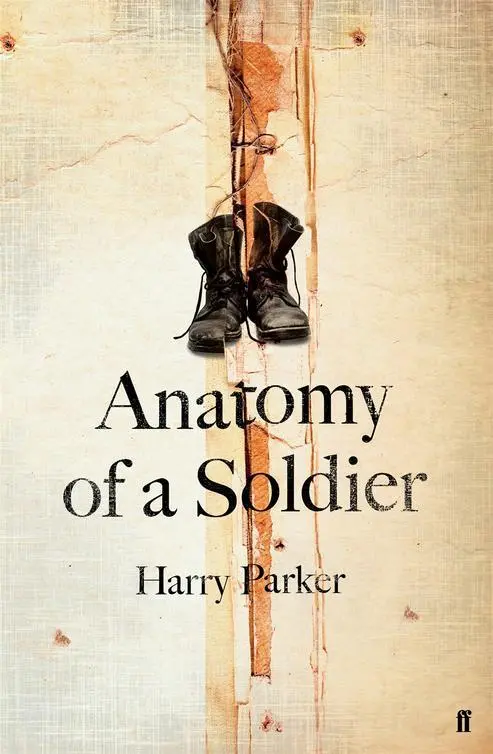
- Название:Anatomy of a Soldier
- Автор:
- Издательство:Faber & Faber
- Жанр:
- Год:2016
- ISBN:9780571325849
- Рейтинг книги:5 / 5. Голосов: 1
-
Избранное:Добавить в избранное
- Отзывы:
-
Ваша оценка:
Anatomy of a Soldier: краткое содержание, описание и аннотация
Предлагаем к чтению аннотацию, описание, краткое содержание или предисловие (зависит от того, что написал сам автор книги «Anatomy of a Soldier»). Если вы не нашли необходимую информацию о книге — напишите в комментариях, мы постараемся отыскать её.
We see them not as they see themselves, but as all the objects surrounding them do: shoes and boots, a helmet, a trove of dollars, a drone, that bike, weaponry, a bag of fertilizer, a medal, a beer glass, a snowflake, dog tags, an exploding IED and the medical implements that are subsequently employed.
Anatomy of a Soldier is a moving, enlightening and fiercely dramatic novel about one man's journey of survival and the experiences of those around him. Forty-five objects, one unforgettable story.
'This is a brilliant book, direct from the battle zone, where all the paraphernalia of slaughter is deployed to tell its particular and savage story.' Edna O'Brien
'A tour de force. In this brilliant and beguiling novel Harry Parker sees the hidden forces that act on the bodies and souls of combatants and non-combatants. . It feels like war through the looking glass but it is utterly real.' Nadeem Aslam
Anatomy of a Soldier — читать онлайн бесплатно полную книгу (весь текст) целиком
Ниже представлен текст книги, разбитый по страницам. Система сохранения места последней прочитанной страницы, позволяет с удобством читать онлайн бесплатно книгу «Anatomy of a Soldier», без необходимости каждый раз заново искать на чём Вы остановились. Поставьте закладку, и сможете в любой момент перейти на страницу, на которой закончили чтение.
Интервал:
Закладка:
Kushan Hhan let the silence fill and listened to the water running in the channels through his garden.
Suddenly the captain started talking to his translator. He seemed to mean well but was impatient. He would want to do business quickly — like everything else they did. Fix it and then move on. Build, repair, leave. He looked straight at Kushan Hhan as the interpreter spoke.
‘He is very interested in the school, if you would like to talk about it?’ he said.
Kushan Hhan sighed and put his cup back down on the tray. ‘Ask the captain how many children he has.’
The two men spoke, then the interpreter said, ‘He is not yet married, but hopes that one day he might be.’
‘Not married? How old is he?’
‘I told him you were surprised,’ the interpreter said after speaking to the captain again. ‘He is twenty-five. He has yet to meet the right woman. Their traditions are very different.’
‘His father has not found a woman for him?’
‘He says he wishes it was that simple.’ The interpreter smiled. ‘He has to do all the hard work himself.’ The young man grinned as his words were translated.
‘It should be simple,’ Kushan Hhan said, ‘but rarely is. Still, it makes for strong families.’ He pointed at his son. ‘This is my son, Faridun. He is seventeen. I will have to find him a bride soon.’
Faridun sat by the window. He did not smile but stared at the captain’s strange clothes and the armour that encased him.
‘The captain says he likes your garden,’ the interpreter said. ‘It is the most beautiful thing he has seen since he has been here. It reminds him of his father’s garden.’
‘Your father has a garden like this?’ Kushan Hhan said.
‘The captain says it helps his father think after work.’
‘Yes.’ Kushan Hhan looked out into the courtyard. ‘It is the one thing I have some control over here. And who my children marry, of course.’
The young man smiled at the translation.
They continued to talk about the garden, the surrounding fields and what the farmers were growing. The captain asked about the harvest and how good it had been. Then they talked of family and the men Kushan Hhan was close to. They discussed the village and how the market was doing and he told the soldier how the bombs under the road made everything difficult for them.
The captain fidgeted on me and had to stretch out his legs. My owner smiled at his discomfort and suggested he should get used to sitting on the floor. He could tell the man wanted to leave; without his weapon he was worried and he glanced at his watch and then at the soldier guarding the door.
So Kushan Hhan told him about the school.
‘The building has been destroyed and it is too difficult to rebuild without any security,’ he said. ‘I have tried, but I lack the support of the other families. They feel threatened.’
‘The captain understands,’ the interpreter told him. ‘He will do what he can to help but he is aware 0f the difficulties. He feels the school is important for the area. He has funds.’
Kushan Hhan looked down at me and rubbed my pile. ‘It is always about money.’ He was angry. ‘Funds do not keep them from beating the children who attend the school, or ripping out doors and windows, or setting fire to the roof. You think dollars will solve all our problems.’
‘He says they will do everything they can. He understands it is not easy for you. But we must be going soon or our journey back to the base will be more dangerous. He thanks you for the tea,’ the interpreter said, putting his cup down on me.
‘Tell him that he will walk out of here, back to his base, and before sunset I will be visited by them. They will come in here, sit where he has been sitting and ask me what the soldier wanted and what I said. Tell your captain that.’
The soldier looked at him and spoke slowly to his interpreter.
‘He says he hopes you have not taken too grave a risk.’
‘We will talk more of the school when we next meet,’ Kushan Hhan said. ‘If he is still here and it is not some other captain.’
‘He hopes he can continue to talk to you. Captain Tom says he realises how hard it is for you to invite him into your home and he is thankful,’ the interpreter said.
‘For each time I speak to a captain or a major like him, and hear their promises about security and education and bridges and new roads, about money, I have to speak to the insurgents five times.’ Kushan Hhan stood up. ‘The insurgents come here to tell me how I should lead my people and to threaten me and my family. They will punish me for inviting you in here today.’
‘I understand,’ the interpreter said.
‘But does he understand?’ Kushan Hhan pointed at the captain, then called over his shoulder, ‘Lalma, come here.’
There were whispers from behind the back door and then Lalma walked in. She stood next to him, her bare feet on me. She glanced up at the soldier, then looked down and pulled her green headscarf up to her eyes. Faridun shifted in the corner.
‘This is my daughter. She is to be married,’ Kushan Hhan said. ‘They have threatened to hurt her if I talk to these foreigners.’
He held the soldier’s gaze as the translator explained what he had said.
The captain nodded and put his equipment and helmet back on. He looked at Kushan Hhan with his beautiful daughter standing beside him and said he hoped they would meet again soon. Kushan Hhan watched him pick up his rifle and step out into the courtyard; he looked aggressive again with his eyes shadowed by his helmet and his weapon at his side. He wondered if the man’s father really did have a garden like his.
When they had gone his wife came in through the back door and hugged Lalma close to her. She watched him silhouetted by the window. ‘How was it, Kushan?’
‘You know how it was, Aadela,’ he said softly. ‘You were listening to every word.’
‘I thought it went well. Perhaps they might help us — maybe they do have money?’
‘Maybe,’ he said.
‘And you didn’t promise them anything, Kushan. I think Hassan will understand that you had no choice.’
Kushan Hhan wasn’t sure that Hassan would understand and he walked across me and went to sit on the veranda and look at his garden.
25
I had been on her table for over a week. She’d tried to write on me but never got beyond Dear Tom .
She was back now, leaning over me and reflected in the mirror. Yawning, she put on her makeup, brushed her hair and tied it back. She slipped her earrings in and glanced down at me and then out of the window at the rusted blue gas-storage tower by the park beyond the flats. A train cut through the rooflines and the bin truck’s lights flashed as it crawled up the wet street.
She felt excited whenever she thought of him and how she’d smiled at him when they met. They had talked but other friends were there too and he wasn’t interested, so they’d circled around the party at a distance — she couldn’t stop looking at him. He won’t want to hear from me, she thought. He was abroad and wouldn’t be back for months. But he had smiled back and lingered near her before leaving with his mates.
And then she picked up the biro and started to write. She wrote fast and the pen looped across me. She smiled once and put the end of the pen to her mouth before turning me over and continuing down my other side. When she had nearly covered me, she paused and then wrote: With love from Anna. x
She looked at her watch and rushed to fold me in three. Her tongue licked my tabs, wetting my glue, and she pressed down my edges. Then she wrote his rank, name and address on the front of me. It occurred to her how strange it was that the four-digit number could deliver me all the way to where he was.
Читать дальшеИнтервал:
Закладка:
Похожие книги на «Anatomy of a Soldier»
Представляем Вашему вниманию похожие книги на «Anatomy of a Soldier» списком для выбора. Мы отобрали схожую по названию и смыслу литературу в надежде предоставить читателям больше вариантов отыскать новые, интересные, ещё непрочитанные произведения.











Обсуждение, отзывы о книге «Anatomy of a Soldier» и просто собственные мнения читателей. Оставьте ваши комментарии, напишите, что Вы думаете о произведении, его смысле или главных героях. Укажите что конкретно понравилось, а что нет, и почему Вы так считаете.