György Spiró - Captivity
Здесь есть возможность читать онлайн «György Spiró - Captivity» весь текст электронной книги совершенно бесплатно (целиком полную версию без сокращений). В некоторых случаях можно слушать аудио, скачать через торрент в формате fb2 и присутствует краткое содержание. Год выпуска: 2015, Издательство: Restless Books, Жанр: Современная проза, на английском языке. Описание произведения, (предисловие) а так же отзывы посетителей доступны на портале библиотеки ЛибКат.
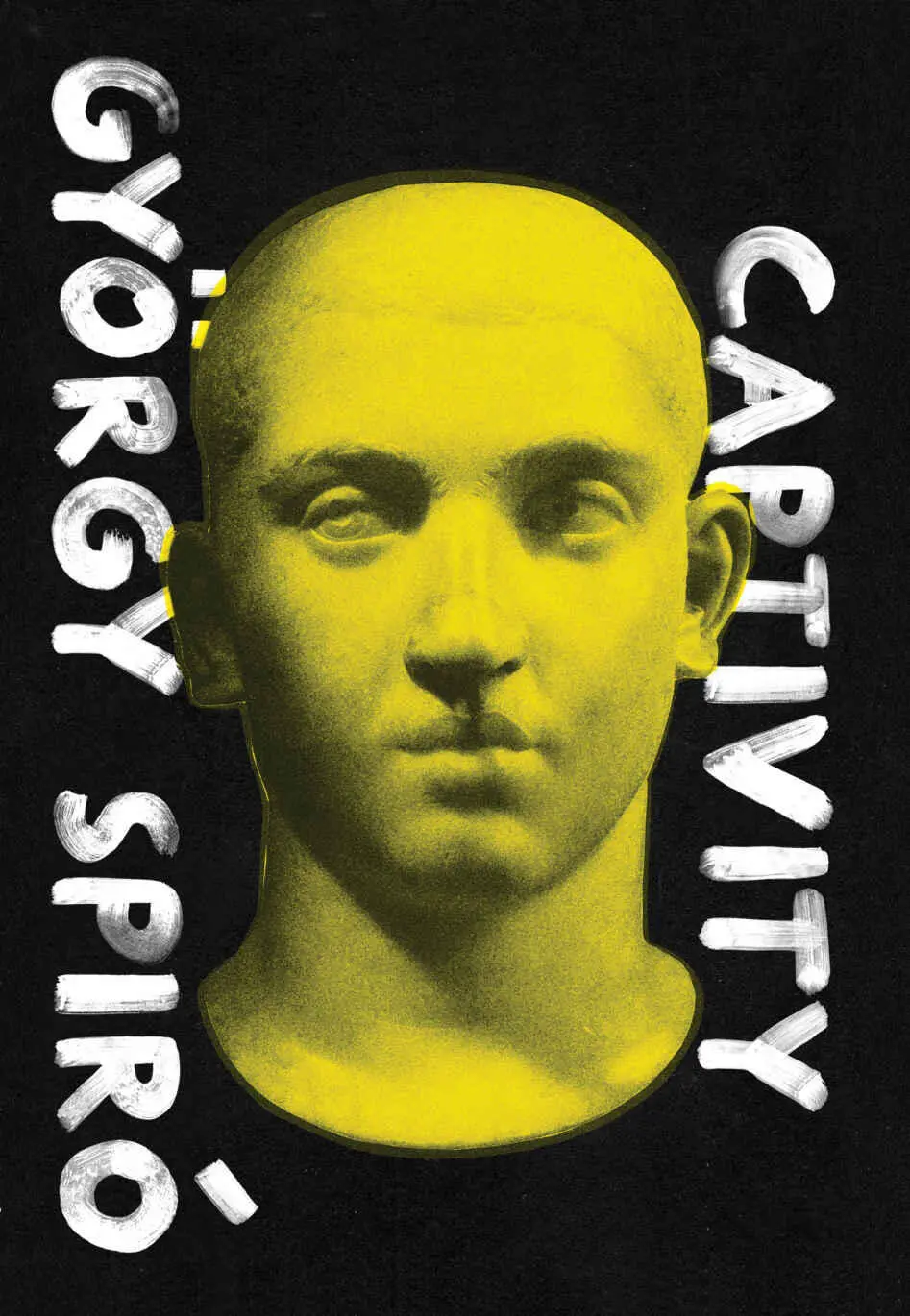
- Название:Captivity
- Автор:
- Издательство:Restless Books
- Жанр:
- Год:2015
- ISBN:нет данных
- Рейтинг книги:4 / 5. Голосов: 1
-
Избранное:Добавить в избранное
- Отзывы:
-
Ваша оценка:
Captivity: краткое содержание, описание и аннотация
Предлагаем к чтению аннотацию, описание, краткое содержание или предисловие (зависит от того, что написал сам автор книги «Captivity»). Если вы не нашли необходимую информацию о книге — напишите в комментариях, мы постараемся отыскать её.
A literary sensation in Hungary, György Spiró’s Captivity is both a highly sophisticated historical novel and a gripping page-turner. Set in the tumultuous first century A.D., between the year of Christ’s death and the outbreak of the Jewish War, Captivity recounts the adventures of the feeble-bodied, bookish Uri, a young Roman Jew.
Frustrated with his hapless son, Uri’s father sends the young man to the Holy Land to regain the family’s prestige. In Jerusalem, Uri is imprisoned by Herod and meets two thieves and (perhaps) Jesus before their crucifixion. Later, in cosmopolitan Alexandria, he undergoes a scholarly and sexual awakening — but must also escape a pogrom. Returning to Rome at last, he finds an entirely unexpected inheritance.
Equal parts Homeric epic, brilliantly researched Jewish history, and picaresque adventure, Captivity is a dramatic tale of family, fate, and fortitude. In its weak-yet-valiant hero, fans will be reminded of Robert Graves’ classics of Ancient Rome, I, Claudius and Claudius the God.
"With the novel Captivity, Spiró proved that he is well-versed in both historical and human knowledge. It appears that in our times, it is playfulness that is expected of literary works, rather than the portrayal of realistic questions and conflicts. As if the two, playfulness and seriousness were inconsistent with each other! On the contrary (at least for me) playfulness begins with seriousness. Literature is a serious game. So is Spiró’s novel.?"
— Imre Kertész, Nobel Prize — winning author of Fatelessness
"Like the authors of so many great novels, György Spiró sends his hero, Uri, out into the wide world. Uri is a Roman Jew born into a poor family, and the wide world is an overripe civilization — the Roman Empire. Captivity can be read as an adventure novel, a Bildungsroman, a richly detailed portrait of an era, and a historico-philosophical parable. The long series of adventures — in which it is only a tiny episode that Uri is imprisoned together with Jesus and the two thieves — at once suggest the vanity of human endeavors and a passion for life. A masterpiece."
— László Márton
“[Captivity is] an important work by yet another representative of Hungarian letters who has all the chances to become a household name among the readers of literature in translation, just like Nadas, Esterhazy and Krasznahorkai.… Meticulously researched.… The novel has been a tremendous success in Hungary, having gone through more than a dozen editions. The critics lauded its page-turning quality along with the wealth of ideas and the ambitious recreation of historical detail.”
— The Untranslated
“A novel of education and a novel of adventure that brings to life ancient Rome, Alexandria and Jerusalem with a vividness of detail that is stunning. Spiró’s prose is crisp and colloquial, the kind of prose that aims for precision rather than literary thrills. A serious and sophisticated novel that is also engrossing and highly readable is a rare thing. Captivity is such a novel.”
— Ivan Sanders, Columbia University
“György Spiró aspired at nothing less than (…) present a theory in novelistic form about the interweavedness of religion and politics, lay bare the inner workings of power and give an insight into the art of survival….This book is an incredible page turner, it reads easily and avidly like the greatest bestsellers while also going as deep as the greatest thinkers of European philosophy.”
— Aegon Literary Award 2006 jury recommendation
“What this sensational novel outlines is the demonic nature of History. Ethically as well as historically, this an especially grand-scale parable. Captivity gets its feet under any literary table you care to mention."
— István Margócsy, Élet és Irodalom
“This book is a major landmark for the year.”
— Pál Závada, Népszabadság
“It would not be surprising if literary historians were soon calling him the re-assessor and regenerator of the post-modern novel.”
— Gergely Mézes, Magyar Hírlap
“Impossibly engrossing from the very first page….Building on a huge volume of reference material, the novel rings true from both a historical and a literary point of view.”
— Magda Ferch, Magyar Nemzet
Captivity — читать онлайн бесплатно полную книгу (весь текст) целиком
Ниже представлен текст книги, разбитый по страницам. Система сохранения места последней прочитанной страницы, позволяет с удобством читать онлайн бесплатно книгу «Captivity», без необходимости каждый раз заново искать на чём Вы остановились. Поставьте закладку, и сможете в любой момент перейти на страницу, на которой закончили чтение.
Интервал:
Закладка:
A modern-day Ruth and Naomi, thought Uri. Or else I have dropped in a millennium earlier.
That thought had a lot of appeal.
His belly may have been aching, but he sat up and broke out into a loud laugh. The crones gave a start, pausing on all fours with their backsides pointed at Uri, but they did not turn around and look back; they were frozen still for a moment before they resumed inching forward as if nothing had happened. Like the chickens last night, they were not at all scared of him. Uri looked on them, delighted with the idea that they could look back on many, many generations of this simple, scanty existence.
What one saw here was something very ancient, something that could not be experienced in Rome. Maybe it had been worth the trip after all.
He also decided that he was not going to collect the gleanings; he would work. That had to pay something.
He stood up and peered, looking for the supervisor. He didn’t see him, but never mind, someone would set him on the right track.
After some indecisiveness, the supervisor took him on as a day laborer. Theo would not be given any money, but he would get lunch, though he would have to work for it until sunset.
He spent until the sun went down among women and children, binding the stalks that had been thrown on the ground into larger bundles, or sheaves as he learned they were called. The work required no expertise, but it was tiring. He noticed that the stalks cut up his palms and not those of the women. Perhaps they looked down on him, he imagined, because he was the only man among them, but he shrugged his shoulders: let them! Early that afternoon he really did get lunch like everyone else: two slices of barley bread dipped in vinegar. Two servants brought around the dish of vinegar, while a third sliced the bread as evenly as possible and, after dipping it in the vinegar, handed it to the next one.
Uri wolfed down the first slice he was given in just five bites. He burped loudly, and for a few seconds he felt content. He took the second slice more slowly and came to the conclusion that this was food he detested: it burned his tongue, his throat, and his stomach. He managed slowly to force it down but resolved that next time he would ask them not to dip the bread in vinegar. But how did the others cope with living off it from sunup to sundown?
By the time they finished work it was completely dark. Uri could see nothing at all, but he was guided by the women’s voices and exhalations as he stumbled home among them. The moon was out and shining to some extent, which was enough for them to see; without them Uri would have spent the night out in the field.
He felt an urge to defecate but did not dare to move aside, because by the time he was done they would be far away and he would never catch up.
Uri asked if they worked for their supper. At first they did not understand, and Uri thought he must be pronouncing the words incorrectly, but it wasn’t that: the question was meaningless. Of course they worked for dinner, they replied, when they finally grasped Uri’s question after the umpteenth time of being asked. Money? No, they did not get any money. The menfolk, yes; they received a daily wage and lunch. Bread and vinegar? Bread and vinegar. Nothing else? No, of course not; bread and vinegar was what they got.
“What sort of person is Master Jehuda ben Mordecai?” Uri inquired when they were close to the village, by now having to fight with all his might to hold back his bowels.
The women said nothing. A few of the girls gave evil laughs but said nothing either. Better I hadn’t asked, but then he put another question to them anyway.
“Is he a man of great knowledge?”
They were walking quietly in the dark into the village.
One of the women said, “He’s the master.”
The women then vanished among the mud-brick dwellings. Uri squatted and felt that he was spilling his guts onto the ground, with all his excrement voided in one fell swoop.
He could scarcely see a thing but nevertheless found his way to his host’s home at the first try. I’m not a lost person, he muttered under his breath and with some triumph, as he flailed with one hand to throw the chickens out of the coop to make room for himself to lie prone, flat on his belly, in their place.
On Thursday he woke of his own accord at daybreak. He did not wait for Jehuda to pull him out by the ankles but wriggled out backward, drank from the cistern, quickly gabbled the Sh’ma, and set off for the fields.
I’m even more soiled with chicken droppings than ever, he thought. Beelzebub, the lord of the flies, will find me not by sight but by smell alone; he was very pleased with himself at this new insight.
The supervisor told him that one of the plowmen had gotten sick and he should replace him.
“But I have no idea how to plow,” protested Uri glumly.
“You’ll learn,” said the supervisor.
He led Uri over to one of the pairs of oxen and showed him how the plowstaff should be held so that the plowshare bit into the soil, how the protruding end of the yoke should be grasped with the left hand, how the oxen were to be induced to start by thrusting it forward. The supervisor had a tough job stopping the oxen once they had set off, having to yell and pull back the yoke for a considerable time before they finally came to a stop.
“Right, now you,” said the supervisor.
Uri sat down behind the plow, grasped the stilt with his right hand and the beam with his left.
“That’s it,” the supervisor said encouragingly.
“Just a moment,” said Uri. “What pay do I get?”
“Your lunch,” said the supervisor.
“The men get pay as well,” Uri notified him knowledgeably.
“You’re not a man yet, Theo,” said the supervisor matter-of-factly.
Uri allowed the answer to sink in. There was some truth in it, as he had not yet paid half a shekel in taxes that year; that would only come next year, when he would be twenty years old.
“Fair enough,” he said, “but I ask that my bread not be dipped in vinegar.”
The supervisor pondered. He was plunged into thought for a long time, which suggested that the request was no simple matter.
“That’s not possible,” he declared finally, almost reluctantly. “The vinegar goes with it.”
Uri groaned quietly, then, with his left hand, pushed the rod on the yoke. The oxen did not respond, so Uri moved the rod more vigorously. The oxen reared.
“Shove the plow into the soil!” the supervisor yelled.
The pull from the oxen was so powerful that Uri all but fell flat on his face.
Uri tried to press the plowstaff down, and his right shoulder was wrenched, almost dislocating it.
“Shove down!” the supervisor shouted, striking Uri on the right hand with his staff.
The oxen, confused, began tossing their heads into each other and bellowing. They tried to run in opposite directions, and there was a tremendous crack; the plowstaff slipped out of Uri’s hand and fell on its side.
The supervisor howled and left.
Uri lay on the ground; his right arm was throbbing. He licked it; it was salty. He tried to move it but could not. He felt it swelling and puffing up; there would be no plowing with that arm that day. A sharp pain ran through his right shoulder; no plowing with that one either.
The plowmen gathered around and wailed.
“The yoke’s broken! The yoke’s broken!”
Uri sat up. His right hand was swollen, bleeding, and he was unable to move his right shoulder. He looked in amazement at the assembled throng of men and women screeching, “The yoke’s broken! The yoke’s broken!”
The same wail went up in Master Jehuda’s house from an elderly woman when Uri was helped in, a wet compress wrapped around his hand and shoulder. He was laid down on Jehuda’s own bed: “The yoke’s broken! The yoke’s broken!”
Читать дальшеИнтервал:
Закладка:
Похожие книги на «Captivity»
Представляем Вашему вниманию похожие книги на «Captivity» списком для выбора. Мы отобрали схожую по названию и смыслу литературу в надежде предоставить читателям больше вариантов отыскать новые, интересные, ещё непрочитанные произведения.







Обсуждение, отзывы о книге «Captivity» и просто собственные мнения читателей. Оставьте ваши комментарии, напишите, что Вы думаете о произведении, его смысле или главных героях. Укажите что конкретно понравилось, а что нет, и почему Вы так считаете.