György Spiró - Captivity
Здесь есть возможность читать онлайн «György Spiró - Captivity» весь текст электронной книги совершенно бесплатно (целиком полную версию без сокращений). В некоторых случаях можно слушать аудио, скачать через торрент в формате fb2 и присутствует краткое содержание. Год выпуска: 2015, Издательство: Restless Books, Жанр: Современная проза, на английском языке. Описание произведения, (предисловие) а так же отзывы посетителей доступны на портале библиотеки ЛибКат.
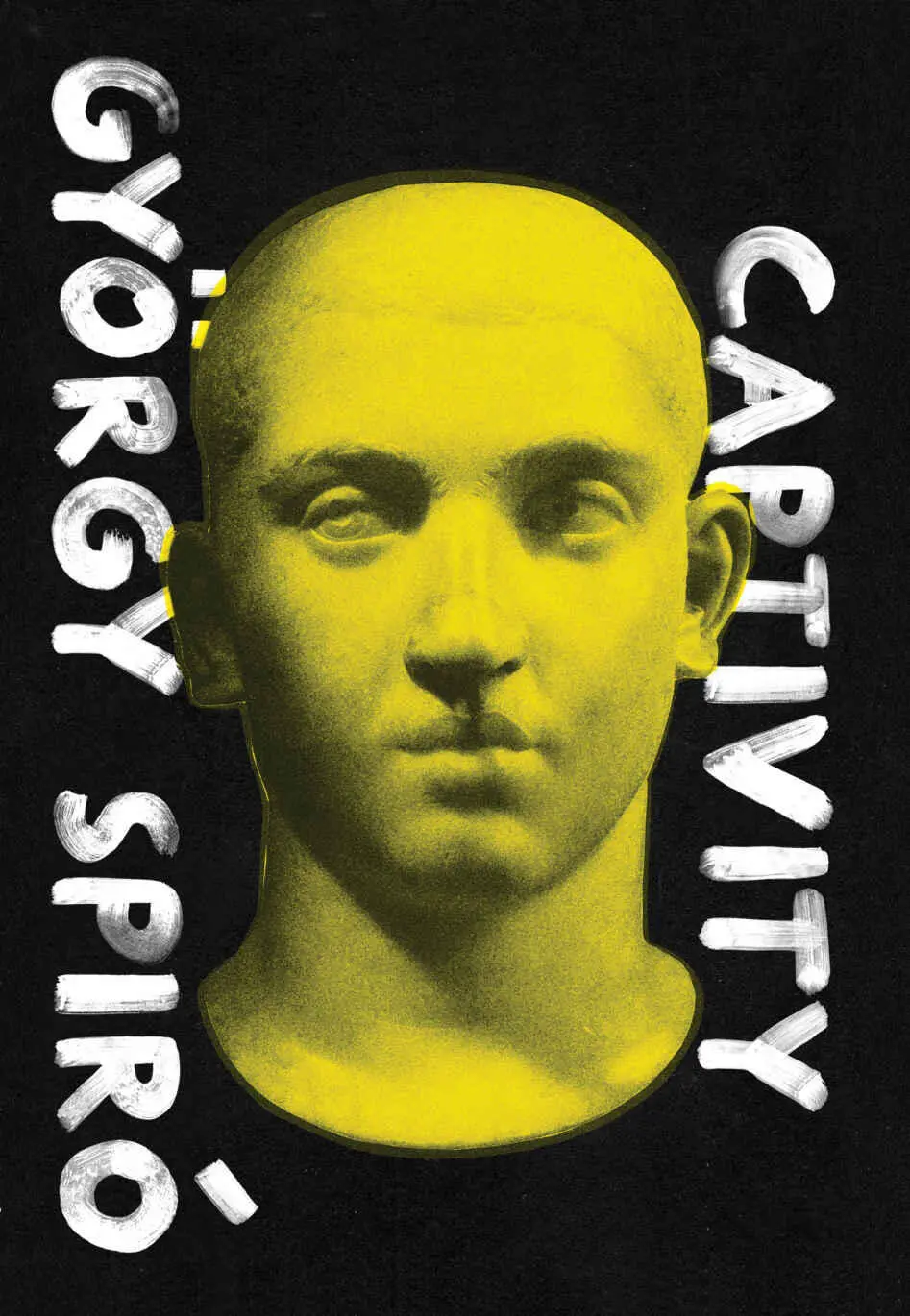
- Название:Captivity
- Автор:
- Издательство:Restless Books
- Жанр:
- Год:2015
- ISBN:нет данных
- Рейтинг книги:4 / 5. Голосов: 1
-
Избранное:Добавить в избранное
- Отзывы:
-
Ваша оценка:
Captivity: краткое содержание, описание и аннотация
Предлагаем к чтению аннотацию, описание, краткое содержание или предисловие (зависит от того, что написал сам автор книги «Captivity»). Если вы не нашли необходимую информацию о книге — напишите в комментариях, мы постараемся отыскать её.
A literary sensation in Hungary, György Spiró’s Captivity is both a highly sophisticated historical novel and a gripping page-turner. Set in the tumultuous first century A.D., between the year of Christ’s death and the outbreak of the Jewish War, Captivity recounts the adventures of the feeble-bodied, bookish Uri, a young Roman Jew.
Frustrated with his hapless son, Uri’s father sends the young man to the Holy Land to regain the family’s prestige. In Jerusalem, Uri is imprisoned by Herod and meets two thieves and (perhaps) Jesus before their crucifixion. Later, in cosmopolitan Alexandria, he undergoes a scholarly and sexual awakening — but must also escape a pogrom. Returning to Rome at last, he finds an entirely unexpected inheritance.
Equal parts Homeric epic, brilliantly researched Jewish history, and picaresque adventure, Captivity is a dramatic tale of family, fate, and fortitude. In its weak-yet-valiant hero, fans will be reminded of Robert Graves’ classics of Ancient Rome, I, Claudius and Claudius the God.
"With the novel Captivity, Spiró proved that he is well-versed in both historical and human knowledge. It appears that in our times, it is playfulness that is expected of literary works, rather than the portrayal of realistic questions and conflicts. As if the two, playfulness and seriousness were inconsistent with each other! On the contrary (at least for me) playfulness begins with seriousness. Literature is a serious game. So is Spiró’s novel.?"
— Imre Kertész, Nobel Prize — winning author of Fatelessness
"Like the authors of so many great novels, György Spiró sends his hero, Uri, out into the wide world. Uri is a Roman Jew born into a poor family, and the wide world is an overripe civilization — the Roman Empire. Captivity can be read as an adventure novel, a Bildungsroman, a richly detailed portrait of an era, and a historico-philosophical parable. The long series of adventures — in which it is only a tiny episode that Uri is imprisoned together with Jesus and the two thieves — at once suggest the vanity of human endeavors and a passion for life. A masterpiece."
— László Márton
“[Captivity is] an important work by yet another representative of Hungarian letters who has all the chances to become a household name among the readers of literature in translation, just like Nadas, Esterhazy and Krasznahorkai.… Meticulously researched.… The novel has been a tremendous success in Hungary, having gone through more than a dozen editions. The critics lauded its page-turning quality along with the wealth of ideas and the ambitious recreation of historical detail.”
— The Untranslated
“A novel of education and a novel of adventure that brings to life ancient Rome, Alexandria and Jerusalem with a vividness of detail that is stunning. Spiró’s prose is crisp and colloquial, the kind of prose that aims for precision rather than literary thrills. A serious and sophisticated novel that is also engrossing and highly readable is a rare thing. Captivity is such a novel.”
— Ivan Sanders, Columbia University
“György Spiró aspired at nothing less than (…) present a theory in novelistic form about the interweavedness of religion and politics, lay bare the inner workings of power and give an insight into the art of survival….This book is an incredible page turner, it reads easily and avidly like the greatest bestsellers while also going as deep as the greatest thinkers of European philosophy.”
— Aegon Literary Award 2006 jury recommendation
“What this sensational novel outlines is the demonic nature of History. Ethically as well as historically, this an especially grand-scale parable. Captivity gets its feet under any literary table you care to mention."
— István Margócsy, Élet és Irodalom
“This book is a major landmark for the year.”
— Pál Závada, Népszabadság
“It would not be surprising if literary historians were soon calling him the re-assessor and regenerator of the post-modern novel.”
— Gergely Mézes, Magyar Hírlap
“Impossibly engrossing from the very first page….Building on a huge volume of reference material, the novel rings true from both a historical and a literary point of view.”
— Magda Ferch, Magyar Nemzet
Captivity — читать онлайн бесплатно полную книгу (весь текст) целиком
Ниже представлен текст книги, разбитый по страницам. Система сохранения места последней прочитанной страницы, позволяет с удобством читать онлайн бесплатно книгу «Captivity», без необходимости каждый раз заново искать на чём Вы остановились. Поставьте закладку, и сможете в любой момент перейти на страницу, на которой закончили чтение.
Интервал:
Закладка:
Philo added tearfully that the emperor had even gone so far as to fulfill the plea that Flaccus be seized on the first day of the Feast of Booths.
“That is, if they couldn’t capture him on Rosh Hashanah, as we originally wished and suggested!”
By this noble gesture the emperor had given Jews the chance to continue to trust with good reason in the providence of the Eternal One.
He’s a sharp fellow, this Bassus, Uri supposed: he must have received a fair reward from Flaccus for collecting all the weapons in Egypt for him, and now he’ll get an even bigger reward. Who knows, he might even make it to the Praetorian Guard in Rome, but even if he doesn’t, he will have made his fortune anyway.
Uri chose not to ask why the alabarch’s private army had not marched in the Sector’s defense. Those 250 excisemen, armed to the teeth, along with the Jews, suitably organized, would have been able to fight successfully against the cudgel-carrying Greek mob and there would have been no occasion for a Sector at all.
Uri did ask about certain details of Flaccus’s capture, and Philo unsuspectingly told him what he knew. Uri did some mental counting back and ascertained that Flaccus was not captured at dawn of the Feast of Booths but a day before, only the news had been withheld so that it would have more impact on Jews. On that one day hundreds had died. He did not ask anything more but stretched out voluptuously on his bed.
Theocritus and Democritus, my dear extramural friends among the XXIInds, you fed me to no avail! I shit on standing witness for you since you’ve been given an amnesty anyway, as have others who were much viler than you were.
Philo made a note of Uri’s reticent account, he made notes about the exaggerations in the accounts of those who survived the Bane out of the Sector. Those who’d survived flocked to the alabarch’s unscathed palace and demanded revenge, amends, legal redress, retraction of Flaccus’s Judaeophobic decree, punishment of the Greeks, punishment of the legions, and compensation for lost income. They also recounted horror stories about one another’s deeds during the Bane, their accounts sparing no detail in their prolixity. And of course they painted portraits of their own heroic acts: their unwavering resistance, how they had defended their synagogues as long as they were able to defend them, how many heathens they had strangled with their bare hands, and so on, now that the peace they had mutually longed for so desperately just a few days ago had broken out.
Of the forty-eight elders who had been arrested outside the Sector only thirty-three were left alive, the others having died of the scourging that they suffered for the entertainment of the audience in the amphitheater. It was unprecedented for Jewish social superiors to be humiliated by being punished at the hands of the lowliest slaves! Philo made a note of this for himself, underlining it as one of the most serious crimes. Andron, Tryphon, and Euodos survived. They were not even taken to the amphitheater to be flogged; instead they were confined with the other elders in the Akra, where, to make up for any omissions by the Greeks, they were given a sound thrashing by their cell mates because the cowards showed themselves to be ready to negotiate with Flaccus. Philo, however, noted down in such a manner as to indicate that they too were flogged by the Greeks. Also among those who survived was Nikolaeus, who had just arrived at the head of a delegation to the alabarch and looked, his dark eyes twinkling, at Uri, who smiled back sardonically and nodded, at which Nikolaeus nodded his acknowledgment. We could be good friends, thought Uri, but it was not to be.
The delegation was visiting the alabarch on the matter of what should happen with regard to Simchat Torah, the ninth and last day of Sukkot, when the annual reading of Torah is completed and recommenced, because observance of Rosh Hashanah, the Day of Atonement, and the Feast of Tabernacles had been omitted this year, the Jews having been left with not one undesecrated synagogue. Now that the Jews were free, what was it to be, given that the festival would soon be upon them?
The alabarch took the common-sense line that the Torah readings should be quickly made up, if necessary over more than one day, on the island of Pharos, the one sacred spot that was left to the Jews. The island of Pharos was doubly holy to Jews as that was the place where the translation of the Septuagint into Greek had been carried out, and that was also where the Jews who had been freed from the Sector were thronging now; sea water was cleaner than the cleanest water from wells or aqueducts, and Jews wanted to give thanks to the Creator for their lives, their deaths, for being the chosen people, and for their salvation, to give thanks to Him for not having deserted them even in the hour of darkest terror, and for making certain those of their loved ones who had been killed during the Bane would be resurrected at the End of Time, which was nigh, the clearest signal for that being the Bane itself. Henceforth until the End of Time they would best be able to give thanks on the island of Pharos, where — and this was no accident — there had been no massacre there even in the worst days of the Bane. The alabarch even went so far as to propose the incredible, almost awesome idea that from now on sacrificial offerings on the island might legitimately be made equally worthy to sacrificial offerings made at the Temple in Jerusalem; indeed, he proposed that a Temple should be erected next to the lighthouse, where it would also be permitted to make sacrificial offerings of animals and produce. On that point the alabarch said warily that it would be necessary to get Jerusalem’s agreement, but what was important now was Simhat Torah. Altogether just six Friday evening readings of the Torah had been missed, it should be possible to make this up within two days, and the three hundred thousand surviving Jews of Alexandria would fit on the island.
Others were opposed to this: it was not possible to assimilate that much of the Torah in one go, this was sacrilege, the Torah could not just be rattled off.
Nikolaeus said nothing, neither did Uri; they beheld those arguing on both sides, the bulging veins in their necks, the red faces, their hatred, their thinness — thin themselves and amicably loathing one another.
The alabarch decided that he would make a tour of the Sector, or at least what remained of it. Diligent Greek hands, so it was reported, had largely demolished the walls, and before long not a trace would be left. That day Uri twisted an ankle and was unable to accompany the alabarch to the Sector; he truly regretted that, demonstrating that his right ankle really was swollen, and Philo shook his head: Uri should rest the leg and get cold compresses applied to it. The alabarch clenched his teeth but said nothing, and proceeded on toward the Sector with his sons and elder brother without the hoped-for in-house tour guide, who had personally lived through the Bane there. The remaining elders ceremoniously received them and showed them around the Sector, showing where various events had taken place, where and how many had breathed their last, where the wife who had eaten pork had bled to death, where the Jews had broken through the wall, how they were suffocated to death with smoke and stoned; they showed where the crosses had stood at the north gate and where men had been broken on the wheels of oxcarts. The alabarch was appalled, Philo was appalled, Marcus was pale, Tija livid. Some of the elders had organized a protest against the despised, craven, perfidious alabarch and showered him with abuse to that effect, while the alabarch handed out menorahs as gifts; the heroes prayed and the massed crowd prayed, and Philo shed tears.
All of this was recounted to Uri later by Apollos, who, by chance, had been present, having decided that day to visit the Sector for the first time since the Bane. It turned out he had gotten through those weeks unscathed, if bored stiff, and he had even put on a bit of weight, hiding in the rear part of the house of Pamphilus, a Greek fellow student.
Читать дальшеИнтервал:
Закладка:
Похожие книги на «Captivity»
Представляем Вашему вниманию похожие книги на «Captivity» списком для выбора. Мы отобрали схожую по названию и смыслу литературу в надежде предоставить читателям больше вариантов отыскать новые, интересные, ещё непрочитанные произведения.








Обсуждение, отзывы о книге «Captivity» и просто собственные мнения читателей. Оставьте ваши комментарии, напишите, что Вы думаете о произведении, его смысле или главных героях. Укажите что конкретно понравилось, а что нет, и почему Вы так считаете.